Energy & Insulation · 6 min read · 21 May 2026
How to Reduce Water Use at Home: A UK Step-by-Step With Real Costs
Most water-saving advice ignores the part that actually costs you money: heating it. Here are the jobs in order of payback, with real UK part prices and plumber rates.
By the Nims Casa editorial team — written from professional cleaning experience and checked against our editorial standards.
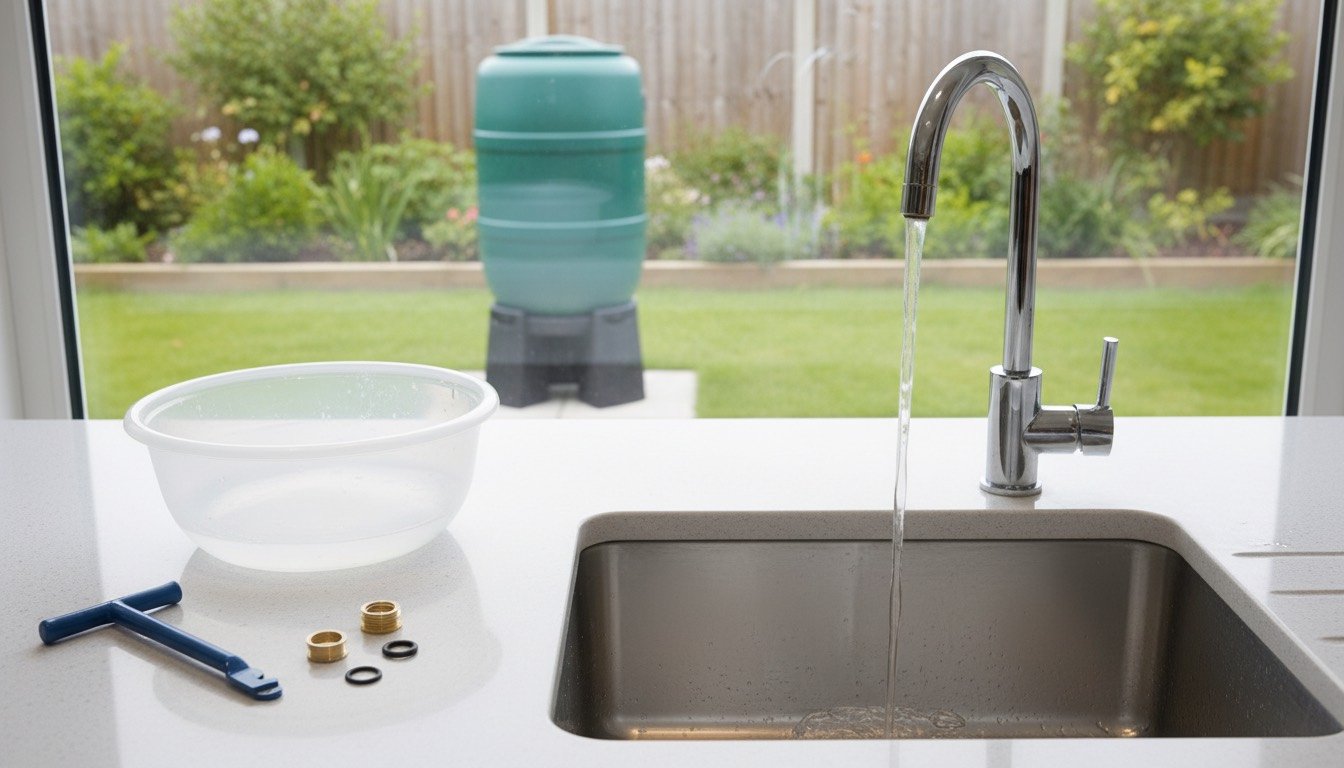
The average person in England and Wales gets through roughly 140 litres a day, and about a third of it is heated first. That is why a metered household doing this properly saves more on gas than on the water bill — the bit most leaflets skip.
This is the running order we use in customers' houses: jobs ranked by payback, with real part prices, plumber rates, and the two big measures that never pay back.
Safety first: five things that go wrong
Saving water sounds harmless. Several of these measures are not.
- •Never drop a hot water cylinder below 60°C. Legionella multiplies between 20°C and 45°C, so stored water needs 60°C and distribution above 50°C.
- •Do not fit a restrictor or aerating head to an electric shower — the unit meters its own flow, and choking the outlet makes it trip.
- •Gravity-fed systems (loft tank, cylinder in the airing cupboard) run at 0.1 to 0.3 bar; most aerating heads need 1 bar and will dribble.
- •Never connect rainwater or greywater to a mains pipe. The Water Supply (Water Fittings) Regulations 1999 require physical separation, backflow protection and marked pipework.
- •Butt water is not drinking water. Keep it off salad crops within a fortnight of harvest.
Tools and materials, with prices
This is hand-tight work; the skill level is low and the list short.
- •Adjustable spanner, water pump pliers and a cloth for the chrome — £15 to £30
- •Tap aerators, £3 to £8 each (M22 male or M24 female fits most UK taps)
- •Aerating shower head, £15 to £45 hand-held or £60 to £120 fixed
- •Inline 8 l/min shower flow regulator, £8 to £15
- •Cistern displacement bag — free from most water companies
- •Replacement flush valve or dual-flush conversion, £15 to £35
- •210-litre water butt, stand and diverter kit, £35 to £70
- •Battery leak alarm for the stopcock cupboard, £20 to £45
Realistic time and cost, and the labour split
A full pass through a three-bedroom house takes a Saturday morning and £70 to £120 in parts. On the DIY jobs, materials are 90 to 100 per cent of the cost; with a plumber that flips. On a £120 running-toilet repair, £22 is the part and £98 is labour — which is why you bundle small jobs into one visit.
Three worked examples at a combined water and wastewater rate of about £3.50 per cubic metre; check your own bill, as regional rates run £2.80 to £4.60.
- •Four tap aerators: £20, 20 minutes, no labour. A family of four saves 8 to 12 m³ a year — £28 to £42, plus the gas that heated it. Payback: one summer.
- •One shower head swap: £35, ten minutes. Taking a mixer shower from 12 to 8 l/min across four eight-minute showers a day saves 47 m³ — £165 of water and 1,600 kWh of gas, another £95.
- •A leaking loo repaired: £22 for the valve, or £90 to £150 with a plumber. A failed flush seal loses 200 to 400 litres a day — £250 to £500 a year metered — and makes no noise.
The step-by-step, in order of payback
Work down this order, not from easiest. Steps 1 and 2 find waste; the rest reduce it.
- •1. Read the meter last thing at night and again at dawn with everything off. Movement over eight hours is a leak — trace it first, using our method to find a water leak in your house.
- •2. Dye-test every toilet: food colouring in the cistern, no flushing for 30 minutes, then look in the pan. Colour there means the flush seal has gone — see our running toilet repair. Add a displacement bag to any pre-2001 cistern too.
- •3. Change the kitchen and basin aerators: unscrew anticlockwise with a cloth around the chrome, then hand-tighten. Basin taps drop to 4 to 5 l/min.
- •4. Time your shower by filling a 10-litre bucket. Under 50 seconds means over 12 l/min, and a low-flow shower head is the best £35 here.
- •5. Kill every drip. A tap dripping once a second wastes 5,500 litres a year, and on the hot side you pay to heat it — see our dripping tap guide.
- •6. Run washing machines and dishwashers full and on eco. A dishwasher on eco uses 9 to 11 litres; the same load under a running tap uses 60-plus.
- •7. Fit a water butt on the downpipe nearest the garden tap and water at 6am, at the roots. A sprinkler throws 500 to 1,000 litres an hour; a soaker hose on a timer uses far less.
- •8. On rateable value with more occupants than bedrooms? Ask for a meter: fitting is free and you can switch back within two years.
Rainwater and greywater: honest payback
Two products get sold hard on water anxiety and deserve real scrutiny.
- •Underground rainwater harvesting — tank, filter, pump, controls, mains top-up — runs £2,500 to £6,000 installed on a four-bed. Supplying every flush saves 40 to 55 m³ a year, or £140 to £250: a 15 to 30 year payback against a pump lasting 15. Our rainwater harvesting cost breakdown itemises it.
- •Greywater recycling costs £1,500 to £4,000 plus annual servicing, and needs BS 8525 compliance and a disinfection stage. It cuts demand 20 to 30 per cent and almost never pays back at UK prices.
- •A quote is reasonable when tank, filter, pump, excavation and pipework are priced separately, the tank volume is named and payback is quoted in decades. Suspect any five-year payback claim.
Troubleshooting: when savings do not show up
Give it one billing quarter, then work through these.
- •Bill unchanged: check you are metered, not on a fixed assessed volume charge that no amount of saving will move.
- •New shower head dribbles: measure pressure at the outside tap with a £10 gauge. Below 1 bar you need a low-pressure head.
- •Aerator sprays sideways: the washer is pinched or the mesh limescaled. Soak in one part white vinegar to four parts water.
- •Meter creeping with the stopcock closed: the leak is on the buried supply pipe — usually yours, though many companies offer a leak allowance.
- •Toilet refilling briefly every hour: the fill valve diaphragm is passing, not the flush valve. A £12 part.
When to stop, and what a fair quote looks like
Call someone for any leak you cannot isolate at the stopcock, anything on the buried supply pipe, and any work joining a non-mains source to internal pipework.
Be wary of a quote that prices 'water saving' as an unlisted package, insists the supply pipe needs replacing before the leak has been isolated, or comes from a detection firm that also sells the repair. Ask for a meter reading before and after — a real fix shows on the dial within the hour.
- •Plumber rate: £45 to £75 outside the South East, £70 to £110 in London, one-hour minimum — see our plumber costs by job
- •Replace a flush or fill valve: £90 to £160 all in
- •Fit an outside tap with a double check valve: £120 to £220
- •Acoustic leak detection on a buried supply: £250 to £600
- •Supply pipe replacement by mole plough: £900 to £2,200
Found this useful?
There's plenty more — hundreds of guides and honestly-tested product reviews for every corner of your home.
Browse All GuidesKeep reading
Energy & Insulation · 17 min read
Warm Home Discount 2026: Eligibility, Dates and Winter Payments Guide
The Warm Home Discount is returning for winter 2026 to 2027, with a £150 electricity bill discount for eligible households. Here is how to check the rules, payment dates and other winter help available across the UK.
Energy & Insulation · 8 min read
How to Stop Heat Escaping Through Your Windows Without Replacing Them
Sealing draughts is only half the job. Here is how to reduce heat escaping through cold window glass without paying for replacement windows.
Energy & Insulation · 7 min read
October's Price Cap Rise Is a Gas Problem: What to Do Before It Hits
The October price cap rise is overwhelmingly a gas rise, so not every appliance deserves the same attention. Here is what is worth sorting before 1 October.
Keep your home in brilliant shape
Hundreds of honest guides and tested product reviews — written from real hands-on experience.