Garden & Outdoor · 6 min read · 14 August 2026
August Garden Centre Sales: What to Buy Now (and What to Skip)
The August sale benches are where sharp gardeners plant next summer's borders at a third of the price. Here's what deserves a trolley dash, what's compost in waiting, and how to tell the difference in sixty seconds.
By the Nims Casa editorial team — written from professional cleaning experience and checked against our editorial standards.
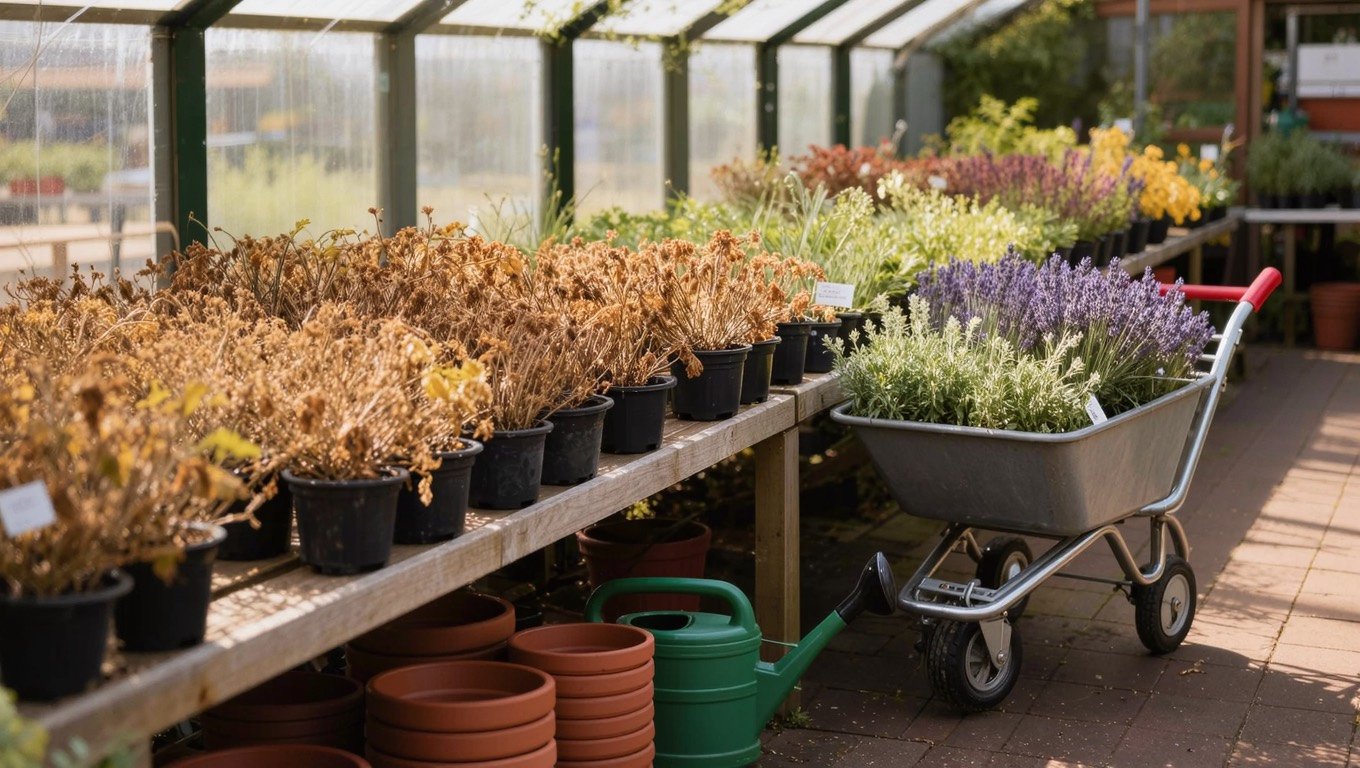
By the second week of August, most UK garden centres are quietly drowning in stock. This summer's heatwave made it worse: bedding wilted faster than anyone could sell it while deliveries kept arriving on contracts signed in January. The result is the deepest discounting of the gardening year — 50 to 70 per cent off plants, 30 to 50 per cent off furniture, and managers who will knock more off a full trolley if you ask.
Roughly half of what sits on the sale benches is worth every penny; the other half is compost in waiting. Here is exactly where we would put the money this month.
Why the Discounts Run So Deep This August
Garden centres order plants six to nine months ahead, so a scorching July does not reduce what arrives; it just reduces what sells. A plant on the bench since May has already eaten its margin in daily watering, and managers would rather take £2 today than keep an £8.99 plant alive until it dies anyway.
There is also a hard deadline. Spring bulbs, pansies and Christmas stock arrive from late August and need the covered benches currently full of tired hostas. That deadline, not generosity, is why reductions steepen every week — and why the choice worsens at the same rate. Mid-August is usually the sweet spot between price and pickings.
What's Genuinely Worth Buying
The single best value on the benches is the herbaceous perennial that looks dead but is not. Hardy geraniums, salvias, nepeta and achillea with crispy brown tops are usually fine underneath: roots do not care what the leaves did in a heatwave. Cut the growth back to 5cm, soak the pot in a bucket for an hour, and you have next June's border for £1.50 to £3 a plant instead of £8.99. If you are rebuilding a sunny bed, cross-check the bench against our full sun perennials that bloom all summer and buy in threes and fives, not singles.
Beyond the benches, hard goods are the other prize.
- •Container roses and lavender: past their flowering peak so priced to clear, with decades of flowering ahead once planted in September.
- •Shrubs with green stems and firm roots: viburnum, choisya, hebe and potentilla shrug off a rough summer on the bench.
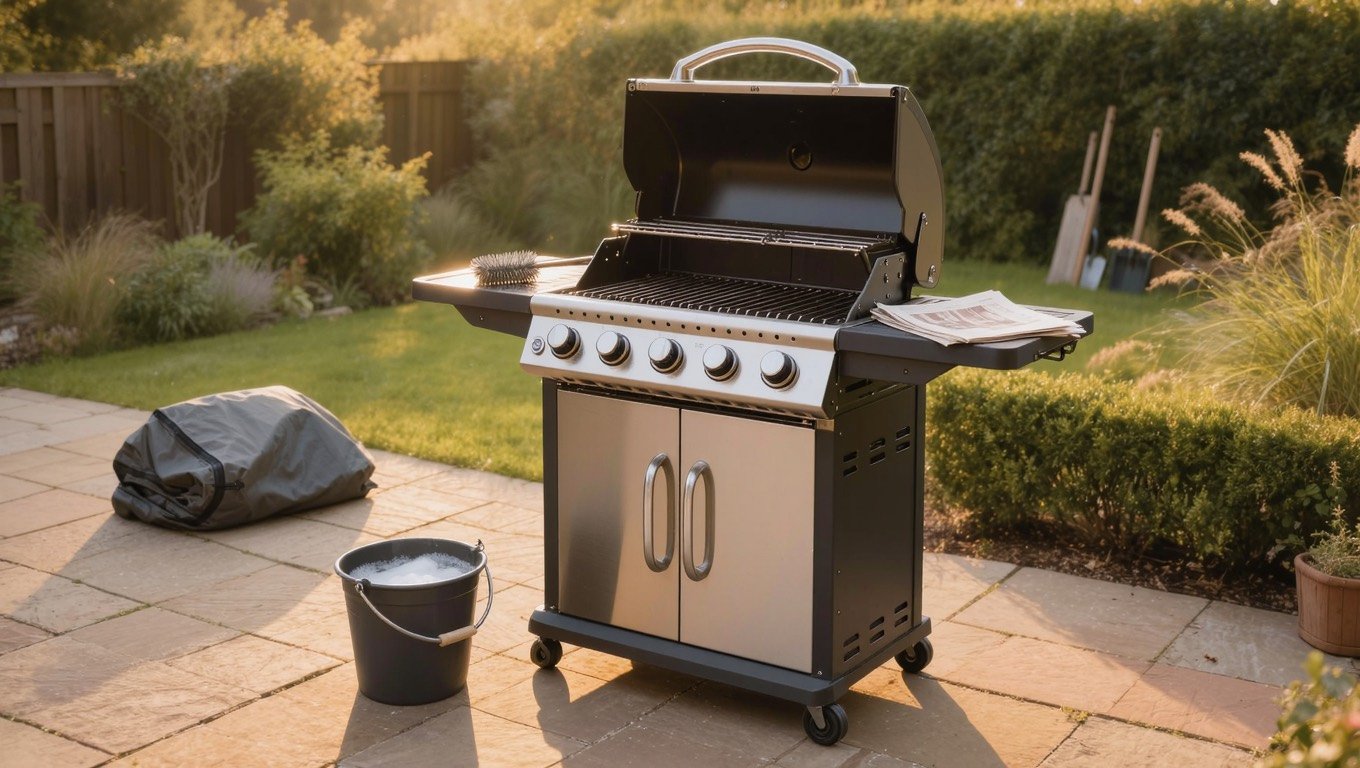
- •Display garden furniture and barbecues: typically 30 to 50 per cent off, and a hardwood set oiled promptly will outlast three cheap replacements — see our guide to garden furniture care before you buy.
- •Terracotta and glazed pots from discontinued lines: tap them — a clear ring is sound, a dull thud is cracked.
- •Hand tools, hoses and watering kit: end-of-season clearance on things with no shelf life at all.
What to Skip, Even at 70 Per Cent Off
A discount is not a bargain if the plant has no future — and some of this stock was never a sensible buy at any price.
- •Heat-stressed annual bedding: petunias and lobelia have six weeks of life left at best. Even at 20p a tray you are buying a fortnight of colour.
- •Browned conifers: the patches never green up again. Walk past.
- •Pot-bound trees at token discounts: two summers in the same container means circling roots that strangle it later; even at 20 per cent off it is a bad deal.
- •Half-dead shrubs still near full price: if it looks 70 per cent dead and is 20 per cent off, the maths does not work.
- •Cheap resin furniture: UV-brittle within two summers, and unlike plants it cannot recover.
The 60-Second Health Check for a Reduced Plant
Every plant on a sale bench gets the same sixty-second inspection before it goes in the trolley.
- •Slide the root ball out of the pot: firm white or cream roots mean it is alive whatever the top looks like. Brown mush or a sour smell means root rot — put it back.
- •Scratch test: nick a stem with a thumbnail. Green underneath is alive; tan and dry, try lower down before giving up.
- •Check for vine weevil: C-shaped cream grubs in the compost or notched leaf edges. Never bring these home.
- •Look for basal growth: fresh shoots at the compost line trump any amount of dead top growth.
- •Haggle on volume: a full trolley of end-of-season stock is exactly the problem the manager wants gone. Ten per cent more off is a normal ask.
Why the September Planting Window Makes This Work
August bargains only pay off because of what happens next. Soil in early September is at its warmest of the year, typically 16 to 18°C, and the autumn rains return to do your watering. A perennial or shrub planted in the first half of September gets six to eight weeks of root growth before dormancy, which is why autumn planting routinely beats spring planting.
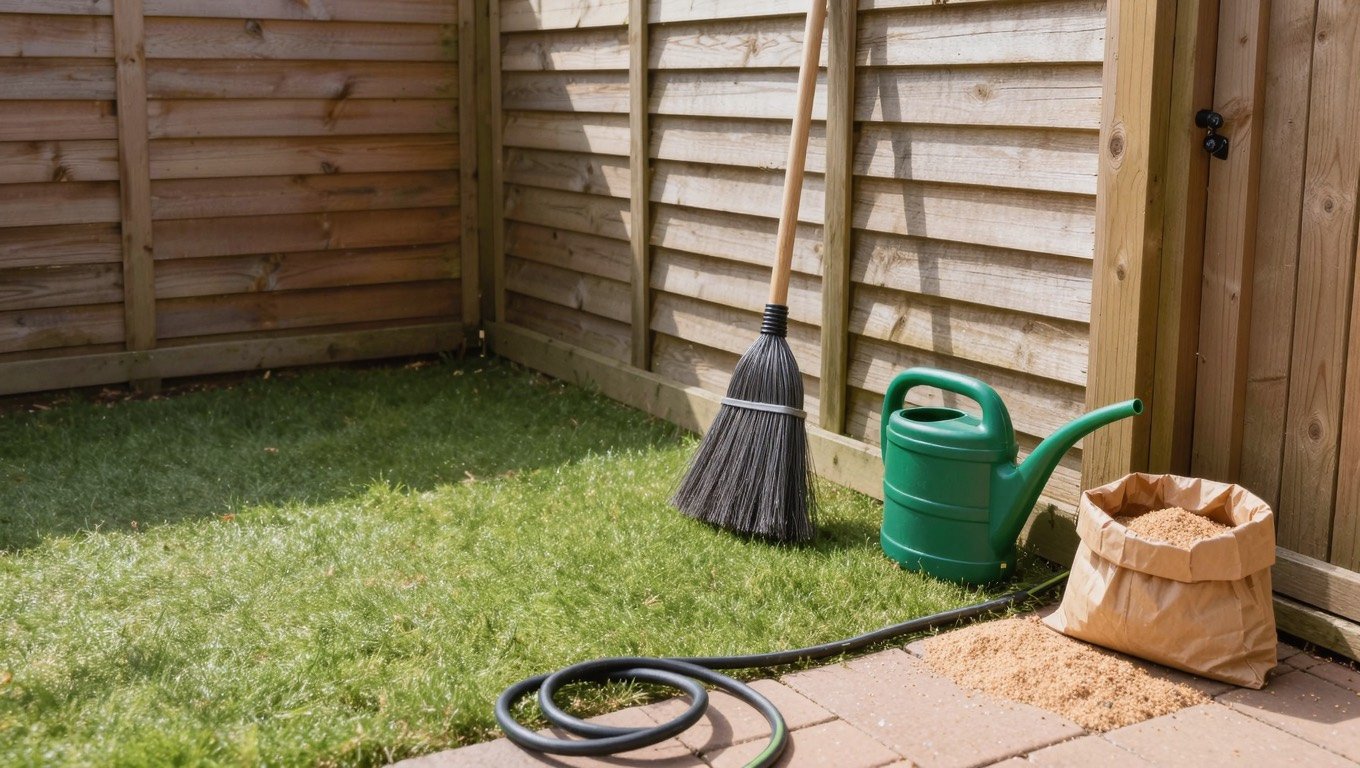
The routine is simple: soak the root ball, tease out circling roots, plant at the same depth as the pot, water in with a full can even if rain is forecast, then leave it alone. Improve poor soil with organic matter rather than feed — if you are not already making your own compost, a £5 bag of soil improver per hole beats a £15 fertiliser. If drought has left bare lawn patches, September is also the best time to sow grass seed in the UK, so reduced seed is worth grabbing.
Buying for an Older Garden: The Period-Property Rules
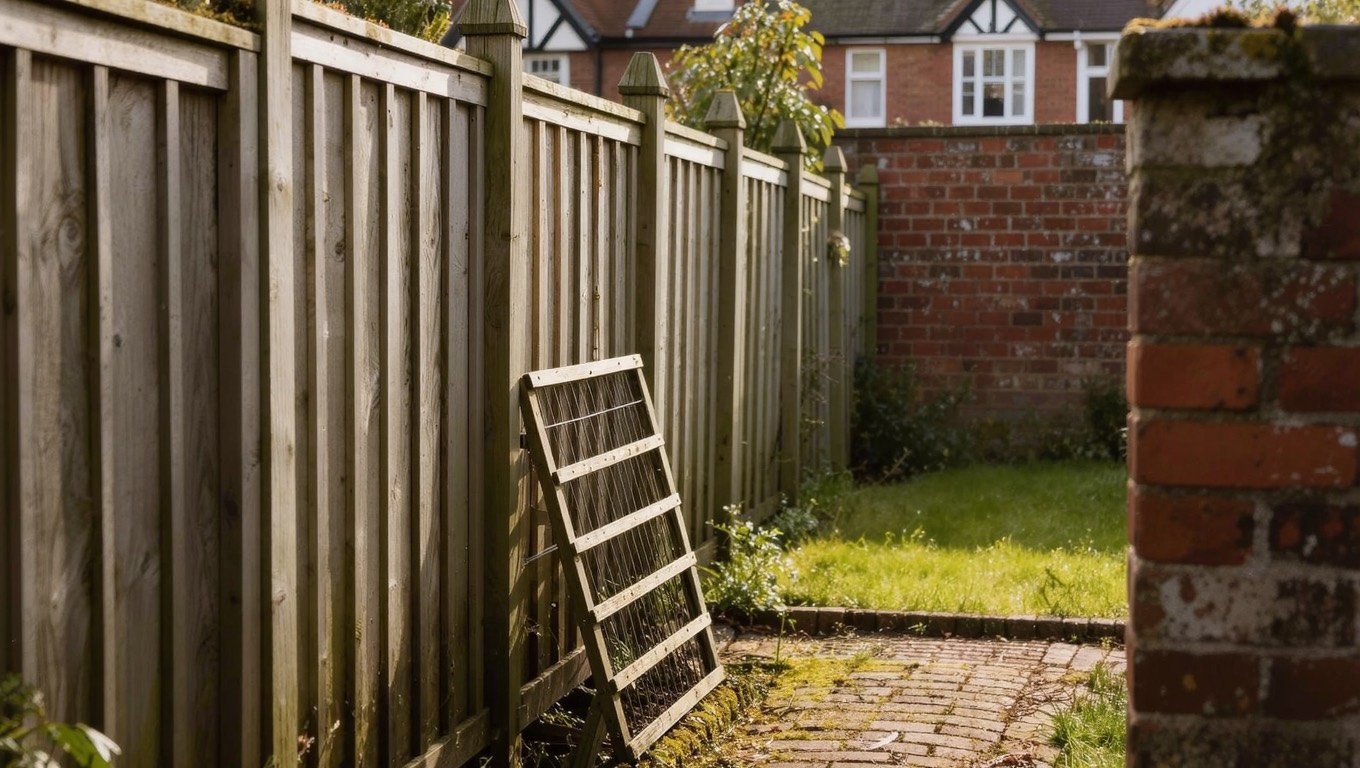
If you garden behind a Victorian or Edwardian terrace, two sale-bench habits need adjusting. First, climbers: reduced clematis, trachelospermum and climbing roses are superb value, but old boundary walls are soft brick laid in lime mortar. Never screw trellis straight into the brick faces — the brick spalls and fixings work loose. Drive vine eyes into the mortar joints and run 2mm galvanised wire between them; joints are repointable, bricks are not.
Second, roots near old drains. Pre-1960s houses usually have clay drainage runs with mortared joints crossing the back garden, often barely 600mm down. Willow, poplar and vigorous bamboo will find a weeping joint and fill the pipe, and a blocked Victorian drain costs £150 to £400 to jet — far more to excavate. Keep anything vigorous 5m from drain runs, and large trees 8m or more from shallow Victorian footings on clay. In a small terrace plot that means one good multi-stem shrub over a cut-price tree — and for boundaries, plan a fast-growing privacy hedge rather than gamble on a pot-bound leylandii from the sale corner.
Where the Money Goes: Three Budget Tiers
A realistic split for the rest of August, based on what delivers next summer.
- •Around £25: ten to fifteen rescue perennials at £1.50 to £2.50 each — enough to fill a 3m border that would cost £90-plus at spring prices.
- •Around £75: the £25 tier plus two structural shrubs or a climber with wire and vine eyes, and a bag of soil improver per planting hole.
- •£150 to £300: hard goods. A reduced hardwood bistro set, a decent hose reel and two frost-proof pots hold their value in a way no tray of bedding ever will.
- •Whatever the budget, skip anything that fails the root check: the cheapest plant is the one you never replace.
Found this useful?
There's plenty more — hundreds of guides and honestly-tested product reviews for every corner of your home.
Browse All Guides