Organisation & Storage · 6 min read · 11 August 2026
Back to School Home Organisation: The Two-Week Reset That Saves Every Morning
The calm September morning is built in August. A professional organiser's two-week plan: launch pad hallway, uniform carousel, lunchbox station and the 15-minute Sunday reset that holds it all together.
By the Nims Casa editorial team — written from professional cleaning experience and checked against our editorial standards.
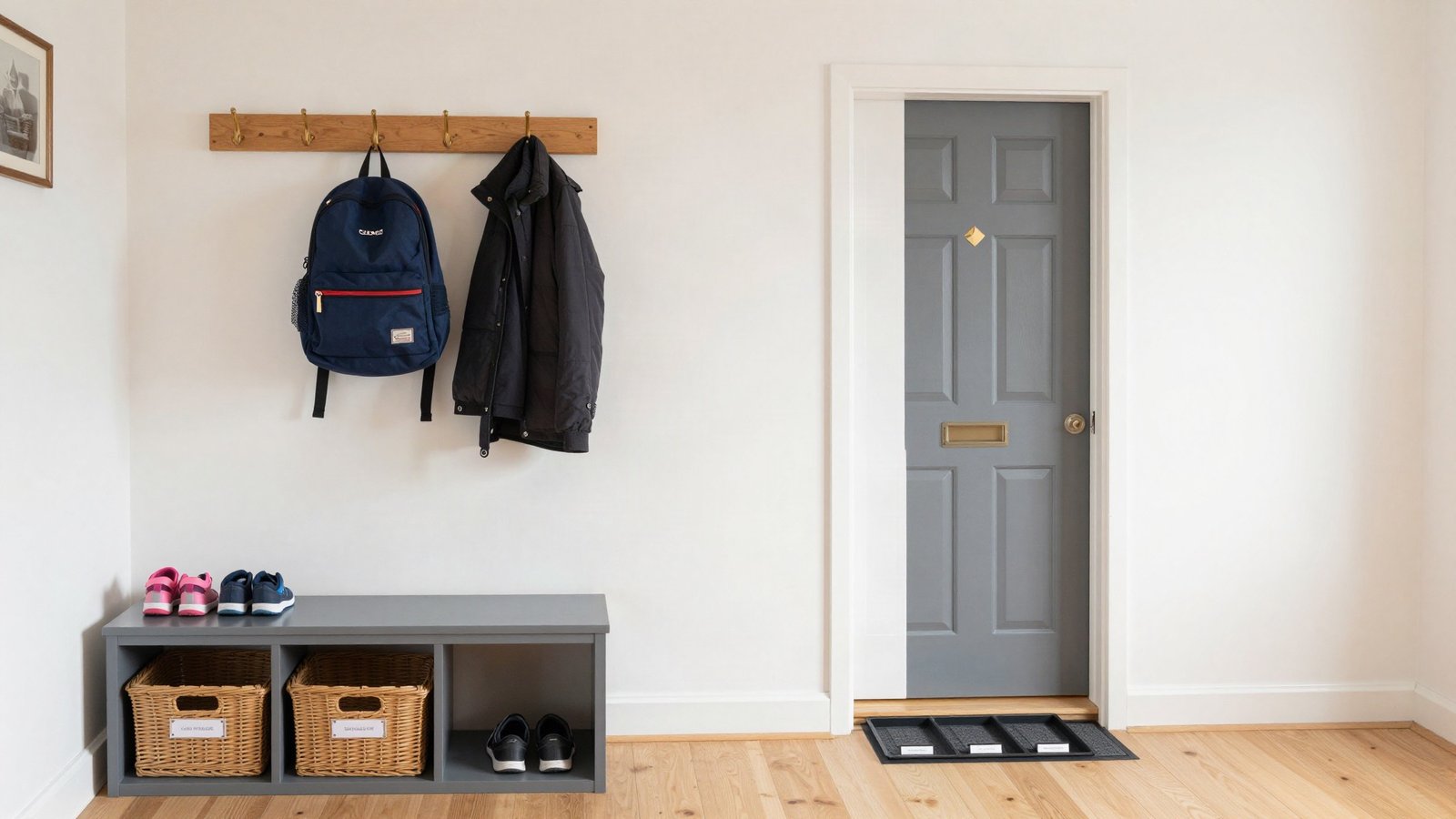
The first school morning of September rarely goes wrong at the school gate — it goes wrong at 8.10am in the hallway, over a missing left shoe and a PE kit nobody has seen since July. After years of organising family homes, I can tell you the difference between a calm run and a shouted one is not willpower. It is whether every object a child needs between 7.30 and 8.30 has one fixed, labelled home.
This is the two-week reset I set up for clients in late August, timed for the early-September return in England, Wales and Northern Ireland (Scottish families should start mid-August). Budget £45–£120 depending on what you already own, and no single session runs longer than 45 minutes.
Week One: Clear Before You Buy
Do not buy a single basket until you have cleared the decks. Organising clutter just gives you tidier clutter, and the fortnight before term is the one time of year children will tolerate a proper sort-out. The full method is in our guide to how to declutter room by room, but the school reset needs only five short sessions.
- •Day 1 — uniform audit (45 min, free): everything tried on. Outgrown items go to the school's second-hand sale or charity; keep the next size up only if it will genuinely fit by half-term.
- •Day 2 — shoe cull (20 min, free): school shoes, trainers and wellies checked for fit. Growing feet need a thumb's width of room at the toe, so measure before you queue at the shoe shop.
- •Day 3 — hallway clear-out (30 min): remove every coat, bag and pair of shoes not used weekly. Summer beach kit goes under the stairs or into the loft.
- •Day 4 — paperwork amnesty (20 min): recycle last year's letters, newsletters and the artwork mountain. Keep reports and anything with a future date on it.
- •Day 5 — bag and lunchbox wash (30 min, about £1): fabric bags on a 30°C cycle and air-dried over the weekend; lunchboxes scrubbed in hot soapy water and left open to dry.
The Hallway Launch Pad — and the Only Drilling in the Plan
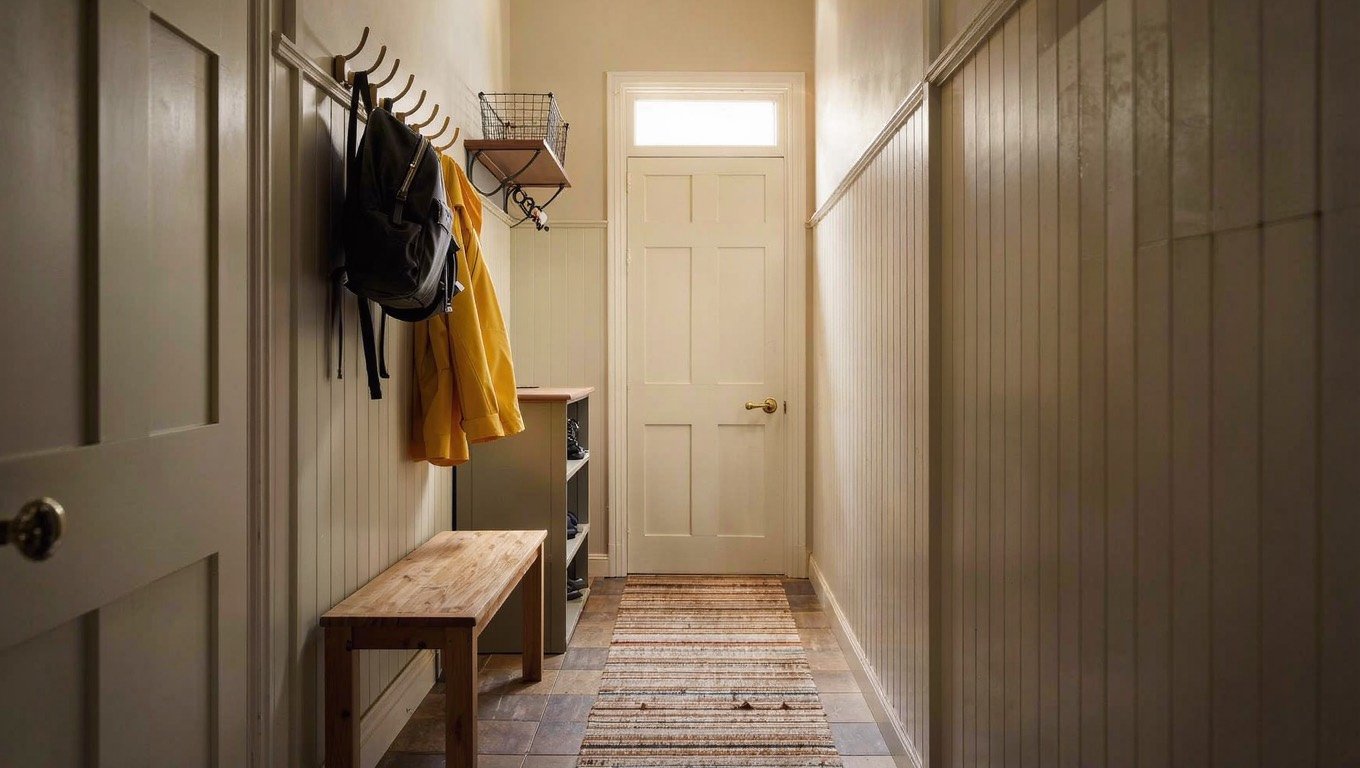
The launch pad is one metre of wall by the front door: a hook per child at shoulder height (roughly 100–120cm for primary-age children), a shoe rack or storage bench below, and one labelled basket each for hats, gloves and the endless small stuff. A hook rail costs £8–£15 at B&Q or IKEA, benches with shoe storage run £30–£70 at Dunelm and Argos, and the whole station fits a terraced hallway 90cm wide. If your hall is genuinely tiny, our small-space storage ideas guide covers slimline and over-door alternatives.
Here is the honest DIY boundary. Fixing a rail into solid brick is a competent-DIYer job: pilot with a 6mm masonry bit, brown wall plugs, 5x50mm screws, twenty minutes. Plasterboard is different — a loaded coat rail carries 10–15kg swinging on and off it daily, so use rated fixings such as GripIt or spring toggles, never the plugs in the packet. Run a £15 cable and pipe detector over the wall first; hallway walls often carry the lighting drop and, in plenty of terraces, pipework to the meter. If the wall is lath-and-plaster (common pre-1930), crumbles when drilled, or you cannot confidently find a stud, stop — an hour of a local handyperson's time costs £40–£60 and is cheaper than a plastering repair or a nicked cable. Adhesive hooks are fine for caps and lanyards, but no adhesive fixing honestly holds a loaded school bag for a full term.
The Uniform Carousel: Five Hangers Per Child
One rail section — or an over-door hanging rail at £10–£12 if the wardrobe is full — five children's hangers labelled Monday to Friday, and a complete outfit on each: polo shirt, jumper, trousers or pinafore, with socks and underwear in a small pegged bag on the hook. A ten-pack of children's hangers is £6–£8. From about age six, a child can dress entirely unsupervised from this system, which is the point: the morning question changes from 'where is a clean jumper' to nothing at all.
The carousel only works if the wash cycle feeds it. Uniforms go in on Friday evening or Saturday morning at 40°C, dry on Saturday, and are pressed on Sunday — a decent steam iron gets five polo shirts done in under ten minutes. If rail space is the blocker, the seasonal rotation method in our wardrobe organisation guide frees more room than you would expect.
The Lunchbox Station and Paperwork Triage
Give lunch kit one shelf or drawer at child height in the kitchen: boxes with their lids on, bottles, and a basket of snacks portioned out once on Sunday. A child who can reach the kit can pack their own snack from age seven or so; the zoning approach in our kitchen cupboard organisation guide shows how to carve out the space. Evening packing takes ten minutes; morning packing takes twenty-five, plus a temper.
Paperwork gets three stacking trays or a wall file beside the launch pad, labelled Action, Dates and Recycle. Book bags are emptied at the door the moment they come home, letters sorted on the spot, and dates entered in the family calendar within 24 hours. One five-minute clear of the Action tray every Thursday evening keeps the pile at zero. Without triage, school paper compounds at roughly ten sheets per child per week — a full tray by October.
The Bedtime Reset and the 15-Minute Sunday Routine
Everything above is hardware. These loops are the software, and they are what actually saves the morning.
- •Every evening, 10 minutes: bags packed and hung on their hooks; tomorrow's hanger checked against the weather and the timetable; water bottles filled and put in the fridge; shoes paired on the rack.
- •Sunday, 15 minutes: five hangers loaded; snack basket refilled; bag pockets emptied of crumbs and crumpled letters; PE kit and reading folder confirmed; the week's dates read aloud over breakfast.
- •Each half-term, 30 minutes: shoe and uniform fit re-checked, iron-on name labels replaced (£7–£10 per 50), launch pad baskets culled before they silt up.
Short on Time? Do These Three Things
If the return date is a week away and the full fortnight is fantasy, work in this priority order and let the rest wait until the September rhythm settles.
Full kit from a standing start: hook rail £12, shoe bench £45, ten hangers £7, three trays £10, two baskets £14, cable detector £15, name labels £8 — about £110 all in, or nearer £45 if you skip the bench and already own a detector. The Sunday quarter-hour then slots into whatever weekly rhythm you run; it pairs naturally with the only cleaning schedule you need and is the highest-return fifteen minutes on that list.
- •1. Put up the hooks (30 minutes, £15). A bag with a fixed home is half the battle won.
- •2. Set up five labelled hangers per child (20 minutes, £8). This removes the single most common morning delay.
- •3. Start the evening bag-pack tonight (10 minutes, free). Routine beats storage — a habit begun in August is still standing in October.
Found this useful?
There's plenty more — hundreds of guides and honestly-tested product reviews for every corner of your home.
Browse All Guides