Garden & Outdoor · 6 min read · 14 August 2026
How to Clean a BBQ at the End of Summer (and Store It Properly)
Two hours in September saves a ruined spring: the professional end-of-season BBQ clean, from burn-off to gas disconnect, plus why the wrong cover rusts a barbecue faster than no cover at all.
By the Nims Casa editorial team — written from professional cleaning experience and checked against our editorial standards.
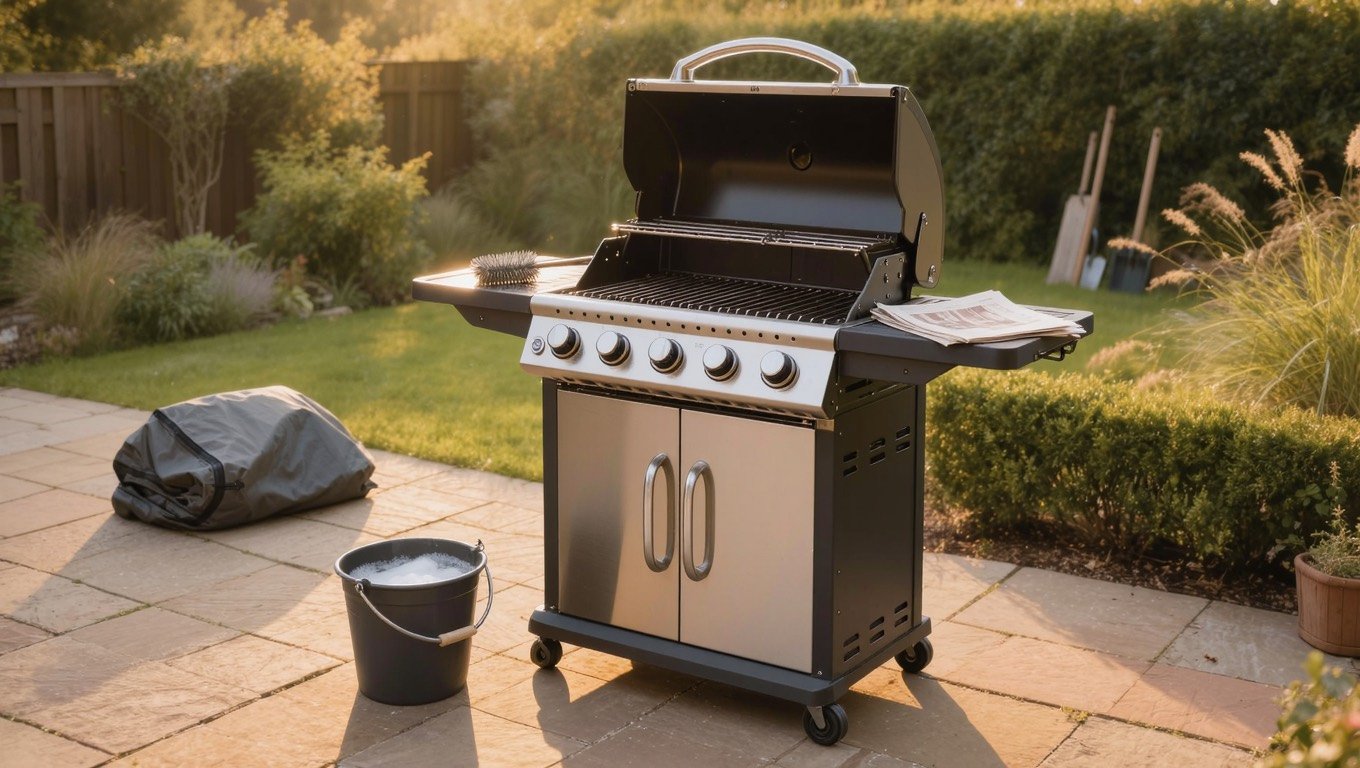
The last barbecue of the season usually ends the same way: lid down, cover on, and a quiet promise to deal with it in spring. Six months later it's furred grates, a tray of solidified fat and spiders in the burner tubes — and that fat fuels most of the flare-ups we see when barbecues are first lit in April.
Two unhurried hours now prevents all of it. This guide covers gas and charcoal — see our gas vs charcoal comparison if you're weighing up which to run — and finishes with what most guides skip: the gas disconnect and rust-free storage.
Safety First
The burn-off runs the barbecue at full heat with nobody cooking: stay with it, at least 2 m from fences, sheds and anything overhanging. Afterwards, cast iron grates hold dangerous heat for 45 minutes — let everything cool fully before touching.
Turn the gas off at the cylinder before removing burners, not just at the knobs. Never use caustic oven cleaner on a barbecue: the sodium hydroxide attacks aluminium castings and blisters painted lids. Inspect any wire brush first — one that sheds bristles leaves them in next season's food, so bin it. Fat plus flame near the house deserves the same respect as anything on our home fire safety checklist.
Tools, Materials, Time and Cost
Everything is stocked by B&Q, Screwfix or a supermarket. Allow 2-3 hours including burn-off and drying; consumables cost under £15 if you own brushes, and a breathable cover is the one purchase worth spending on.
- •Stiff wire brush or grill stone (£5-£10) — cast iron and stainless grates only
- •Nylon-bristle brush (£4-£6) — porcelain-coated grates
- •Plastic scraper — for carbonised grease
- •Citrus or sugar-soap degreaser (£6-£9) and washing-up liquid
- •Balled-up aluminium foil, disposable gloves, bin bags
- •Rapeseed or vegetable oil for seasoning cast iron
- •Spray bottle of 50:50 washing-up liquid and water — gas leak test
- •Breathable, vented BBQ cover (£15-£40) if yours is torn or non-vented
The Deep Clean, Step by Step
Work in this order and you only handle the filthy parts once.
- •1. Burn off. Gas: all burners on high, lid closed, 15-20 minutes until the smoke stops. To shut down, close the cylinder valve first and let the flames die before turning off the controls — this empties the hose. Charcoal: no burn needed — brush out all cold ash, which holds moisture and breeds rust.
- •2. Cool for 45 minutes, then strip: grates, flavouriser bars or lava rocks, drip tray all out.
- •3. Scrape the lid and bowl with the plastic scraper — the black flakes are carbonised grease, not failing paint — then wash with hot soapy water.
- •4. Clean the grates by material (next section) — this is where most people wreck porcelain coatings.
- •5. Degrease the drip tray: scrape solidified fat into the bin — never down a drain — then wash with hot water and degreaser. Refit with a foil liner so spring's clean takes five minutes.
- •6. Gas burners: brush across the port holes, not along them, and clear blocked ports with a wooden cocktail stick, never metal. Check each venturi tube for spider webs — a blocked tube causes lazy yellow flames or flashback next year.
- •7. Exterior: warm soapy water only. Wipe stainless steel with the grain; painted finishes get nothing abrasive.
- •8. Dry everything completely before reassembly — trapped moisture is how a clean barbecue still comes out rusty.
Grate Cleaning by Material
The grates are where the wrong method does permanent damage, and the rule is the same as when cleaning an oven: match the chemistry and abrasive to the surface, not the dirt.
Cast iron must never be soaked — scrub it warm with the wire brush, rinse briefly, dry it in a 140°C oven for 15 minutes and wipe on a thin coat of rapeseed oil while warm. That seasoning layer is your rust protection until spring. Stainless steel is the opposite: soak for 30 minutes in hot soapy water, then scrub with balled foil or a brass brush — not ordinary steel wool, which embeds carbon-steel particles that later bloom into rust spots. Porcelain-coated grates take the nylon brush only. One chip from a metal tool lets rust spread under the enamel until it flakes off in sheets.
The Gas Check and Disconnect
Test the system before you disconnect. Spray every joint from cylinder to manifold with the 50:50 washing-up liquid solution, open the cylinder valve and watch for 30 seconds. Growing bubbles mean a leak: valve closed, tighten or reseat, retest. Flex the hose and look for cracking — UK suppliers advise replacing hoses every 5 years and regulators at 10; the date is stamped on both.
To disconnect: cylinder valve fully closed, regulator unclipped or unscrewed, plastic safety cap refitted. Store the cylinder outdoors, upright, away from house openings and drains — never in the house, garage or shed. Propane is heavier than air and pools at low level, hence Calor's blunt storage guidance. The barbecue can live indoors; the cylinder cannot.
Rust Prevention: Cover vs Shed
A dry shed or garage is the best home for the barbecue body over winter — our garage and shed storage guide shows how to claim the space. Wipe grates and bare cast iron with a film of oil, and leave the lid slightly ajar so air circulates.
If it stays outside, a cheap non-vented cover traps condensation against the metal and rusts a barbecue faster than no cover at all. Buy a breathable, vented cover, stand the barbecue on slabs not grass, and strap it down in wind. Pair the job with putting away cushions and treating the garden furniture — and while the patio is clear, shift the summer's grease spots using our patio cleaning guide before they set in for winter.
Troubleshooting and When to Call a Professional
Almost everything on a portable cylinder barbecue is fair game for a competent DIYer — including replacing the hose and regulator, provided you fit matching parts and repeat the leak test. The hard boundary is fixed pipework: a barbecue or outdoor kitchen plumbed into the house gas supply is a gas installation, and work on it — including disconnecting it for winter — legally requires a Gas Safe registered engineer, typically £80-£120. A leak you can't cure by tightening, a hissing regulator or a damaged cylinder valve means stop: valve closed, cylinder outdoors, supplier swap.
Everything short of that is a cheap patio fix — the likely post-winter faults:
- •Rusty grates: surface rust on cast iron scrubs off and re-seasons; flaking porcelain or rusted-through grates need replacing (£20-£60) — the barbecue itself is usually fine
- •Lazy yellow or uneven flames: blocked venturi tubes, almost always spider webs — remove the burners and brush through
- •Igniter won't spark: new AA battery first, then check the electrode gap is about 3-4 mm
- •Musty cover: wash it, and refit only once cover and barbecue are both bone dry
- •Rusted-through burners on a £120 three-burner: replace the barbecue — but a £400+ model justifies new burners, bars and grates
Found this useful?
There's plenty more — hundreds of guides and honestly-tested product reviews for every corner of your home.
Browse All Guides