Product Reviews · 6 min read · 15 May 2026
The Best Pressure Washers UK (2026): Patios, Driveways & Cars
Nothing in home cleaning is as satisfying as the first stripe across a winter-grimed patio. The machines that do it properly — and the surfaces to spare.
By the Nims Casa editorial team — written from professional cleaning experience and checked against our editorial standards.
Affiliate disclosure: if you buy through links in this article we may earn a small commission at no extra cost to you. Our recommendations come from professional cleaning experience and are never influenced by retailers or brands.
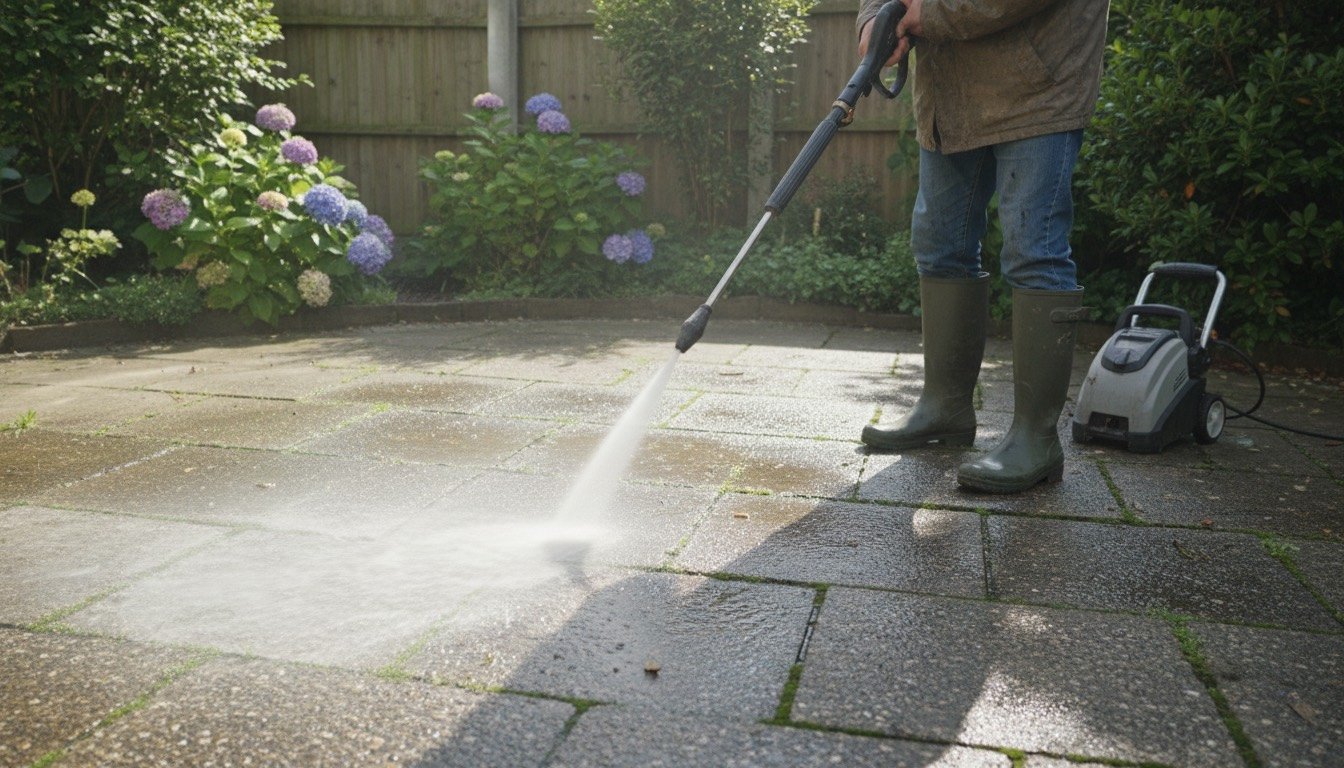
There's a particular satisfaction in the first clean stripe across a winter-grimed patio, watching a season of algae disappear in one steady sweep. It's also the moment most pressure washer damage happens — etched decking boards, blasted-out pointing sand, and window seals that never quite sealed again. A pressure washer is a genuinely powerful bit of kit, and like any powerful tool it rewards a little restraint alongside the right machine.
This guide rounds up three machines we rate for UK driveways, patios and cars — from a budget bike-and-bins model through to a genuinely capable all-rounder — and explains the bar and flow-rate figures that actually determine what a machine can, and shouldn't, tackle. We've also covered the surfaces that punish an over-eager operator, the maintenance that keeps a pump alive for a decade rather than two summers, and the buying mistakes that see machines returned within a month.
Our top picks at a glance
Kärcher K4 Power Control
~£230The sweet spot in Kärcher's range: enough pressure for patios and driveways, app-guided settings for surfaces, and the huge accessory ecosystem. Add the T7 patio cleaner — it's transformative.
Pros
- ✓ Ideal power for most UK jobs
- ✓ Excellent accessory range
- ✓ Induction motor for longevity
Cons
- ✗ Hose reel storage is fiddly
- ✗ Patio head sold separately
Nilfisk Core 140
~£180Slightly more raw pressure per pound than the equivalent Kärcher, with a robust metal pump. Less polished ecosystem, more straightforward grunt.
Pros
- ✓ Strong pressure for the price
- ✓ Durable pump design
- ✓ Good hose length
Cons
- ✗ Fewer accessories available
- ✗ Louder than rivals
Kärcher K2 Compact
~£90For bikes, bins, furniture and the occasional small patio, the little K2 does the job and stores in a shoebox of space. Know its limits and it'll serve for years.
Pros
- ✓ Cheap and tiny to store
- ✓ Fine for cars, bins and furniture
- ✓ Light enough for anyone
Cons
- ✗ Slow on large areas
- ✗ Plastic fittings feel budget
How We Tested and Chose These Pressure Washers
We ran each shortlisted machine on the same block-paved driveway and mossy patio, using the bundled patio attachment where supplied, and timed how long a two-metre square took to come up clean. We weighed hose and cable length against realistic working reach, since that single spec ruins more washdays than the headline pressure rating, and checked how easily replacement parts remain available years down the line. Noise, weight when full, storage footprint and genuine UK street prices — not launch RRPs — all fed into the final scores.
Bar, Litres Per Minute and What Actually Matters When Buying
Bar pressure gets the attention on the box, but litres-per-minute (LPM) matters just as much — it's the flow rate that shifts dirt, and high bar with low LPM will streak rather than strip. Entry-level machines run 100–110 bar at 5–6 LPM for roughly £80–£130; mid-range machines for driveways and patios sit at 130–150 bar, 7–8 LPM, £150–£280; commercial-grade internals — induction motors, metal pump heads — start around £300.
- •Patio (surface) cleaner attachment: £35–£70, roughly halves cleaning time on large areas and removes overlapping stripe marks.
- •Induction motor vs universal motor: induction motors cost more and add weight, but run quieter and typically outlast a universal motor under regular use.
- •Detergent system: check whether it takes universal cleaning fluid or a proprietary cartridge — proprietary systems can roughly double running costs.
- •Quick-connect fittings: if upgrading, check the new machine's bayonet system is compatible with accessories you already own.
Choosing the Right Pressure Washer for Your Jobs
For occasional car washes and garden furniture, a compact 100–110 bar machine is plenty — you'll be tackling algae on plastic chairs, not years of ground-in dirt. Doing patios, paths and driveways once or twice a year? Step up to 130–150 bar with a patio cleaner attachment; it roughly halves the time a job takes and stops the tell-tale stripe marks a narrow jet leaves behind. For large driveways, render or serious moss coverage, weigh a proper patio clean against DIY — a domestic machine can eat a full weekend where commercial kit clears the same area in an hour.
Surfaces That Need Caution (or a Professional)
A pressure washer doesn't know the difference between grime and the surface underneath it, so the same jet that strips algae in seconds will just as happily strip paint, mortar or timber fibres. These are the surfaces where we'd turn the pressure right down, or reach for a different tool entirely:
- •Softwood decking — high pressure furs the grain permanently and can void a decking oil's warranty; use a wide fan tip, low pressure and a proper decking clean rather than brute force.
- •Old brick pointing and joint sand — a direct jet excavates mortar in seconds, and you'll need to deal with the salts and re-sand afterwards.
- •Render and painted masonry — flakes and blows if the coating is tired; for algae and staining, wash render by hand instead of pressure.
- •Windows and door seals — never jet them directly; water forces past the seal and can crack ageing glass.
- •Roof tiles and gutters — strips granules and voids warranties; if blockages are the real problem, gutter clearing needs a different approach.
- •Artificial grass — close-range jetting blows infill loose and lifts seams; artificial lawns need a gentler routine.
- •Stained or oiled garden furniture — a close jet strips the finish too, so keep furniture looking good with lower pressure.
Caring for Your Pressure Washer So It Lasts
A domestic pressure washer that's looked after properly should comfortably last eight to ten years; neglect the basics and you'll be replacing pump seals within two. Always run the machine dry of detergent before switching off — leftover fluid dries sticky inside the valves and is a common reason a machine won't build pressure the following spring. Flush the hose and lance with clean water after every session, and store the unit somewhere frost-free over winter; water left in the pump head expands when it freezes and can crack the casing, a repair that often costs more than a budget machine is worth. Check the small gauze inlet filter every few uses, since grit here wears seals out fastest.
Common Pressure Washer Buying Mistakes
The most expensive mistake is buying on bar pressure alone and ignoring flow rate — a high-bar, low-LPM machine takes twice as long on a driveway as a properly balanced one. The second is underestimating hose and cable length: a 5-metre hose sounds fine in the shop but leaves you dragging an extension lead across a wet drive at home, so check total working reach before buying, not after. Choosing a universal-motor machine for frequent heavy use is a false economy too, since it wears out faster under sustained load than an induction motor. And skipping the patio cleaner attachment to save £40–£70 is the mistake almost everyone regrets, since a hand-held lance takes roughly twice as long and leaves visible overlap stripes.
Frequently asked questions
**Do I need permission to use a pressure washer in the UK?** No licence is needed for domestic use, but be considerate of noise — sustained loud garden work early morning or late evening can count as a nuisance, so stick to reasonable daytime hours.
**Can I use a pressure washer on a rented property?** Check your tenancy agreement first — some landlords restrict pressure washing render, cladding or shared driveways because of the damage risks covered above, and any harm can come out of a deposit.
**How much does professional pressure washing cost in the UK?** For a driveway or patio, expect roughly £120–£250 depending on size and how ingrained the dirt is — often cheaper than buying a machine you'll only use once or twice a year; see our patio cost breakdown for a fuller picture.
**What detergent should I use in a pressure washer?** Stick to detergent designed for pressure washers rather than diluted washing-up liquid, which foams excessively and can clog the injector; a proper patio or drive cleaner does more of the chemical work, letting you rely on less mechanical pressure.
**Is it worth buying a pressure washer rather than hiring one?** If you'll use it more than two or three times a year, buying pays for itself within a couple of seasons compared with hire costs of roughly £35–£50 a day. For one big job — a driveway before selling a house, say — hiring or a professional clean is usually the more sensible route.
Which Pressure Washer Should You Buy?
If you want one machine that handles everything from bikes to driveways without a second thought, the Kärcher K4 Power Control (Best Overall for Homes) is the sensible default — the accessory ecosystem alone justifies the extra outlay. Tighter on budget but still tackling patios and drives regularly, the Nilfisk Core 140 (Best Value Performance) delivers comparable pressure per pound with a sturdier metal pump. And if your needs start and end with bikes, bins, furniture and the odd small patio, the Kärcher K2 Compact (Best Budget / Small Jobs) does the job without cluttering the shed — just don't expect it to shift a decade of driveway grime.
Found this useful?
There's plenty more — hundreds of guides and honestly-tested product reviews for every corner of your home.
Browse All Guides