Product Reviews · 6 min read · 3 July 2026
The Best Window Vacs UK (2026): Condensation's Worst Enemy
The gadget Britain didn't know it needed until black mould arrived on the window seals. Window vacs earn their cupboard space — these are the good ones.
By the Nims Casa editorial team — written from professional cleaning experience and checked against our editorial standards.
Affiliate disclosure: if you buy through links in this article we may earn a small commission at no extra cost to you. Our recommendations come from professional cleaning experience and are never influenced by retailers or brands.
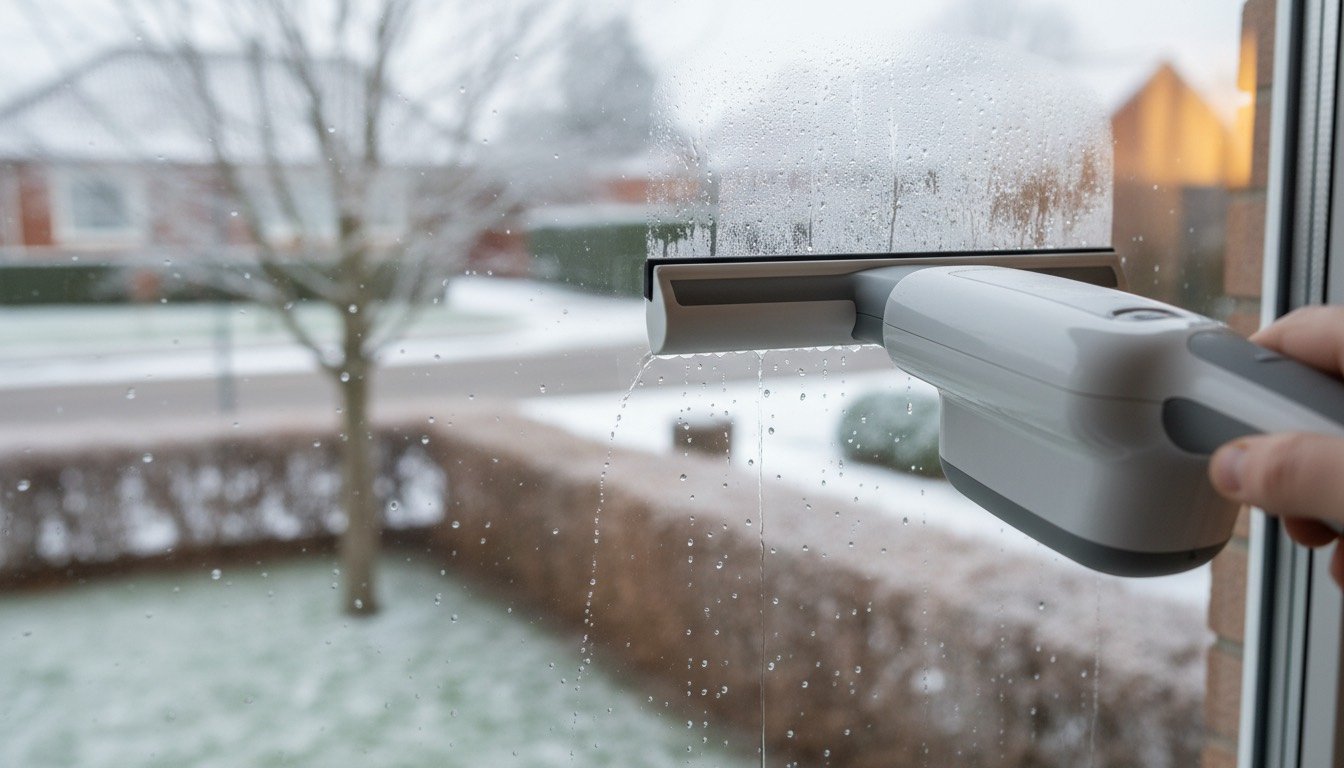
Window vacs are a strange product category — a squeegee bolted to a hand-held vacuum — that solves a very British problem. Overnight condensation collects on single and ageing double glazing, runs down onto the sill, soaks into the paintwork and feeds the black mould along window seals. Run the blade over a wet pane for sixty seconds each morning and that water goes into a tank instead of your frames, breaking the seal-mould cycle before it starts. They're also quietly brilliant on shower screens and as the finishing pass after washing your windows properly.
We've used window vacs through several winters across Victorian sash windows, uPVC double glazing and steamed-up shower screens, tracking which machines clear a whole pane in one pass and which leave a dribble at each end of the blade. Battery life, tank design and how comfortable a unit feels held overhead for ten minutes turned out to matter more than the spec sheet suggests.
This guide sits alongside our three picks above — the Kärcher WV 6 Plus, Kärcher WV 2 Plus and Beldray 2-in-1 — and covers how we tested them, the specs worth paying for, keeping one working for years, the buying mistakes that waste money, and the questions we're asked most about condensation and window vacs.
Our top picks at a glance
Kärcher WV 6 Plus
~£90The category inventor's flagship: strongest suction, 100-minute battery, clean edge-to-edge pickup and a proper level indicator. The one to buy if condensation is a daily battle.
Pros
- ✓ Best-in-class suction and battery
- ✓ No end-of-blade dribble
- ✓ Comfortable weight balance
Cons
- ✗ Costs more than casual users need
- ✗ Spare blades aren't cheap
Kärcher WV 2 Plus
~£55Same core engineering, smaller battery and simpler trim. For a few windows a day it's all the machine most homes need — the default recommendation.
Pros
- ✓ Proven Kärcher blade quality
- ✓ Light and easy to store
- ✓ Fair price
Cons
- ✗ 35-minute battery
- ✗ No charge indicator
Beldray 2-in-1 Window Vac
~£30Does the job for occasional use at a third of the Kärcher price. Suction and battery are modest — fine for a couple of windows and the shower screen, frustrating for a whole house.
Pros
- ✓ Cheap entry point
- ✓ Includes spray/microfibre head
- ✓ Light
Cons
- ✗ Weaker suction at blade ends
- ✗ Short battery life
How we tested these window vacs
We ran every machine over the same ten windows in a single-glazed flat with chronic winter condensation, plus a steamed-up shower screen, repeated across three mornings per model. For suction, we drew the blade edge-to-edge in one pass and checked whether a wet line remained at the outer edges — the point where cheaper blades typically fail first. For battery life, we timed how many full-size windows each unit actually cleared before the indicator dropped from green to red, rather than trusting the box copy. We also weighed each machine, since a window vac spends most of its life held above head height on a first-floor sash, and a 200g difference is noticeable by window ten. Finally, we emptied every tank mid-test to flag any that dribbled during the pour — a common complaint with budget models.
What to look for when buying a window vac
Price alone tells you little here — a £30 model and a £90 model can look almost identical on a shop shelf. These are the specs that separate a machine you'll use daily from one that ends up in a drawer. Bear in mind too that a window vac only clears water that's already condensed; it doesn't lower the humidity causing it, so persistent damp rooms do best paired with a dehumidifier to bring ambient moisture down.
- •Blade width and swap options: a standard 25–28cm head suits large uPVC panes, while a narrower 17cm head suits Georgian glazing bars and shower screens — pick interchangeable heads if your home has a mix of styles.
- •Real suction, not the claimed figure: look for confirmed edge-to-edge pickup, since a weak motor leaves a thin trail of water at each end that you then wipe by hand.
- •Battery runtime: budget models typically manage 15–20 minutes per charge, enough for 10–15 windows; flagship models stretch to 30–100 minutes and 25-plus windows.
- •Tank capacity: most sit between 100ml and 200ml — a bigger tank means fewer pauses on the wettest mornings, but adds weight to a machine you're holding overhead.
- •Weight: aim for under 700g if reaching ceiling-height glazing or doing a whole house each morning; anything over 800g gets tiring by the last few windows.
- •Typical UK prices in 2026: budget models roughly £25–£35, capable mid-range machines £45–£65, premium flagships £75–£100, generally tracking battery size rather than brand.
Care and maintenance that make a window vac last
Window vacs are simple machines, but a few habits separate one still going strong after three winters from one that leaks, smells or loses suction by spring.
- •Empty and rinse the tank after every use — standing water left inside breeds the exact mould growth you bought the machine to prevent.
- •Wipe the rubber blade dry before storing; left compressed or damp against a hard surface for weeks it tends to warp or crack, and that's when streaking starts.
- •In hard water areas, rinse the squeegee and filter in a weak vinegar solution roughly once a month to stop limescale dulling suction.
- •Charge the battery fully before long summer storage — lithium-ion cells degrade faster when left flat for months.
- •Replace the rubber blade every 12–18 months with regular use, and check spares are stocked before you buy; budget models often fall down here.
Common mistakes when buying a window vac
- •Buying on price alone without checking blade width against your windows — a wide head is useless on narrow Georgian panes or a compact shower screen.
- •Skipping the corners: no blade reaches flush into a frame corner, so budget thirty seconds with a microfibre cloth to finish each pane properly.
- •Treating the vac as a cure for rotten or draughty frames rather than a symptom manager — if condensation keeps returning to the same window, it's worth addressing the draught or seal itself rather than mopping up every morning indefinitely.
- •Choosing the smallest battery for a large house — a 15-minute runtime sounds fine in the shop but runs out around window eight in a home with a lot of glazing.
- •Ignoring existing mould on the seals before you start: a window vac won't remove growth that's already taken hold, so treat visible mould first and use the vac to stop it coming back.
Frequently asked questions
Do window vacs actually stop condensation from forming? Not on their own — they remove water that's already on the glass before it runs into the frame and seals. Condensation itself comes from warm, moist indoor air meeting a cold pane, so pairing the daily vac routine with better ventilation tackles the cause, not just the symptom.
Can I use a window vac on a shower screen every day? Yes — a quick pass after each shower stops hard water spots and soap scum building up, taking under a minute on a standard screen.
How long does the battery last before it needs replacing? Most lithium-ion batteries hold a useful charge for around 2–3 years of regular use before runtime noticeably drops; models with a removable battery let you buy a replacement rather than a whole new unit.
Is a window vac worth buying with modern double glazing? Often yes, particularly in bathrooms and kitchens where steam is generated daily — even efficient double glazing condenses in cold snaps, and a vac is far quicker than towelling a pane dry.
Will a window vac remove mould that's already on the seals? No — it only lifts water, not mould. Established black mould needs a dedicated mould and mildew remover first; the vac's role is stopping it coming back once the seal is clean.
What's the real difference between the WV 6 Plus and the WV 2 Plus? The core motor and blade are shared, so single-pass suction is similar; the WV 6 Plus adds a larger battery for roughly double the runtime, a level indicator and a slightly bigger tank.
Which window vac should you buy?
If condensation is a daily fight across several rooms, the Best Overall Kärcher WV 6 Plus earns its higher price with the longest runtime and cleanest edge-to-edge pickup on test. For most homes with a handful of affected windows each morning, the Best Value Kärcher WV 2 Plus is the sensible default — the same core engineering in a smaller, cheaper package. If you're only clearing an occasional shower screen or a couple of windows in a rented flat, the Budget Pick Beldray 2-in-1 does the job for a third of the price; don't expect it to keep pace with a whole house of glazing. Whichever you choose, it's worth pairing with a proper long-handled window cleaning routine rather than using instead of one — the vac finishes the glass, it doesn't clean it.
Found this useful?
There's plenty more — hundreds of guides and honestly-tested product reviews for every corner of your home.
Browse All Guides