Pest Control · 6 min read · 21 June 2026
Fruit Flies, Drain Flies & House Flies: Evicting Every Kitchen Fly
Three different flies, three different breeding sites, three different fixes. Identify which cloud you've got before reaching for the vinegar.
By the Nims Casa editorial team — written from professional cleaning experience and checked against our editorial standards.
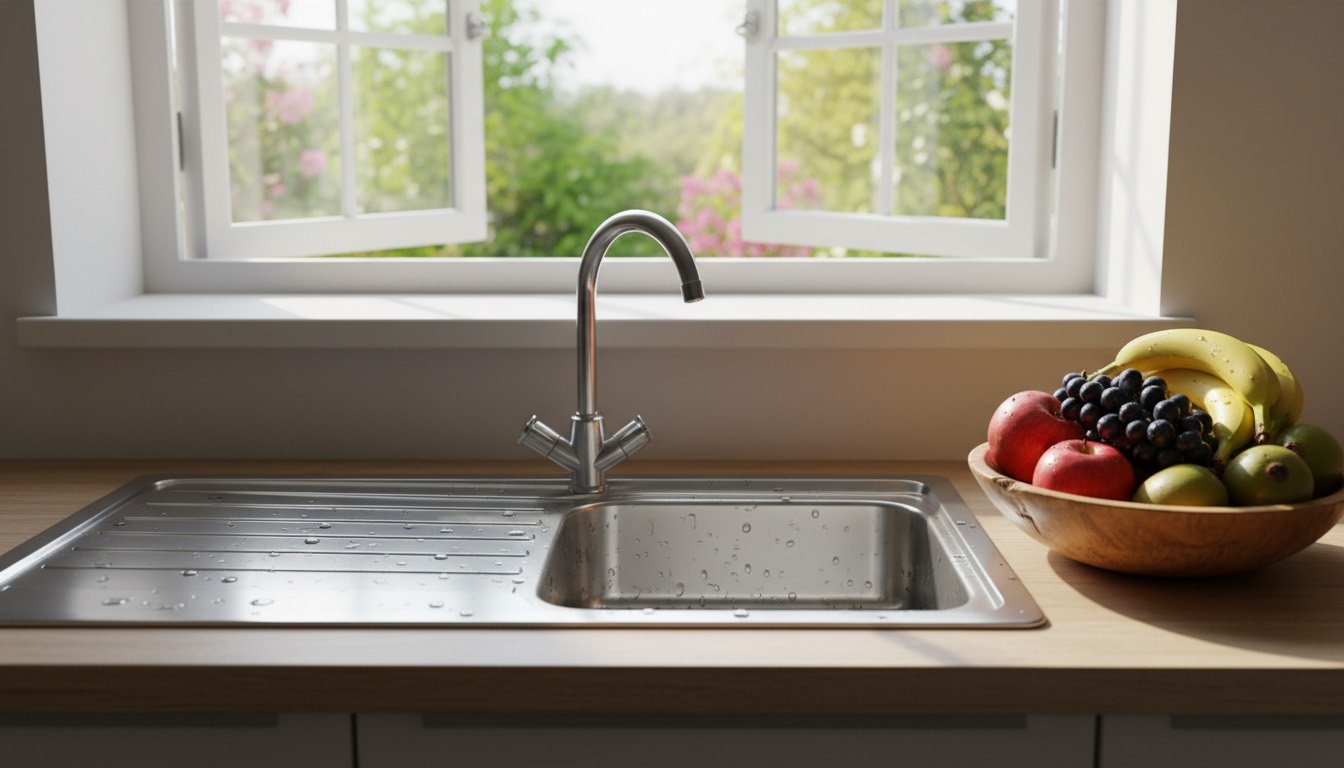
Nothing empties a kitchen faster than a cloud of tiny flies rising off the fruit bowl or drifting up every time you run the tap. Most people assume it's one problem and reach for a spray, then wonder why the flies are back within a week. In reality you're almost certainly dealing with one of three different insects, each with its own breeding ground — and the spray that kills the flying adults does nothing to the nursery producing the next generation.
This guide covers how to tell fruit flies, drain flies and house flies apart in under a minute, the specific eviction method for each with realistic UK prices, and the habits that stop the cycle restarting once the current cloud has cleared.
Identify Your Fly First: Look, Location and Behaviour
Treating the wrong species is the biggest reason kitchen flies 'keep coming back' after a clean and a spray. Check colour, size and where they rest before doing anything else:
- •Fruit flies: small, tan or orange, red eyes, hovering low around the fruit bowl, recycling bin or wine glasses.
- •Drain flies (moth flies): tiny, dusty grey and fuzzy, with a moth-like wing shape. Weak fliers that rest on tiled walls near the plughole.
- •House flies and bluebottles: noticeably larger, noisy, fast fliers that bump against windows. Breed in bins, pet waste, or — if the swarm is sudden and indoors — something a rodent has left behind.
- •Cluster flies: similar size to house flies but slower, typically massing at windows in autumn rather than a summer kitchen sink — a different problem entirely.
Fruit Flies: Remove the Breeding Site, Then Trap the Rest
Fruit flies lay eggs directly in anything sweet and fermenting, so a spray only removes the adults you can see:
- •Bin overripe fruit, clear the fruit bowl for a week, and check the vegetable rack for a forgotten potato or onion turning soft.
- •Rinse recycling before binning it — fruit flies breed happily in sugary dregs left in beer cans and wine bottles.
- •Wipe the bin lid, worktop and any sticky rings left by jars; the eggs need only a sugary film.
- •Set a trap: cider vinegar in a glass, one drop of washing-up liquid, clingfilm lid with pinprick holes. Flies climb in and can't climb out.
- •Leave the trap 48 hours and set a fresh one if flies persist — one trap rarely catches everything first time.
Drain Flies: Treat the Biofilm, Not Just the Flies
Drain flies breed in the biofilm — the slimy organic gunk lining a drain that everyday use never quite flushes clean. Killing the visible flies does nothing while that film stays put:
- •Scrub the visible plughole and overflow with an old toothbrush or narrow bottle brush.
- •Use a drain snake or flexible brush to pull gunk from the first 30cm of pipe, where most of the biofilm sits.
- •Follow with an enzyme drain cleaner rather than bleach — enzymes digest the organic film feeding the larvae, while bleach mostly disinfects the surface. Repeat several nights running.
- •Pour boiling water down afterwards as a follow-up, not a fix alone — it only ever gives temporary relief.
- •Fix any slow-draining sink or shower: standing water is exactly the still, damp environment larvae need. See how to unclog a sink drain and chemical vs enzyme drain cleaners for which product suits which blockage.
House Flies and Bluebottles: Cutting Off the Outdoor Source
House flies and bluebottles breed outdoors — bins, pet waste, compost, a carcass — then come inside chasing food smells or light. Fix the source, not the fly:
- •Fit bin lids that seal properly and wash bins out every few weeks; see the wheelie bin cleaning guide.
- •Pick up pet waste daily in warm weather — a single pile can support several generations within a week.
- •Fit fly screens on any window left open through summer — cheap, underrated, and standard practice across much of Europe.
- •A sudden, persistent indoor swarm with no obvious bin source is a strong sign of a dead rodent in a wall void or loft; the smell usually confirms it within a day or two.
Tools, Traps and Treatments: What They Cost in 2026
Most fly problems are solved with items already in the kitchen, but here's what to budget for from scratch:
- •Cider vinegar for DIY traps: around £1–£2, enough for several traps.
- •Enzyme drain cleaner: typically £4–£9 per bottle; budget two or three treatments for a stubborn drain.
- •Flexible drain-cleaning brush or hand-cranked drain snake: around £5–£12, reusable indefinitely.
- •Fly screens for windows: roughly £8–£25 per window, fixed frame or adhesive mesh.
- •UV electric fly killer or sticky traps: £15–£40, best used once the breeding site is under control.
- •Professional drain jetting, if biofilm is beyond a DIY brush: see how much drain cleaning costs.
Common Mistakes That Keep Flies Coming Back
A few habits explain most 'the flies came back' complaints:
- •Spraying the flying adults and stopping there — the breeding site keeps producing more within days.
- •Using bleach on drain flies and assuming a fresher smell means it's worked — bleach barely touches the biofilm underneath.
- •Leaving a slow drain unfixed because it 'still empties eventually' — see preventing clogged drains.
- •Treating fruit flies without checking the fruit bowl, bread bin or vegetable rack — one forgotten item can outproduce several rounds of trapping.
- •Ignoring a persistent bluebottle swarm as 'just flies' when it can signal a dead rodent — check voids if mice or other rodents have been active nearby.
When to Call a Professional
Most fruit fly and drain fly problems clear within days of proper treatment. Call a pest controller or plumber if drain flies persist after two rounds of cleaning and enzyme treatment (a deeper blockage may be feeding it), if a house fly swarm keeps returning with no obvious source (often an inaccessible carcass or nest), or if flies appear alongside droppings or gnaw marks, in which case a wider pest-proofing check is worth doing too. A one-off callout is generally cheaper than months of repeat DIY — see how much pest control costs.
Frequently asked questions
**Why do I keep getting fruit flies even though I don't leave fruit out?** They only need a trace of fermenting sugar — check bin juice, the recycling box, empty juice bottles and drips behind the bin. A single sticky patch sustains a small population.
**Are drain flies a sign my pipes are dirty or actually broken?** Almost always dirty rather than broken — they breed in biofilm that builds up in any drain over time. It only signals a bigger problem if the drain is also slow or gurgling.
**Can I use bleach to get rid of drain flies?** It disinfects but barely breaks down the biofilm feeding the larvae, so flies often reappear within a week. An enzyme cleaner used on consecutive nights is more reliable.
**How long does a vinegar trap take to work?** Most kitchens see a drop within 24 hours and the trap clears fully within 48, provided the breeding site is also removed.
**Do fly screens actually make a difference in a UK home?** Yes — an underused fix here despite being standard elsewhere. A mesh screen on any open summer window stops flies entering in the first place.
**Is a sudden indoor swarm always a sign of a dead animal?** Not always, but a cluster with no obvious food or bin source nearby, especially with an unpleasant smell, is one of the more reliable signs of it.
Found this useful?
There's plenty more — hundreds of guides and honestly-tested product reviews for every corner of your home.
Browse All Guides