Organisation & Storage · 6 min read · 14 August 2026
Build a Hallway Drop Zone Before September: Bags, Shoes and Sanity
One hook per child, one shelf for tomorrow, one rule for muddy shoes. A professional organiser's plan for a hallway drop zone that survives the British school run.
By the Nims Casa editorial team — written from professional cleaning experience and checked against our editorial standards.
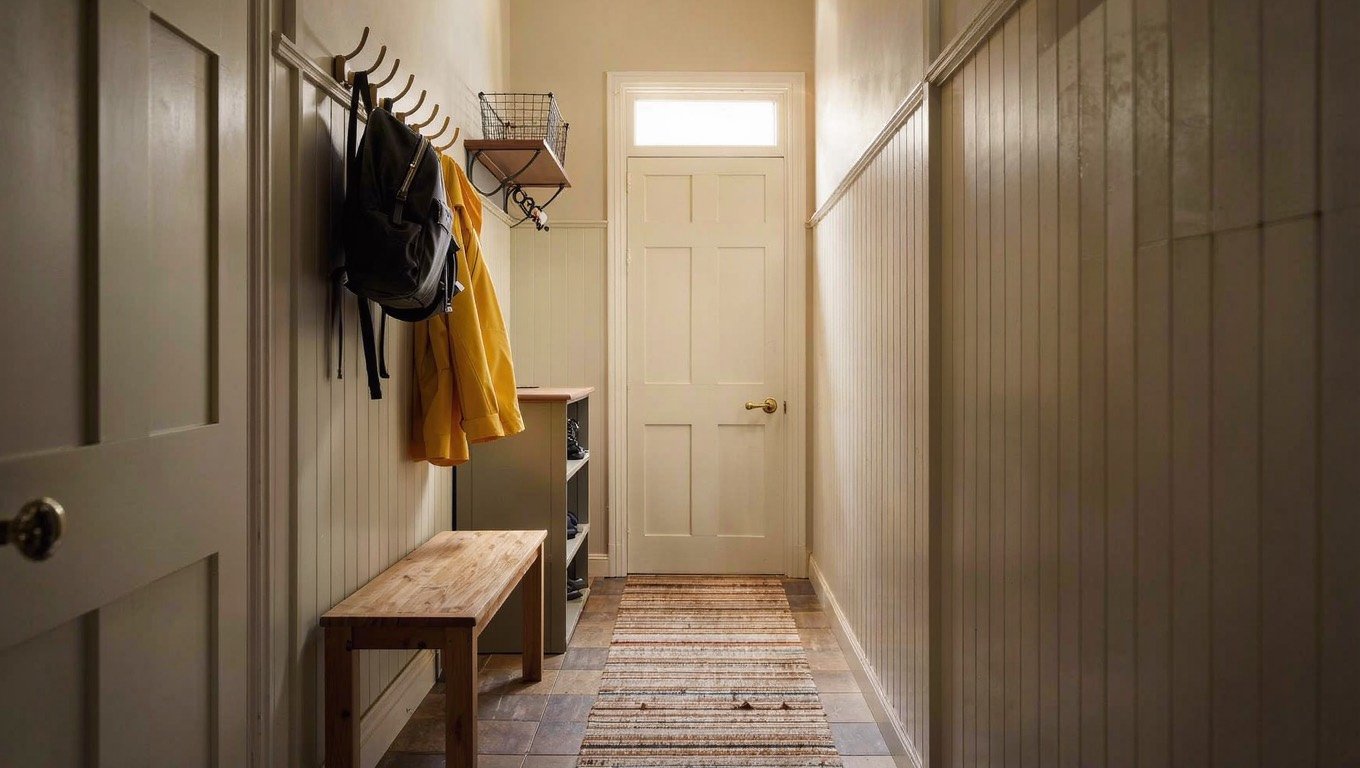
Every September the same scene plays out: one school shoe missing, a PE kit still in the wash, a permission slip buried under yesterday's post, and a child who has chosen this exact moment to need the toilet. After fitting out dozens of hallways in terraces and semis, I can tell you the fix is rarely more discipline. It is a drop zone — a metre or two of wall by the front door that catches everything on the way in and hands it back on the way out.
You do not need a boot room or an American-style mudroom. Most UK hallways are 85–100cm wide, and the best drop zones I have built live almost entirely on the wall. Here is how to plan one before term starts, what it costs at £50 and at £200, and exactly which fixing jobs are worth handing to a professional.
Start With the Four Zones
A drop zone fails when everything shares one overloaded hook. Divide the wall into four zones and give every item a single home. Before you fit anything, declutter the hallway ruthlessly — out-of-season coats upstairs, outgrown shoes to the charity bag. A drop zone organises what the family uses this term, not everything it owns. If the whole house needs the same term-time reset, our back-to-school home organisation guide extends the method beyond the hallway.
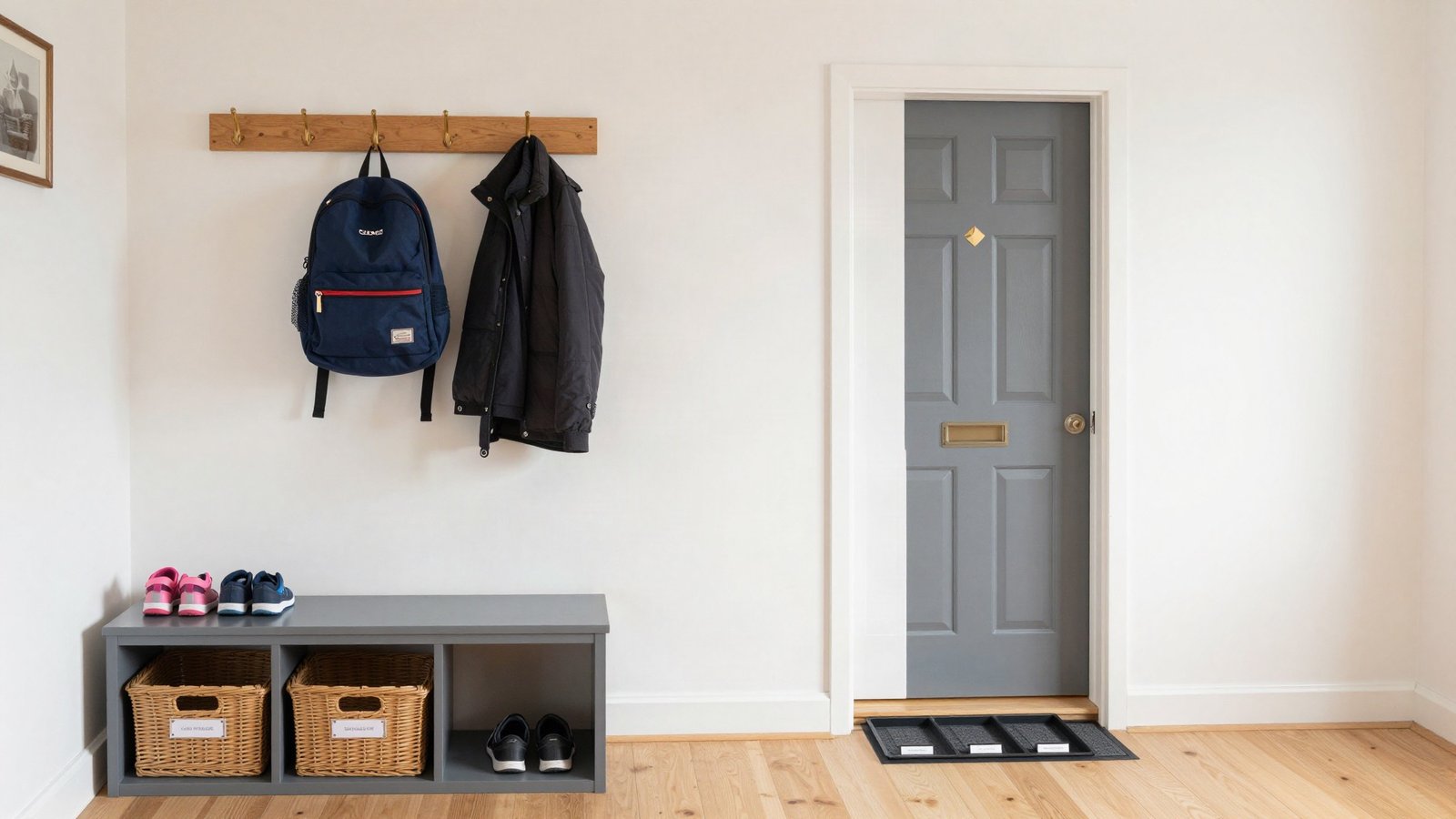
- •Shoes: one pair per person by the door, the rest elsewhere. A two-tier rack holds eight pairs in 60cm of wall.
- •Bags: one hook per child, fitted low enough to reach. School bags dumped on the floor is where mornings go to die.
- •Coats: two hooks per person maximum — current coat plus waterproof. More hooks just means a bigger pile.
- •Paperwork: one wall-mounted file or tray for letters, slips and forms. Empty it every Sunday evening, without fail.
Hooks at Child Height, One Name Per Hook
The single biggest upgrade is fitting hooks children can actually reach. Adult hooks sit at 150–170cm; a five-year-old cannot use them, so the coat lands on the floor. Fit children's hooks at 90cm for infants, 110–120cm for juniors, and move them up as they grow. Label each hook with a name or a colour and the arguments stop, because "that's my hook" is a rule children enforce themselves.
The fixing matters more than the hook. On plasterboard, a bare screw in a cheap plug will pull out the first time a wet winter coat and a 4kg school bag land on it — a loaded hook can take a 10kg shock load. Use a heavy-duty plasterboard fixing rated to at least 20kg per hook, or better still screw into timber — find the stud by tapping and probing rather than guessing. On brick or block, a 6mm masonry bit, a brown wall plug and a 5x50mm screw will outlast the house.
The Launch-Pad Shelf
The trick that actually saves mornings is not storage — it is staging. Fit one shelf at adult chest height and make it the launch pad: everything needed for tomorrow goes on it tonight. Signed forms, keys, bus passes, the recorder for Tuesday's music lesson. Ten minutes each evening loads it, and the morning becomes grab-and-go. A 60x20cm shelf is plenty — build a simple floating shelf or buy one from about £8 at B&Q. Add one small basket per child so it never becomes a dumping ground.
Narrow-Hallway Ideas That Actually Fit
A comfortable passing width is around 90cm, and a standard 40cm-deep hall bench swallows half of a terraced hallway. In narrow Victorian and Edwardian houses the answer is vertical, slim, or both. There are more tricks for tight spaces in our small-space storage guide, but these are the proven hallway winners:
- •Wall-hung slim shoe cabinets: IKEA's TRONES units are 18cm deep, hold four to six pairs each and stack three high in a metre of height — using almost no floor at all.
- •A bench no deeper than 26cm: enough to sit and do laces, shallow enough that the pram still gets past.
- •Go up, not along: hooks at three heights — child, adult, guest — triple the capacity of the same metre of wall.
- •The back of the front door: an over-door rack takes hats, gloves and the dog lead with zero drilling.
- •Under-stairs overflow: out-of-season coats and spare shoes live there, never in the drop zone itself.
The Muddy-Season Mat Strategy
From October to March a UK hallway is a mud-management system. Run two mats: a ridged rubber scraper mat outside the door and an absorbent washable mat inside — coir looks traditional but sheds constantly and cannot be machine-washed. Inside, a 120x67cm washable runner (Turtle Mat and Hug Rug both make good ones, £30–£60) catches the first three steps, where most tracked-in dirt lands. Wash it fortnightly in season. Add an £8–£12 boot tray for wellies and enforce one hard rule: muddy footwear stops at the tray. No exceptions, including yours. The full autumn version of that defence — mats, trays and a two-minute routine — is in stopping mud, leaves and grit indoors.
The £50 Build vs the £200 Build
Most of the money in a drop zone goes on seating and shoe cabinets; hooks and trays are cheap. Both of these builds work — the difference is looks and lifespan, not function. Whatever you spend, measure the wall before buying anything: storage bought before measuring tops our list of home organisation mistakes.
- •£50 build: two four-hook rails (£16, Dunelm), a stacking shoe rack (£12, Argos), a wall file for paperwork (£6), a boot tray (£8) and name labels (£3). Around £45 all in, fitted in an afternoon.
- •£200 build: a wall-hung shoe cabinet (£70–£90), a slim bench with baskets under it (£60–£80), individual named hooks (£20), a floating launch-pad shelf (£15) and a washable runner (£35). Closer to £220 done properly.
- •Where money gets wasted: hall benches deeper than 30cm, novelty hooks with no load rating, and paperwork sorters with more than two slots — nobody files anything at 8am.
What You Can DIY — and When to Call Someone In
Nearly all of this is honest DIY. Anyone with a decent cordless drill, a spirit level and the right fixings can fit hooks, rails, shelves and wall-hung cabinets in a weekend. Two habits keep it safe: run a cable-and-pipe detector over the wall before every hole, and respect the safe zones — cables run vertically and horizontally from every socket and switch, so never drill directly above, below or beside one without checking first.
Stop and bring in a professional in three situations. Anything electrical — moving a socket, adding a light over the bench — needs a qualified electrician, and notifiable work in England and Wales falls under Part P of the Building Regulations. Heavy fixed seating or full-height cabinetry on a lath-and-plaster wall in an older house may need battening out first, which is a carpenter's call. And if drilling reveals crumbling brick, soft damp plaster or a musty smell behind the skirting, stop — you have found a damp problem worth diagnosing before you hang a family's worth of wet coats over it. A handyperson charges £40–£60 an hour and will fit the entire drop zone in two to three hours if you would rather not drill at all.
Found this useful?
There's plenty more — hundreds of guides and honestly-tested product reviews for every corner of your home.
Browse All Guides