Kitchens & Bathrooms · 6 min read · 11 July 2026
How to Clean Grout (Floors & Walls) Without Wrecking It
Grout is cement — porous, alkaline and easily ruined by the wrong acid. The methods that brighten it, and the point where painting beats scrubbing.
By the Nims Casa editorial team — written from professional cleaning experience and checked against our editorial standards.
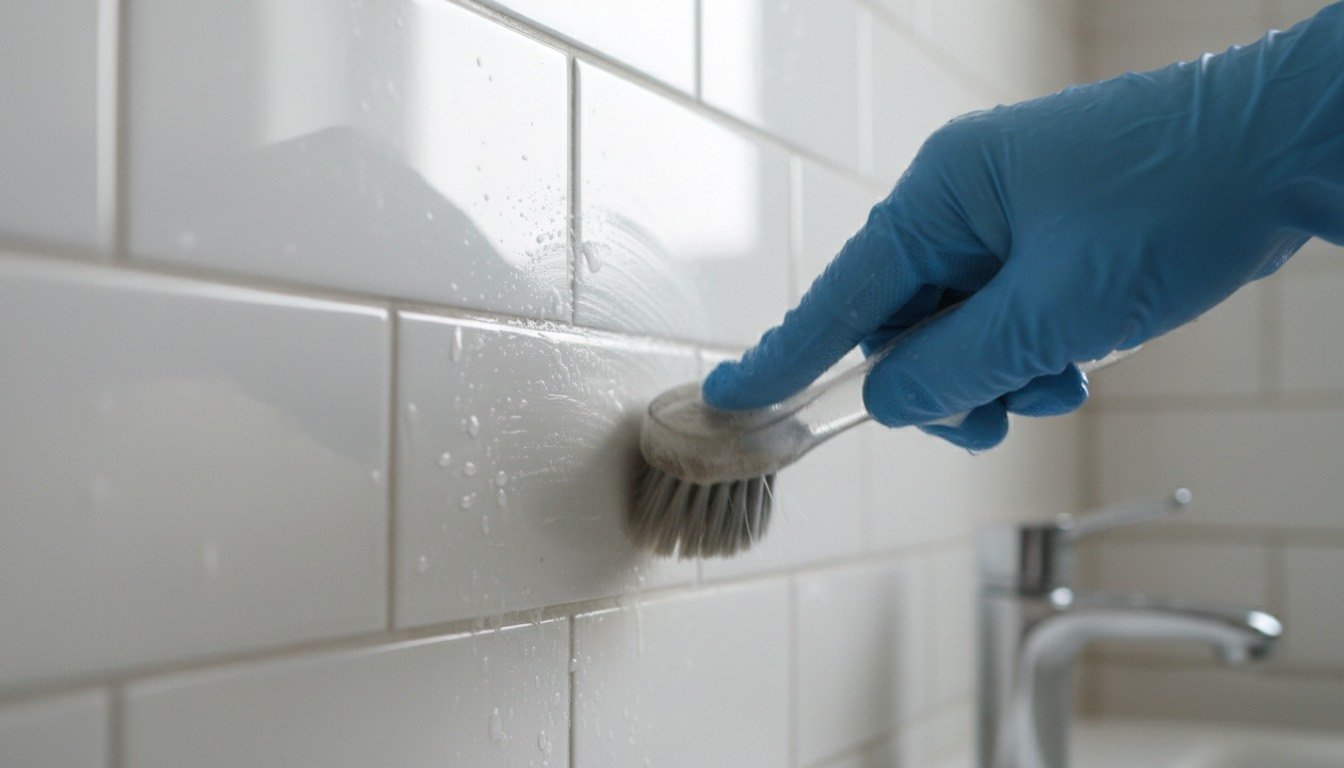
Grout starts as the neat frame around your tiles and slowly becomes the grey grid that makes a clean bathroom or kitchen floor look dirty, however hard you scrub the tiles themselves. The problem isn't the tiles — it's the grout: cement-based grout is porous and alkaline, and it happily soaks up soap scum, body oils, cooking grease and mop water long after the surrounding tile has been wiped clean.
The good news is that most grout discolouration is dirt rather than permanent staining, and it responds well to the right chemistry and a bit of elbow grease. The bad news is that the products many people reach for first — neat vinegar, limescale gel, a wire brush — are exactly what damages grout permanently, turning a cleaning job into a re-grouting job.
This guide covers the method professional cleaners actually use, the tools worth buying, where steam cleaners help, how to tell mould from ordinary dirt, and the point at which scrubbing stops working and re-colouring or sealing becomes the honest answer.
Tools and materials you'll actually need
For most bathrooms and kitchen floors you need surprisingly little kit.
- •Oxygen bleach powder (sodium percarbonate, sold as 'Oxi' stain removers) — around £4–£8 for a 500g–1kg tub, enough for several sessions
- •A stiff grout brush or an old toothbrush — £2–£5, or free if you're repurposing one you already own
- •Rubber gloves and a small bucket for mixing paste — under £5 combined
- •Microfibre cloths for rinsing and buffing dry — around £5–£8 for a pack of five
- •A dedicated bathroom mould remover for black-spotted grout — £3–£6 a bottle
- •A grout sealer once the lines are clean — £8–£18, enough to cover a bathroom floor and a shower enclosure
- •Optional: a steam cleaner with a narrow nozzle attachment for wall grout and larger jobs — steam mops start around £40 and run to £120 for higher-output models
Step-by-step: the oxygen bleach method that works
This is the method that lifts grime without attacking the cement itself, and it works on both floor and wall grout.
- •Clear the area and vacuum or sweep loose dust off the tiles first, so you're not grinding debris into the grout as you work.
- •Mix oxygen bleach powder with warm water to a thick paste — roughly the consistency of toothpaste — following the ratio on the tub.
- •Apply the paste along the grout lines with an old brush or spare grout float, working in sections of about one square metre at a time.
- •Leave it to work for 15–30 minutes, keeping it damp; on stubborn runs, press cling film over it so the paste doesn't dry out too soon.
- •Scrub along the line with a stiff grout brush or toothbrush, using real pressure rather than a light polish — the result comes from the scrubbing, not the soaking.
- •Rinse thoroughly with clean water and a cloth, then wipe dry so you can see how much colour has genuinely lifted.
- •Repeat on stubborn sections rather than reaching for a stronger chemical — oxygen bleach is safe to reapply, unlike acid-based cleaners.
Steam cleaning and mould-spotted grout
Steam cleaners earn their keep on wall grout, where heat loosens grime that a paste struggles to hold in vertical lines. Keep steam away from silicone seals and any cracked or missing grout, though — forced moisture can get behind the tile and cause damp underneath rather than cleaning anything.
Mould-spotted grout, common around showers and baths, needs a different first step: treat it with a dedicated mould and mildew remover before scrubbing, because black spotting is biology growing in the pores, not surface dirt. Our guide to removing mould from bathroom grout covers the full routine, including how to stop it returning.
What ruins grout — mistakes worth avoiding
- •Acidic cleaners: descalers and neat vinegar dissolve cement grout the same way they dissolve limescale in a kettle — the wall just can't be descaled back to new. If limescale on tiles or screens is the actual target, follow a limescale removal method built to protect grout rather than strip it.
- •Wire brushes and abrasive scourers: these gouge the grout surface, opening up pores for dirt to sink into next time, so the line looks worse again within weeks.
- •Dirty mop water: a mop that isn't rinsed deposits its grey load into every grout line it crosses, which is why kitchen floor grout darkens fastest along traffic lanes. Rinse the bucket more often, or switch to washable flat microfibre pads.
- •Cleaning over cracked grout without checking it: pushing paste into a line that's already crumbling forces moisture behind the tile. If lines are breaking up rather than just discoloured, see why grout cracks before continuing to clean it.
When cleaning isn't enough: re-colouring, sealing and re-grouting
Deeply stained, decades-old grout sometimes won't scrub back, because the staining runs all the way through the cement rather than sitting on the surface. At that point, grout pens and paint-on revivers are a legitimate answer: they recolour the line and seal it in one pass, and a careful application lasts a couple of years before it needs doing again.
For grout that's freshly cleaned, or new after a retile, a spray-on grout sealer closes the pores that caused the discolouration in the first place — roughly an hour's work for a bathroom, and it halves the effort of every future clean. Reseal shower surrounds annually; floor grout in drier rooms can often go two to three years between coats.
If grout is missing chunks or was mixed wrong when the tiles went in — a common DIY tiling issue — no amount of sealing fixes it, and it's a re-grouting job. Worth knowing first: sanded and unsanded grout aren't interchangeable, and if the line borders a bath, check the silicone sealant too, since the two usually fail together.
When to call a professional
Most grout is a DIY job, but a specialist earns their fee when staining is extensive across an entire floor and re-grouting whole areas beats line-by-line scrubbing; when tiles are natural stone such as marble or slate, where the wrong cleaner etches the tile itself; when black mould keeps returning despite treatment, a sign of an underlying damp problem rather than a cleaning one; or when grout sits over underfloor heating or a wet-room membrane, where DIY re-grouting risks the waterproofing beneath it. Expect roughly £150–£350 for a professional deep clean and reseal of an average bathroom, more if re-grouting is needed.
Frequently asked questions
How long does grout take to dry after cleaning? Most lines are touch-dry within a couple of hours in a ventilated room, but leave 24 hours before sealing and 48–72 hours before showering heavily over floor grout, so trapped moisture has time to evaporate.
Can I use bleach spray instead of oxygen bleach powder? Chlorine bleach spray works on surface mould but does little for ingrained grime and can bleach coloured grout patchily; oxygen bleach paste sits on the line long enough to actually lift dirt on both white and coloured grout.
Does baking soda and vinegar clean grout safely? Vinegar is an acid and will etch cement grout with repeated use, even diluted, so it's best avoided as a routine method — oxygen bleach paste does the same brightening job without the risk.
Why does my grout go dark again within weeks of cleaning? Unsealed grout is porous, so it reabsorbs dirt from mop water, shower spray or bare feet almost immediately; sealing straight after cleaning is what makes the result last.
Is coloured grout cleaned the same way as white grout? Yes — oxygen bleach paste is colour-safe, though it's worth testing a small hidden area first if the grout is a bold or dark shade.
Can I just paint over grout instead of cleaning it? Grout pens and paint-on revivers are designed for exactly this and suit grout that's stained all the way through, but they work best over grout that's already been cleaned and dried, not over grease and soap scum.
Found this useful?
There's plenty more — hundreds of guides and honestly-tested product reviews for every corner of your home.
Browse All Guides