Cleaning Guides · 6 min read · 2 July 2026
How to Clean an Oven Properly (The Method End-of-Tenancy Cleaners Use)
The oven is the single most-failed item on end-of-tenancy inspections. Here's the professional method that gets it done in an evening, not a weekend.
By the Nims Casa editorial team — written from professional cleaning experience and checked against our editorial standards.
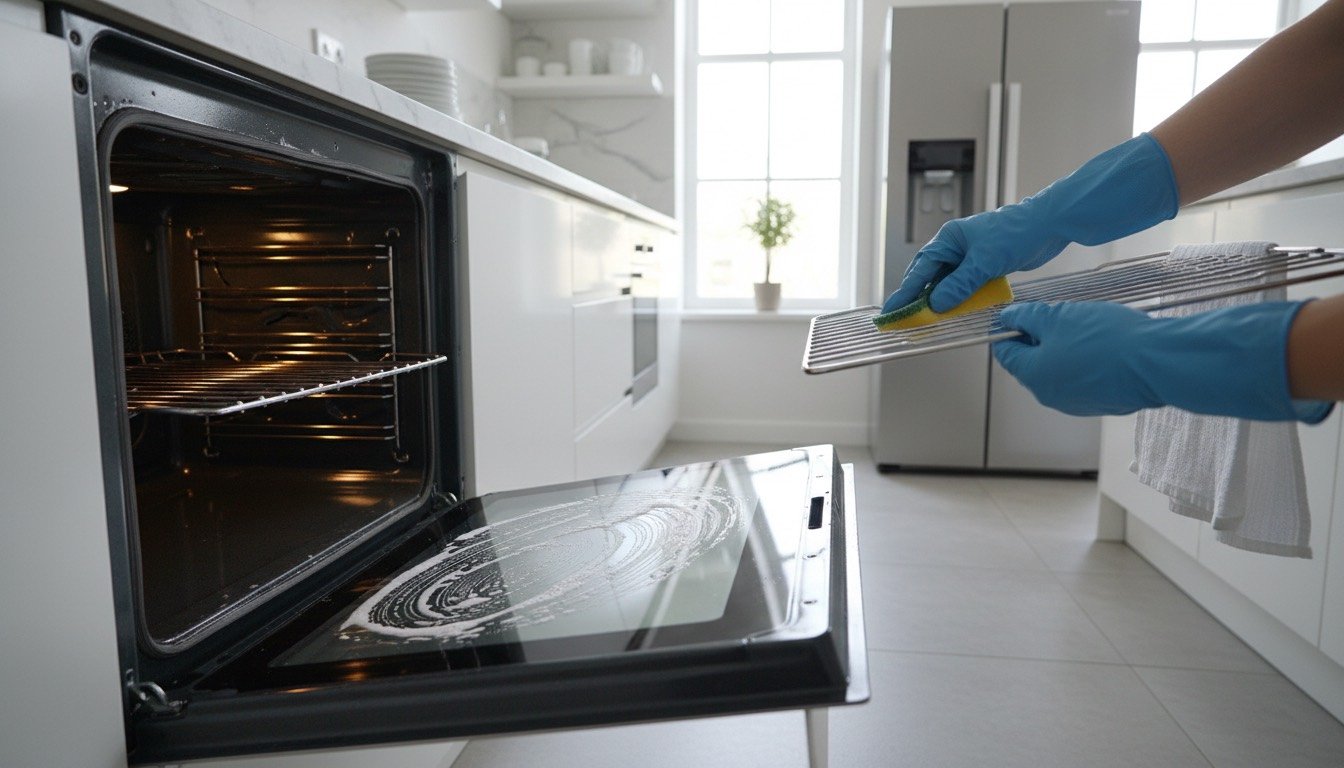
Ask any end-of-tenancy cleaner which room lets tenants down hardest and the answer is almost always the oven. Letting agents check it first, torch in hand, because burnt-on grease is easy to spot and hard to fake. A genuinely filthy oven doesn't need a weekend and a bottle of elbow grease — it needs the right method and a bit of patience.
Professional cleaners rely on dwell time rather than scrubbing strength: the right product left to work overnight breaks down carbon that no scouring shifts cold. This guide covers the overnight soak method, the glass door where brown haze collects, which panels and products should never meet on self-cleaning ovens, the mistakes that ruin a liner, and the habit that keeps you out of this situation again.
If you're cleaning for a deposit return rather than your own peace of mind, it's worth knowing exactly what a landlord can and can't charge for first — a genuinely clean oven can save a deposit on its own.
What You'll Need (And What It Costs)
Most of this is already under the sink; the rest costs a few pounds at the supermarket.
- •Gel oven cleaner — around £4–£8, enough for two or three cleans
- •Biological washing powder — a couple of tablespoons for the rack soak; a box costs £3–£4 and lasts months
- •Heavy-duty bin bags — £2–£3 a roll, to seal the racks overnight
- •A non-scratch scourer — under £2, the only abrasive tool safe on enamel
- •Rubber gloves — £1–£2; oven gel is caustic and irritates skin
- •Bicarbonate of soda — about £1, used as a paste on the glass
- •A blade-style glass scraper — £4–£6, for carbon spots no cloth will shift
- •Microfibre cloths — a pack of ten is around £5, for the daily wipe-down habit
- •Old towels to protect the floor while the racks soak
The Overnight Soak Method, Step by Step
- •Evening: remove the racks and trays. Seal them in a heavy-duty bin bag with a couple of tablespoons of biological washing powder dissolved in a kettle of hot water, or use a purpose-made rack soak bag. Leave it in the bath or garden overnight — the enzymes do the work while you sleep.
- •With the oven cold, apply gel cleaner generously to the interior walls, ceiling and floor. Keep it away from the fan opening, the element and any rough, matte grey panels — those are catalytic liners, and gel cleaner strips the coating permanently.
- •Close the door and leave the gel for at least four to six hours. Don't add heat — most gel cleaners work cold and can give off stronger fumes if warmed.
- •Morning: wipe the loosened carbon away with a non-scratch scourer and warm water, working top down so drips land on areas you haven't cleaned yet. Stubborn patches need a second short application, not more pressure.
- •Rinse the racks under the tap — the soak means a sponge and a rinse is all they need, saving close to an hour of scrubbing.
- •Finish by wiping the rubber door seal with a damp cloth, since trapped grease there causes a burning smell on the next bake even in an otherwise clean oven.
Getting the Glass Door Properly Clean
Most oven doors come apart in a few minutes — usually two clips or screws along the top edge — letting you reach between the panes where brown haze builds up over years of roasting. Check the manual first, as some models differ. Once inside, a paste of bicarbonate of soda and water, left for ten minutes, lifts baked-on grease from the inner glass without scratching. For the outer glass, a blade-style scraper held at a shallow angle shaves off carbon spots no spray touches — wet the glass first and use light, even pressure.
What Never to Do to an Oven
Never use caustic gel on catalytic liners — the rough, matte grey panels fitted to some ovens are designed to burn off grease at cooking temperature, and any cleaning product strips the coating for good, meaning the panel needs replacing. Never spray cleaner directly onto the fan or the exposed element; overspray can damage its coating and create fumes when the oven is next switched on. And never mix an acidic descaler with a caustic oven gel in a closed space — the reaction gives off fumes with no place in a kitchen. If your oven has pyrolytic self-cleaning, skip the manual clean and run the built-in cycle instead — that's what it's for — then wipe away the ash once cool.
Common Mistakes That Turn a One-Evening Job Into a Ruined Oven
- •Scrubbing a hot oven — burns are the obvious risk, and heat makes some gel cleaners release stronger fumes.
- •Using a metal scraper or scourer on enamel — every scratch becomes a place for grease to cling next time.
- •Forgetting the door seal and hinges — grease trapped in the rubber gasket causes new bakes to smell burnt even after a thorough clean.
- •Not protecting the floor — gel cleaner drips and marks vinyl or laminate if it isn't caught with an old towel first.
- •Treating every panel the same — check for a catalytic liner before reaching for gel cleaner, not after.
- •Repeating wider cleaning mistakes that damage a home, like grabbing whatever tool is already in the cupboard instead of the right one.
When to Call a Professional Oven Cleaner
A professional oven clean typically costs £40–£90 depending on size and neglect — in line with a single professional house clean more broadly. It's worth booking one before a tenancy handover if you're short on time, the oven hasn't been touched in years, or you'd rather not handle caustic chemicals. Professionals carry dip tanks that soak racks, trays and door glass in a solution far stronger than anything sold for home use, which is why they strip years of build-up in one visit. Short of that, the overnight method above gets a domestic oven looking new.
Keeping It Clean: The Thirty-Second Habit
While the oven is still warm — not hot — after cooking, a quick wipe with a damp microfibre cloth stops most spills bonding to the enamel. A reusable liner or a sheet of foil on the oven floor catches drips before they burn on, and goes straight in the dishwasher or bin. Build this into the same routine as deep-cleaning the kitchen or wiping down small appliances — a thirty-second habit after each roast means your next deep clean is months away. The same logic applies to the fridge: little and often beats one dreaded session, and a decent all-purpose cleaner under the sink makes it quick enough that you'll actually do it.
Frequently asked questions
**How long does the overnight method take?** About ten minutes of active work in the evening to apply the gel and bag the racks, and fifteen to twenty minutes the next morning to wipe down and rinse — the rest is dwell time, not effort.
**Can I use oven cleaner on a self-cleaning oven?** Only if it's pyrolytic, meaning it has a high-heat burn-off cycle — run that instead. If it's catalytic, with rough, matte grey panels, keep gel and caustic cleaners off those panels entirely; the glass and racks can still be cleaned as normal.
**Why does my oven smell burnt even after cleaning?** Almost always grease trapped in the rubber door seal or the channel the door glass sits in, both easily missed by a quick wipe-round. Clean the gasket with a damp cloth and check between the panes.
**Is bicarbonate of soda alone enough, without a shop-bought cleaner?** For light, regular maintenance, yes — a paste left for ten minutes handles everyday splatters. For carbon built up over months, a proper gel oven cleaner saves far more scrubbing time.
**How often should I deep clean my oven?** Every three to four months for a household that cooks most days, with the thirty-second warm wipe-down after roasts in between. Ovens used less often, or with a pyrolytic cycle, can stretch to twice a year.
Found this useful?
There's plenty more — hundreds of guides and honestly-tested product reviews for every corner of your home.
Browse All Guides