Organisation & Storage · 6 min read · 14 August 2026
Laundry Cupboard Organisation for Small UK Homes
The average UK 'utility room' is a 600mm cupboard. Here's how professionals zone, stack and ventilate one — including the detergent safety rules and the moisture warning most storage guides skip.
By the Nims Casa editorial team — written from professional cleaning experience and checked against our editorial standards.
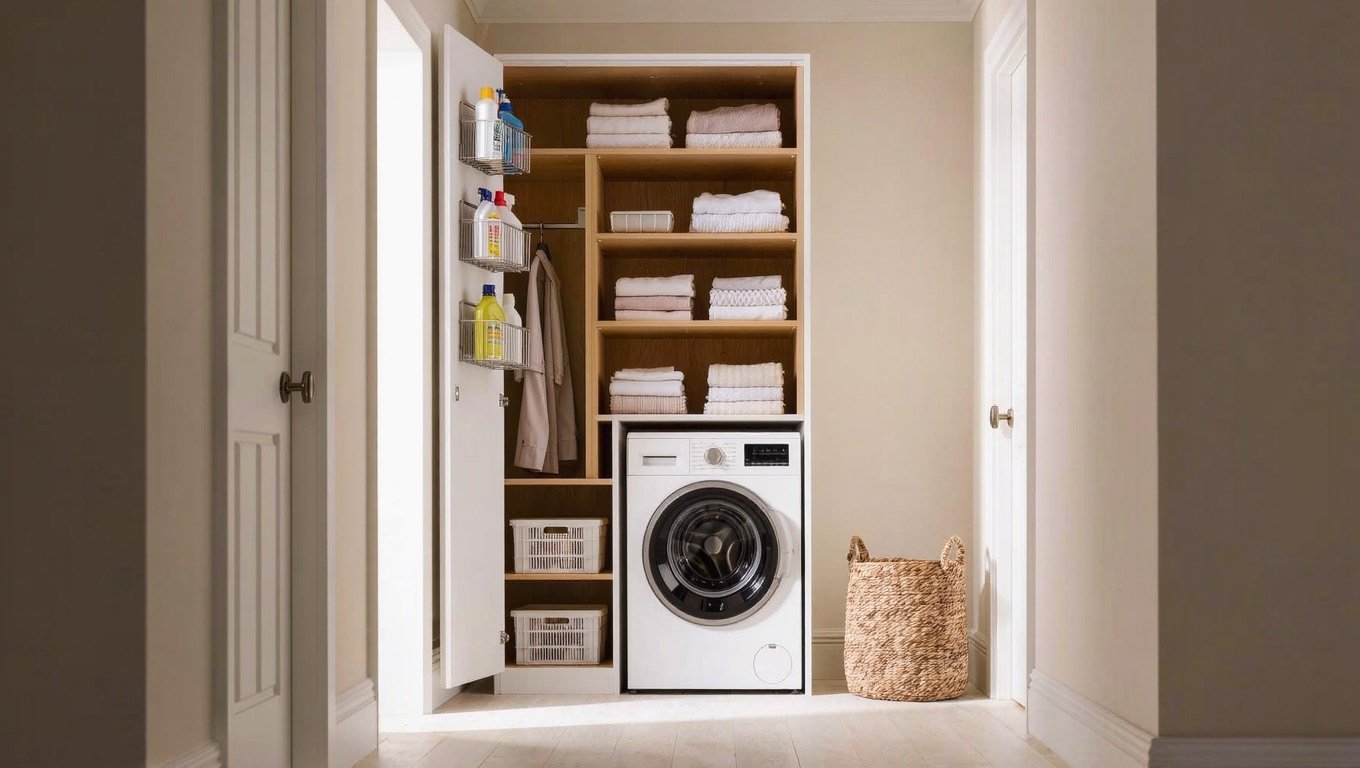
Most British homes never got the utility room the floor plan promised. What we have instead is a cupboard: the airing cupboard on the landing, an under-stairs void, or a 600mm alcove in the kitchen with a washing machine wedged into it. After fitting out dozens of these for clients, I can tell you the difference between a cupboard that works and one that avalanches every time you open the door is rarely more than £40 of hardware and an honest hour with a drill.
The ideas below are ordered the way I'd tackle the job myself: zone first, build upwards second, spend money last. Prices are realistic 2026 UK retail figures, and the safety points — detergent storage and drying moisture especially — are not optional extras.
Zone the Airing Cupboard Around What's Already There
An airing cupboard has one job before any others: letting warm air circulate around the hot water cylinder. So leave roughly 50mm of clear space around the cylinder, keep the pressure-relief pipework unobstructed, and never drape damp washing directly over the copper. If yours is an unvented cylinder it needs an annual service — don't build shelving an engineer will have to demolish to reach it.
Then zone by frequency, exactly as you would with kitchen cupboard organisation: spare duvets and out-of-season bedding on the top shelf, everyday towels and bed linen at eye level, laundry products in the bottom zone where a leaking bottle can't ruin fabric. Slatted shelves beat solid ones here because warmth rises through them — 44x21mm planed battens screwed at 25mm gaps cost about £15 per shelf from B&Q or Wickes and take an hour to fit.
Steal the Door and the Dead Height
Small cupboards fail because everything lives at one height on one deep shelf. The fixes are almost all vertical, and most suit renters:
- •Over-door rack (£8-15, Dunelm or Argos): holds sprays, brushes and pegs without a single screw.
- •Pegboard on the door back (£20-30 with hooks, IKEA's version is the benchmark): takes the lint roller, scissors and dustpan off the shelves entirely.
- •Slim rolling caddy, 12-15cm wide (£20-35): fills the gap beside the machine and holds every bottle at ankle height where spills don't matter.
- •Tension rod (£6-12) fitted high across the cupboard: an instant hanging rail for shirts straight off the airer.
- •Stackable vented crates (£4-8 each) instead of solid baskets: airflow matters in a warm cupboard, and vented sides stop that musty smell solid wicker traps.
Decanting Detergents: Pretty, But Follow the Rules
Decanted jars of powder look wonderful and I use them myself, but detergent is a hazardous product and the rules matter. Keep the original packaging — the label carries the dosing instructions and the first-aid information required under CLP regulations, and A&E will want to know what is actually in the product, not what your chalk pen says. Never decant into anything that once held food or drink; a squash bottle of pink liquid is precisely how young children get poisoned.
Liquid capsules stay in their original child-resistant tubs, full stop — they sit behind thousands of calls to the National Poisons Information Service every year, most involving under-fives. If the lower shelves are within a toddler's reach, fit magnetic child locks (£6-10 for four from Screwfix) and keep everything except towels above 1.2m. Label decanted jars with contents and dose, and date them: powder clumps after about six months in a warm cupboard.
Stacking Machines: Double the Capacity, Same Footprint
If the footprint takes one machine it can usually take two. A universal stacking kit with a pull-out shelf costs £25-45 and bolts a tumble dryer on top of the washer — always the dryer on top, never the reverse, and check the two machines' depths match within a couple of centimetres. Inside a cupboard, choose a condenser or heat pump dryer unless you can duct a vented model through an outside wall; a heat pump machine also uses roughly a third of the electricity, around 50p a full load at current rates against £1.30-1.50 for an ageing condenser.
Two cautions from experience. Leave at least 25mm of air gap at the sides and rear or the dryer will overheat and cut out mid-cycle. And if the cupboard needs a new socket, that is an electrician's job: a new circuit is notifiable under Part P of the Building Regulations in England and Wales, all wiring must meet BS 7671, and neither machine should ever run from a trailing extension lead tucked behind the units.
Drying in a Cupboard Without Growing Mould
A single load of washing releases up to two litres of water as it dries. Trap that inside a closed cupboard and it condenses on the coldest surface — usually the back wall — and mould follows within weeks. If you dry anything in there, ventilation is not optional.
The cheap fix is a pair of louvre vents at about £5 each cut into the door, one high and one low, so air convects through. Better still is a slatted door, or simply leaving the door open with a dehumidifier working nearby — our guide to drying clothes indoors without damp covers the routine, and the best dehumidifiers for UK homes will pull a load dry overnight for pennies. If the cupboard backs onto an external wall, a humidity-sensing extractor fan (£40-80 plus £100-150 to fit) is the permanent answer.
Landlords should treat this as more than housekeeping. Under Awaab's Law, phased in for England's social housing from October 2025 and due to extend to private tenancies under the Renters' Rights Act, damp and mould hazards must be investigated and dealt with inside fixed timescales. An unventilated cupboard used for drying washing is one of the most common causes we're called to.
Budget Tiers: Where the Money Actually Goes
Spend in this order — each tier assumes the one before it is done:
- •Under £25: tension rod, over-door rack, two louvre vents, child locks and a chalk pen. This tier sorts safety and airflow before appearance.
- •£25-£100: stacking kit (£35), a slatted batten shelf (£15 in timber), slim rolling caddy (£25) and a door-back pegboard (£25). This is the tier that genuinely transforms capacity.
- •£100-£400: a full shelving refit in moisture-resistant MDF (£80-150 in materials — use the green-core board, not standard, anywhere humid), a humidity-sensing extractor supplied and fitted (£150-250), or made-to-measure slatted doors.
Labels, Systems and the Five-Minute Reset
Label by task, not brand — WHITES 40, STAIN KIT, DELICATES — so anyone in the house can run a load without an induction course, and if care labels still defeat the household, pin a copy of our laundry symbols guide inside the door. The same go-up-not-out principle behind all good small-space storage applies to maintenance too: a system you can reset in five minutes is one you'll keep.
So once a month: bin the empties, wipe the shelf fronts, restack the crates, and run the machine's 60°C maintenance wash while you're at it. A clean washing machine is the difference between a cupboard that smells of warm linen and one that smells of pond — and no amount of matching jars fixes the second.
Found this useful?
There's plenty more — hundreds of guides and honestly-tested product reviews for every corner of your home.
Browse All Guides