Laundry & Fabric Care · 6 min read · 30 June 2026
Laundry Symbols Explained: Every Washing Label Decoded (UK Guide)
Five symbol families run every care label on earth. Learn the system once — five minutes — and you'll never shrink another jumper.
By the Nims Casa editorial team — written from professional cleaning experience and checked against our editorial standards.
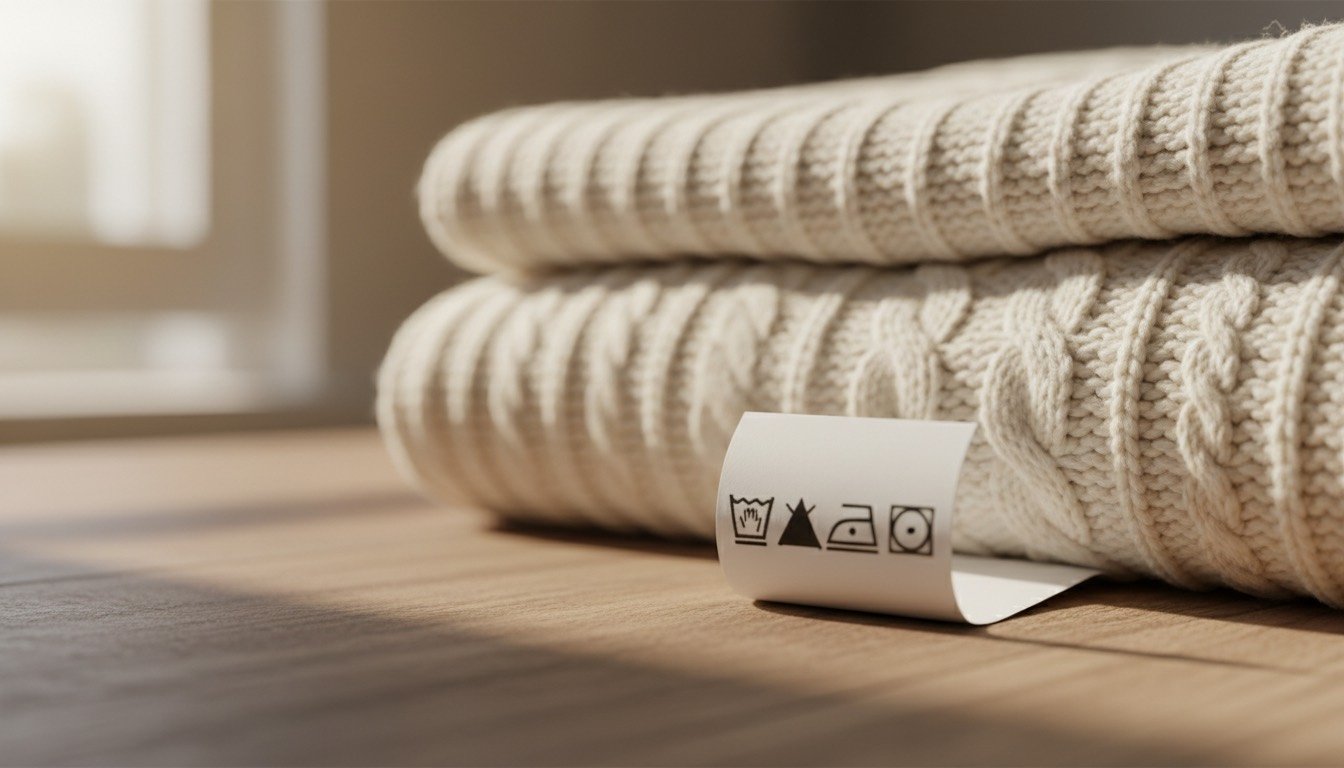
You're stood at the washing machine holding a jumper covered in dots, triangles and tiny bath tubs, trying to work out whether a 40 with a line underneath differs from a plain 40. Care labels look like they were designed to be ignored, but they're free advice from whoever chose the fabric — printed on a tag most of us cut out and bin within a week of buying anything.
There are only five symbol families, and they appear in the same order on almost every UK label: a wash tub, a bleach triangle, a drying square, an iron, and a circle for professional cleaning. Learn what each shape and its variations mean once, and you'll never again guess whether a 30-degree wash with one bar underneath behaves like a plain 30-degree wash. It doesn't.
This guide decodes every symbol family, flags the three that prevent expensive mistakes, explains what to do when a label's worn away, and covers the mistakes that shrink and fade clothes that should have lasted years. For stains that turn up anyway, our guide to removing common stains from clothes covers the chemistry symbol-reading can't.
Wash Tub Symbols: Temperature, Bars and Hand-Wash Explained
The number inside the tub is a ceiling, not an instruction — the hottest water the fabric can tolerate. Washing colder than the label is always safe; washing hotter is how school shirts end up two sizes smaller. The lines underneath matter just as much as the number:
- •Number, no bar underneath: normal cycle at that temperature, full agitation and spin — fine for cotton, denim and everyday basics.
- •One bar: synthetics/easy-care cycle — reduced agitation and a slower spin, stopping polyester pilling and preventing hard-to-iron creasing.
- •Two bars: delicates/wool cycle — minimal movement and a very gentle spin, built to stop wool jumpers felting and fine knits stretching.
- •Hand inside the tub: hand-wash only, or your machine's dedicated wool/hand-wash programme on cold if it has one.
- •Crossed-out tub: do not wash in water at all — usually leather, suede or padded pieces needing a specialist cleaner instead.
Bleach Triangle and Drying Square: The Symbols Behind Most Laundry Disasters
The triangle covers bleach, and most households only need two versions of it. Empty triangle: any bleach is fine, including chlorine on whites. Two diagonal lines: oxygen bleach only — the colour-safe stain removers and non-bio boosters most of us already reach for. Crossed-out triangle: no bleach at all, common on coloured synthetics and printed cotton. For getting whites properly white without dulling them, see our guide on keeping whites white.
The square covers drying, and it's where most laundry disasters happen. A circle inside means tumble dryer: one dot for low heat, two for normal, crossed-out for never — the symbol most responsible for shrunk jumpers and felted wool. Lines inside a plain square mean air-drying: vertical for line dry, horizontal for dry flat (heavy knitwear that would stretch on a hanger), diagonal corner lines for dry in the shade, away from sun that fades colour. If line drying outdoors isn't realistic through a British winter, our guide to drying clothes indoors without causing damp covers airing a full load without steaming up the house.
Iron Dots and the Professional Cleaning Circle: Codes and What Dry Cleaning Costs
The iron symbol uses dots, not numbers: one for a cool setting on synthetics, two for medium on wool and silk, three for hot on cotton and linen. Crossed-out means don't iron at all, common on prints, sequins and technical sportswear — worth checking on anything from a PE kit and trainers wash routine with a heat-sensitive badge.
The circle is the symbol most people ignore, assuming it's only for dry cleaners. A letter inside — usually P or F — is a solvent code that tells a professional exactly which process to use; just show them the label. A W means professional wet cleaning, a gentler machine-based process some now offer. Crossed-out means the item can't be dry cleaned, so a garment carrying that plus a crossed wash tub needs a specialist. Typical 2026 UK dry-cleaning prices: £6–£9 for a shirt, £9–£14 for a jacket or trousers, £13–£20 for a coat, £40–£90 for an occasion dress — worth it on tailoring and anything with an interlining a home wash would ruin.
The Three Symbols That Actually Save Your Clothes
Memorise just three symbols and you'll prevent most laundry disasters: the crossed-out tumble-dry circle, because heat shrinks and felts wool permanently with no way back; the single bar under the wash tub, the difference between a jumper and one that now fits a child; and the two-dot iron limit on wool or silk, since a hot iron scorches protein fibres almost instantly. When a label conflicts with your plans, the label wins — it was written by whoever chose the fabric, not a guess.
No Label? Read the Fibre Instead — Plus the Kit Worth Keeping By the Machine
Vintage finds and cut-label garments still follow fibre logic once the tag's gone. Cotton is forgiving and copes with warm water and a normal spin. Wool wants cool water, zero agitation and never a tumble dryer. Silk wants a hand wash with something mild, or a cool, minimal-spin cycle in a mesh bag. Anything heavy on elastane — leggings, swimwear, shapewear — hates heat in the wash and dryer alike. When genuinely unsure, a cold, gentle wash in a mesh bag followed by drying flat has never ruined anything.
A few cheap bits of kit make this easier: mesh wash bags (around £4–£8 for a set), a wool and silk detergent (roughly £4–£6 a bottle), and a fabric shaver for bobbling even correctly washed wool develops (£8–£16). None is essential, but it earns its keep within a couple of jumpers saved. If damp patches or a musty smell greet you at the wardrobe rather than shrinkage, that's a different problem — see our guide to mould on clothes and inside wardrobes.
Common Laundry Symbol Mistakes That Ruin Good Clothes
- •Washing a mixed load at the warmest symbol in the basket instead of the coolest — the most fragile item should set the temperature for everyone.
- •Ignoring the bar under the wash tub and running a normal cycle anyway, which stretches, pills or felts the fabric the label was protecting.
- •Tumble drying something with a crossed-out circle 'just this once' — one hot cycle is enough to felt wool permanently, and it can't be undone.
- •Assuming an unfamiliar symbol means any setting is fine rather than looking it up — most disasters come from guessing, not from following a label.
- •Ironing straight over a heat-sensitive print instead of checking the dots first, a common way school uniform badges get scorched.
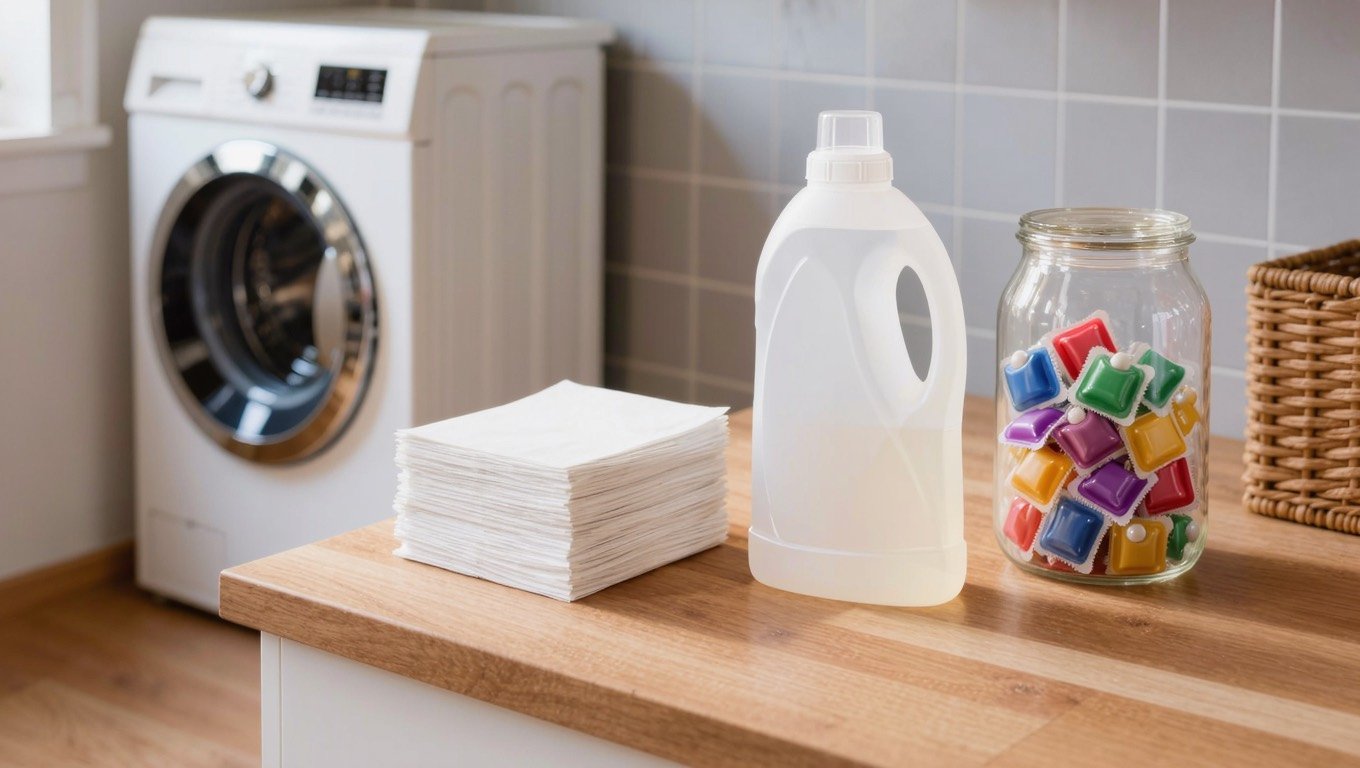
- •Using whatever detergent is nearest regardless of cycle — sheets, liquid and pods perform differently on cold and delicate washes; see our comparison of detergent sheets, liquid and pods.
Frequently asked questions
**What does a circle inside a square mean?** It's the tumble-dryer symbol. The dots show heat setting — one for low, two for normal — and a crossed-out circle means never tumble dry.
**Is it safe to use a cooler wash temperature than the symbol shows?** Yes, always. The number is a maximum, not a target, so colder is safe — it may just clean slightly less effectively on stubborn stains. Warmer is what causes shrinkage and colour loss.
**What's the difference between one bar and two bars under the wash tub?** Both mean reduced agitation, but two bars is gentler — one suits synthetics, two suits wool and anything prone to felting. Using the wrong one can still cause damage.
**Do UK and EU laundry symbols mean the same thing?** Yes. The five families follow the same international care-labelling standard, so a garment bought abroad means exactly the same as one bought at home.
**My machine has no wool or hand-wash programme — what do I do?** Use the gentlest delicates cycle at the lowest spin speed, ideally cold, in a mesh bag, or hand wash in the sink — bulky items like duvets and pillows need similar care if they won't fit your drum.
Found this useful?
There's plenty more — hundreds of guides and honestly-tested product reviews for every corner of your home.
Browse All Guides