Garden & Outdoor · 6 min read · 24 June 2026
How to Clean a Patio Properly (With or Without a Pressure Washer)
A winter's grime comes off a patio spectacularly — if you match the method to the stone. Concrete, block and natural stone each want different treatment.
By the Nims Casa editorial team — written from professional cleaning experience and checked against our editorial standards.
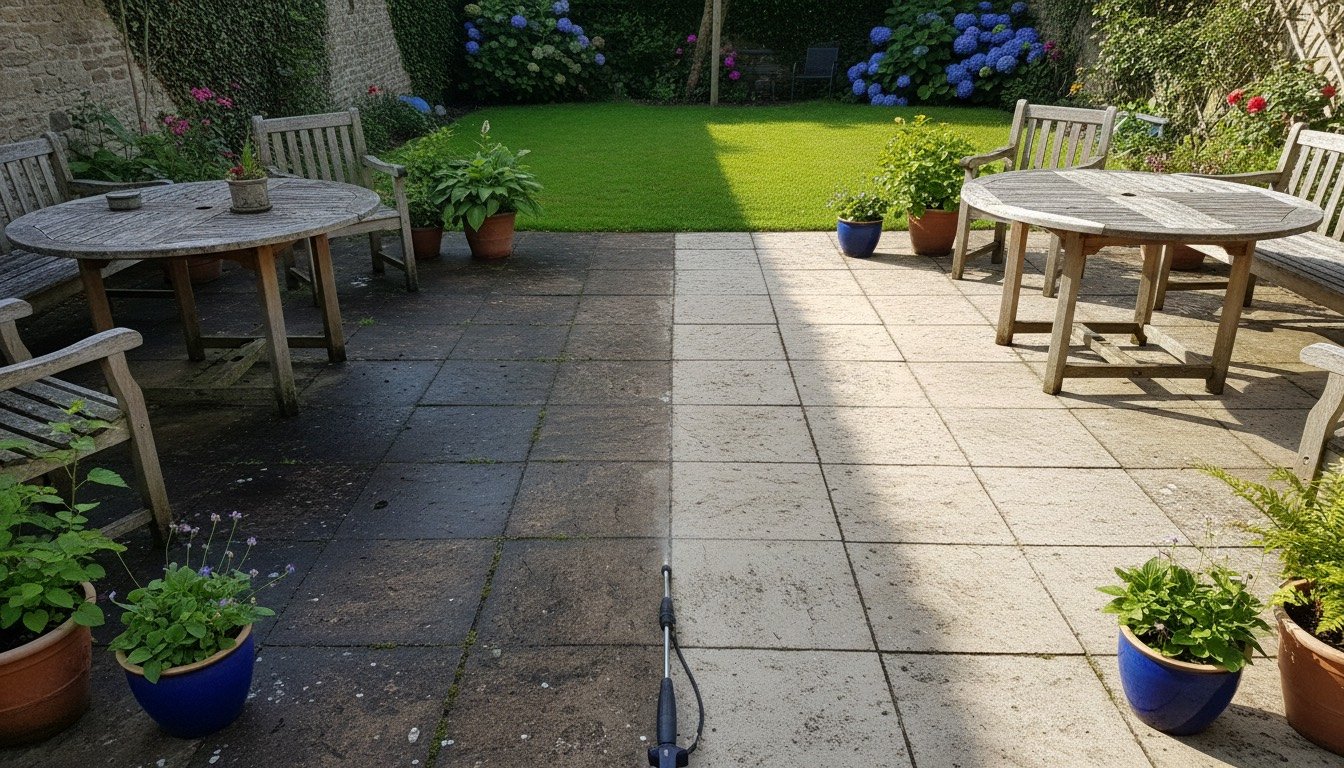
The half-cleaned-patio photo is the most satisfying image in home care for a reason — a year of algae, traffic film and moss lifts away in one pass to reveal paving you'd half-forgotten the colour of. But a patio isn't one material, and treating concrete slabs, block paving and natural stone the same way is the single most common cause of a patio that looks worse after cleaning than before it.
This guide covers identifying what you've actually got underfoot, the pressure and technique each material tolerates, how to shift black spot lichen and green algae that plain water won't touch, and the re-sanding and sealing that stops the whole job needing repeating every fifteen months. Whether you own a pressure washer or you're working by hand with a stiff broom and a bucket, there's a method below that won't cost you a re-laid patio.
Late spring is when most UK gardens need this most, once winter's leaf litter and months of low sun have let algae take hold on anything shaded or north-facing. Get the method right and one proper clean, followed by decent aftercare, can keep a patio presentable for two or three years rather than one.
Identify your patio material before you reach for a pressure washer
Concrete slabs and block paving are manufactured, dense and generally tolerant of high pressure. Natural stone — Indian sandstone, York stone, limestone, slate and granite setts — is quarried, more porous, and often finished with a sealer that a careless jet strips clean off. Up close, manufactured concrete has a uniform, slightly grainy finish, while natural stone shows genuine mineral variation, occasional fossils or crystal flecks, and irregular thickness slab to slab.
It's also worth checking whether joints are sand-filled (block paving) or mortar-pointed (slabs), because that changes the cleaning rules below. Weighing up a full replacement instead? Our comparison of block paving against poured concrete covers which lasts longer and costs less to maintain.
Tools, cleaners and what they cost in 2026
You don't need much kit for a basic clean, but the right items save hours.
- •Pressure washer (electric, 1800–2200W): £90–£220 for a domestic model; see our pressure washer buying guide for which specs matter.
- •Surface-cleaner attachment (rotary head): £25–£60, worth it on anything over 15m² — clears streaking and works roughly three times faster than a wand alone.
- •Stiff outdoor broom and a bucket: £10–£18, essential for natural stone or hand-cleaning.
- •Patio and driveway cleaner: £6–£15 a bottle; a dedicated patio cleaner tackles grime plain water leaves behind.
- •Black spot lichen remover: £8–£14, separate from general cleaner and the only thing that reliably shifts those dark discs.
- •Kiln-dried jointing sand: £6–£12 per 25kg bag, for re-sanding block paving.
- •Breathable stone or paving sealer: £25–£45 per 5 litres, covering roughly 20–25m² a coat.
How to pressure wash concrete slabs and block paving
Concrete and block paving are the robust ones and generally tolerate proper pressure washing, provided you follow this sequence rather than blasting whatever looks dirtiest first.
- •Sweep first to clear loose grit and leaves — wet grit under a jet acts like sandpaper and can scour the surface.
- •Treat oil or fat stains separately: work washing-up liquid or a degreaser in with a stiff brush, leave ten minutes, then rinse.
- •Fit a 25–40° fan tip (never a pinpoint nozzle, which gouges joints and chips edges) and hold the lance around 30cm up.
- •Work with the fall of the patio so dirty water drains away, in even, overlapping passes rather than lingering in one spot.
- •On block paving, work diagonally across joints, not along them — a jet run parallel to a joint strips out the locking sand in seconds.
- •Let it dry fully — normally 24 to 48 hours in decent weather — before the next steps.
- •Check local rules first: if a hosepipe ban is in force, mains-fed pressure washers are typically covered, though rules vary by water company.
Cleaning natural stone patios without damaging them
Indian sandstone, limestone, slate and York stone are softer, more porous and often sealed, so the concrete-and-block method above will fur sandstone, flake slate and etch limestone. Drop the pressure right down, use the widest fan available, and work from further back — or skip the machine altogether and use a stiff brush with hot soapy water or a specialist stone cleaner, which shifts most grime without any risk.
The rule that matters most, especially on limestone: never use an acid-based cleaner — acid dissolves it outright, so check labels for 'acid-free'. Paving near brick or rendered walls shares the same run-off issues; our guide to cleaning render and external walls covers the algae and staining that travels between the two.
Removing black spot lichen, green algae and oil stains
Black spot lichen — the stubborn dark discs on shaded paving — is one stain pressure alone never removes, because it grows into the pores rather than sitting on the surface. It needs a dedicated remover, left to work over several days and sometimes more than one application, before a final rinse. Don't force it with more pressure; you'll damage the surface before the lichen gives up.
General algae and traffic film respond well to a patio cleaner worked in with a broom and given 10–15 minutes' dwell time before rinsing. Old oil and fat stains near a barbecue area usually need a specific degreaser rather than a general cleaner — treat those separately, not as an afterthought.
Re-sanding joints, sealing and aftercare that actually works
The clean is only half the job — skipping this is why patios slide back into algae and weeds by autumn.
- •Re-sand block paving joints with kiln-dried sand once fully dry — washing always strips some, and leaving it out is why paving goes wobbly and weedy within a year.
- •Repoint failed mortar joints on slabs before winter frost gets in and lifts them further.
- •Apply a patio algae inhibitor once dry — it pushes regrowth from months out to a year or two, rather than stopping it forever.
- •Consider a breathable sealer on natural stone after a full dry week; it turns every future clean into a quick rinse.
- •Trim back overhanging planting — shade plus leaf litter is the biggest driver of regrowth.
- •Before laying or extending any paving, check the rules on paving over a garden — drainage limits catch people out; for a full replacement instead of a repair, our patio cost guide has realistic 2026 figures.
- •A five-minute brush sweep monthly beats a heroic annual rescue, and it's the cheapest step here.
Frequently asked questions
**Do I need a professional, or can I do this myself?** Concrete and block paving are safe to pressure wash yourself with a fan tip. Call a professional for stone you're unsure about, cracked or loose joints, or a patio large enough that a day's hire and labour (roughly £150–£300) beats your own time.
**How often should a patio be cleaned?** Once a year, typically spring, suits most gardens, with a monthly brush-down between times. Shaded, north-facing patios under trees often need it twice a year.
**Why does my patio go green again so fast?** Algae needs moisture, shade and organic matter, so shaded or damp-fence patios regreen fastest. Skipping the algae inhibitor is the most common reason a clean patio looks tired again within months.
**Is it safe to pressure wash old or Victorian paving?** Reclaimed flagstones are often softer and more weathered than they look. Test a corner at the lowest setting first, and use hand-cleaning if in doubt — the surface is usually irreplaceable if damaged.
**What's the difference between a patio cleaner and a black spot remover?** A general cleaner lifts algae and everyday grime for routine use. Black spot remover is a separate, stronger product for lichen, which ordinary cleaners and pressure alone barely touch.
**Does sealing stop a patio getting dirty?** Sealing stops grime and algae bonding to the stone rather than stopping dirt landing on it, so future cleans become quick rinses. Reapply every few years depending on traffic, and only onto a dry, freshly cleaned surface.
Found this useful?
There's plenty more — hundreds of guides and honestly-tested product reviews for every corner of your home.
Browse All Guides