Pest Control · 6 min read · 6 June 2026
Pest Proofing Checklist for Your Home: A UK Month-by-Month Plan
Pest proofing is a sealing job, not a spraying job. Here is the checklist we run on UK properties: monthly, seasonal and annual tasks, what each costs, and what tenants can do without losing a deposit.
By the Nims Casa editorial team — written from professional cleaning experience and checked against our editorial standards.
A house mouse gets through a 6mm gap, the width of a pencil, and an average British terrace has four or five: under the front door, around the gas pipe, where the kitchen waste pipe leaves the wall, and along the join between an extension and the original brickwork. A young rat needs 25mm, about the hole left by a tumble dryer vent nobody filled in.
Baits and sprays deal with animals already inside. Proofing decides whether they get in at all. What follows is the walk-round we run on properties: monthly, seasonal and annual work, plus a version tenants can do without touching the walls.
Check three things before you seal a single gap
Sealing the wrong hole in the wrong month is a criminal offence here, and it happens every summer. Every British bat species is protected under the Wildlife and Countryside Act 1981, and lofts and soffits are where they roost. Blocking an active bird's nest between March and August is the same story. Foaming a wasp nest shut does not kill the colony either; it persuades several thousand wasps to chew a new way out, often into the bedroom below.
Ten minutes with a torch and twenty at the eaves settles all three.
- •Bats: droppings that crumble to shiny dust, not the hard black grains a mouse leaves. Ring the Bat Conservation Trust helpline.
- •Nesting birds: moss, straw or chirping in the soffits. Seal in September, not June.
- •Wasps: a golf-ball nest in May is 3,000 to 6,000 workers by August. Treat first, seal after.
Monthly: the fifteen-minute walk-round
Fifteen minutes a month with a torch is the whole system. Almost every infestation we get called to was visible for weeks first: droppings behind the kickboard, a chewed cereal box.
- •Torch behind the kitchen units and under the sink: droppings, gnawed packaging, greasy smears along the skirting.
- •Check under the front and back doors. If you can see daylight, a mouse can walk in.
- •Lift the food caddy and wheelie bin lids: spillage, maggots, a lid that no longer shuts.
- •Walk the outside wall at ground level for new holes, loose mortar and open drain covers.
Seasonal: jobs that follow the British weather
UK pests run on a predictable calendar. Ants swarm in mid-July, mice move indoors on the first cold snap in late October, cluster flies pile into lofts in November. If ants are already on the worktop, the trail wipe-down in our ants guide works faster than proofing. Autumn matters most: what you do between mid-September and the end of October decides your winter. That window is exactly what our guide to autumn rodent-proofing and the insurance gap is about — insurers rarely pay for gnawing damage, so prevention is the only cover you get.
- •Spring (March to May): clear leaf litter from the walls, cut ivy back to leave 300mm of bare brick, check airbricks are clear, look for wasp queens in the loft.
- •Summer (June to August): seal around window and door frames before flying ant day, hose down the bin store, move bird feeders 10m from the house, since spilled seed is Britain's biggest rat magnet.
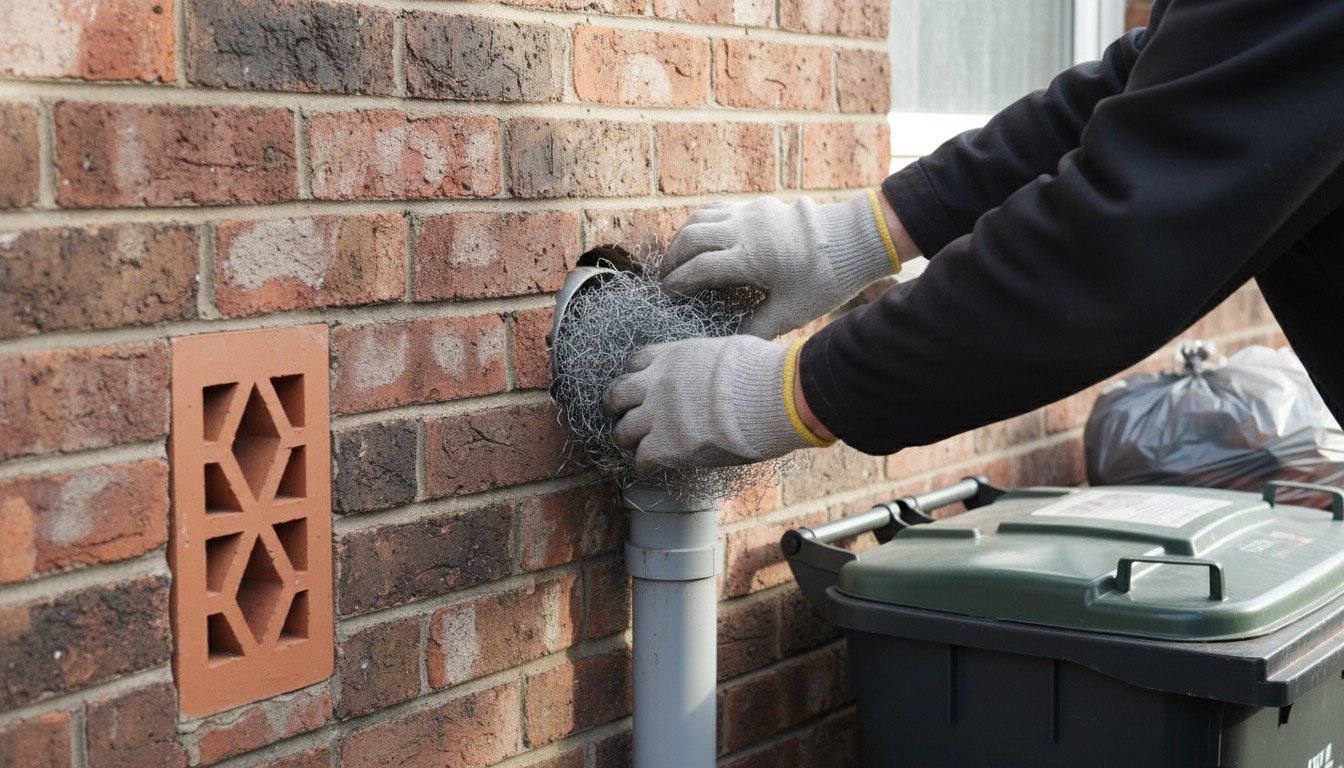
- •Autumn (September to November): fit door brush strips, pack every pipe entry, mesh the airbricks, clear the gutters, cut branches a metre back from the roofline so squirrels cannot bridge across.
- •Winter (December to February): monitor rather than proof. Check the loft twice and listen for scratching in the ceiling void at dusk.
Once a year: the proper proofing jobs
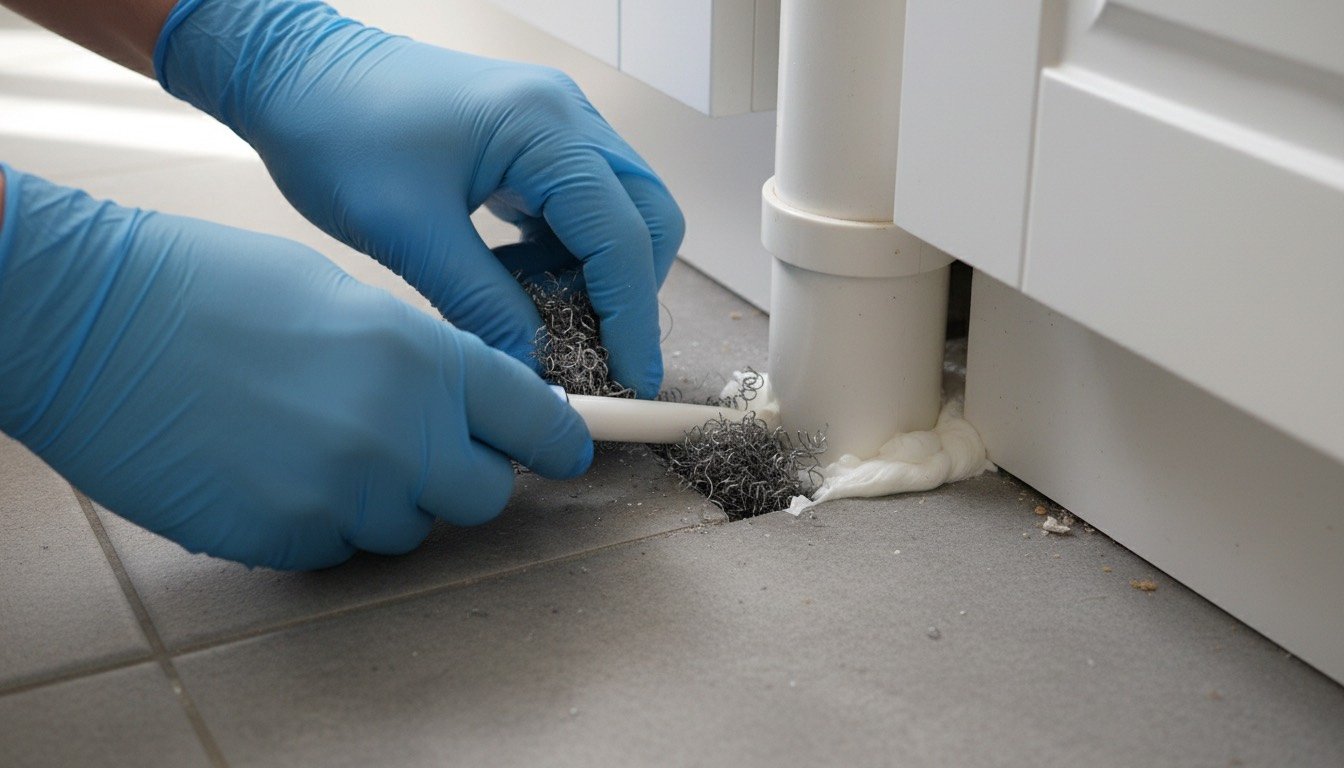
These are the jobs that change the building, and done in early autumn most last for years. Technique matters more than product: mice chew straight through expanding foam, caulk and plastic, so every gap is stuffed tight with stainless steel wire wool or copper mesh first and only then finished with foam or mortar. Wire wool left proud in a damp gap rusts and stains the brick, so it goes behind the filler.
Gutters belong here too, because a blocked gutter rots the fascia and rotten fascia is how squirrels get into a loft; our gutter cleaning guide is twenty minutes against a £400 repair. And ignore American advice about termites: Britain has no established termite population, and the timber pest to look for here is woodworm, covered in our timber pest guide.
- •Pack and seal every service entry: gas, water, electric, waste pipe, boiler flue, dryer vent.
- •Fit 5mm mesh airbrick covers. Never fit blanks, or you trade mice for damp under the floor.
- •Fit a rat blocker in the inspection chamber on older shared Victorian drain runs.
- •Repoint failed mortar joints at ground level.
Your kit, and what each task really costs
Budget £60 to £90 for the first year's kit and £15 to £25 a year after. Set that against £120 to £250 for a private two-visit mouse treatment, or £0 to £120 for council pest control depending on the borough; our exterminator cost breakdown has 2026 rates by pest. Buy gloves: wire wool shreds bare hands in seconds.
- •Stainless steel wire wool, 100g: about £6, enough for eight to ten pipe entries.
- •Mesh airbrick cover: about £4 each, ten minutes to fit.
- •Door brush strip: £8 to £14, twenty minutes with a hacksaw and a screwdriver.
- •Gap-filling foam about £7; exterior mortar repair tube about £9.
- •Drain rat blocker: £30 to £60 DIY, £150 to £250 fitted by a drainage firm.
- •Full annual pass on a three-bed semi: four to six hours.
The renter-safe version that will not cost your deposit
Almost everything above involves drilling, foam or mortar, none of which belongs in a rented flat, and agents do charge to remove foam. The reversible version still stops most of what gets in, because mice and ants arrive at floor level far more often than through the walls.
Then put it in writing. Under section 11 of the Landlord and Tenant Act 1985 and the Homes (Fitness for Human Habitation) Act 2018, an infestation caused by disrepair, a broken airbrick, a hole under the sink, is the landlord's to fix. Photograph it, email it, keep the thread. If mice are already inside, work through our battle plan for mice while the repair is chased.
- •Stuff gaps with stainless wire wool only, no filler over it. It pulls straight back out on move-out day.
- •Use clip-on or self-adhesive rubber door seals rather than screwed brush strips, and keep the packaging.
- •Cover vents and pipe gaps with removable aluminium foil tape instead of sealant.
- •If you must use sealant, use acrylic frame sealant, which peels off cleanly. Silicone tears paint with it.
Short on time, and where DIY has to stop
If you have one hour before winter, do these five: pack the pipe entries under the kitchen sink, fit a brush strip to the back door, mesh the airbricks, clear the bird feeder area, and move the wheelie bin two metres off the wall. Those cover most of the entry routes we find, and none need a ladder. September's other reliable arrival is house spiders — keeping spiders out takes the same seal-the-gaps approach.
Stop and call someone when it is rats rather than mice, when droppings appear in a loft you cannot safely reach, or when cockroaches turn up in a flat, since that means a shared riser and treating one flat achieves nothing. Rat activity usually points to a defective drain: a camera survey job, not a wire wool job. Our other pest control guides cover each species.
Found this useful?
There's plenty more — hundreds of guides and honestly-tested product reviews for every corner of your home.
Browse All Guides