DIY & Maintenance · 5 min read · 15 April 2026
Power Outage Checklist: Food, Water, Heat and Backup Power for UK Homes
Storm season power cuts are when we see the real damage: defrosted freezers, spoiled food, soot-stained walls. Here is the checklist we give our own clients, with timings and prices.
By the Nims Casa editorial team — written from professional cleaning experience and checked against our editorial standards.
Between November and February the UK now averages six to eight named storms, and after each one our phones ring with the same jobs: freezer meltwater under the vinyl, a fridge of spoiled food nobody dared open, candle soot up a chimney breast. Storm Arwen left some homes dark for over a week; Storm Eowyn cut off around a million properties in a day. The damage we clean up is rarely caused by the storm itself - it is caused by the first 48 hours indoors being handled badly.
This is the checklist we give our own clients, in the order that matters: the first ten minutes, then food, water, heat, and the backup kit that is genuinely worth buying - with honest prices.
The first 10 minutes: what to do in a power outage
Before you assume it is a network fault, rule out your own consumer unit. A tripped RCD looks identical to a power cut from inside the kitchen.
- •Check your consumer unit (fuse box). If the main switch or an RCD has tripped, flip it back once. If it trips again, unplug everything on that circuit and try once more - repeated tripping means a faulty appliance, not a power cut.
- •Look outside. If neighbours' lights and street lamps are off, it is a network fault. Call 105 - free from any phone - and it routes you to your Distribution Network Operator for a restoration estimate.
- •Note the time. This starts your food-safety clock and any compensation claim later.
- •Switch off anything that should not restart unattended: hobs, irons, hair tools, portable heaters. Power often returns while you are asleep or out.
- •Leave one light switched on so you know the moment supply returns.
- •Do not open the fridge or freezer. Every opening costs cold air you cannot replace.
How long is food safe in the fridge and freezer?
The honest answer is shorter than people hope. A fridge holds a safe temperature for around 4 hours with the door kept shut. After that, high-risk foods - milk, cooked meats, fish, soft cheeses, cooked rice, leftovers - that sit above 8°C for more than 4 hours should go in the bin. A £4 fridge thermometer takes the guesswork out; without one you are sniffing milk and gambling.
Freezers are more forgiving. A full freezer at -18°C keeps food frozen for roughly 48 hours; a half-full one about 24, because air warms faster than frozen mass. Food with ice crystals still in the centre can stay put and refreeze as the unit recovers. Anything fully defrosted should be cooked within 24 hours or binned - never refreeze raw defrosted meat or fish.
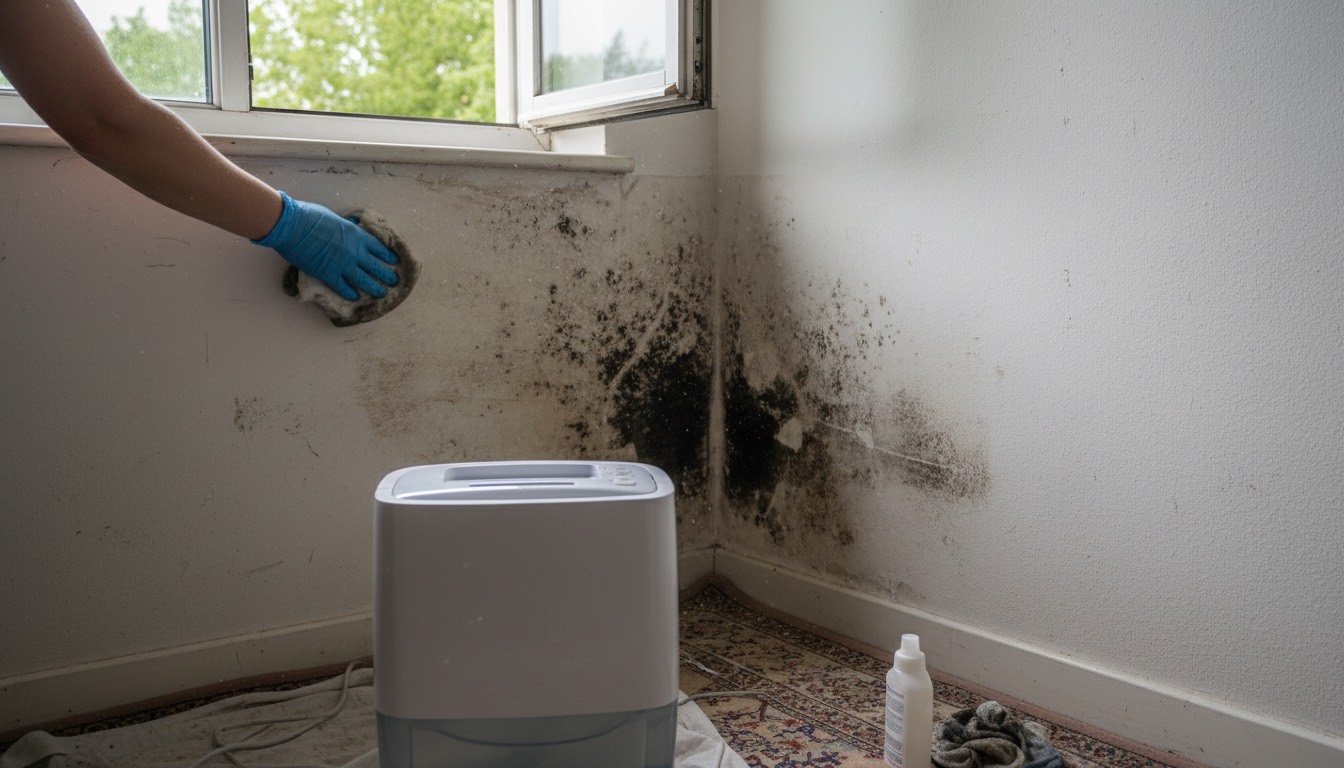
Two notes from experience. Resist putting food outside in winter: UK temperatures swing either side of safe, and foxes find it within the hour - an unheated garage is better. And if a freezer fully defrosts, pull it out and dry underneath properly. Meltwater wicks beneath vinyl and laminate and turns to mould within a fortnight; if it has run under fitted units you cannot reach, a professional deep clean is cheaper than replacing swollen kickboards.
Water: what fails and what to store
Mains cold water usually keeps flowing in a power cut because most of the network is gravity-fed, but know your exceptions: flats above roughly the fourth floor often rely on electric booster pumps, private boreholes stop dead, and every combi boiler stops making hot water the moment the electrics go.
Store 2 to 3 litres of drinking water per person per day - own-brand bottles cost about 17p a litre, so a family of four is covered for two days for under £5. When an amber or red storm warning is issued, fill two or three flasks with boiling water for hot drinks and washing up, and run a few inches into the bath: a bucket from the bath flushes a toilet perfectly well if pumps fail.
Heat: staying warm when the boiler is off
Here is what surprises people every winter: gas central heating dies in a power cut. Combi and system boilers need electricity for the pump, fan and controls, so a 'gas' home goes cold as fast as an all-electric one - typically 1 to 2°C per hour, faster in older solid-wall properties.
Pick one small room and concentrate everyone in it. Shut every door in the house, draw the curtains, and block the gap under the door with a rolled towel; if you have already done some draught-proofing, this is where it pays for itself. Hot water bottles from your pre-storm flasks, layers and blankets will hold a closed room comfortable for hours. In a prolonged winter cut, remember the rest of the house is unheated: know where your stopcock is and how to prevent frozen pipes, because a burst pipe turns a bad week into a terrible one.
Two hard safety rules. Never bring a barbecue, camping stove or patio heater indoors - not into a garage with the door open either - because carbon monoxide kills quietly. And go easy on candles: they cause around 1,000 UK house fires a year, and we spend every January sponging soot off ceilings. LED candles and lanterns are £10 well spent.
Backup power: what is actually worth buying
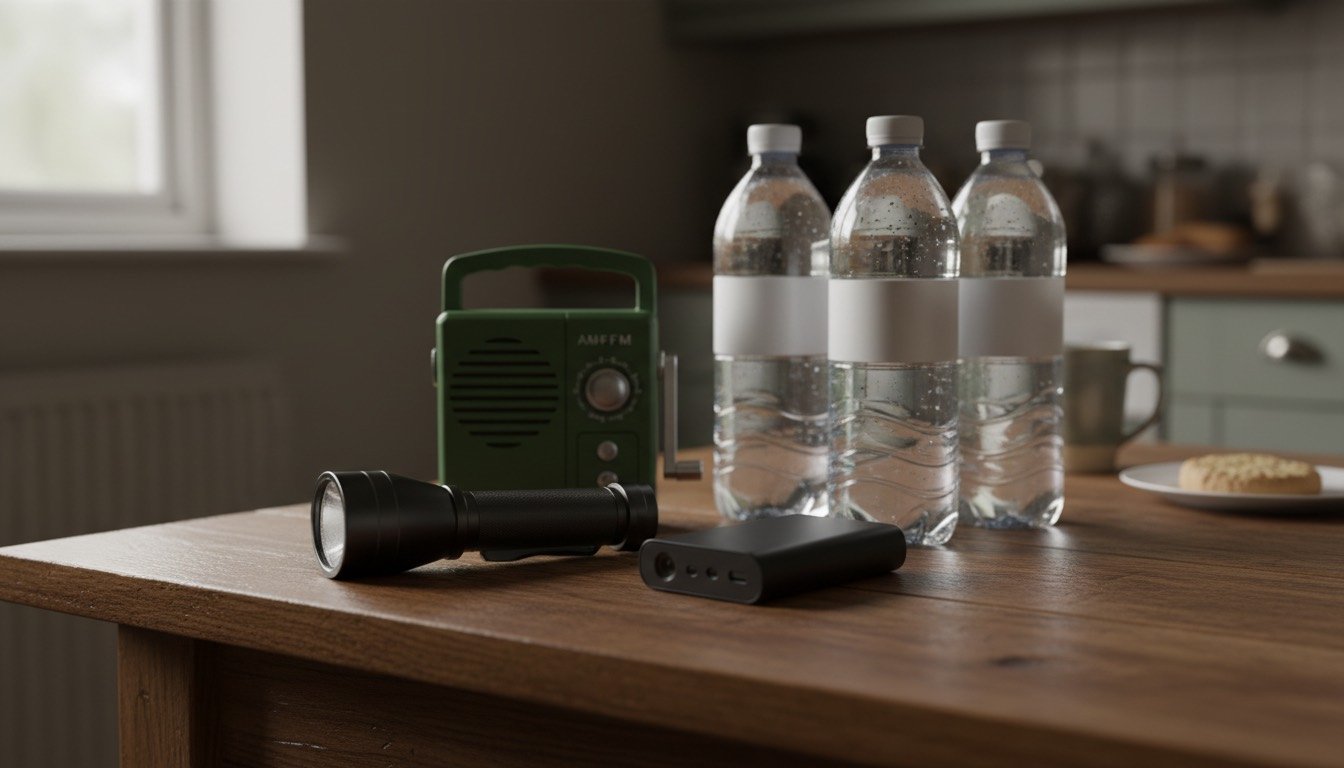
You do not need a £2,000 setup. This kit, kept in one labelled box, covers a 48-hour cut for a typical household:
- •LED head torch per person (£8-£12, Screwfix or Argos) - hands-free beats a handheld for cooking and stairs, and saves phone battery you need.
- •One 20,000mAh USB power bank per two people (£20-£30) - four to five phone charges. Recharge them on the first of every month.
- •Wind-up or battery DAB radio (£20-£25) - local radio carries restoration updates when mobile masts lose backup power in longer cuts.
- •Spare AA and AAA batteries, a 10-pack of each (£6) - check them each autumn.
- •Portable power station, 250-500Wh (£150-£400) - only worth it if you are rural, cut off often, or someone at home relies on powered medical equipment. It runs a router, phones and a lamp for a day or two, not a kettle or heater.
- •Petrol generators: fine for farms, overkill for most streets, and lethal run anywhere enclosed. If you buy one, it lives and runs outdoors, full stop.
When the power comes back
Restoration has its own checklist, and rushing it is how food poisoning and airlocked heating systems happen.
- •Check the fridge thermometer before restocking. Above 8°C for an unknown time, apply the 4-hour rule ruthlessly to high-risk foods.
- •Give the freezer 4 hours to pull back down to -18°C before adding anything new.
- •Restart the boiler and watch the pressure gauge - systems often need a top-up after a cut, and if radiators heat unevenly, bleeding the radiators usually sorts it. A cylinder or immersion that stays cold has its own fixes - see our water heater troubleshooting guide.
- •Reset heating timers and plug-in timers, or the heating quietly runs on the wrong schedule for weeks.
- •Claim what you are owed. A weather-caused cut lasting over 24 hours typically earns £95 or more from your network operator, rising every further 12 hours. It is not always automatic - call 105 and ask.
- •If anyone at home is over 65, chronically ill, disabled or under one year old, join the Priority Services Register via your energy supplier. Free, five minutes, and you get priority support during faults.
The 10-minute version
Trip switches first, then call 105. Fridge shut: 4 hours. Full freezer shut: 48. One warm room, doors closed, no flames you would not leave a toddler near. £60 of torches, power banks and a radio in a labelled box beats any gadget bought in a panic at 9pm with the lights already off. We would rather you spent ten minutes on this in October than paid us to deal with the mould under your freezer in March.
Found this useful?
There's plenty more — hundreds of guides and honestly-tested product reviews for every corner of your home.
Browse All Guides