Cleaning Guides · 6 min read · 18 June 2026
Streak-Free Windows: How the Professionals Actually Do It
Streaks aren't bad luck — they're dried product. Swap the spray-and-scrub routine for the squeegee method and windows change from chore to two minutes each.
By the Nims Casa editorial team — written from professional cleaning experience and checked against our editorial standards.
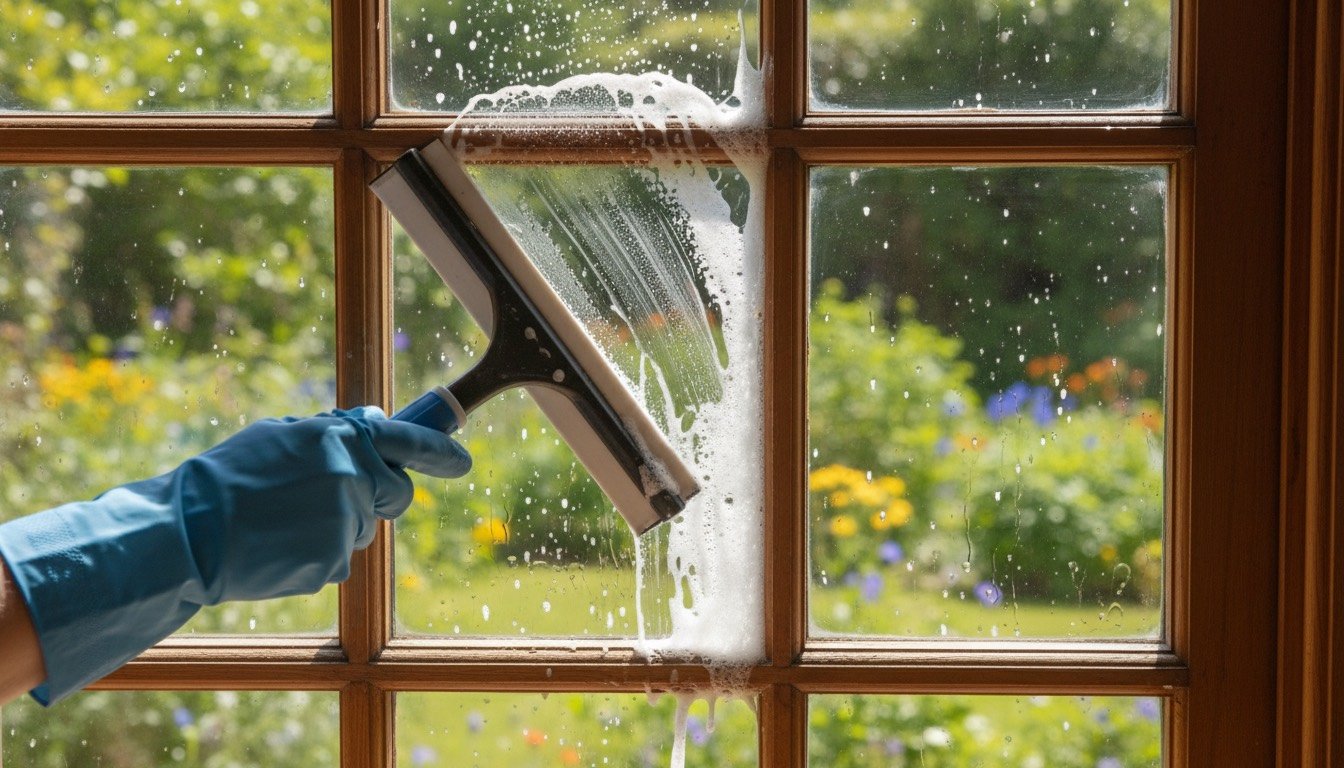
Streaks are simply cleaning solution that dried on the glass before you managed to remove it — that's the whole mystery solved. Anyone who has scrubbed a window with kitchen roll and a spray bottle, only to watch cloudy smears reappear as soon as the sun catches the glass, has been fighting evaporation, not dirt. Professional window cleaners don't use special potions; they use a squeegee, a fixed rhythm, and a mix that costs less than a coffee.
This guide covers the kit worth buying, the squeegee technique window cleaners use pane after pane, when to schedule the job so the weather helps rather than fights you, and how to handle upstairs glass safely without a ladder — plus the mistakes that ruin a clean and when it's worth paying a professional instead.
The Kit and Solution That Actually Get Results
You need surprisingly little kit, and spending properly on the one tool that matters — the squeegee — pays for itself within minutes. A basic 25–30cm squeegee with a fresh rubber blade costs around £8–£15; replacement blades run £3–£5 and are worth swapping once the blade starts skipping or leaving thin lines. Add a bucket, a microfibre 'scrim' or lint-free cloth (£4–£8 for a pack), and a sponge for the initial scrub, and £15–£25 covers the whole kit outright — it will then last for years.
The mix itself is almost insultingly simple: one small squirt of washing-up liquid in half a bucket of warm water is exactly what most professional window cleaners use on everyday grime. For hard-water spotting, common in areas with harder mains water, swap in one part white vinegar to four parts water — its mild acidity cuts through limescale far better than soap. Skip anything marketed as 'streak-free spray'; it's a weaker version of the same mix, and the aerosol makes it harder to control how much lands on the glass.
The Professional Squeegee Method, Step by Step
- •Prepare the room: lay a towel along the sill and clean the frame first, so drips land on surfaces you're about to clean anyway, not glass you've already finished.
- •Wash the frame and sill before the glass itself — grit dragged across the pane by a dirty cloth is the fastest way to leave fine scratches.
- •Wet the whole pane generously with soapy water and a sponge, working from the edges inward so dirt trapped in the corners loosens before you squeegee.
- •Starting at a top corner, tilt the blade to roughly 30–45 degrees so water channels sideways toward the dry edge rather than dripping back down glass you've just cleared.
- •Pull the blade across in one smooth, unbroken horizontal stroke, overlapping the previous pass by 2–3cm so you never leave an unwiped strip.
- •Wipe the blade dry on your cloth after every stroke — a wet blade is the number-two cause of streaks, since it redistributes dirty water rather than lifting it off.
- •Work down the pane in overlapping rows, then use a dry corner of the cloth to detail the edges the squeegee can't reach.
- •Finish with a dry cloth along the sill and frame to catch any final drips before they dry into new marks.
Timing and Weather: The Real Secret to Streak-Free Glass
Never clean windows in direct sunshine or on a hot, breezy day — the solution flash-dries mid-stroke, and that's the single biggest cause of streaks, more so than any product or technique. An overcast, mild morning is genuinely the best window-cleaning weather: cool enough that the solution stays wet long enough for the squeegee to keep up with it. Light rain later won't undo a finished window, but dust settling during a dry, windy spell will show within a day or two.
As a rough rule, exterior glass needs cleaning around twice a year, rising to quarterly near busy roads or under trees that drop sap and pollen. Kitchen windows indoors benefit from a quarterly wipe too, since cooking grease films glass faster than dust settles elsewhere.
Cleaning Upstairs Windows Safely Without Always Needing a Ladder
Upstairs glass is where most DIY window cleaning goes wrong, because reaching it safely matters more than the technique. A long-handled window cleaning kit with a telescopic pole lets you wash and squeegee most upper-floor windows from the ground, and a decent set costs £25–£45 — far less than a professional call-out, and much safer than balancing on a windowsill. To skip the squeegee on tricky angles, a cordless window vac sucks dirty water off in one pass and works well on smaller panes or conservatory roofs.
Where a ladder genuinely is the only option, invest in a proper sturdy ladder rated for the job rather than borrowing whatever's in the shed, and never lean it against guttering, which is rarely built to take that load. If you're already up there, it's worth clearing your gutters at the same time, since an overflowing gutter is what streaks the glass beneath it every time it rains.
Common Mistakes That Cause Streaks (And How to Avoid Them)
- •Cleaning in full sun or on a warm, windy day, so the solution dries before the squeegee can catch up with it.
- •Using too much washing-up liquid — more suds means more residue left behind, not a cleaner window.
- •Skipping the frame and sill wash first, so grit gets dragged across the glass and leaves fine scratches.
- •Reusing a wet, dirty section of cloth to wipe the blade instead of switching to a dry section.
- •Using the same stroke direction on both sides of the glass, making it impossible to tell which side a streak is on — go horizontal on one, vertical on the other.
- •Ignoring draughty window frames and condensation at the edges, which leaves a grimy film that reappears days after cleaning.
When to Call a Professional Window Cleaner
A squeegee-and-bucket clean for an average UK terraced or semi-detached house typically costs £15–£25 per visit, rising to £25–£40 for a detached property or one with a conservatory. It's worth booking a professional for anything above two storeys, for Georgian or Victorian sash windows with fragile original glass, or if your windows show signs they need replacing rather than just cleaning — they'll spot failed seals or rotten frames a routine clean would miss.
It's also worth calling in help if the outside of the house, not just the glass, is visibly grimy, since cleaning render and external walls properly needs different tools and a soft-wash approach. For everything else, a DIY clean above will match a professional's results for a fraction of the cost.
Frequently asked questions
**How often should I clean my windows?** Twice a year outside is enough for most homes, rising to quarterly near a busy road, under trees, or on the coast. Kitchens indoors need a quarterly wipe because cooking grease films glass faster than dust settles elsewhere.
**Why do my windows streak even after using a squeegee?** Almost always because the blade wasn't wiped dry between strokes, the solution dried before you finished a pane in strong sun, or too much washing-up liquid was used. Cut back the soap, work in shade, and dry the blade after every pass.
**Is vinegar better than washing-up liquid for windows?** Not for everyday grime — soapy water and a good squeegee beat vinegar on ordinary dirt. Vinegar earns its place on hard-water spots, where its acidity dissolves limescale that soap can't touch.
**Can I use newspaper instead of a cloth to dry the glass?** You can, but modern inks and glossy stock leave more lint and print residue than a microfibre cloth. A cheap lint-free cloth does the job better for very little more.
**Do window vacs work as well as a squeegee?** For most household windows, yes — a cordless window vac lifts dirty water off in one pass and is faster on kitchen or conservatory glass. A squeegee still edges it on very large or heavily soiled panes.
**What's the best weather for cleaning windows outside?** An overcast, cool, still morning — bright sun dries the solution before you can squeegee it off.
Found this useful?
There's plenty more — hundreds of guides and honestly-tested product reviews for every corner of your home.
Browse All Guides