Plumbing · 6 min read · 4 May 2026
Why Does My Drain Smell? Causes, Fixes and When to Call a Plumber
A smelling drain is rarely the drain's fault. Nine times in ten it is an empty water seal or a film of grease you can reach with a bottle brush - here is how to tell which, and where DIY has to stop.
By the Nims Casa editorial team — written from professional cleaning experience and checked against our editorial standards.
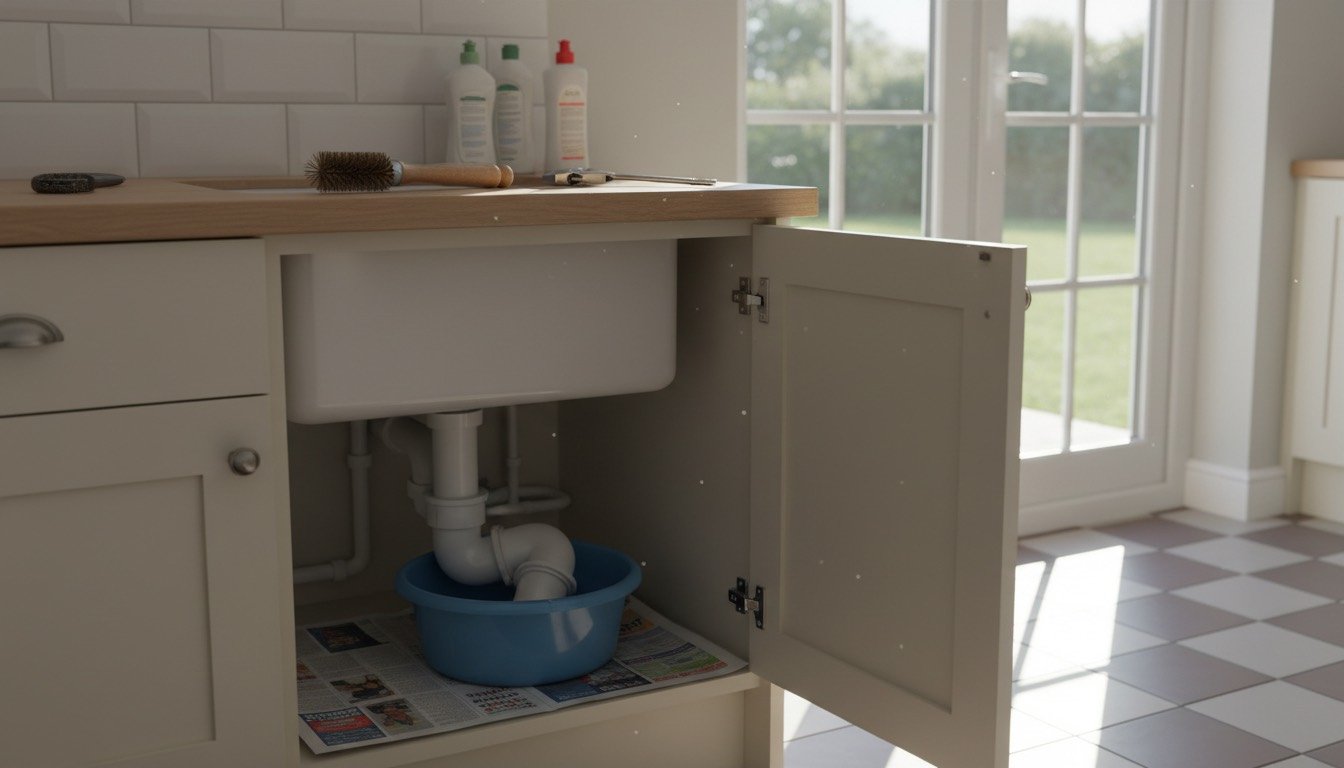
A smelling drain is rarely the drain's fault. In most homes we attend the pipe is sound and the culprit is an emptied water seal, or a skin of grease in the first 300mm of waste pipe - reachable with a bottle brush.
The rest matter more. A smell that follows you round the house, or worsens in wet weather, concerns drainage below floor level. What follows runs the diagnosis in a plumber's order, then says which fixes belong to a competent DIYer and which do not.
Start With the Two-Minute Diagnosis
Run this before buying anything. It costs nothing and eliminates two-thirds of the causes.
- •Run the tap into the offending plughole for 45 seconds, then leave it an hour. If the smell goes, the trap had dried out - the commonest cause of all.
- •Sniff 50mm from the plughole, then the overflow slot. A stinking overflow with a clean plughole means biofilm in the overflow, not a drainage fault.
- •Note whether the smell only arrives after the washing machine or dishwasher empties - if so, the appliance waste is the suspect, not the sink.
- •Count the affected fittings. One basin is local. Kitchen sink, downstairs loo and outside gully together points below ground.
- •Name the smell. Rotten eggs is sewer gas. Sour or cheesy is bacterial biofilm. Musty and earthy is damp around the pipework, not inside it.
Symptom to Cause: What the Smell Is Telling You
Match what you have to the closest description. These pairings hold whether the waste is 40mm push-fit plastic or old lead into a stack.
- •Rotten eggs from one basin, worst after a fortnight away - a dried trap. The 50-75mm water seal has evaporated and sewer gas walks through.
- •Rotten eggs from several fittings, with gurgling and slow drainage - restricted flow below ground, or a soil vent pipe capped by a bird's nest.
- •Sour, bin-like smell from the kitchen sink alone - grease and starch biofilm coating the trap and first metre of waste pipe.
- •Smell plus small dark flies at the plughole - a biofilm colony feeding drain flies; killing the flies without stripping the film only restarts the cycle.
- •Sewer smell outside the back door in warm, still weather - a silted or dried gully.
The Causes, in the Order We Actually Find Them
Plumbers work down this list because the frequencies are wildly uneven. Worrying about a collapsed clay pipe while a spare-room shower trap has evaporated is the classic wasted weekend.
- •Dry or siphoned traps - around half of call-outs. Unused shower trays, utility sinks and floor gullies lose their seal in three to six weeks, faster with the heating on.
- •Biofilm and grease - roughly a quarter. A 40mm kitchen waste narrows to 25mm of clear bore within two years where fat goes down the sink, and the film is what smells.
- •Appliance waste faults - about one in ten. Hoses shoved 400mm into a standpipe instead of the 150mm specified, or a dishwasher spigot cut open and never blanked.
- •Failed air admittance valves - the rubber diaphragm hardens after eight to twelve years and quietly stops sealing.
- •Damaged seals and joints - bottle traps cross-threaded onto their collars, or a shower trap dropped 5mm clear of the tray outlet.
- •Damaged underground drainage - fewer than one in twenty, but the expensive one: root ingress, a fractured pipe, or a blocked shared lateral.
Fixes, Ordered From Safest to Riskiest
Work top to bottom and stop the moment the smell goes. Everything above the halfway mark suits a competent DIYer with a bucket.
- •Refill every trap: run each tap a minute, flush every WC, pour two litres down any floor gully. In a rarely used en-suite add a teaspoon of cooking oil, which slows evaporation.
- •Clean plughole and overflow with a bottle brush and a biological cleaner. Ten minutes, under £5, and it removes the food supply as well as the smell.
- •Flush at 55-60C, never boiling: boiling water distorts uPVC waste and softens compression seals. Follow with an enzyme maintainer left overnight.
- •Strip and clean the trap - bucket underneath, hand-tighten only, washer sitting flat. Our walkthrough on cleaning a P-trap covers bottle and shower traps too.
- •Re-seat appliance hoses so no more than 150mm sits inside the standpipe, and cap unused spigots with the blanking plug supplied.
- •Replace an accessible air admittance valve - £12-£25 at any merchant, unscrews from the boss. Only where you reach it without opening a wall or ceiling.
- •Lift the gully grid, scoop out the silt with a gloved hand and hose it through. Drain rods cost around £25 and clear soft debris to the inspection chamber.
- •Resist the caustic bottle. Sodium hydroxide sits on top of a blockage, generates real heat and makes the next engineer's job hazardous - see chemical drain cleaners and pipework.
Where DIY Must Stop: The Honest Boundary
The rule is simple: if you can reach it with your hands, from the room, without dismantling part of the building, it is yours. Once the job needs floorboards lifted, tiles cut, or any part of you inside a chamber, it stops being DIY. Call someone if any of these apply.
- •Sewage or grey water backing up at the lowest fitting, or standing in the garden - read the signs of a blocked main sewer before touching anything.
- •A rotten-egg smell persisting indoors after every trap is refilled and every reachable joint checked. That means a breached pipe or stack behind a finish.
- •The fault sits on a macerator, a soil stack above ground floor, or pipework buried in a wall or screeded floor.
- •Rodding meets a hard stop within a metre, or water rises rather than falls. Forcing it can open a hairline fracture wide.
- •Never climb into an inspection chamber. These are confined spaces; hydrogen sulphide pools at the bottom and deadens your sense of smell before it kills you.
- •You smell natural gas rather than drains - sharp and chemical, not eggy. Leave the property and ring 0800 111 999.
Who Pays, and What It Should Cost
Since October 2011 most lateral drains and shared sewers in England and Wales have belonged to the water companies. If the blockage lies beyond your boundary, or the pipe serves more than one home, your water company clears it free on a 24-hour line; Scottish Water and NI Water do the same. That free call regularly saves a £150 invoice.
On your side of the boundary, expect £80-£150 for a daytime unblock, £150-£250 evenings and weekends, and £150-£350 for a CCTV survey. Patch-lining a cracked section runs £600-£1,200; excavation and replacement £1,500-£4,000. Many buildings policies cover accidental damage to underground services - see also our breakdown of UK plumber rates.
Keeping the Smell From Coming Back
Odour is a maintenance problem dressed up as an emergency, and preventing blockages costs far less than curing one. Run every seldom-used tap and shower for 60 seconds a fortnight, pour an enzyme maintainer down the kitchen waste monthly at bedtime, and wipe roasting tins with kitchen roll rather than tipping fat down the sink. Rinse the gully grid each autumn, and change air admittance valves every ten years.
Found this useful?
There's plenty more — hundreds of guides and honestly-tested product reviews for every corner of your home.
Browse All Guides