Energy & Insulation · 6 min read · 28 April 2026
Portable vs Standby Generator: Differences, Costs and Which Suits a UK Home
One costs about £2,000 over a decade and lives in the shed. The other costs £14,000 and starts on its own. With British power cuts, only one of them usually makes sense.
By the Nims Casa editorial team — written from professional cleaning experience and checked against our editorial standards.
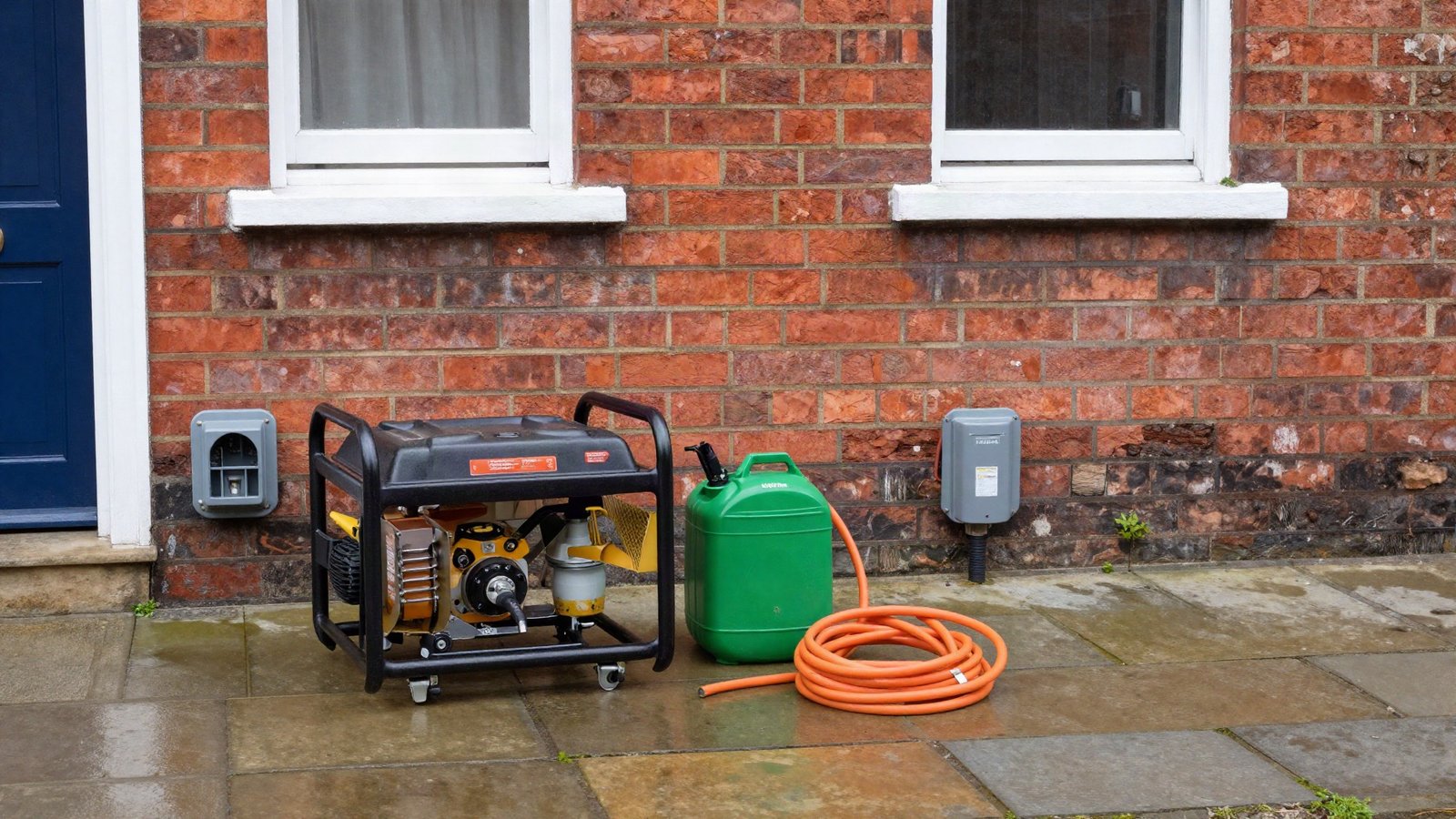
Backup power in Britain is a different problem from backup power in the American Midwest. The average UK home loses supply for 30 to 40 minutes a year, and most cuts end inside two hours, so you are insuring against a rare inconvenience rather than a weekly event. The exception is real: at the end of an overhead line in mid-Wales, Cumbria or west Devon, one winter storm can take the lights out for three days.
The other factor is the house. If yours went up before 1930 — solid brick walls, lath and plaster, wiring added to rather than replaced — the generator is the cheap part. Getting its power into your circuits safely is where the money goes.
Side by Side: The Honest Comparison
A portable is a tool you deploy; a standby set is a system that sits there being expensive until the night it earns its keep.
- •Output: a decent portable inverter gives 2 to 3.5kW continuous, around 8 to 15A at 230V. A domestic standby set is 6 to 13kW.
- •Starting: portable means going out in the rain to pull-start it and run leads. Standby fires on an automatic transfer switch 10 to 30 seconds after the supply drops.
- •Noise: a quality inverter is 48 to 60dB at 7m. A cheap open-frame set is 90dB and up, which in a terrace is a complaint waiting to happen.
- •Siting: a portable lives in the shed. A standby set needs a permanent base, roughly 1.5m clearance from windows, doors and boundaries, and planning advice in a conservation area.
Performance: What Each One Will Actually Run
The most useful number in British backup power is this: a gas combi or system boiler draws only 120 to 250W. Pump, fan, ignition and circuit board, that is the lot. A 2kW inverter therefore keeps a whole house warm, the thing people most often miss when pricing standby for a gas-heated home.
Anything with a circuit board in it — boiler, heat pump, fridge — needs a clean sine wave under about 5% total harmonic distortion. Inverter sets deliver 1 to 3%; cheap open-frame AVR sets produce 12 to 25% and have killed more boiler PCBs than power cuts ever have. Work out peak demand first: our method for sizing a home generator covers start-up surge, and calculating your electrical load stops you buying twice.
- •Gas combi or system boiler: 120 to 250W running.
- •Fridge-freezer: 100 to 200W running, but 600 to 1,200W for a second or two on compressor start.
- •Kettle: 2,200 to 3,000W. On a 2.2kW set it is the only thing running at that moment.
- •Electric shower at 8.5 to 10.5kW, or a 3kW immersion heater: not realistic on any portable.
- •Air source heat pump: 1.5 to 4kW running with a higher start-up draw. Genuine standby territory.
Installation, and What an Older House Adds
Never backfeed the house through a socket. That so-called suicide lead energises your meter tails and, through the street transformer, the network beyond. The legal route in England and Wales is a changeover switch and an external generator inlet, fitted under Part P and notified through NICEIC or NAPIT. Budget a day of an electrician's time on a modern board.
On a pre-war house it is rarely that simple, and this is where the quote grows.
- •Fuse boards: a rewireable BS 3036 board with no RCD will not take a changeover. Add £600 to £950 for a consumer unit first.
- •Earthing: most urban terraces sit on a PME supply, which BS 7671 restricts exporting to some generator arrangements. An earth electrode must be driven in, awkward through Victorian clinker under concrete.
- •Cable routes: chasing solid nine-inch brickwork takes lime plaster off in sheets. Route the inlet through an existing airbrick, coal chute or cellar light well, and make good with lime.
- •Ceilings: do not drop cables through lath and plaster from above. The laths crack, the keys let go, and a £120 cable run becomes a £900 ceiling.
- •Exhaust: this is the one that kills. Ground-floor airbricks feed the void under suspended floors and sash windows never seal, so a set running within 3m pushes carbon monoxide indoors. Site it 5m away and downwind, never in a porch or open garage doorway, and fit a CO alarm to BS EN 50291.
The Ten-Year Cost, With the Numbers Shown
Purchase price is the least interesting figure. Three routes, costed over a decade.
- •Portable, three-bed 1908 terrace on gas heating: £950 for a 2.2kW inverter, £700 for a changeover and inlet, £120 of oil, plugs and stabiliser, £180 of petrol bought and rotated. Around £2,000, or £200 a year.
- •Standby, same house: £5,500 for an 8kW LPG set, £4,800 for the base, gas connection, transfer switch, earth electrode and notification, then £320 a year servicing and £60 of exercise fuel. About £14,100, or £1,410 a year.
- •Battery power station, first-floor Victorian flat: £1,400 for a 2kWh LiFePO4 unit, no installation, fuel or servicing, replaced once around year ten. £1,400 to £2,800 all in.
Maintenance and Fuel Storage
Both fail for the same reason: they are asked to work after two years of neglect. Petrol goes stale in roughly 90 days and gums a carburettor jet solid; a standby set's starter battery dies quietly while nobody checks the charger.
- •Portable: run it under real load, not off-load, for 30 minutes every 8 to 12 weeks. Use a stabiliser, or shut the fuel tap and run the bowl dry before storage.
- •Oil at the first 20 hours, then every 50 to 100 hours or annually. Half a litre of 10W-30 is £8; skipping it scraps the machine inside 400 hours.
- •Store no more than 30 litres of petrol at home, in approved containers of 10 litres or less, kept outside the dwelling.
- •Standby: an annual service is £250 to £400, and the starter battery wants replacing every 3 to 5 years.
Who Each One Suits
- •Portable inverter, 2 to 3.5kW: right for most UK homes. Gas or oil heating, mains water, cuts measured in hours. Our tested portable generator picks start around £550.
- •Standby, 8 to 13kW: rural overhead-line properties, all-electric homes and heat pumps, houses with a borehole or pumped drainage, and households depending on a stairlift or oxygen concentrator.
- •Battery power station: flats, mid-terraces with no outdoor space, noise-sensitive neighbours. Silent, indoor-safe, no fuel storage. See the current home battery backup options.
- •Nothing at all: honestly right for many people. A torch, a camping stove, a full freezer and one warm room beat a generator you never maintained.
The Verdict
For a gas-heated British house with an average outage record, a 2.2 to 3kW inverter on a proper manual changeover is the correct buy. It carries the boiler, freezer, router and lights for roughly a seventh of what standby costs. Check it against the current standby generator price guide.
Standby earns its keep in three situations only: frequent multi-day cuts, a genuinely all-electric house, or medical dependency. If none apply, spend the difference on preparation. Work through a power cut checklist, then browse our energy and insulation guides.
Found this useful?
There's plenty more — hundreds of guides and honestly-tested product reviews for every corner of your home.
Browse All GuidesKeep reading

Energy & Insulation · 17 min read
Warm Home Discount 2026: Eligibility, Dates and Winter Payments Guide
The Warm Home Discount is returning for winter 2026 to 2027, with a £150 electricity bill discount for eligible households. Here is how to check the rules, payment dates and other winter help available across the UK.

Energy & Insulation · 8 min read
How to Stop Heat Escaping Through Your Windows Without Replacing Them
Sealing draughts is only half the job. Here is how to reduce heat escaping through cold window glass without paying for replacement windows.
Energy & Insulation · 7 min read
October's Price Cap Rise Is a Gas Problem: What to Do Before It Hits
The October price cap rise is overwhelmingly a gas rise, so not every appliance deserves the same attention. Here is what is worth sorting before 1 October.
Keep your home in brilliant shape
Hundreds of honest guides and tested product reviews — written from real hands-on experience.