Tools & Workshop · 6 min read · 22 April 2026
How Much Does Custom Built-In Shelving Cost? UK Prices for 2026
Quotes for a pair of alcove units range from £900 to £9,000 for what looks like the same job. Here is how joiners actually price it, and what each band buys you.
By the Nims Casa editorial team — written from professional cleaning experience and checked against our editorial standards.
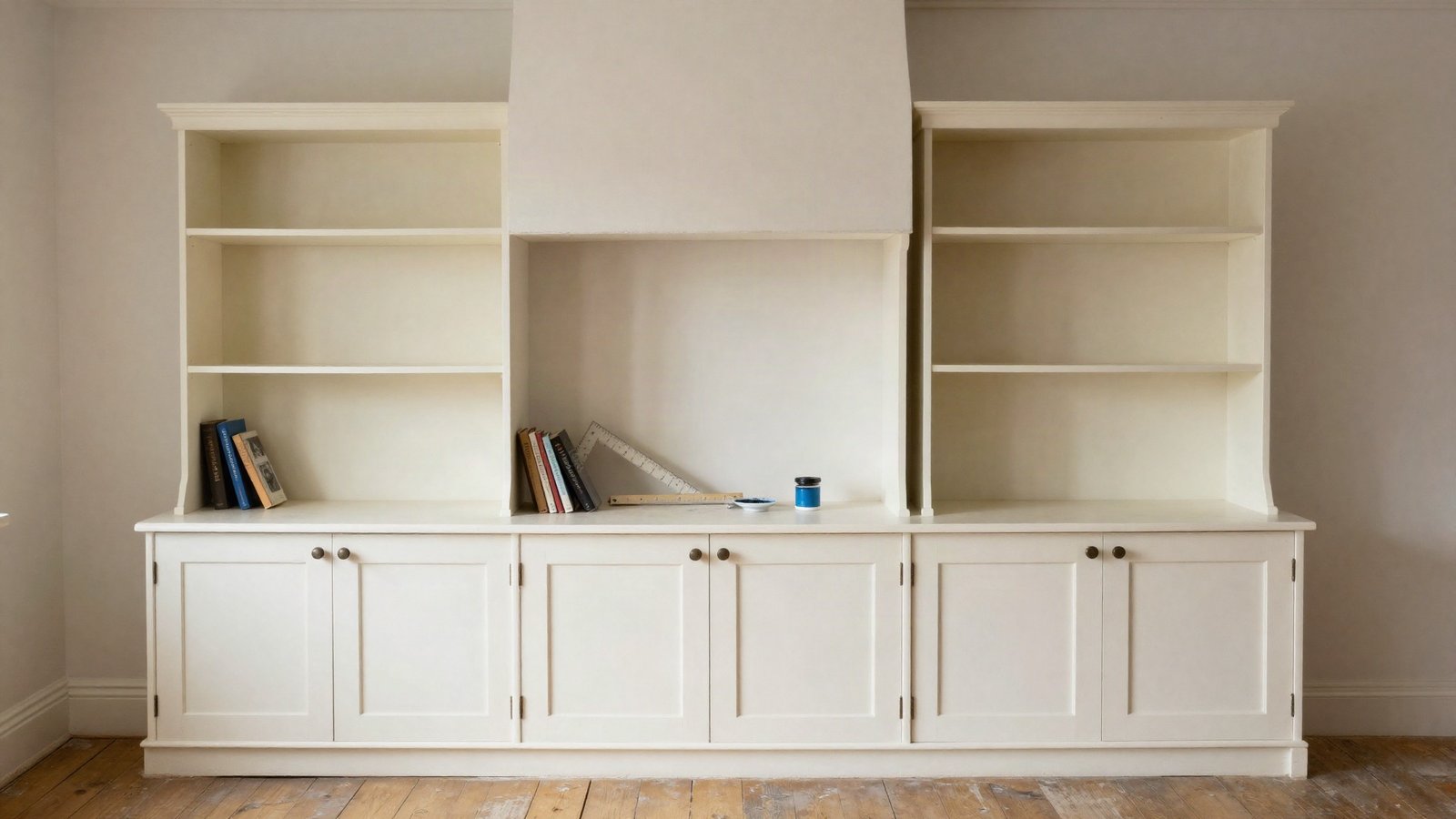
A pair of alcove units either side of a chimney breast is the most requested joinery job in British homes, and the quotes come back anywhere from £900 to £9,000 for what looks, from the doorway, like the same thing. That spread is not cowboys versus craftsmen. It is the difference between 18mm MDF cut and brush-painted on site, and a workshop-built carcass with scribed panels, soft-close doors and a sprayed finish.
This guide prices the job the way a joiner does: sheet materials, workshop days, fitting days, decoration, VAT. Figures are ex VAT unless stated and assume a 2.4m to 2.7m ceiling.
Typical UK price range in 2026
Most homeowners land between £1,100 and £3,200 per alcove. Below that you are in flat-pack-adapted territory; above it you are paying for a cabinetmaker and a spray booth. The bands below are installed prices for one unit roughly 0.9m to 1.1m wide, floor to ceiling.
- •Flat-pack adapted with plinth, scribed trim and paint: £180-£450
- •Open painted MDF shelving, no doors: £650-£1,200
- •Painted MDF, base cupboards and adjustable shelves above: £1,100-£2,400
- •Oak or walnut veneered ply, solid lippings, oiled: £2,200-£3,800
- •Workshop-built and spray-finished, London and the South East: £3,200-£5,500
- •Full-wall media unit or library run, 3m to 4m wide: £4,500-£12,000
Unit costs: what the materials really are
What surprises people is how cheap the timber is. A painted alcove unit costing £1,800 fitted holds roughly £250 of material. You are buying days, not sheets — which is why a thin spec is hard to spot on paper. Current UK merchant prices.
- •18mm moisture-resistant MDF, 2440 x 1220 sheet: £38-£52 (an alcove eats two)
- •18mm oak-veneered MDF: £80-£125. 18mm birch ply: £75-£105. 6mm MDF back: £18-£28
- •PSE softwood shelf bearers, 2.4m: £4-£7 each, six to eight needed
- •Soft-close concealed hinges, pair: £5-£9. Drawer runners, pair: £12-£24
- •Shelf pins, screws, PVA, caulk, filler: £25-£40. Primer plus 2.5L satinwood: £45-£70
- •Material total per alcove: £230-£320 painted MDF, £480-£700 in veneered ply
Labour versus materials: where the money goes
On a painted MDF job, expect roughly 80% labour and 20% materials. Veneered ply shifts that to about 65/35: the sheets cost triple but the hours barely change. Anyone quoting a job that is half materials is either using solid hardwood or padding the figure.
Day rates in 2026 are £190-£250 for a self-employed joiner outside the M25, £280-£380 inside it, and £170-£240 for a decorator. A pair of alcove units is half a day templating, two to three days assembly, two days fitting and scribing, and a day and a half filling, caulking and painting. That is the whole invoice. For shorter carpentry work, our handyman rates breakdown covers the other end of the scale.
One purely British variable: VAT. A sole trader under the registration threshold adds nothing; a limited company adds 20%. On a £3,000 job that is £600 for identical work, and it is the commonest reason two quotes for one spec look wildly apart.
What moves the price
- •Doors and drawers: each pair of doors adds £120-£240, each drawer £90-£190
- •Out-of-square walls: Victorian alcoves are rarely parallel, and scribing adds half a day to a day per unit
- •Finish: brush paint is usually included; spray adds £400-£1,400 and forces an off-site build
- •Construction: a screwed butt-jointed carcass is cheaper than a housed and glued one — see our guide to basic woodworking joints first
- •Lighting: LED strip, driver and channel run £150-£420, plus an electrician for a new spur
- •Shelf span: over 800mm in 18mm MDF sags visibly under books within a year, so wide alcoves need 25mm boards or a hardwood lipping
- •Region: London and the South East run 25-45% above the Midlands and the North
- •Making good: stripping out an old built-in, repairing plaster and removing waste is £150-£400, usually left off the first quote
- •Doors at all? See open shelving versus closed cabinets
Three worked examples
- •Leeds terrace, two alcoves 0.95m x 2.5m, base cupboards plus four adjustable shelves each, painted on site. Materials £540, joiner 4.5 days at £230 = £1,035, decorator 1.5 days at £200 = £300, paint and waste £175. Quoted £2,350, sole trader, no VAT.
- •Bristol semi, one bookcase 2.4m x 2.7m in oak-veneered MDF with oak lippings, oiled, no doors. Materials £710, finish £75, joiner 5.5 days at £250 = £1,375. Quoted £2,650 — about £1,100 per linear metre.
- •London flat, 3.6m media wall with recessed TV, cable runs, four base cupboards, sprayed eggshell. Materials £980, nine days at £340 = £3,060, spraying £880, electrician £290. Subtotal £5,210 plus VAT = £6,250, or £1,735 per linear metre.
The renter-safe version
Tenants get told built-ins are off the table. They are not — you just cannot leave fixings, and it must come out in an afternoon. Build a freestanding carcass that behaves like a fitted one, held by two small screws rather than forty. Reckon on £150-£500 per alcove plus a weekend. It convinces because the visual language of a built-in is the plinth, the scribed edge and the paint colour, not the fixings. Our rental-friendly decor guide applies the same logic to floors and walls.
- •Build carcasses 20-30mm narrower than the alcove, then close the gap with a scribed filler strip caulked — not filled — so it peels away cleanly
- •Add a painted MDF plinth and a shadow gap at the top; that alone reads as fitted
- •Restrain each unit with one L-bracket into a wall plug: two 6mm holes, not forty
- •Paint the front frames the colour of the chimney breast so the eye stops hunting for a join
- •Ignore adhesive strips for anything structural — they hold about 2kg, and books weigh far more
- •Get written permission by email for any screw, and keep 250ml of matched paint for check-out
- •Fill and touch up properly at the end: filling cracks and holes in walls costs £20-£40, against £150-£350 off the deposit for a botched removal
How to sanity-check a quote
Convert every quote to pounds per linear metre and the outliers reveal themselves. Painted MDF under £550 per metre is almost certainly thin board or fixed shelves; over £1,400 per metre outside London needs a spec that justifies it. Ask for the split between materials, workshop days, fitting and decoration, then compare like for like using our guide to comparing contractor estimates.
- •Confirm board thickness — 18mm minimum for carcass and shelves; 12mm is a corner cut
- •Ask whether shelves are adjustable or fixed, and what the unsupported span is
- •Check painting is included and to what standard: primer plus two coats, brush or spray
- •Confirm skirting refit, plaster making-good and waste disposal are in the number
- •Ask whether VAT is included, in writing
- •Take three quotes, discard the cheapest and dearest, interrogate the middle one
- •Deposit 25-30% maximum, balance on completion, never in full up front
How we priced this, and when to re-check
Figures come from joinery quotes across Leeds, Bristol, Birmingham, Glasgow and London in Q1 2026, cross-checked against merchant sheet prices and published day rates. They are ex VAT unless a worked example says otherwise, and assume reasonable access and no structural work. Sheet prices can shift 10-15% in a year; day rates move more slowly. Re-check anything older than twelve months before challenging a quote with it.
Found this useful?
There's plenty more — hundreds of guides and honestly-tested product reviews for every corner of your home.
Browse All GuidesKeep reading
Tools & Workshop · 6 min read
Power Tool Safety Checklist (Printable UK Workshop Guide)
The injuries that come out of home workshops are boringly repetitive, and nearly all of them trace back to one skipped check. Here is the routine that prevents them, plus an honest DIY-or-pro line.
Tools & Workshop · 6 min read
How to Use a Torque Wrench Properly: A UK Step-by-Step Guide
Most torque wrenches in British garages have been used twice and calibrated never. Here is how to set one, pull it correctly, and where UK law says to put it down.
Tools & Workshop · 6 min read
How to Use a Circular Saw: Straight, Safe Cuts (UK Step-by-Step)
A circular saw is the cheapest way to buy a straight line – and the power tool most likely to hurt you. The method, the kit, the real costs, and a version that works in a rented flat.
Keep your home in brilliant shape
Hundreds of honest guides and tested product reviews — written from real hands-on experience.