Product Reviews · 6 min read · 14 August 2026
The Best Mould Removers UK (2026): Astonish, HG, Cif and More Tested
Four bleach-based sprays, one clear winner — and the honest truth about which mould jobs no spray can fix. Tested on silicone seals, grout and painted walls.
By the Nims Casa editorial team — written from professional cleaning experience and checked against our editorial standards.
Affiliate disclosure: if you buy through links in this article we may earn a small commission at no extra cost to you. Our recommendations come from professional cleaning experience and are never influenced by retailers or brands.
Between October and March, black mould on silicone seals, grout lines and window reveals is the most common problem our cleaning teams get called about — and the supermarket shelf offers a dozen sprays that all claim to fix it. Most are the same chemical, sodium hypochlorite, at similar strengths and wildly different prices.
We put four of the biggest names — Astonish, HG, Cif and Dettol — through the same test: stained shower grout, a blackened silicone bath seal and a condensation-prone painted window reveal. Here's how each performed, which surfaces each one suits, and the jobs where no spray is the right answer.
Our top picks at a glance
HG Mould Spray (500ml)
~£5-6The strongest performer of the four, clearing established black staining on silicone seals in one to two applications where the others needed three. The precise trigger keeps the mist where you aim it.
Pros
- ✓ Visibly clears blackened silicone that defeats cheaper sprays
- ✓ Accurate, low-overspray trigger for grout lines and seals
Cons
- ✗ Dearest per millilitre here by some margin
- ✗ Harshest fumes of the group — ventilation is non-negotiable
Astonish Mould & Mildew Blaster (750ml)
~£1.50The same hypochlorite chemistry as sprays costing four times more, in a big 750ml bottle sold everywhere from Home Bargains to the big supermarkets. Our default for large flat areas like tiles and uPVC frames.
Pros
- ✓ Outstanding price per millilitre
- ✓ Widely stocked in supermarkets and discount stores
Cons
- ✗ Runny formula drips off vertical surfaces before the dwell time is up
- ✗ Old, established stains need two or three passes
Cif Perfect Finish Mould Stain Remover (435ml)
~£3.50A noticeably thicker spray that hangs onto vertical grout joints for the full 15-minute dwell instead of streaking down the tiles. Strong results on tile joints and shower trays.
Pros
- ✓ Best cling of the four on vertical grout
- ✓ Effective in one application on all but the oldest staining
Cons
- ✗ Smallest bottle here, so mid-pack value
- ✗ Strong chlorine smell in enclosed shower cubicles
Dettol Mould & Mildew Remover (750ml)
~£3The mildest-smelling of the group and a sensible weekly-maintenance spray for keeping clean bathrooms clean. It slows visible regrowth well but lacks the punch for established black silicone stains.
Pros
- ✓ Noticeably gentler fumes in small bathrooms
- ✓ Generous 750ml bottle at a fair mid-range price
Cons
- ✗ Underpowered on long-established silicone staining
- ✗ Still bleach-based despite the milder smell — same fabric and dye warnings apply
Who These Sprays Are For — and Where DIY Should Stop
A hypochlorite spray is the right tool for surface mould caused by condensation: the speckled black growth on bathroom ceilings, tile grout, window frames and silicone. Used properly it kills the growth and strips the staining in 10–15 minutes. What it will not do is cure the moisture that grew the mould — for that, start with our guide to getting rid of damp and mould, because spraying an unresolved damp wall buys you three or four weeks at best.
- •DIY is fine when: the mould covers less than about one square metre in total, it sits on hard non-porous surfaces (tiles, glass, silicone, uPVC), and the cause is condensation.
- •Call a professional when: the affected area is larger than a square metre, mould returns within a month of treatment, the cause is a leak or penetrating/rising damp, or the plaster underneath feels soft and crumbly.
- •Get a damp specialist rather than a cleaner if mould appears mid-wall or at skirting level on an external wall — that pattern usually points to a building fault, not a ventilation habit.
- •Renting? Report it to your landlord in writing. Damp and mould are health hazards landlords must investigate — social landlords now face fixed legal timescales — and DIY spraying can mask the evidence.
- •If anyone in the household has asthma, COPD or a weakened immune system, don't do the removal while they're in the room — the spores released during scrubbing are the worst part of the job.
How We Judge a Mould Remover
Every product here is built on sodium hypochlorite — the active ingredient in household bleach — at concentrations under 5%. Within that family, five things separate a good spray from a waste of £4:
- •Cling. A runny liquid slides off vertical tiles in seconds; a thickened formula stays put for the 10–15 minute dwell the chemical needs to bleach staining out.
- •Real-world strength. We judge by the state of a blackened silicone seal after one application, not by the label's promises.
- •Fume level. All hypochlorite sprays smell of chlorine, but some are noticeably harsher in a 2m × 2m bathroom.
- •Nozzle control. A tight, adjustable trigger matters when the target is a 6mm grout line, not a whole wall.
- •Price per 100ml. Across near-identical chemistry the spread runs from roughly 20p to £1.20 per 100ml.
The Vinegar Myth
You'll read everywhere that vinegar "kills mould at the root" while bleach "only hides it". On the hard, non-porous surfaces these sprays are designed for, that advice is backwards. Household vinegar is 4–5% acetic acid: it can kill some surface growth, but it leaves the black staining — the melanin pigment in the mould itself — completely intact, which is why vinegar-treated grout looks exactly as bad afterwards. Hypochlorite kills the growth and strips the stain in one visit.
On genuinely porous surfaces — bare plaster, old emulsion, timber — the honest answer is that neither chemical reaches growth embedded below the surface. That's a moisture problem first and a redecoration job second: treat, dry the room properly, then repaint with an anti-mould paint. One hard rule: never use vinegar and a bleach spray in the same session. Mixing hypochlorite with any acid releases chlorine gas, and that will empty the house.
Matching the Product to the Surface
Surface suitability matters more than brand loyalty. This is where each bottle earns its keep:
- •Silicone seals: HG Mould Spray is the standout. Soak a strip of kitchen roll in it, press it along the seal and leave it an hour. If black staining survives two treatments it's inside the silicone, and the only real fix is replacing the sealant — about £8 in materials and an afternoon.
- •Grout: the thicker Cif formula clings to vertical joints. Spray, wait 15 minutes, scrub with a stiff nylon brush, rinse well. Our grout cleaning guide covers the sealing step that stops the mould coming straight back.
- •Painted walls and ceilings: never spray overhead — you'll take drips and mist in the face. Apply with a well-wrung sponge, expect some lightening of coloured emulsion, and plan to repaint. Our bathroom ceiling mould guide walks through the full sequence.
- •Fabric — shower curtains, textile blinds: none of these four. Hypochlorite strips dye on contact. Machine-wash at 60°C with an oxygen-bleach laundry booster instead.
- •uPVC frames and glass: any of the four will do the job; Astonish at around £1.50 is the obvious pick for big, cheap jobs like a bay window's worth of frames.
Fumes, Ventilation and Common Sense
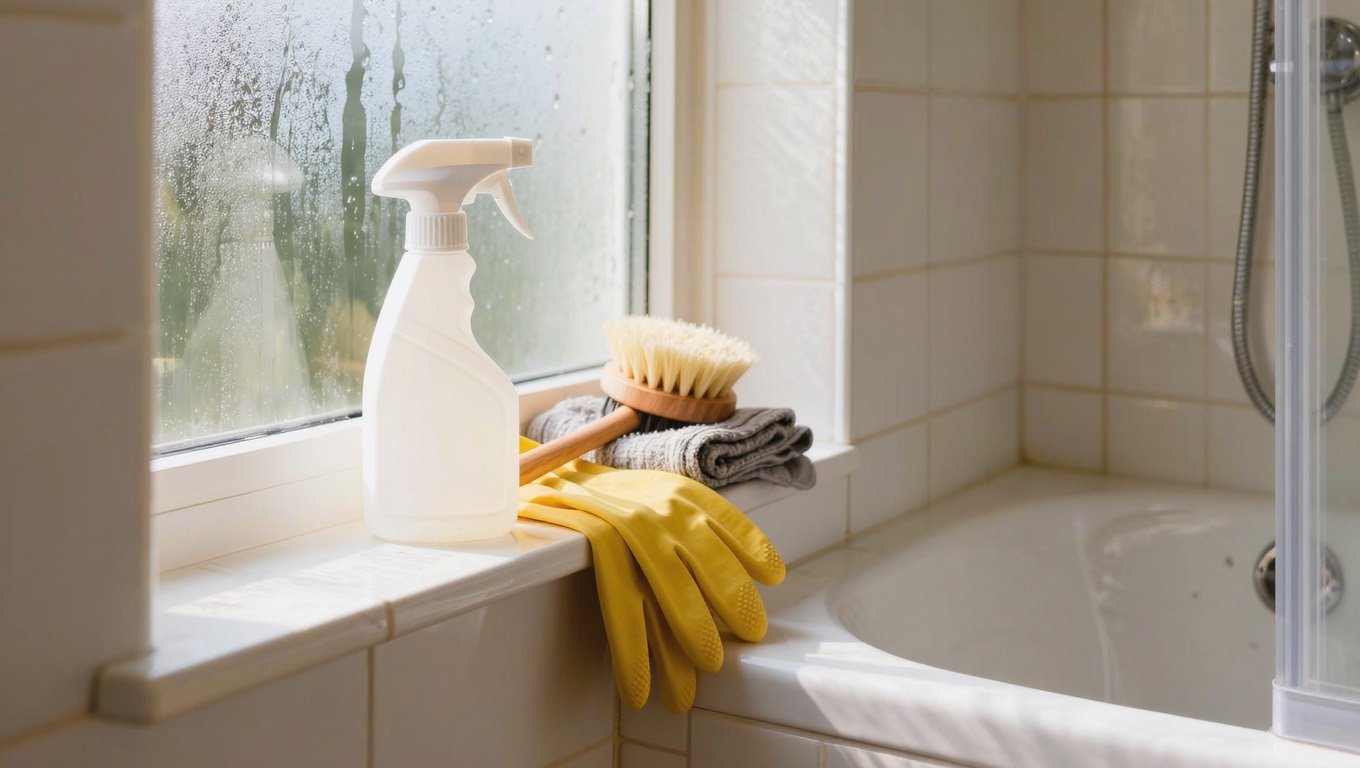
Treat these sprays with the respect you'd give neat bleach. Open the window before you start, run the extractor fan throughout, and wear rubber gloves — hypochlorite turns skin slippery and sore surprisingly quickly. Spray, then leave the room for the dwell time rather than standing in the mist; in a windowless internal bathroom, work in short bursts with the door open and the fan running.
Two more rules from bitter experience. Never combine these products with anything acidic — vinegar, limescale removers — or with ammonia-based cleaners. And rinse chrome and stainless fittings promptly: hypochlorite left pooled on plated finishes overnight can pit them permanently.
Common Buying Mistakes
The short version: buy the cheap big bottle for flat surfaces, keep the strong clinging one for silicone and grout, and spend the money you save on fixing the moisture.
- •Paying extra for the word "professional". If two sprays are both sub-5% hypochlorite, the £6 bottle isn't three times stronger than the £2 one — it may cling better or smell milder, and that's all.
- •Buying a spray to solve a damp problem. If the room sits above 70% humidity every day, mould returns whatever you buy. A dehumidifier or better ventilation is the actual fix.
- •Using one bottle on everything. The spray that's brilliant on tiles will wreck a fabric blind and dull a coloured feature wall.
- •Expecting prevention from a remover. These kill what's there and leave no lasting protection — change the conditions, especially if you regularly dry laundry indoors.
- •Ignoring bottle size. A 750ml bottle at £1.50 versus 435ml at £3.50 is roughly a fourfold price difference per millilitre for closely related chemistry.
Found this useful?
There's plenty more — hundreds of guides and honestly-tested product reviews for every corner of your home.
Browse All Guides