Roofing & Exterior · 6 min read · 28 April 2026
Lime Mortar vs Portland Cement: Costs, Performance and Which Your UK Walls Need
One of these mortars protects a solid brick wall. The other quietly destroys it over about seven winters. Here is how to tell which your house needs, and what each really costs.
By the Nims Casa editorial team — written from professional cleaning experience and checked against our editorial standards.
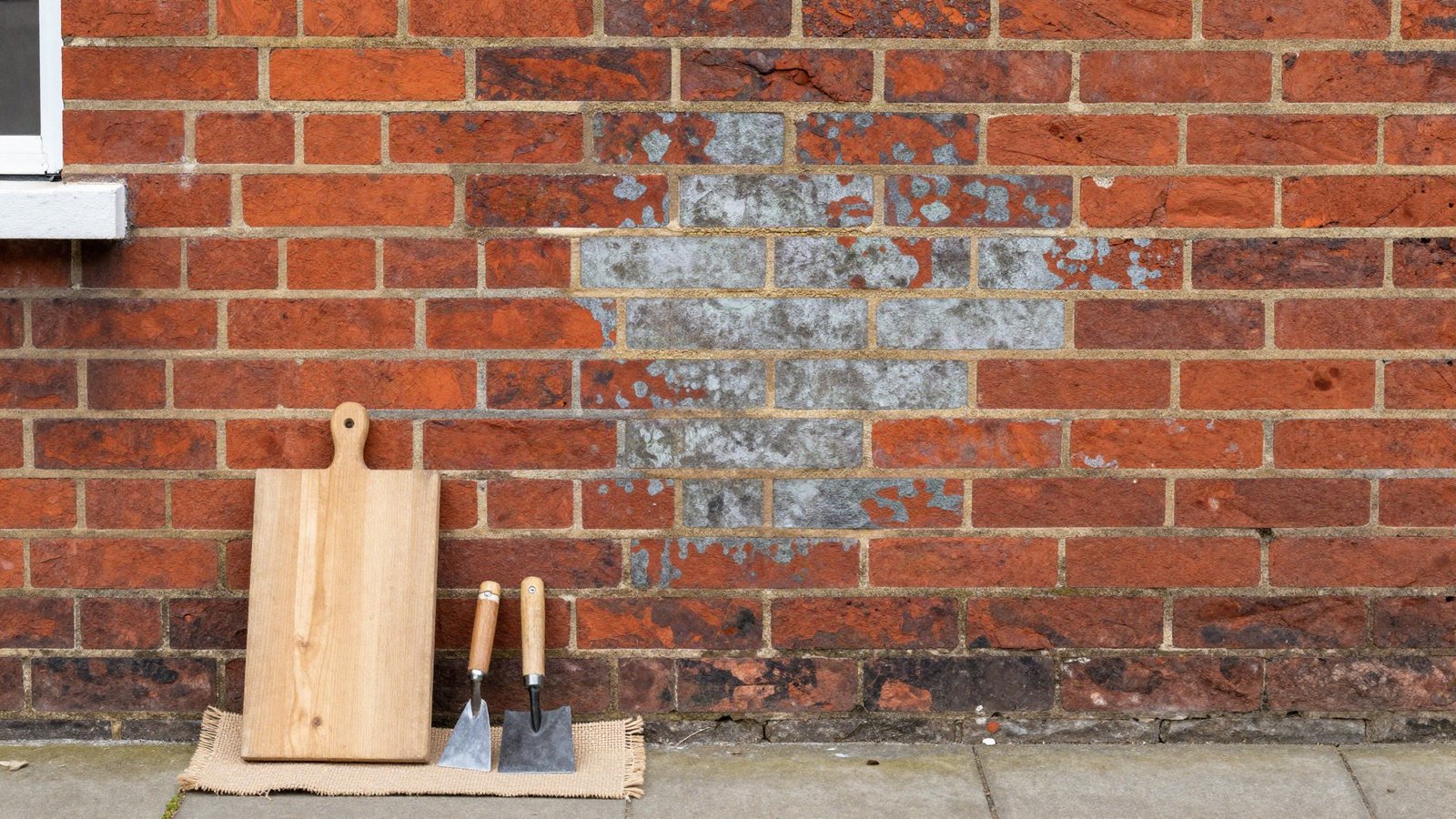
Walk any Victorian terrace and the repointing history is written on the wall. Joints standing proud, hard and battleship grey, with brick faces flaking behind them: Portland cement on soft handmade brick. Joints set back a millimetre, buff and chalky, with the arrises still crisp: lime.
About a fifth of UK homes predate 1919, and nearly all have solid 215mm walls bedded in lime. That mortar is not glue — it is the wall's drainage route. Choose wrong and you will not find out for six or seven winters, which is precisely why so many people choose wrong.
The one principle that decides everything
Mortar must be weaker and more permeable than the masonry around it. A 1:4 Portland cement mix reaches 11-16 N/mm²; a Victorian stock brick manages 8-12 N/mm², a handmade red much less. When a wall moves, something gives — and if the mortar is the hardest thing there, the brick gives instead, cracking through the face rather than along the joint. Check which foundation cracks are serious before you touch the pointing.
Permeability does the rest. Solid walls have no cavity, so driving rain soaks through and must dry outwards. Lime is open-pored: water and salts leave via the joints — 15-18% of the wall's surface — and crystallise in mortar you replace for pennies. Cement pushes them through the brick face instead. The face blows, and one -3°C frost on a saturated elevation can strip the arrises off a whole wall.
Lime mortar vs Portland cement: side by side
The realistic UK choice: natural hydraulic lime for repairs, sand-and-cement for everything modern.
- •Composition: natural hydraulic lime (NHL 2, 3.5 or 5 to BS EN 459-1) or lime putty, gauged 1:2.5 to 1:3 with sharp sand. Cement work is CEM I at 1:4 or gauged 1:1:6.
- •Strength: NHL 3.5 gives about 3.5 N/mm² at 28 days against 11-16 N/mm² for 1:4 cement — three to five times harder than the brick it should protect.
- •Breathability: lime vents vapour and takes the salt damage itself; cement drives both out through the brick face.
- •Movement: lime tolerates seasonal shift and heals hairline cracks; cement cracks in a clean line and holds water behind the joint.
- •Setting: cement is touch-hard in 4-6 hours; NHL 3.5 needs 3-5 days of protection and carbonates over months.
- •Reversibility: lime rakes out with a plugging chisel without marking the brick; cement usually will not, and that is the real cost.
- •Materials: 25kg NHL 3.5 £12-£16, lime putty £15-£22, Portland cement £6-£9, a bulk bag of sharp sand £45-£65.
Performance on real UK walls
Cement is not the villain. On a post-1930s cavity wall in hard wirecut or Fletton brick at 20-50 N/mm², cement is correct and lime would be needlessly soft. Below damp-proof course, under copings, in retaining walls, blockwork and hard landscaping it wins outright. The problem is only ever cement laid against masonry softer than itself.
The failure pattern is diagnosable from the pavement: spalling concentrates on the south-west elevation, on parapets and chimney stacks, and in the first metre above ground where splash-back keeps brick wet. Inside, you get a matching band of penetrating damp, blamed on condensation for years. If that sounds familiar, read the external causes in our guide to damp and mould before buying a dehumidifier.
The ten-year cost, honestly
A front elevation on a three-bed Victorian mid-terrace: 40m² over two storeys, full rake-out and repoint. Trade prices outside London; add 25-40% inside the M25.
- •Cement repoint: scaffold £550-£900, materials £110-£160, labour 4-5 days at £220-£280. Total £2,000-£2,800.
- •Lime repoint: same scaffold, materials £200-£320, labour 6-8 days because joints go in over two or three passes and get beaten back. Total £2,600-£3,900.
- •Years 6-10 on cement: 40-120 spalled faces on an exposed elevation. Replacing with matched reclaimed stocks runs £28-£50 a brick, so £1,100-£6,000, plus replastering at £45-£70 per m² where damp has followed.
- •Years 6-10 on lime: usually nothing, or a morning tucking in a few joints on the windward corner. Budget £150-£300.
- •Ten-year totals: cement £3,100-£8,800 and a wall that has permanently lost material; lime £2,750-£4,200 and a wall in better shape than when you started.
Installation: what actually differs on the job
Access costs the same whichever mortar you choose and is often a quarter of the bill, so saving £900 on materials tends to mean paying for the scaffold twice — figures that sit alongside our guide to renovating an old house.
- •Rake out to twice the joint width, minimum 20-25mm, with a plugging chisel or narrow quirk saw. Never an angle grinder: it widens joints, wrecks arrises, and on a listed building counts as unauthorised works.
- •Damp the joints the evening before, then fill lime in two or three 10-15mm layers, letting each firm up. Dry brick pulls the water out before it can set. Cement goes in one pass: faster, but it shrinks off the arris.
- •Beat the surface back with a churn brush once the mortar takes its initial set, typically 3-8 hours. Do not iron it smooth.
- •Cure under damp hessian for 3-5 days, redamped twice daily. Lime wants 5-25°C, so realistically May to September.
- •Stop if frost is forecast within seven days: one hard frost on green lime turns the joint to powder and the elevation comes out again.
Where UK regulation actually bites
There is no Part P or Gas Safe equivalent for mortar: no registration scheme, no competent-person certificate. The controls that exist come from planning and heritage law, and they have teeth.
- •Listed buildings: repointing that affects character needs listed building consent under the Planning (Listed Buildings and Conservation Areas) Act 1990. The application is free and takes about eight weeks; proceeding without it is a criminal offence carrying an unlimited fine.
- •Conservation areas: repointing an unlisted house is repair and needs no consent, but Article 4 directions commonly remove permitted development rights on front elevations. Ring the conservation officer — they will usually name the right mix for the street.
- •Building control: repointing is not notifiable, but rebuilding a chimney stack or more than a quarter of a wall's area brings Building Regulations into play. A building notice runs £200-£450.
- •Landlords: exterior and structure fall under section 11 of the Landlord and Tenant Act 1985 and the Homes (Fitness for Human Habitation) Act 2018. Cement-driven penetrating damp is disrepair, not a tenant lifestyle issue; social landlords now work to Awaab's Law timescales.
- •VAT: repairs are standard-rated at 20% even on listed buildings, though a dwelling empty two years or more can qualify for the 5% rate.
Who each suits, and the verdict
Unsure what is up there? Scrape a joint with a screwdriver. Pale, powdery dust is lime; if the tip skates and the dust is grey, it is cement — then ask whether that is original or a 1970s mistake you inherited.
On a pre-1919 solid-wall house there is no honest contest: lime is the right material, and the ten-year maths favours it before you count the brickwork you do not lose. But if existing cement pointing is genuinely sound, do not strip it off on principle — taking hard cement off soft brick often does more damage than leaving it. Fix the failed and exposed sections first, keep the wall breathable with the right paint for a period house, apply the same thinking to restoring versus replacing historic windows, and work through the rest via our Roofing & Exterior guides.
- •Choose lime if: pre-1919 house, solid brick or stone walls, soft buff existing mortar, or the property is listed or in a conservation area.
- •Choose Portland cement if: post-1930s cavity in hard wirecut or engineering brick, work below DPC, or bedding blockwork, copings, retaining walls and hard landscaping.
- •Get a professional in if: the elevation is above single-storey height, the wall is stone rather than brick, or you are matching a historic mix — a bad colour match stays visible for a generation.
Found this useful?
There's plenty more — hundreds of guides and honestly-tested product reviews for every corner of your home.
Browse All Guides