Cleaning Guides · 6 min read · 9 May 2026
The Whole House Cleaning Checklist: Every Room, Every Frequency (UK Printable)
The list professional cleaners actually work from — daily, weekly, monthly and annual — with honest timings, UK costs, and a clear line showing which jobs belong to a trade.
By the Nims Casa editorial team — written from professional cleaning experience and checked against our editorial standards.
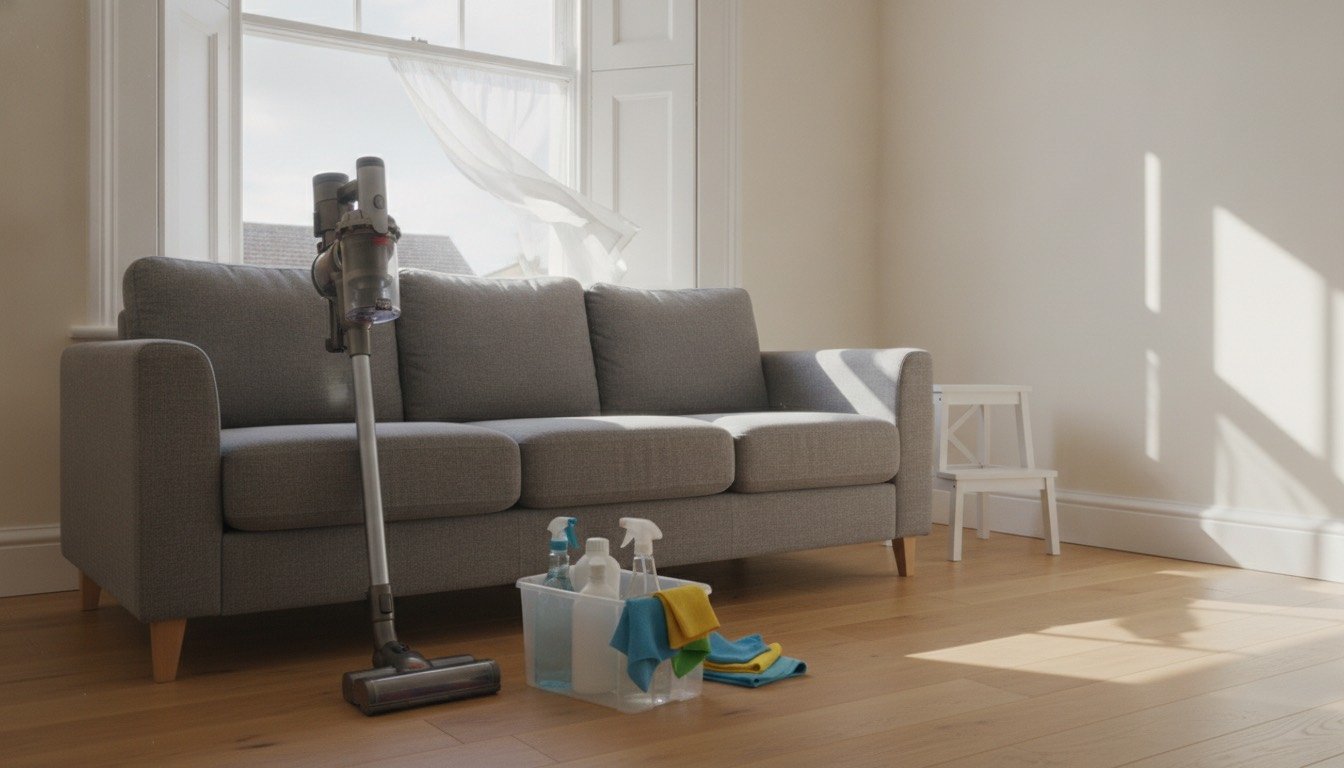
Most cleaning lists online are written by people who have never cleaned a three-bed semi to a deadline. They tell you to wipe skirtings weekly and never mention that the extractor fan above your shower stopped moving air in 2019. This is the list professional domestic cleaners work from, adapted for UK housing stock: hard water, condensation, gas boilers, ceilings that might be Artex.
It is grouped by frequency, not by room, because that is how the work gets done. Each task carries a realistic time and cost, and the last two sections cover the bit nobody publishes: which jobs you can safely do, and which need a certificated trade.
Daily: the 20-minute reset
None of this is deep cleaning. It is the maintenance that stops a house ever needing one. Cost is pennies.
- •Wipe worktops and hob after the last meal, run the dishwasher, do the sink last and dry it — 8 minutes. Wet stainless steel in a hard water area spots within the hour.
- •Squeegee the shower screen and tiles, hang towels open — 2 minutes. This removes most of your future limescale and mould work.
- •Quick vacuum of the two busiest floors, beds made, surfaces cleared — 8 minutes.
- •Open two windows on opposite sides of the house for 10 minutes after showering or cooking — the cheapest damp prevention there is.
Weekly: the full round (2–3 hours)
A cleaner does an average three-bedroom home in about two and a half hours, working top-down and dry before wet so dust lands on floors not yet done. Consumables cost £3–£5 a week.
- •Dust high to low with a damp microfibre, light fittings and picture rails included — 25 minutes.
- •Vacuum every room, under beds and along carpet edges, then mop hard floors — 45 minutes. Sealed timber takes a barely damp mop only.
- •Bathrooms: toilet inside and out, basin, bath, screen, taps, mirror — 30 minutes each, with descaler in hard water areas.
- •Kitchen: hob, splashback, cupboard fronts, fridge front, microwave interior, bin — 30 minutes.
- •Change bed linen. Sheets weekly; pillowcases twice weekly for anyone with acne or hay fever.
- •Wipe door handles, light switches and banisters — the highest-value five minutes of flu season.
Monthly and quarterly: the jobs that hide
These separate a house that looks clean from one that is. Run them as a rota, one per weekend, rather than in a single Saturday. The only cleaning schedule you need lays the same tasks out as a grid.
- •Monthly: empty 90°C cycle on the washing machine, plus door seal and drawer — 15 minutes, about 60p of electricity.
- •Monthly: descale kettle and shower head, clear the shower waste — 20 minutes, £3 of citric acid.
- •Monthly: vacuum the fridge condenser coils, and brush and vacuum radiator fins — 45 minutes, best before the heating season.
- •Quarterly: oven interior, racks and door glass — 90 minutes with a caustic-free paste, using the method end-of-tenancy cleaners use. Products £6–£12.
- •Quarterly: internal windows, sills and frames; curtain headers and blinds — 60–90 minutes.
- •Quarterly: rotate and vacuum mattresses, and do the cooker hood filters. Metal mesh goes in the dishwasher; charcoal ones are not washable, £8–£20 to replace.
Twice-yearly and annual: seasonal tasks
British weather sets the timing. April to May and late September to October are the two windows when you can leave the house open for hours and still dry things out.
- •Spring: room-by-room deep clean — skirtings, door tops, behind furniture, inside cupboards. Budget a weekend, or work through the ultimate spring cleaning checklist.
- •Spring: launder curtains and cushion covers, shampoo carpets. Hire machines £25–£35 a day; professional carpet cleaning £30–£45 a room.
- •Spring and autumn: clear gutters and downpipes — read the safety boundary below first.
- •Autumn: check window and door seals, clear trickle vents, service the dehumidifier, and have the chimney swept if you burn anything.
- •Annual: wash exterior uPVC frames, clear moss from paths, jet the patio, turn out the loft.
The supply kit that earns its place
A working cleaner's caddy holds about eight things, not thirty. Outlay is £45–£60 and most of it lasts three to six months. The better eco cleaning products now match mainstream sprays on everything bar heavy grease and limescale.
- •Colour-coded microfibre cloths, 10 for £8 — red for toilets, blue for glass, yellow for general. Wash at 60°C, no fabric conditioner.
- •A cream cleaner, £1.50, for enamel, sinks and hob tops. It replaces about four sprays.
- •A sulphamic or formic acid descaler, £3 — vinegar is not strong enough for a UK hard water shower screen — plus a degreaser and a thickened toilet cleaner. Never mix bleach with anything acidic, descaler included.
- •A squeegee (£5), a long-handled radiator brush (£6), and nitrile gloves and eye protection for caustic oven cleaner or fungicidal mould wash.
Where DIY stops and a professional starts
This is the part of a whole house cleaning checklist that gets skipped, and it is the part that lands people in A&E. A competent DIYer can do everything above with two exceptions: anything at height, and anything touching gas, fixed wiring or asbestos.
Internal and ground-floor work is all yours — appliances, descaling, carpet spot treatment, washing surface mould off tiles and sealant. If mould returns within weeks across more than a square metre you are treating a symptom, so get the cause diagnosed, as damp and mould in UK homes explains.
- •Gutters on a single-storey extension: DIY from a footed ladder or tower. Above first-floor level, pay someone, £60–£120. Ladder falls are the most common serious home-maintenance injury in the UK.
- •External windows above the ground floor: a window cleaner, £15–£30 a visit, never a ladder.
- •Inside any gas appliance — boiler casing, hob burner assemblies, gas fire fret: Gas Safe registered engineer only. Wiping the outside is fine.
- •Extractor fans: the cover and grille are DIY. Removing the unit, altering wiring or fitting a new bathroom fan is notifiable under Part P and needs a registered electrician.
- •Textured Artex from before 2000 may contain asbestos. Never sand, scrape or scrub it. Wipe gently or leave it; removal is a licensed job.
- •Chimneys: a HETAS or NACS registered sweep, £60–£90, and keep the certificate for your insurer.
- •Blocked soil pipes or sewage backup: stop and call a drainage firm. That is a health risk, not a cleaning task.
- •Wool carpets, silk rugs and antique upholstery: professional only. Over-wetting shrinks wool backing permanently, and a £150–£250 clean beats a re-fit.
What to prioritise when time is short
Nobody completes this list every week. When time is short, cut cosmetic tasks first and hygiene tasks last: a dusty bookshelf waits a month, a bathroom left three weeks cannot.
With 45 minutes and someone arriving, do the bathroom, the kitchen sink and hob, the visible floors, then the door handles — in that order, as the 45-minute speed clean sets out. With a whole afternoon, spend it on the most overdue monthly task rather than repeating the weekly round; that is where the real dirt sits. If the house has drifted well past manageable, a one-off deep clean at £180–£350 resets the baseline and makes the schedule stick.
Found this useful?
There's plenty more — hundreds of guides and honestly-tested product reviews for every corner of your home.
Browse All Guides