Home Safety & Security · 5 min read · 21 June 2026
How to Protect Your Home from Wildfire: A UK Guide for Heath, Moor and Grassland Edges
Grass and heath fires have already taken British homes. The work that saves a house happens in the first five metres of garden, and most of it is one weekend with a rake and a bag of gravel.
By the Nims Casa editorial team — written from professional cleaning experience and checked against our editorial standards.
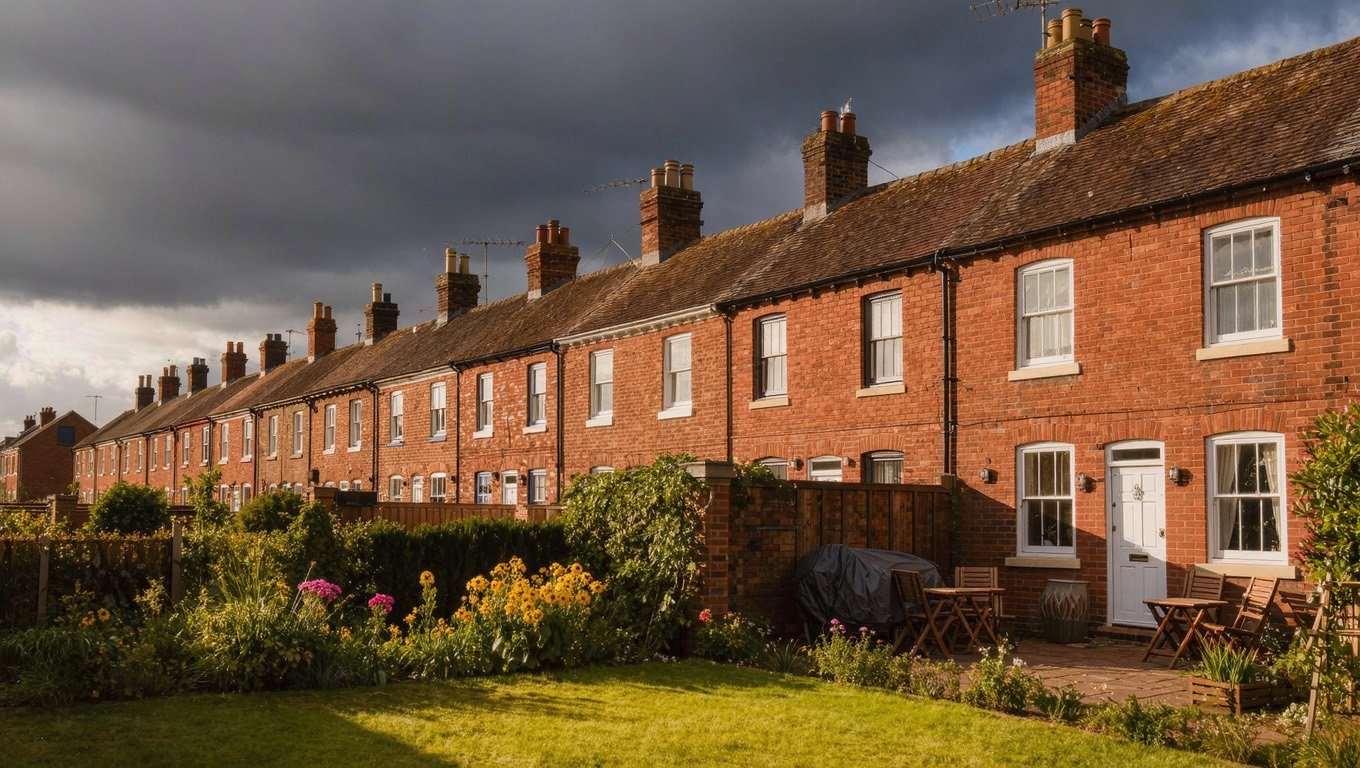
On 19 July 2022 a grass fire crossed a field boundary at Wennington in east London and destroyed roughly nineteen houses before the afternoon was out. None of them stood in a forest. They backed onto dry grass, close-board fencing and plastic wheelie bins, and that was enough.
British wildfire risk lives at the wildland edge: moorland across the Pennines, lowland heath in Surrey, Dorset and the Brecks, gorse in Wales and the Mournes, unmanaged grassland almost anywhere. If your boundary touches any of it, this is a weekend's work, and nearly all of it happens in the garden.
Safety first: what this work is, and what it is not
In the UK you do not defend a property against a wildfire. There is no stay-and-defend doctrine, no house is worth it, and a front runs at 10 to 20 km/h uphill through cured grass. This is all preparation, done weeks ahead.
- •Call 999 the moment you see smoke on your boundary; if you are rural, give a what3words or grid reference.
- •Never point a hose at an approaching front. It is for damping embers on your own roof beforehand and wetting down afterwards.
- •Do not strim, mow or grind on dry vegetation on a hot, windy day. Crews attend machinery-started grass fires every summer.
- •In a dry spell watch the Met Office Fire Severity Index. At 'exceptional' councils can close access land under the CROW Act, and all outdoor hot works should stop.
Tools, materials, time and cost
Skill level: competent DIY — a gutter clear, a barrow of gravel, a cordless driver. Two people and one weekend covers it; materials are cheap, and it is fencing, tree work and height that carry the cost.
- •Telescopic pole pruner and long-reach hedge trimmer (hire, £35–£45 a day), stiff rake, shears, barrow, gloves, goggles, FFP3 mask
- •Ladder for single-storey only, or a telescopic gutter vacuum; mesh gutter guards at £6–£12 per metre
- •2 mm stainless mesh and fixings for airbricks, vents and the deck void; washed 10–20 mm gravel (a tonne bag covers 10 m² at 100 mm deep)
- •Day one, 6–7 hours of clearance and gravel: £120–£250. Day two, 5–6 hours on gutters, vents and deck void: £80–£180.
- •Fence panel by the house swapped for a metal gate or gravel board: £90–£180 in materials, £180–£300 fitted. Conifer removal within 3 m of the wall: £250–£700 per 10 m run.
- •Typical heath-edge semi: £400–£900 done yourself, £1,200–£2,200 with contractors on the height and fencing.
Steps 1–6: clearing the first five metres
Work outwards from the wall. The band that decides whether a house catches is 0–1 m, and almost nobody clears it, because that is where the bins, bark mulch and log pile live.
- •1. Strip the 0–1 m band against every external wall to bare ground: bark mulch, dead ivy, leaf litter behind the downpipe, stacked pallets.
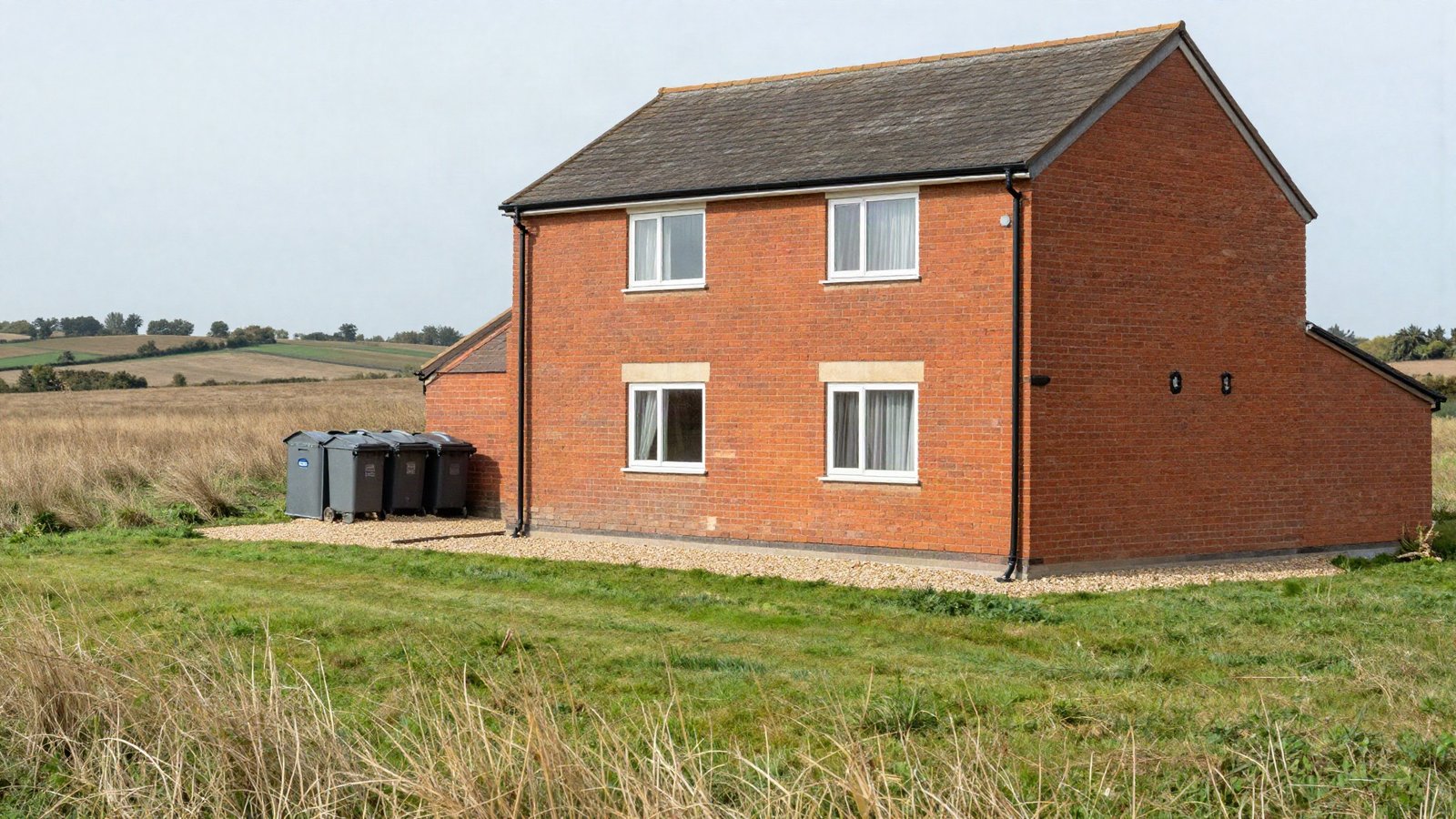
- •2. Lay 100 mm of gravel or slate chippings in its place, 500 mm wide minimum. It is the break that stops a creeping grass fire reaching your render.
- •3. Move wheelie bins 3 m clear or into a brick or metal store. A burning 240-litre bin against a UPVC door turns a garden fire into a house fire.
- •4. Shift patio gas, petrol and two-stroke to a ventilated store 3 m out. Householders may keep 30 litres of petrol in approved containers; above that you must notify your petroleum enforcement authority.
- •5. Keep grass within 10 m under 100 mm through July and August. Green grass barely burns; 300 mm of cured grass carries fire at running pace, and our lawn watering guide covers keeping it green cheaply.
- •6. Break planting into islands 2–3 m apart and pull anything resinous within 3 m of the wall — leylandii, juniper, gorse, bamboo. Screen with a lower-resin option from our privacy hedge guide, planted further out.
Steps 7–11: closing the ember gaps
Most UK homes lost to wildfire are not consumed by the front. They are lit by embers in gutters, under decking or through eaves vents, twenty minutes after the flames passed.
- •7. Break the fence where it meets the house. Close-board timber fixed to the wall is a wick straight to your eaves; use a metal gate or a gravel board on a steel post.
- •8. Clear gutters and flat-roof valleys — dry leaf litter sits directly under a timber fascia. Clear it safely and fit mesh guards while you are up there.
- •9. Screen every opening with 2 mm stainless mesh: airbricks, soffit and eaves vents, extractor terminals, the perimeter under a raised deck. Any gap over 3 mm admits a live ember.
- •10. Sweep the deck void and mesh it, or slab the area. If rebuilding anyway, capped composite decking ignites far less readily than softwood.
- •11. Re-bed slipped tiles and check the ridge. One displaced tile lets embers into a loft of dry felt and cardboard, above your smoke alarms.
Troubleshooting: what stalls this job
Three things reliably hold British homeowners up, and they are legal rather than practical.
- •Nesting birds. Cutting hedges and scrub between 1 March and 31 August risks an offence under the Wildlife and Countryside Act 1981, so do heavy clearance in September or February.
- •Trees you do not control. A conservation area needs six weeks' notice before pruning and a protected tree needs consent; branches can be cut back to the boundary, but the cuttings are the neighbour's.
- •A shared fence. The panel touching your house is often theirs, and a metal gate is cheaper than an argument. A hosepipe ban does not bar emergency use, but gravel and short grass work with the tap off anyway.
Where DIY stops and a professional starts
This is the part most wildfire advice skips. For UK housing stock, the honest line runs here.
- •Do yourself: garden clearance, gravel strips, mulch removal, bin and fuel relocation, ground-level airbrick mesh, deck screening, hose reels, and gutter clearing on a single-storey roof from a footed ladder.
- •Roofer: anything at two-storey height or on the slope, meshing eaves where a tower is needed, re-bedding tiles and ridge. Ladder work at two-storey gutter height is how people end up in A&E.
- •Arborist: felling or reducing anything over roughly 3 m, anything with a Tree Preservation Order, and anything near an overhead line — your network operator isolates that, never you.
- •Builder plus Building Control: swapping timber cladding or a boarded gable for non-combustible board. Re-covering over 25% of an external wall is controlled work under Approved Document B (Technical Handbook Section 2 in Scotland).
- •Master thatcher and insurer: anything involving thatch, including barrier boards and retardant treatment. An electrician for any external pump or sprinkler circuit, notifiable under Part P.
When to stop working and leave
The trigger is visible smoke on your own boundary, or a fire service instruction. Do not wait for flame, and do not go back.
- •Close all windows, doors and trickle vents, shut internal doors, and turn the LPG off at the cylinder only if that takes under a minute.
- •Take medication, documents, pets, keys and chargers, and drive out away from the fire — grass fires cross roads.
- •If you have thirty seconds, photograph each room. Fire and smoke are standard perils on UK buildings cover, and photos make an insurance claim quicker. Keep the grab bag by the front door, not in the loft.
Found this useful?
There's plenty more — hundreds of guides and honestly-tested product reviews for every corner of your home.
Browse All Guides