DIY & Maintenance · 5 min read · 26 April 2026
Window Installation Mistakes to Avoid (UK Fitters' Ranked List)
Most failed windows are not badly made. They are badly fitted, badly ventilated, or the wrong answer to a problem that was never properly diagnosed.
By the Nims Casa editorial team — written from professional cleaning experience and checked against our editorial standards.
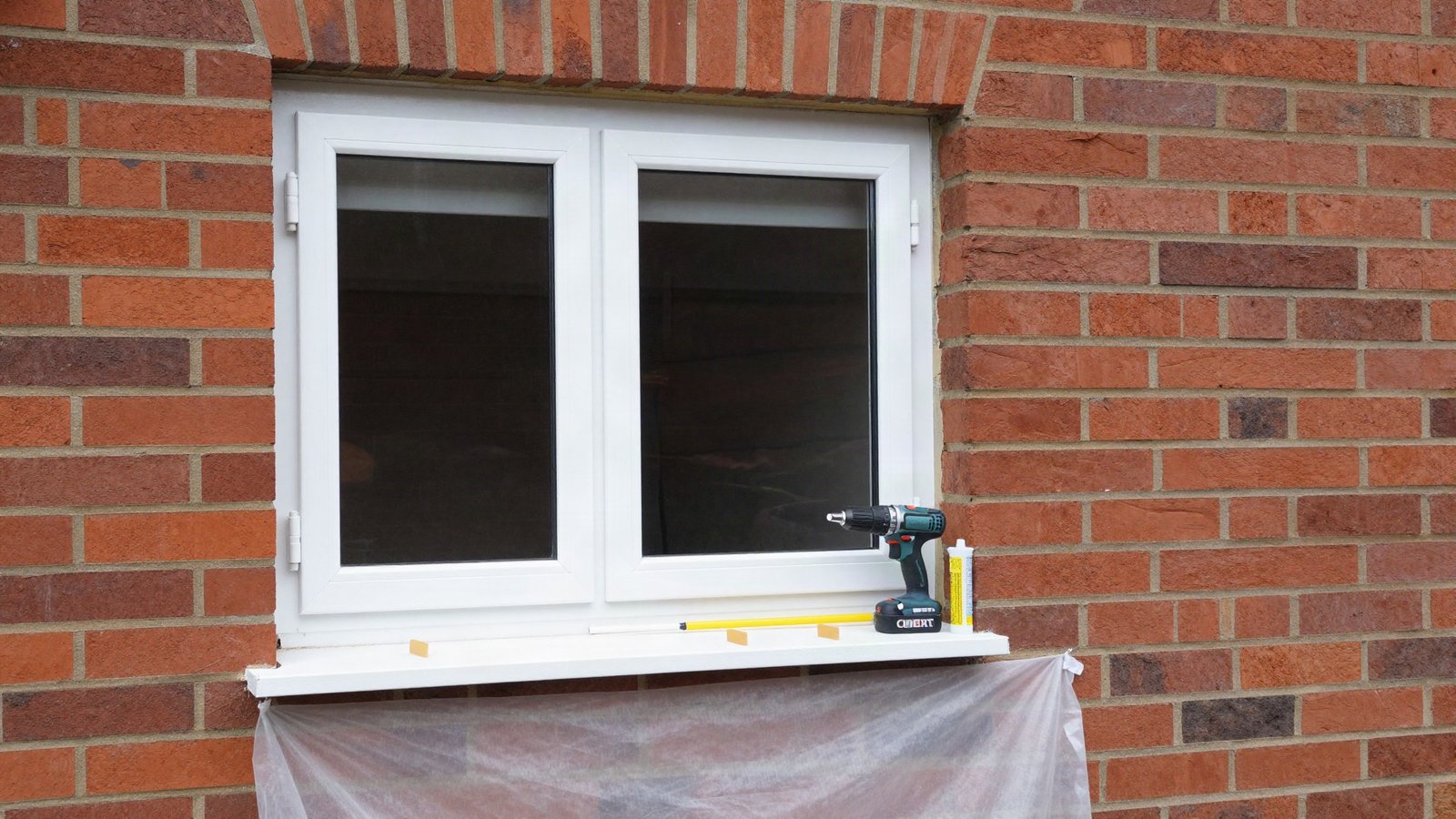
Almost every remedial visit we make to a two-year-old window ends the same way: the frame is fine, the glass is fine, and the fault is in the 40 minutes after the unit went into the hole. Packers in the wrong place, foam doing a job foam cannot do, drainage slots sealed shut with silicone, and no trickle vent because the customer said they let the cold in.
The other half of the problem happens before anyone picks up a tool. A lot of windows get replaced when the actual fault was a £6 gasket, a blocked weep hole or a humidity problem in the room. So this guide runs in two parts: first work out which fault you genuinely have, then avoid the errors ranked by what they actually cost you — starting with the ones that hurt people.
Diagnose the fault before you order anything
Spend twenty minutes on this. Do it on a windy day if you can, and again on a cold morning, because draughts and condensation give completely different signatures. A damp hand held 20mm from the joint will find moving air that your eye never will.
Match your symptom to the cause below. Only the last three lines genuinely point to a new window.
- •Air moving at the joint between frame and brickwork, worse in wind: perimeter seal has failed or was never done properly inside. Re-sealing, not replacement.
- •Draught only around the opening sash: perished gasket or a hinge and keep out of adjustment. £8-£15 of gasket and a 4mm allen key fixes it — see our guide to fixing a drafty window before you spend more.
- •Misting or a tidemark between the panes: the sealed unit has failed, not the frame. A replacement double-glazed unit is roughly £90-£220 fitted for a standard casement pane.
- •Water on the internal sill after driving rain only: failed external seal, or the drainage slots in the bottom of the outer frame are blocked or siliconed over.
- •Water on the internal sill on cold mornings with no rain: that is condensation, and it is a ventilation and heating fault. New windows usually make it worse, not better.
- •Black mould on the plaster reveal but clean glass: cold bridging at the reveal, normally a missing or crushed cavity closer.
- •Timber bottom rail that a bradawl sinks 5mm into: wet rot. Splice-repair if the joints are sound, replace if the corner joints have opened.
- •Sash catching on the frame, lock stiff, visible bow in the frame: the window was packed or fixed wrongly. Refit rather than rebuy.
- •Frame cracked, hinges pulling out of the profile, or the opening itself out of square by more than 10mm: replacement is now the honest answer.
The mistakes that can actually injure someone
These sit at the top because the consequence is not a callback, it is an ambulance. They happen because glass and openings look like a straightforward swap, and the rules that govern them are invisible once the job is finished.
None of these are recoverable by touching up afterwards. Get them wrong and the window comes back out.
- •Ordinary annealed glass in a critical location. Approved Document K requires safety glass below 800mm from finished floor level in a window, below 1500mm in a door, and within 300mm of a door edge. Toughened or laminated to BS EN 12600, with the kitemark etched in a corner so it can be checked. It adds roughly £20-£45 per pane — there is no reason to skip it.
- •Losing the fire escape opening. In habitable rooms above ground level and in loft conversions you need an unobstructed openable area of at least 0.33m², with no dimension under 450mm, and the sill 800-1100mm above the floor. Swapping a side-hung casement for a top-opener quietly destroys this, and it is the single most common failure a building inspector picks up.
- •Cutting an opening wider, or taking out a structural mullion, with no lintel. Diagonal cracking above the head appears within a heating season. A structural engineer's calculation is £250-£450, and the lintel work £600-£1,400.
- •Handling glass off a ladder. A 1200 x 1200 double-glazed unit is around 32kg; triple glazing is nearer 48kg. Two people, a tower (£70-£130 a week to hire) or scaffold, and suction grips. Nothing about a first-floor window is a solo job.
- •Dry-sanding or disc-cutting old paint and panels. Timber windows painted before 1992 very likely carry lead; infill panels and window boards in 1960s-80s properties can be asbestos-cement. Both need wet methods, containment, and in the case of asbestos, a licensed contractor.
The compliance mistakes that surface when you sell
Replacement windows in England and Wales are controlled work. Nobody stops you at the time, but your buyer's solicitor will ask, and an indemnity policy is a delay you do not want mid-chain.
The four that catch people out are consistent.
- •No FENSA or CERTASS certificate. Installers registered under a competent person scheme self-certify. If you fit them yourself, you must submit a building control notice first — typically £200-£450 depending on the council and number of windows.
- •Missing the thermal standard. Replacement windows must hit Window Energy Rating band B or a whole-window U-value of 1.4 W/m²K or better. Cheap trade units on eBay often do not. If you are weighing the glazing spec itself, our comparison of double and triple glazing sets out where the extra spend does and does not pay back.
- •Deleting trickle vents. Approved Document F requires background ventilation to be maintained or improved — in practice around 8,000mm² equivalent area for habitable rooms and 4,000mm² for kitchens, utilities and bathrooms. Homes that lose their vents are the ones that ring us about damp and mould eighteen months later.
- •Ignoring listed building consent or an Article 4 direction in a conservation area. uPVC in a conservation area can mean an enforcement notice and a bill to put it back. If the house is period, weigh restoring the original timber windows against replacing them first.
The fitting mistakes behind almost every callback
This is where competent DIY goes wrong. The frame is in, it looks square, and three things have quietly been done in the wrong order.
Foam is the biggest single offender. Expanding foam is an insulating filler. It is not a fixing, not a weather seal, and it holds water like a sponge once the outer skin is cut. It goes in after the frame is mechanically fixed and packed, and it gets sealed over on both faces.
- •Packers in the wrong places. They belong at every fixing point and directly under load points — corners, and beneath mullions and transoms. Pack elsewhere and you bow the frame; sashes then catch and hinges take the strain.
- •Over-tightening fixings. Frame fixings go roughly 150mm from each corner at maximum 600mm centres, nipped up against a packer, not pulled until the profile dishes. A 2mm bow is enough to stop a lock engaging.
- •Siliconing the drainage slots. Those small slots in the bottom of the outer frame are how the frame drains. Seal them and the water backs up over the internal upstand and onto your sill.
- •The wrong sealant, or only sealing outside. Use low-modulus neutral-cure silicone externally on a 6-10mm joint with a backer rod. Then seal the internal perimeter too — that inner air seal is what stops warm room air reaching a cold reveal and condensing.
- •No cavity closer. In a cavity wall the closer stops both cold bridging and water tracking across. Leaving it out is why the plaster reveal grows mould while the glass stays clear.
- •Filling the gap with mortar. Rigid mortar against a uPVC frame cracks as the profile moves through the seasons, and the crack becomes the leak path.
Measuring and preparation mistakes
Sizing errors are irreversible once the units are made — nobody takes back a bespoke frame. Measure the structural opening in three places for width and three for height, work from the smallest reading, and deduct 10mm from each dimension so you have room for packers and a proper sealant joint. Measure the depth too, because a frame that finishes flush with the outer brick has nowhere to shed water.
On timber, prime or base-coat all six faces including the end grain and the rebates before the frame goes in. The face you cannot reach afterwards is the face that rots first. Check the lintel and the sill for rot before you commit as well; if the plaster around the opening is already cracking, deal with the wall movement before new frames go anywhere near it.
When to stop and call a fitter
Stop if the opening needs widening, if you are working above ground-floor level, if it is a bay (bays frequently carry roof load through the frame itself), or if the house is listed. Stop as well if you pull the old frame out and find a soft, sagging or absent lintel — that is a same-day structural conversation, not a weekend job.
The honest arithmetic matters here. A standard uPVC casement supplied and fitted by a registered installer, with the certificate included, runs about £400-£700; a full house of eight to ten is typically £4,500-£8,000. Our full breakdown of window replacement costs shows where the money goes. DIY saves perhaps £120-£180 a window and hands you the guarantee, the paperwork and the risk. That trade is worth it on a ground-floor shed or garage window. It is rarely worth it on the front of the house.
If the diagnosis at the top pointed at draughts rather than the windows themselves, do the cheap work first — a weekend of draught-proofing across the whole house will beat one new window on every measure that matters.
Quick answers
- •Can I replace windows myself in the UK? Yes, but you must notify building control before the work and pay the inspection fee, because you cannot self-certify without FENSA or CERTASS registration.
- •Do I have to have trickle vents? If the existing windows had them, the replacements must have them. Even where they did not, inspectors expect ventilation not to be made worse.
- •How long should a new window take to fit? Around 60-90 minutes per standard casement for two fitters, including making good. A full house is normally one to two days.
- •Should windows go in before or after plastering? Windows first. The reveals are then plastered up to the frame, which is also your chance to get the internal air seal right.
- •Is condensation on the inside of new windows a fault? Not on the glass — that is room humidity. Condensation between the panes is a failed unit and is covered by the guarantee.
Found this useful?
There's plenty more — hundreds of guides and honestly-tested product reviews for every corner of your home.
Browse All Guides