DIY & Maintenance · 6 min read · 12 September 2026
Damp and Mould in Autumn 2026: What UK Tenants Should Do
A warm, wet autumn is more likely in 2026, just as new damp and mould repair rules arrive. Here is what to check, record and report in the next few weeks.
By the Nims Casa editorial team — written from professional cleaning experience and checked against our editorial standards.
The Met Office three-month outlook published on 11 September 2026 makes a warm and wet UK autumn about 1.5 to 2 times more likely than usual, with a greater chance of windy weather later in the season. Chief meteorologist Ian Lisk linked the wetter signal to a strengthening El Nino. That makes the next few weeks a sensible time to check vulnerable rooms rather than waiting for a damp patch to spread.
There is a legal reason to pay attention too. England's social-housing damp and mould deadlines under Awaab's Law are already in force, while Scotland introduces new investigation and repair clocks on 6 October 2026. The rules are not the same everywhere, so the practical starting point is simple: find the moisture, document it and report it clearly.
What to do before a warm, wet autumn settles in
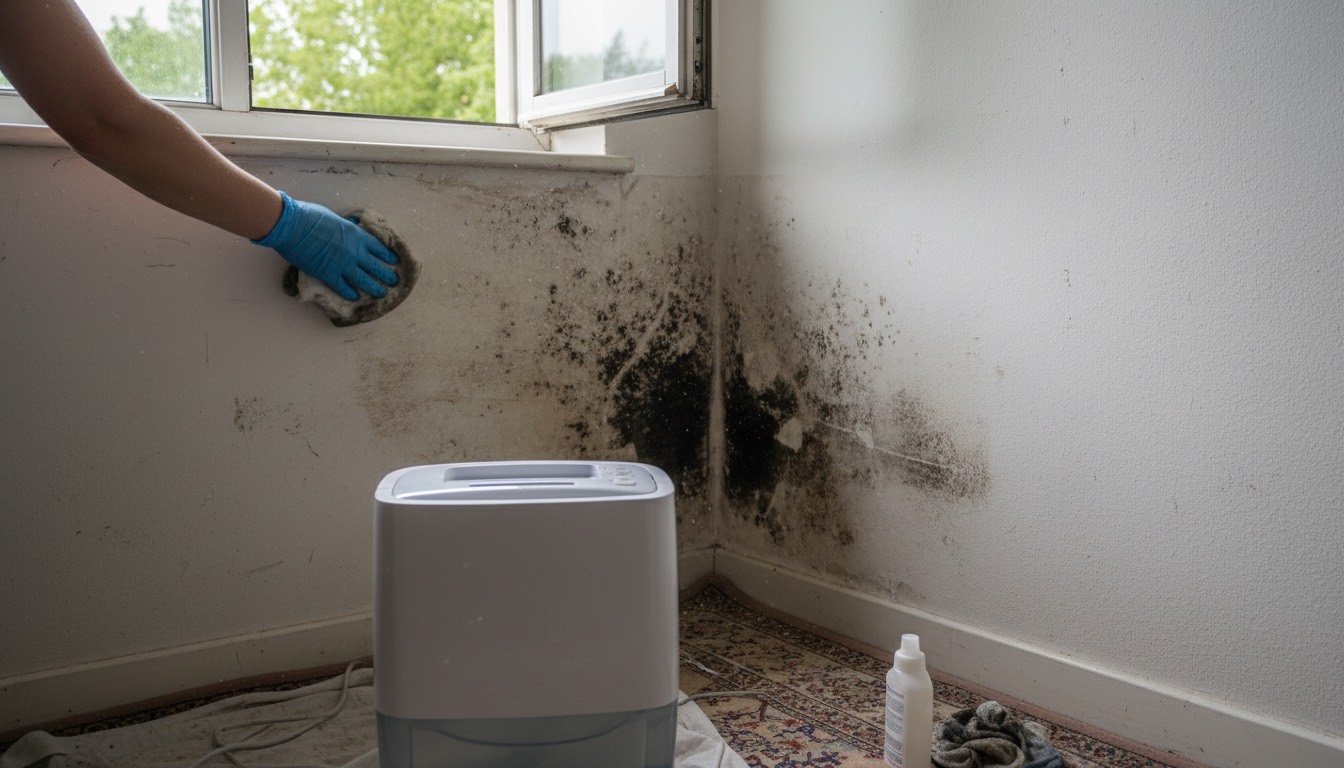
Start with the places moisture shows first: window reveals, external corners, behind furniture on outside walls, around baths and showers, and near roof or plumbing routes. Look for beads of water, musty smells, dark spotting, peeling finishes and patches that feel persistently damp.
The rest of September is expected to be changeable with temperatures near average, followed by slightly above-average temperatures in early October. There is no named storm and no official cold-snap warning for mid to late September 2026, so there is no need for dramatic preparation. Concentrate on routine moisture control and early reporting.
Habinteg Housing Association's condensation guidance dated 12 September recommends ventilating, using extractor fans and avoiding drying washing indoors. If indoor drying is unavoidable, our guide to drying clothes indoors without damp gives practical ways to reduce the moisture load. It is also worth checking the signs of poor home ventilation before colder weather makes opening windows less appealing.
Is it condensation or penetrating damp?
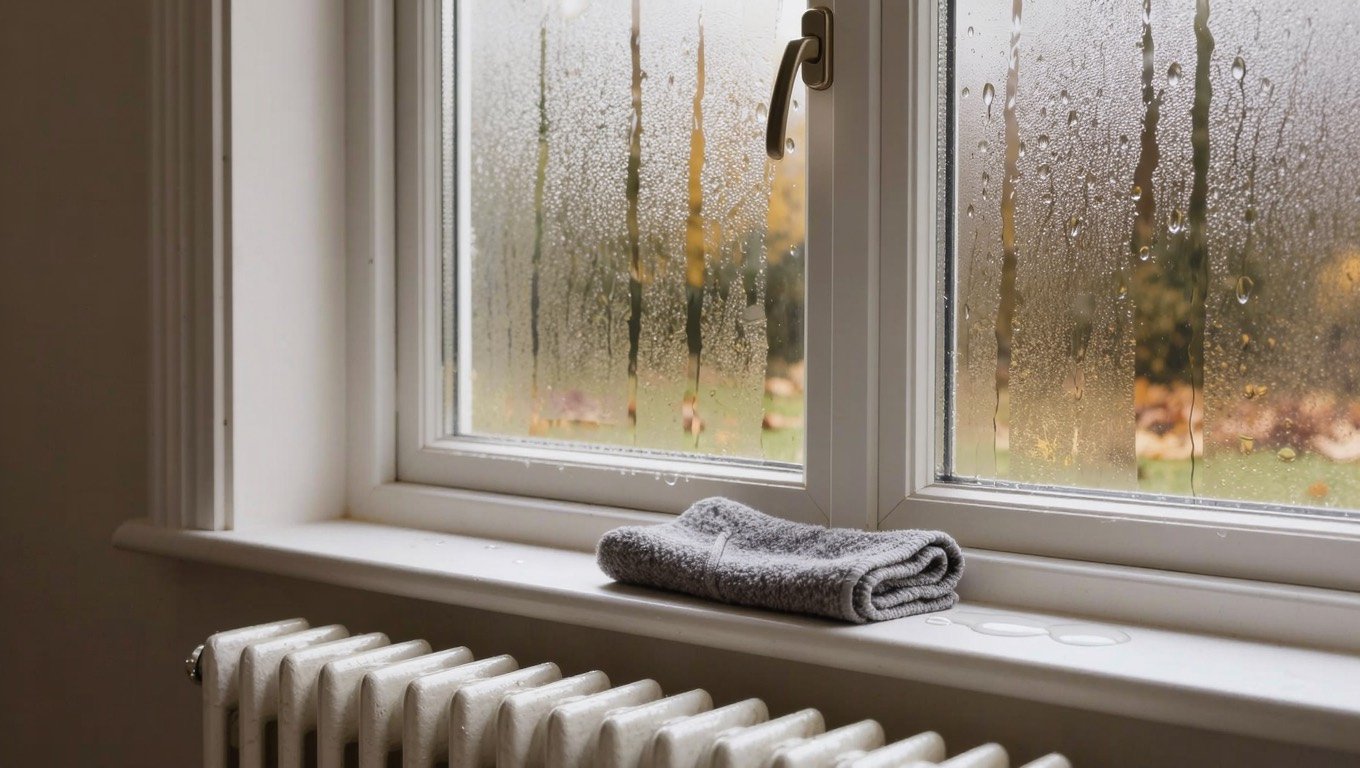
Condensation forms when moisture in indoor air meets a colder surface. Typical clues are water on windows and mould around frames, corners or other cold surfaces, especially where air movement is poor. If the problem follows cooking, showering or indoor laundry, condensation becomes a stronger possibility.
Penetrating damp is moisture entering through the building fabric. A patch associated with an outside wall, roof area or defect, particularly one that becomes more obvious after wet weather, needs investigation rather than being treated simply as a ventilation problem.
Do not assume every mould patch proves one cause. Record when and where it appears and what the weather or room use was like. Our guide to the ideal indoor humidity level can help you understand indoor moisture, while this guide on how to get rid of damp and mould covers safe practical cleaning and prevention.
How to report damp and mould to your landlord
Report the problem in writing even if you have already mentioned it by phone or in person. A clear written record helps establish when the landlord was told and what was reported.
Include:
Keep copies of messages, photographs and any replies. If the patch changes, take further dated photographs rather than relying on the first set. For day-to-day prevention while you wait, use sensible ventilation and extractor fans; our September condensation prevention guide is a useful checklist.
- •the date of your report
- •the rooms and exact areas affected
- •what you can see or smell
- •when you first noticed it and whether it is getting worse
- •dated photos showing both the affected area and its wider location
- •any obvious link with rain, leaks or recurring condensation
- •a request for the problem to be investigated and the cause addressed.
England: what Awaab's Law means this autumn
For social housing in England, phase 1 of Awaab's Law has applied since 27 October 2025. After a report of significant damp and mould, the landlord must investigate within 10 working days. It must provide a written summary of its findings within 3 working days of the investigation ending.
If a significant hazard is found, the property must be made safe within 5 working days. Emergency hazards must be dealt with within 24 hours.
Phase 2, covering wider hazards including excess cold and heat, falls, fire and electrical hazards, and hygiene, is scheduled for autumn 2026. Published sources differ on whether it starts in October 2026 or on 30 November 2026, so the exact date is not yet settled.
Private tenants in England are not yet covered by Awaab's Law. An extension under the Renters' Rights Act has no confirmed start date. That distinction matters: do not assume the social-housing clocks apply to a private landlord.
Scotland: new clocks begin on 6 October 2026
The Investigation and Commencement of Repair (Scotland) Regulations 2026 come into force on 6 October and cover social and most private tenancies. For reports made from that date, a landlord must investigate a damp or mould report within 10 working days and provide a written summary within 3 working days after the investigation ends.
If substantial damp or mould is found, repairs must start within 5 working days. Social landlords then have a maximum of 20 working days to complete the work; private landlords must complete it as soon as reasonably practicable.
The timing of your report matters. Cases reported before 6 October are not covered by these new clocks. Keep your dated correspondence so there is a clear record of when the report was made.
What to do if nothing happens
First, check what deadline actually applies to your tenancy and location. Then follow up in writing, referring to your original dated report, the landlord's response and any missed step that applies. Attach updated photographs if the condition has spread or changed.
Keep the focus on the unresolved cause, not only surface mould. Ask what was found during the investigation, what work is proposed and when the next action will happen. Where a law requires a written summary, keep that document with your record.
Homeowners have no landlord to chase and these landlord repair clocks do not give them a repair route. The practical job is therefore to identify whether moisture is coming from condensation, a leak or the building fabric, then arrange the appropriate investigation or repair rather than repeatedly cleaning the visible mark.
Do not solve damp by simply under-heating the home
Energy costs may make people reluctant to heat their homes this autumn. Ofgem's dual-fuel direct debit price cap for typical use is £1,723 a year from 1 October to 31 December 2026, up 4 per cent or £60 from £1,663 in July to September. Gas bills rise about 8 per cent, while homes without gas rise under 1 per cent.
That pressure is understandable, but simply leaving a home colder is not a damp strategy. Use ventilation and extractor fans to manage moisture, deal with leaks or building defects, and report problems promptly where a landlord is responsible.
Make the next few weeks count
The 11 September outlook does not promise constant rain, but it does tilt autumn 2026 towards warmer and wetter conditions, with windier weather more likely later. That is enough reason to inspect known trouble spots now and create a record before conditions worsen.
For tenants, the useful sequence is straightforward: photograph the problem, report it in writing, keep dates and replies, and understand which legal timetable applies. For homeowners, concentrate on finding and fixing the moisture source. In either case, early action is more useful than waiting for a small patch to become a recurring autumn problem.
Found this useful?
There's plenty more — hundreds of guides and honestly-tested product reviews for every corner of your home.
Browse All Guides