Home Safety & Security · 6 min read · 11 August 2026
BBQ and Garden Fire Safety in a Drought: The Rules Right Now
Tinder-dry lawns, banned disposables and coals that stay hot for hours. What UK fire services want you to change about barbecues, mowers and bonfires this summer.
By the Nims Casa editorial team — written from professional cleaning experience and checked against our editorial standards.
The New Forest fire that closed the A31 this week started the way almost every UK grass fire starts: with something small, human and avoidable. After six weeks with barely any rain, heathland and gardens alike are standing fuel. A brown, crisp lawn will take a flame in seconds and carry it to the fence line faster than you can walk, and fire services across the south are at their highest wildfire response level.
Here is the honest version: what is now banned, the mistakes ranked by how badly they end, how to put a barbecue out properly, and the point where fighting a fire yourself becomes the wrong call.
The Mistakes, Ranked by Consequence
Ranked from worst outcome to merely expensive; the top three make the evening news.
- •1. A disposable barbecue on heathland, moorland or dry parkland. This is how the big wildfires start, and in many areas it is a finable offence.
- •2. Beating at a spreading grass fire instead of calling 999. In wind it moves faster than you can run.
- •3. Binning warm coals. They can ignite a wheelie bin 24 hours later, and bin fires against a wall spread into the eaves.
- •4. Barbecuing on decking or dry grass. Baked timber decking ignites from dropped fat alone.
- •5. Siting it within a metre of a fence, shed or hedge. Drought-dry conifers burn like they are soaked in paraffin.
- •6. Lighting charcoal with petrol or meths. Vapour flashover causes serious burns every summer.
- •7. Leaving anything lit unattended. Gusts do not wait for you to finish your drink.
Disposable Barbecues: Banned in More Places Than You Think
There is no blanket national ban, but the patchwork of local bans is extensive. The New Forest, much of Dorset's heathland, most Peak District access land and many council beaches and parks ban disposable barbecues and open fires outright under byelaws or Public Space Protection Orders. Breaching a PSPO typically means a £100 fixed penalty, rising to £1,000 on prosecution, and several major supermarkets have stopped selling disposables altogether.
The physics is simple: the foil tray scorches and ignites grass beneath it, and stays dangerously hot for hours after the sausages are done. If you must use one, it belongs on paving, raised on bricks, doused and left overnight before it goes near a bin. Better: spend £30 on a small reusable grill; our gas vs charcoal comparison covers which is easier to make safe in a dry garden.
Setting Up a Barbecue When the Garden Is Tinder-Dry
All of this is DIY territory: ten minutes of setup before the charcoal is lit.
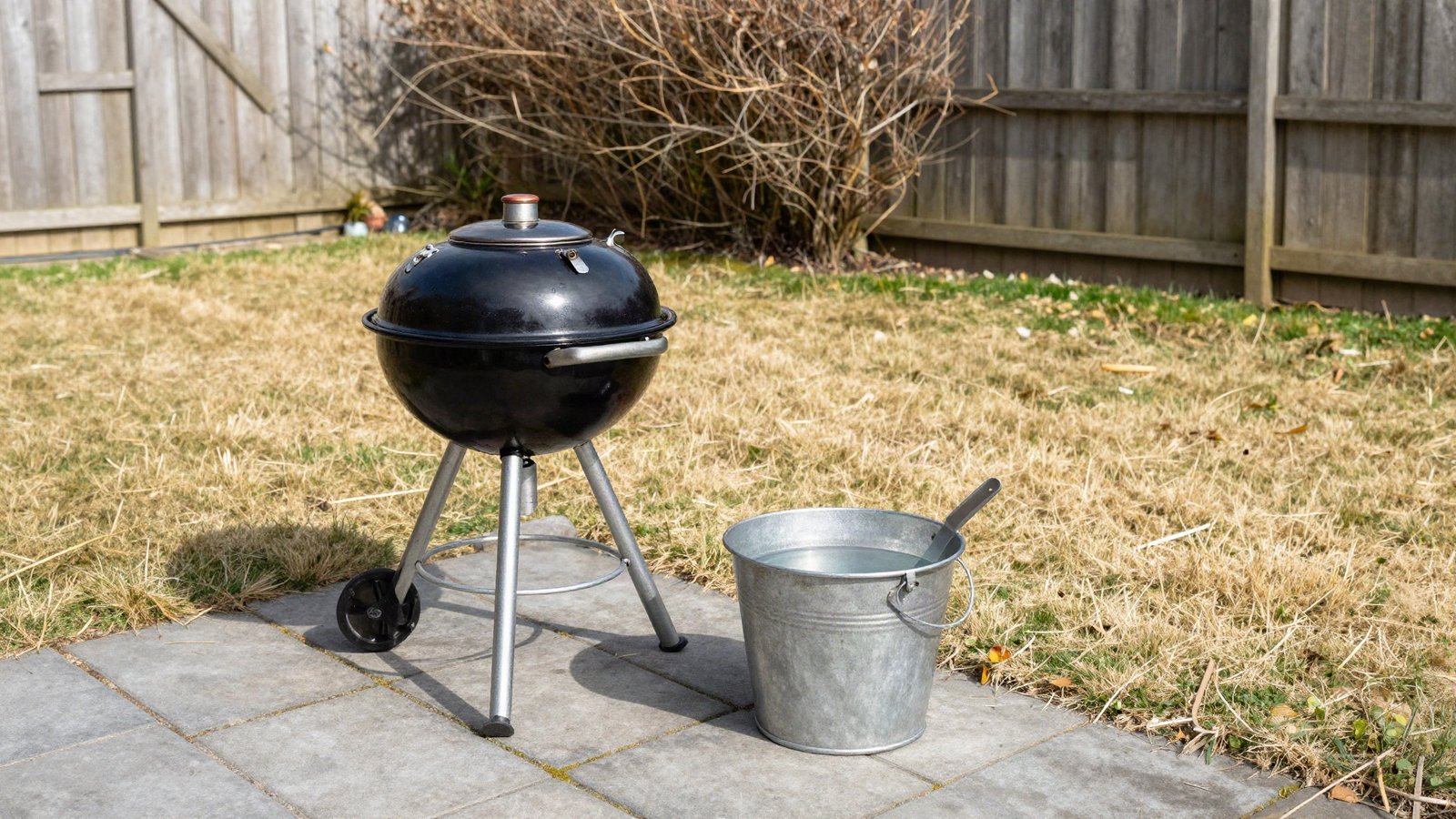
- •Site it on hard standing: paving, gravel or bare earth. Never on grass, however green it looks, and never on decking.
- •Keep at least 3 metres clear of fences, sheds, hedges and anything overhanging, including parasols and pergolas.
- •Fill a bucket and uncoil the hose before you light anything; 90 seconds spent finding a hose belongs to the fire.
- •Check the wind: gusts above roughly 15 mph throw embers metres; that is a postpone-it day.
- •Use firelighters or a chimney starter, never petrol or spirit-based accelerants.
- •Gas users: check the hose for cracking and test connections with soapy water.
- •Keep children and pets behind an agreed line, and never move a lit barbecue.
The Ignition Sources Nobody Suspects
Barbecues get the headlines, but drought fires start from stranger things. Petrol mowers are repeat offenders: a blade striking a stone sparks into dry clippings, and a hot exhaust on parched grass can do it alone. If your lawn is fully brown and crunchy, stop mowing; it is dormant, not growing, and our lawn watering guide explains the little it actually needs.
Glass is the other quiet one: jam jars, bottles and mirrored ornaments can focus sunlight enough to smoulder dry material, and fire services log genuine cases every summer. Add last night's fire pit embers, compost heaps self-heating in the middle, and cigarette ends flicked into borders. A five-minute sweep for glass and damping down old ash removes most of this risk, and our guide to protecting your home from wildfire covers the same logic for houses backing onto fields, heath or railway embankments.
Putting It Out Properly (Where Most People Fail)
A barbecue is not out when the flames die; charcoal holds serious heat for hours, which is where the 10 pm bin fires come from. The routine takes five minutes:
- •Close the lid and vents, then pour water over the coals slowly. Expect violent steam; keep your face back.
- •Stir the coals with tongs and douse again. Unstirred piles stay glowing in the middle.
- •Hold the back of your hand 10 cm above the coals. Any radiant heat means douse again.
- •Disposables: drench, leave on the paving overnight, then bin. Never bury coals in soil or sand; they stay hot for hours and burn feet.
- •Never tip warm ash into a wheelie bin, compost heap or border. Cold charcoal ash can go in general waste the next day.
- •Once everything is cold, clean the grill properly; baked-on fat is the fuel for next weekend's flare-up.
If a Fire Starts: What You Can Fight, and When It's 999
This is the DIY-or-professional boundary, and in a drought it sits much closer to 999 than people think. Tackle a fire yourself only if all of these are true: smaller than a doormat, not touching a fence, shed, hedge or building, no gas cylinder nearby, hose or bucket already in hand, and a clear escape route behind you. Douse it, then douse the ground a metre around it, because grass fires creep back from the edges.
Everything else is the fire service's job. If flames are moving through grass, have reached anything vertical, or the heat stops you getting close, get everyone away, shut windows and doors as you go, and call 999. If a gas barbecue catches, turn the cylinder valve off only if you can reach it without stretching over flames; if the cylinder itself is being heated, leave immediately and tell the 999 operator a cylinder is involved. Recheck the area for two hours afterwards, since rekindles are common in drought, then walk through our home fire safety checklist; the alarm that wakes you matters more than anything on this page.
Bonfires, Fire Pits and Incinerators Right Now
There is no national bonfire ban, but this is the wrong month to test that. Councils and fire services have formally asked people to avoid garden burning during the drought, some PSPOs prohibit it outright, and a bonfire that spreads or repeatedly smokes out neighbours can bring statutory nuisance action. Hold your garden waste instead: green bins and recycling centres take it, and brash piles can wait for autumn.
Fire pits and chimineas follow the same rules as barbecues: hard standing, 3 metres of clearance, water within reach, and fully doused before bed. If you are planning one for when conditions ease, our guide to building a fire pit covers UK siting rules and costs. For now, check your local fire service's website for the wildfire risk level before you strike a match; when it says severe, cook indoors. No barbecue is worth a fence line, let alone a forest.
Found this useful?
There's plenty more — hundreds of guides and honestly-tested product reviews for every corner of your home.
Browse All Guides