Garden & Outdoor · 6 min read · 19 April 2026
Gas vs Charcoal Grill: The Honest UK Comparison on Cost, Heat and Hassle
Same sausages, two very different machines. The real difference is not flavour dogma but money, minutes and where you live — and in a terrace with a courtyard garden, that changes the answer.
By the Nims Casa editorial team — written from professional cleaning experience and checked against our editorial standards.
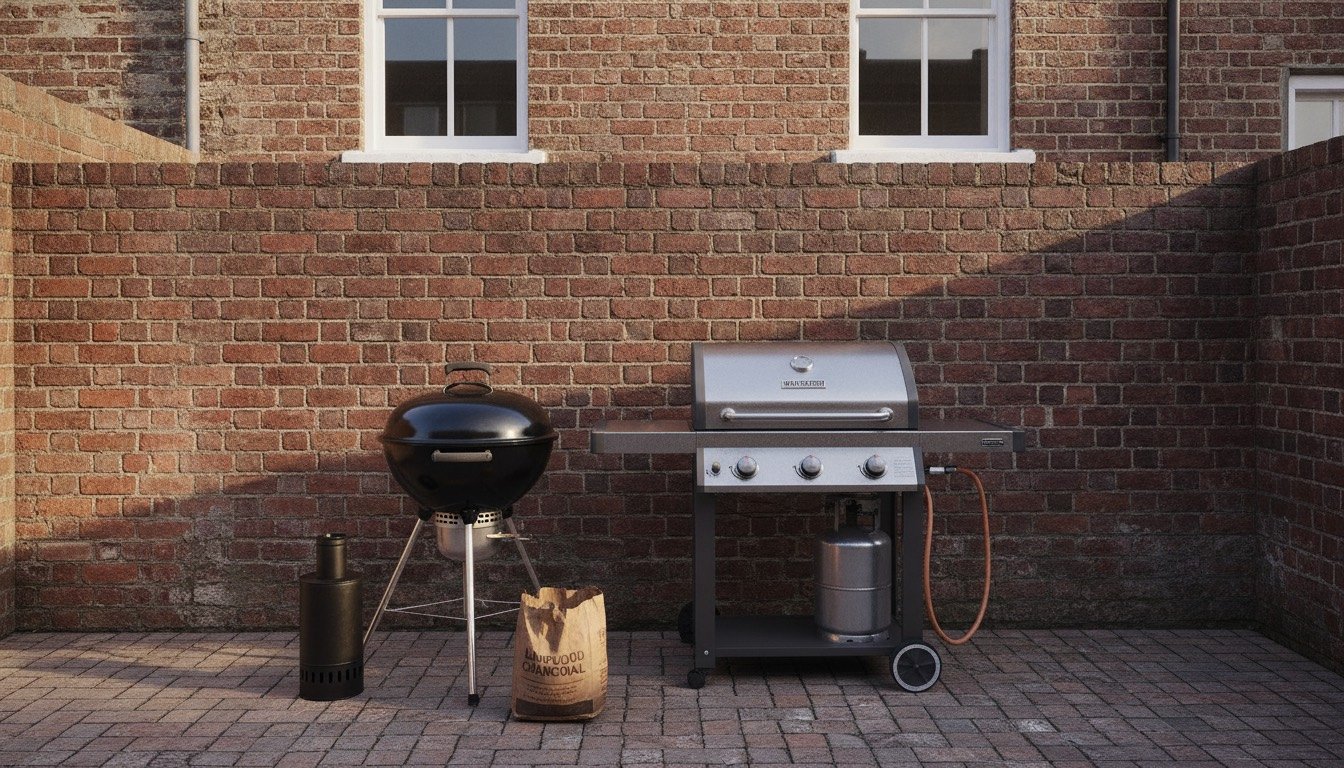
The argument usually gets fought over flavour, which is the least useful part of it. Most of what people taste as barbecue is fat dripping onto a hot surface and vaporising back onto the food, and that happens over gas as readily as over coals. What genuinely separates the two is time, running cost, shutdown risk, and the part nobody plans for: the garden you have to put it in.
A three-burner gas cabinet is a different proposition in a 1990s detached house with a side gate than in a Victorian terrace where the only route to the garden runs through the hallway and a neighbour's single-glazed sash window sits four metres from your grate.
The short version, side by side
These are the figures we quote customers, comparing a decent 57cm kettle against a mid-range three-burner gas barbecue rather than the cheapest of each.
- •Purchase price: a good charcoal kettle is £150-£260; equivalent-quality three-burner gas is £450-£700. Entry-level gas at £150-£250 rarely survives four British winters.
- •Fuel per cook: charcoal £3.50-£5.00 (1.5-2kg of lumpwood at £2.40-£3.00 a kilo). Gas £1.20-£1.80 an hour, from a 13kg patio gas refill at £32-£38.
- •Cold to cooking: gas 8-10 minutes; charcoal 20-25 minutes with a chimney starter, considerably longer without one.
- •Grate temperature: gas 230-280°C lid down. Charcoal 300-350°C direct, and over 400°C on fresh lumpwood for a proper crust on a steak.
- •Low and slow: a kettle holds 110-130°C for five to eight hours on 1.5kg of briquettes. Gas holds low temperatures easily but needs a smoke box to taste of anything.
- •Smoke: gas produces almost none; charcoal throws out 10-15 minutes of heavy smoke at lighting, which is when neighbours notice.
- •Shutdown: gas is off in a second. Charcoal stays dangerously hot for two hours and gives off carbon monoxide the whole time.
- •Lifespan: cast-aluminium or stainless gas lasts 8-12 years with a new burner set halfway; a porcelain-enamelled kettle regularly does 15 years.
Performance: where each genuinely wins
Gas wins on Tuesdays. You can decide to cook at 18:40, be searing at 18:50 and be indoors by 19:30 with nothing left smouldering. Three controlled burners give real zones without moving anything.
Charcoal wins on peak heat and long cooks. Nothing domestic in gas matches a bed of lumpwood at 400°C for a 25mm ribeye, and a kettle with the vents shut to a whisper is a capable smoker for a fiver of briquettes. It also copes better with a full grate: gas sags in temperature under 20 burgers because burner output is fixed.
- •Choose gas if you will cook more than about 30 times a year — the speed is what keeps you doing it.
- •Choose charcoal if you cook at weekends, in batches, and enjoy fire management rather than tolerating it.
What each costs over ten years
Assume 25 cooks a year, realistic for a UK household using it April to September. Over a decade, 250 sessions. The headline is counter-intuitive: charcoal is far cheaper to buy and clearly dearer to feed.
- •Charcoal: kettle £250, chimney starter £30, cover £30, replacement grate around year six £30, cleaning blades £25. Fuel 250 × £4.25 = £1,063. Ten-year total about £1,428, or £5.70 a cook.
- •Mid-range gas: barbecue £650, cover £45, cylinder deposit £45, burner set and flame tamers at year six £110. Fuel 250 hours × £1.60 = £400. Total about £1,250, or £5.00 a cook.
- •Budget gas: a £200 barbecue replaced at years four and eight is £600 of hardware plus £400 of gas — roughly £1,000, but with three trips to the tip and worse cooking throughout.
- •Cook 60 times a year and gas pulls clearly ahead: £96 of propane against roughly £255 of lumpwood annually.
- •Building something permanent changes the maths entirely, because fixed costs dwarf fuel — see our outdoor kitchen cost guide.
Setting up: cylinders, hoses and outdoor sockets
Charcoal needs no installation beyond a level, non-combustible standing area a metre clear of anything that burns, and a lidded metal ash bucket. Ash sits in it 48 hours before it goes near a wheelie bin.
Gas needs discipline. In the UK you are running bottled LPG, not piped gas: 13kg propane on a 37mbar regulator is standard. Use propane, not butane — butane stops vaporising below about 4°C, which covers most of April and October here. Replace the rubber hose every five years, check the moulded date stamp, and bubble-test the joints with washing-up liquid each spring. Store the cylinder outdoors and upright, never below ground level.
A rotisserie, mains ignition or pellet grill needs a weatherproof outdoor socket. In England, adding one to an existing circuit is no longer notifiable; a new circuit is, and Wales still treats outdoor work as notifiable. Budget £180-£350 for a registered electrician, more if the board is an old rewireable unit with no RCD — which is where most problems in century-old houses begin.
The old-house case: terraces, solid walls and Victorian drains
This is where the decision often gets made for you. A rear courtyard in a Victorian terrace is frequently four to six metres deep, enclosed by 225mm solid brick with no cavity, and overlooked by sash windows that leak air both ways. Charcoal smoke in that geometry does not disperse; it climbs the wall into someone's bedroom. Persistent barbecue smoke can be actioned as a statutory nuisance under the Environmental Protection Act 1990, and in terraced streets it occasionally is.
The fabric matters too. Soot marks soft red stock brick permanently, and you cannot wash it off without eroding the brick face and the lime pointing behind it — the same reason we are cautious about jet washing in our patio cleaning guide. Fixing a built-in unit to a solid wall means resin anchors into the bricks themselves; lime mortar joints will not hold a mechanical fixing under load.
- •No side access: a full 13kg cylinder weighs about 28kg and has to come through the hall. A 5kg bottle costs more per kilo but is a one-hand carry.
- •Cellars, coal vaults and lightwells: never store LPG in them. Propane is heavier than air and pools in exactly those spaces.
- •Victorian drainage: do not wash grease into the yard gully. Salt-glazed 100mm clay with shallow traps blocks readily, and a drainage engineer costs more than the barbecue.
- •Listed or in a conservation area: freestanding is never an issue; a masonry built-in against a boundary wall can be, so check before ordering stone.
- •Lath-and-plaster lean-tos and open porches: charcoal must never cool under any roof, however open it looks.
Maintenance: what actually fails
Gas barbecues die from the inside out; charcoal ones die from the bottom up. Either way, cover it only when stone cold and dry, because a cover over a warm, damp barbecue is a rust incubator.
- •Gas: clear the burner ports with a wire each spring. Spider and insect nests inside the venturi tubes are the commonest cause of yellow flames and failed ignition in UK gardens.
- •Gas: empty the grease tray before it overflows into the cabinet, and expect £90-£120 for burners and flame tamers at 5-7 years.
- •Charcoal: rake the ash out after every cook. Left in the bowl it holds moisture against the steel and rots the base years early.
- •Charcoal: brush the grate while it is hot and keep the one-touch cleaning blades moving so they do not seize.
- •Both: a proper deep clean twice a season, set out step by step in our guide to cleaning a barbecue.
Who each suits, and the verdict
If you cook often, live in a terrace or a flat with a small enclosed garden, or have neighbours close enough to hear their radio, buy gas. The speed means you use it, the smoke is a non-issue and the shutdown risk is nil. Our best gas barbecue picks start where build quality stops being a gamble.
If you have space around you, cook in weekend bursts, and want peak heat plus the option of smoking a shoulder for eight hours, buy charcoal — and spend £250 on a good kettle rather than £600 on a kamado you will use twice.
The honest verdict after years of servicing both: ten-year cost differs by under £200, so choose on behaviour and geography, not economics. Gas gets used more; charcoal cooks better on its best day. If you are planning something fixed rather than something on wheels, settle the layout first with our guide to planning an outdoor kitchen, because moving a gas point twice costs more than either barbecue.
Found this useful?
There's plenty more — hundreds of guides and honestly-tested product reviews for every corner of your home.
Browse All Guides