Garden & Outdoor · 5 min read · 20 April 2026
How to Clean a Grill: The Full Method for Gas and Charcoal BBQs
Most barbecues are not worn out, just filthy. Here is the method we use on gas and charcoal grills at the start of every UK season, including what a tenant can safely do.
By the Nims Casa editorial team — written from professional cleaning experience and checked against our editorial standards.
Nine out of ten barbecues replaced in April would have cooked well for another five years. What people read as "knackered" is usually carbonised grease flaking off the lid into the food, blocked burner ports giving a lazy yellow flame, and grates that look rusty but are only crusted.
This is not the same job as cleaning an oven, and the indoor shortcuts damage outdoor kit. Caustic oven cleaner eats cast aluminium. A pressure washer forces water into burner tubes and igniters. Cheap wire brushes shed bristles into food.
Safety first: gas, hot ash and caustic cleaners
Three things genuinely hurt people here, and none is the dirt. Disconnect the cylinder at the regulator before you touch anything, and keep it outdoors and upright — never in a cellar or under the stairs.
Charcoal ash stays hot enough to start a fire for 24 to 48 hours. Damp it down, seal it in a metal bucket and leave it outside overnight before it goes near a bin; warm ash is a routine summer callout for UK fire crews.
Wear nitrile gloves and eye protection with any degreaser. Sodium hydroxide oven cleaners blacken and pit cast aluminium lids within minutes and strip the seasoning off cast iron. Use a dedicated barbecue degreaser, and keep all of it off the paving.
Tools and materials you actually need
A £20 to £30 kit that lasts several seasons. The scraper is the only item worth paying up for.
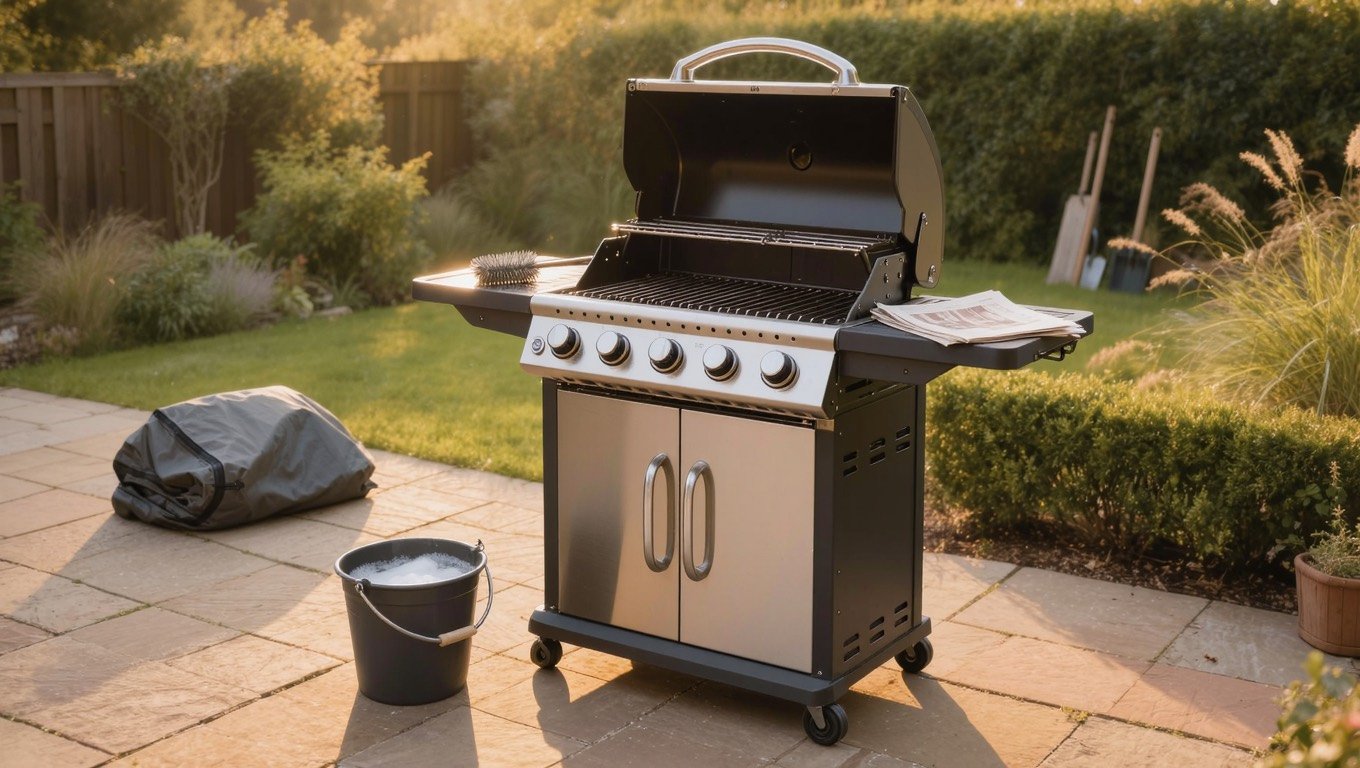
- •Bristle-free grill scraper or coiled stainless helix brush, £8 to £15. Loose bristles from cheap brushes have caused hospital admissions — if yours sheds when tugged, bin it.
- •Barbecue degreaser, £3 to £6 for 500ml from B&Q, Wilko or the supermarket. Alkaline, not caustic.
- •Two buckets, hot water and washing-up liquid for the soak.
- •Non-scratch pads and a plastic putty knife or old wallpaper scraper for the lid.
- •A paperclip and an old toothbrush for burner ports and venturi tubes.
- •Rapeseed oil and kitchen roll for re-seasoning cast iron, plus heavy-duty foil for the drip tray.
Realistic time, cost and how often
A full strip-down is 90 minutes to two hours on a three-burner gas barbecue, about an hour on a kettle charcoal. Do it twice a year: April before the season, and October before it goes away. In between, a burn-off and scrape after each cook takes ten minutes and prevents most of the hard work.
Consumables run £15 to £25 a year. Cast iron grates cost £40 to £80 to replace, flavouriser bars £25 to £60 a set, a burner tube £20 to £45 — all worth buying while the frame and firebox are sound. Professional cleaning services with a dip tank charge £90 to £180: fair on a large built-in unit, poor value on a £250 trolley model.
The deep clean, step by step
- •1. Burn it off. Lid down, all burners high for 15 minutes, past 250°C on the lid gauge. Grease carbonises to a dry ash you can brush away. On charcoal, do this at the end of your last cook.
- •2. Shut the gas at the bottle first, then the control knobs. Let it cool to hand-warm, disconnect the regulator and move the cylinder clear.
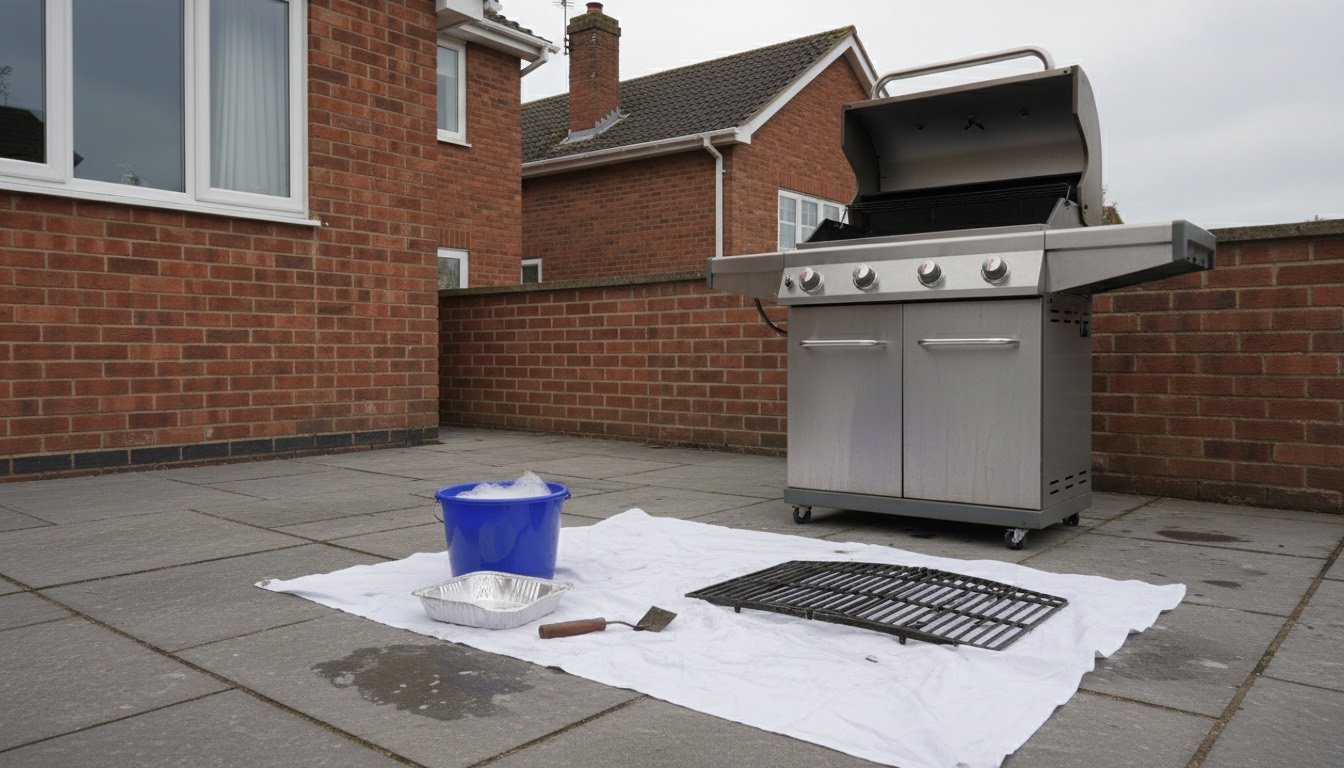
- •3. Lift out grates and flavouriser bars into a bucket of hot soapy water for 20 minutes. Never soak cast iron longer — it flash-rusts.
- •4. Scrape the underside of the lid. Those black flakes are polymerised grease, not paint. A plastic putty knife takes it off in sheets; finish with degreaser and a non-scratch pad.
- •5. Sweep the firebox down into the tray with a hand brush. No water in here yet.
- •6. Check the burner tubes. Ports should be open and even — clear them across the tube with a paperclip, never along it. Look into the venturi for spider webs, the commonest cause of yellow flames and flashback each spring.
- •7. Empty and wash the drip tray, then re-line it with foil, or a shallow layer of sand on charcoal models.
- •8. Scrub the grates, rinse and dry immediately. Wipe cast iron with a thin film of rapeseed oil and run the barbecue at 200°C for 30 to 40 minutes to re-season.
- •9. Clean the exterior: stainless with the grain, enamel with warm soapy water only. Tea-staining on cheap 430-grade stainless is cosmetic and normal in UK coastal air.
- •10. Reassemble, reconnect and leak-test every joint with soapy water. Bubbles mean stop — new hose and clips before the next cook.
The renter-safe version
If the barbecue came with the property, the risk is not the barbecue but what ends up on the ground and in the inventory report. Check the tenancy agreement and, in a flat, the lease — balcony barbecues are banned outright in a large share of UK leasehold blocks. Everything below is reversible, the same principle behind sensible rental-friendly decor choices.
- •Stand it on a spare paving slab or fire-retardant mat, never on decking, artificial grass or resin-bound gravel — radiant heat scorches all three permanently.
- •Line the drip tray with foil every cook. Grease that reaches paving soaks in within hours, as anyone following a proper patio cleaning routine will confirm.
- •If it does land on the slabs, blot it, cover it with cat litter overnight to draw it out, then degrease with warm water. Do not start with a pressure washer: on older pointed paving it strips the joints and turns a stain into a repair.
- •Skip caustic cleaners entirely. Nothing you use should be capable of bleaching the landlord's slabs.
- •Deep clean in the final week of the tenancy. Clerks photograph the inside of a barbecue lid exactly as they do an oven, to the same standard as an end-of-tenancy oven clean.
Troubleshooting the usual complaints
- •Yellow, lazy flames: blocked venturi tubes or spider webs. Clear them before assuming the burner has failed.
- •One burner much weaker: partly blocked ports, or the regulator has tripped into bypass. Turn everything off, disconnect, wait 30 seconds, reconnect slowly.
- •Constant flare-ups: full grease tray or caked flavouriser bars. A cleaning fault, not a cooking fault.
- •Orange flaking on grates: usually surface only. Scrub, dry, oil, re-season. If a screwdriver goes through, replace them.
- •Sour, sooty smell on first light: old fat in the firebox. Burn off for 20 minutes before cooking.
When to stop and call someone
Stop the moment you smell gas that does not clear, see bubbles at a leak test that a new hose and clip will not cure, or find a burner tube split along its length. Barbecue LPG sits close enough to Gas Safe territory that guessing is not worth it. Rubber hoses harden and craze — replace them every five years regardless of how they look.
The other stopping point is economic. A holed firebox, a rotted lid hinge or a frame that flexes when you lift it means cleaning is money after bad. Work out which fuel suits how you actually cook, because the gas versus charcoal argument is less one-sided than it looks, then buy against tested gas barbecue picks.
Whatever you keep, dry it properly and use a breathable cover, not a tarpaulin — trapped condensation does more damage over a British winter than a whole summer of cooking, the same lesson that applies to garden furniture.
Found this useful?
There's plenty more — hundreds of guides and honestly-tested product reviews for every corner of your home.
Browse All Guides