Product Reviews · 6 min read · 19 June 2026
The Best Ant Killer UK (2026): What Actually Reaches the Nest
Squashing the trail removes about one per cent of the colony. Here is what actually empties a nest, what each product is genuinely for, and where a competent DIYer should stop.
By the Nims Casa editorial team — written from professional cleaning experience and checked against our editorial standards.
Affiliate disclosure: if you buy through links in this article we may earn a small commission at no extra cost to you. Our recommendations come from professional cleaning experience and are never influenced by retailers or brands.
A line of black ants crossing the kitchen worktop in July is rarely a kitchen problem. The colony is almost always outside — under the patio slabs, beneath the concrete doorstep, or in the sand under block paving — and it has sent twenty or thirty foragers indoors because something sweet is on offer. Wipe the trail away and you have removed perhaps one per cent of the nest. The queen keeps laying, and the trail is back within two days.
So the only honest way to rank these products is by whether they reach the queen. Everything else — aerosols, barrier granules, ultrasonic plug-ins — is a supporting act at best. Below are the products worth your money in the UK, what each is for, and the point where a sensible DIYer should stop and phone someone with a certificate.
Our top picks at a glance
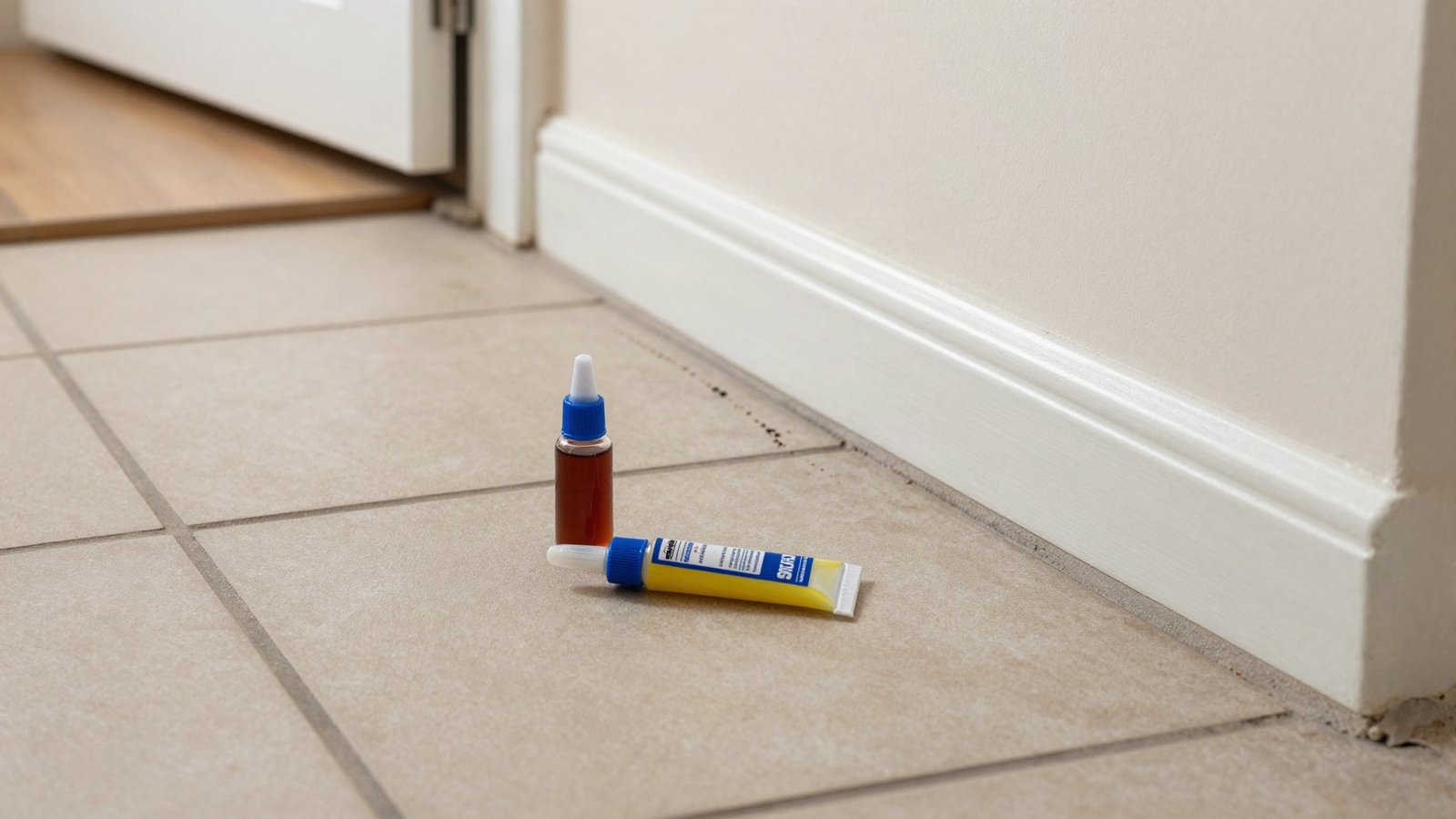
Nippon Ant Killer Liquid (25g tube)
~£5-7A sugar-syrup bait laced with spinosad, and still the product most domestic technicians keep in the van for garden ants. It is slow enough that foragers carry it back and feed the brood, which is the only mechanism that actually empties a nest.
Pros
- ✓ Clears the colony rather than the visible trail — most jobs are done in one to three weeks
- ✓ A single 25g tube treats several trails and costs less than a takeaway coffee
- ✓ Works on both black garden ants and the biting red ants found in UK lawns
Cons
- ✗ Sticky and very easy to over-apply; a single drop on a piece of card is plenty
- ✗ Exposed drops must be placed out of reach of toddlers and pets, which limits where you can use it
Zero In Ant Killer Bait Station (twin pack)
~£5-8Pre-baited sealed stations you sit directly on the trail, so the bait is enclosed and a curious dog cannot get at it. The trade-off is a slower kill than open liquid bait, but the placement freedom is worth it in a busy family kitchen.
Pros
- ✓ Sealed housing makes it the sensible choice around pets and small children
- ✓ Slim enough to slide under a kickboard, behind a bin or along a skirting run
- ✓ No mess, no measuring, nothing to spill on a worktop
Cons
- ✗ Uptake is noticeably slower than a fresh liquid bait drop
- ✗ In a heavy summer the stations dry out and need replacing every few weeks
- ✗ Completely ineffective unless placed on the actual pheromone trail
Nippon Ant & Crawling Insect Killer Powder
~£5-8A permethrin-based powder puffed into a nest entrance or worked along a paving joint where you can see ants coming and going. This is contact-kill perimeter work, not baiting, and it should be treated as an outdoor product.
Pros
- ✓ Fast, visible result on a nest entrance you have actually located
- ✓ Holds up reasonably well in a sheltered joint or under a doorstep
- ✓ Cheap enough to treat several nest entrances across a garden
Cons
- ✗ Will not clear a colony you cannot find — it kills what it touches and nothing more
- ✗ Harmful to bees and aquatic life, so it must stay off flowering plants and away from ponds and drains
- ✗ Needs reapplying after heavy rain, which in a British summer is often
Food-grade diatomaceous earth (1kg tub)
~£12-18Fossilised silica dust that abrades the waxy cuticle of anything crawling through it, so the insect dehydrates. Used sparingly in dry voids, cable entries and the gap behind a kickboard, it is a genuinely useful insecticide-free layer.
Pros
- ✓ No insecticide at all, so it suits households that want to avoid chemical products
- ✓ Stays effective indefinitely as long as it stays bone dry
- ✓ A 1kg tub is several years' worth for a normal house
Cons
- ✗ Stops working the moment it gets damp, which rules out most outdoor UK use
- ✗ Slow — expect days rather than hours, and it does nothing to the queen
- ✗ Fine dust that gets everywhere; wear a mask and apply it with a puffer, not a spoon
Who this guide is for — and who should skip straight to a professional
This is written for householders dealing with the black garden ant, Lasius niger, which is behind the overwhelming majority of UK domestic ant calls, plus the occasional biting red ant nest in a lawn. That job is seasonal, predictable and cheap: £8 to £20 of the right bait, placed properly, clears a garden colony in one to three weeks. Our walkthrough on getting rid of ants indoors covers the placement technique in detail.
A few ant problems are a different animal, and a supermarket product will make them measurably worse.
- •Pharaoh's ants — tiny (about 2mm), pale yellow-amber, active indoors all year in heated buildings. Amateur sprays make the colony bud, splitting one nest into several. This needs professional gel baiting.
- •Any ant problem in a block of flats — treating one flat while the neighbour's stays untreated is money burnt, and it is usually the managing agent's job.
- •Food premises or childminding settings needing a documented treatment record.
- •Trails emerging from a ceiling rose or first-floor light fitting, which can point to nesting in damp timber.
- •Two properly baited cycles that have failed — you have the wrong species, the wrong bait or an unfound nest.
How we judge an ant killer — and what we haven't done
We do not run a laboratory and will not pretend otherwise. These ratings come from two clearly stated sources: repeated use of these products on domestic properties across several British summers, and each product's own approval documentation and label data. No manufacturer paid for a place here.
What we weight, in order:
- •Does it kill the nest, or only the ants you can see? Anything that drops foragers on the spot scores badly — a dead forager never feeds the brood.
- •Bait uptake. Sugar syrups beat protein baits for garden ants in mid-summer; the pattern reverses in early spring.
- •Approval. Every amateur insecticide legally sold in the UK carries an HSE approval number on the label. No number on the pack, no place in this guide.
- •Placement safety around cats, dogs and toddlers — specifically whether the bait is enclosed or exposed.
- •Cost per treated trail, not per pack. A £5 tube that does four trails beats an £11 aerosol that does none.
What to look for when you buy
The most counter-intuitive point is that a good ant killer should be slow. A bait that kills within seconds never gets carried back down the hole, leaving you with a clean worktop and an intact colony. Look for label wording like destroys the nest or kills the queen; be sceptical of instant knockdown.
- •Bait beats spray for anything indoors. Spray is for a nest entrance you can physically see, and nothing else.
- •Match the bait to the season — sugar syrup from May to September, protein bait if a spring trail ignores the syrup after 48 hours.
- •Check for the approval number and the words for amateur use. Professional-only products are not legal for you to buy or apply.
- •Permethrin powders are toxic to bees and aquatic life — keep them off flowering plants and away from ponds and drains.
- •Skip ultrasonic repellers. We have never seen one shift a trail, and neither has any technician we know.
The DIY-or-pro boundary: exactly where to stop
Ant control has a genuinely high DIY success rate, provided you stay on the right side of a fairly clear line. Here is where that line sits in the UK.
Safe for a competent DIYer: placing amateur-approved bait stations directly on an active trail; a drop of liquid bait on card tucked under a kickboard; treating a visible nest entrance in a lawn or paving joint with an approved powder; sealing entry points around pipework with frame sealant or wire wool and filler; brushing fresh kiln-dried sand into the joints after laying or resanding a paved patio; and removing the food source, which usually means the bin lid, the pet bowl and a sort-out of the kitchen cupboards.
Call a professional for: any suspected Pharaoh's ant; a nest inside cavity wall insulation, under a suspended floor or behind a fascia; any job that means lifting floorboards, drilling a cavity or working off a ladder at first-floor height; ants alongside soft or crumbling timber; communal buildings; and anything needing fipronil or indoxacarb gel, which are professional-use products an amateur cannot legally buy or apply. Expect roughly £70 to £150 for a domestic ant visit — our UK exterminator cost breakdown sets out what that should include.
Common buying mistakes
Most failed ant treatments are not a product failure. They are one of these six.
- •Buying an aerosol as the main weapon. Sprays are repellent — they scatter the trail and can split one nest into two.
- •Using spray and bait together. The residue kills foragers before they carry anything home, so the bait sits untouched.
- •Moving the bait on day two because the ants got worse. A heavy trail onto the bait is the treatment working; leave it for a week.
- •Placing bait where it looks tidy rather than on the trail. Ants follow a pheromone route roughly 20mm wide; bait 30cm off it is wasted.
- •Pouring boiling water down a nest hard against a wall or under a slab, soaking the substructure and washing out shallow jointing.
- •Treating below about 10°C. Foraging is slow and uptake is poor, so you blame the product when the weather was the problem.
Termites, and the pests the ant aisle will not fix
Because so much online pest advice is written for North America, UK readers get sold worries they do not have. There is no established termite population in Britain; the only confirmed colony, in North Devon, was the subject of a government eradication programme and is treated as eradicated. A trader who inspects your home and quotes for termite treatment is a red flag, not a diagnosis — though it is worth knowing what genuine termite evidence looks like if you own property abroad. Here the real timber pests are woodworm and rot, and neither responds to anything in the ant aisle.
The same goes for mice, cockroaches and wasps: each needs its own bait chemistry, and multi-pest sprays tend to do none of them properly. Our pest control guides cover each separately, which is how they should be tackled.
Found this useful?
There's plenty more — hundreds of guides and honestly-tested product reviews for every corner of your home.
Browse All Guides