Product Reviews · 6 min read · 26 June 2026
The Best Indoor Plants for Low Light: What Actually Survives a UK Winter
A north-facing back bedroom in January gets a fraction of the light the nursery grew that plant in. Here are the ones that genuinely cope, and the point where a dark room stops being a plant problem.
By the Nims Casa editorial team — written from professional cleaning experience and checked against our editorial standards.
Affiliate disclosure: if you buy through links in this article we may earn a small commission at no extra cost to you. Our recommendations come from professional cleaning experience and are never influenced by retailers or brands.
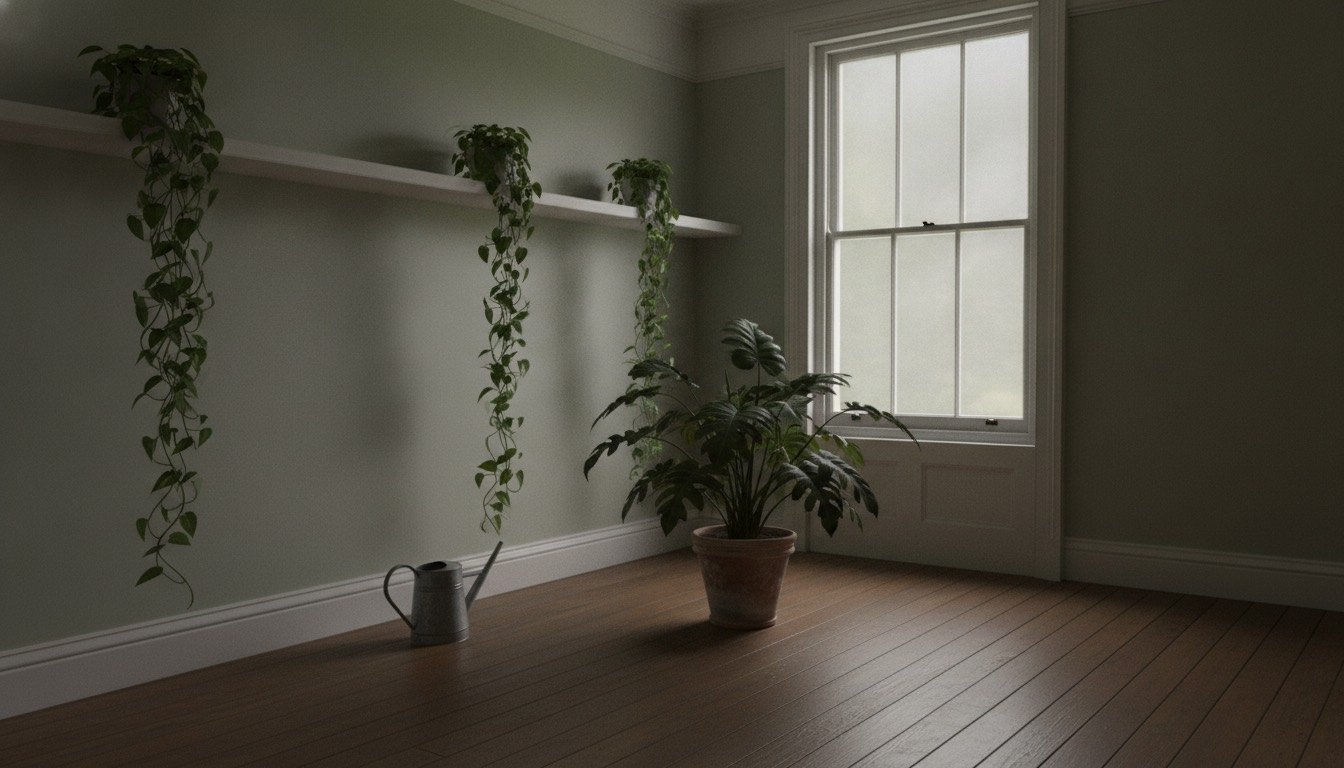
A north-facing back bedroom in a Victorian terrace measures around 200 to 500 lux on a grey January afternoon. The Dutch glasshouse that plant was raised in runs at 15,000 lux and a steady 21C. That gap is why so many houseplants look content for six weeks after you carry them home, then drop half their leaves in a fortnight. It is rarely neglect. It is a light debt coming due.
The genuinely shade-tolerant list is short, and shorter still once you add British conditions: barely eight hours of usable daylight in December, low-emissivity glazing that filters a slice of what arrives, and hallways sitting at 14 to 16C overnight. Everything below copes. We have also drawn a hard line between the jobs you can safely do yourself to make a dark room work and the ones that need a professional.
Our top picks at a glance
Aspidistra elatior (Cast Iron Plant)
~£22-38The Victorians grew these in gas-lit parlours for a reason: nothing else here tolerates deep shade, cold and neglect simultaneously. Widely sold by Hortology, Dobbies and independent nurseries in 17cm and 21cm pots.
Pros
- ✓ Survives below 200 lux and down to 7C, so it copes with unheated hallways and porches
- ✓ Non-toxic to cats and dogs, and tough enough to shrug off being knocked over
Cons
- ✗ Very slow: three or four new leaves a year in a dark room is normal
- ✗ The dearest plant here, largely because nurseries take years to grow it
Zamioculcas zamiifolia (ZZ Plant)
~£15-30Stores water in potato-like rhizomes, so it genuinely tolerates a month unwatered and a fortnight of near-darkness. Stocked year round by B&Q, Homebase and most supermarket plant aisles.
Pros
- ✓ Glossy leaves stay presentable with almost no care and wipe clean in seconds
- ✓ Rots only from overwatering, which makes it very hard to kill in a dark room
Cons
- ✗ Toxic if chewed by cats or dogs, and the sap irritates skin
- ✗ Grows upward and outward, so it needs floor space rather than a shelf
Epipremnum aureum (Devil's Ivy, plain green)
~£10-18The plain green form is far more shade-tolerant than the marbled cultivars everyone buys, and it roots from cuttings in a jam jar within three weeks. Cheap enough to spread through several dark rooms at once.
Pros
- ✓ Tells you clearly when it is thirsty by drooping, then recovers within hours
- ✓ Free to propagate, so one plant can fill a stairwell over a year
Cons
- ✗ Toxic to pets, and trailing stems sit at exactly cat-batting height
- ✗ Goes leggy with long bare gaps between leaves if the light drops too far
Asplenium nidus (Bird's Nest Fern)
~£12-24The one plant here that actively benefits from a steamy internal bathroom, where humidity sits high and light is minimal. Sold in 12cm and 17cm pots by most UK garden centres and online plant retailers.
Pros
- ✓ Thrives in the humidity that finishes off most other low-light plants
- ✓ Non-toxic to cats and dogs, with soft fronds and no spines or sap
Cons
- ✗ Fronds brown at the edges quickly in dry air near a radiator
- ✗ Dislikes water sitting in the central rosette, which causes crown rot
Who this guide is for
This is for people whose rooms are dark for structural reasons they cannot change. If you have a bright south-facing bay, your choice is far wider than this. You are in the right place if your home includes any of the following.
- •North-facing rooms, lower-ground-floor flats and garden-level conversions in terraces
- •Hallways, landings and stairwells lit only by borrowed light through a doorway
- •Internal bathrooms and en-suites with an extractor fan and no window at all
- •Rented flats where you cannot add fixed lighting or drill freely
- •A desk more than three metres from a window, which is already below 300 lux most days
How we judged these plants
Plain disclosure: this is not a controlled glasshouse trial. It draws on a decade of maintaining planting in UK homes and small offices, lux-meter readings taken in ordinary rooms in Leeds, Bristol and south London across a full winter, and the specifications interior-landscaping firms use when they guarantee a plant will live in a dark reception. Where our experience contradicts the care label, we say so.
- •Held condition for twelve weeks at 150 to 500 lux with no supplementary lighting
- •Tolerated 14C nights and the bone-dry air within a metre of a radiator
- •Survived three to four weeks unwatered, which is what actually happens
- •Stocked by UK retailers year round, not only in a spring garden-centre push
- •Cheap enough that a failure is annoying rather than painful, with toxicity to pets stated honestly
Our picks for genuinely dark UK rooms
Four plants earned a place, detailed below. A fifth, the parlour palm (Chamaedorea elegans), deserves a mention at £9 to £15 for a 12cm pot: the cheapest reliable option and completely non-toxic, though it sulks below 13C. Two of our four picks are toxic if chewed, so check our guide to pet-safe houseplants if you have a cat that grazes.
Expect slow growth. A cast iron plant may push out three leaves a year in a dark hallway against eight in a bright north-facing room. Slow is not the same as unhealthy, and impatience is the commonest reason people overwater an otherwise fine specimen. If leaves yellow from the bottom up, our guide to yellowing leaves works through the causes in order of likelihood.
What to look for when you buy
Buying well matters more in a dark room, because a stressed plant has no light budget to recover with. Low light also changes watering completely — a plant at 300 lux uses perhaps a third of what it would at 3,000 — so set your schedule by the compost rather than the calendar, using our houseplant watering guide.
- •Tip the pot up. A few roots at the drainage holes is ideal; a solid felted puck means stress and immediate repotting.
- •Lift it. Heavy and cold means saturated compost, a straight road to root rot in a dark room.
- •Buy the smaller size. A 12cm pot at £12 acclimatises far better than a 24cm specimen at £45.
- •Skip variegated forms. Cream areas carry no chlorophyll, so a marbled devil's ivy needs noticeably more light than the plain green one.
- •Between November and March, ask for a sleeve. Ten minutes at 4C on the walk to the car will blacken a fern or a palm.
Where DIY stops and a professional starts
Making a dark room work usually means shelving, hanging planters or a grow light, and this is where people get hurt or fall foul of the regulations. The boundary in the UK is clearer than most assume.
Do all of this yourself: fit a hanging planter to a plasterboard ceiling using spring toggles rated for the load, which realistically caps a wet pot at 4 to 5kg; screw a bracket shelf into timber studs found with a detector; repot, prune and set up a pebble humidity tray; and plug a clamp-on LED grow lamp into an existing socket, which is not notifiable work anywhere in the UK. A 20W full-spectrum lamp on a plug timer costs £25 to £40 and runs for roughly £4 a year at eight hours a day.
Call a professional for everything below, and do not negotiate with yourself about it.
- •Any new socket, spur or fixed light fitting for a plant shelf. In England and Wales, new circuits and most bathroom electrical work are notifiable under Part P of the Building Regulations and need a registered electrician (NICEIC, NAPIT or ELECSA) or a building control notice; Scotland and Northern Ireland have equivalent rules. Budget £120 to £250 per socket.
- •Anything suspended over roughly 15kg, or any fixing that notches or drills a ceiling joist. A joiner's job.
- •Green walls and planters plumbed into the mains. A plumber's job, with backflow protection required under the Water Supply (Water Fittings) Regulations 1999.
- •Black mould behind planting over roughly a square metre, or returning within weeks of cleaning. That is a building fault, not a plant fault; our guide to damp and mould covers the causes, but persistent growth warrants an independent damp survey, not a free one from a firm selling injected damp-proof courses.
- •Suspected ingestion by a pet or child. Ring your vet or NHS 111 with the plant's Latin name and take a leaf with you.
Common buying mistakes
Most low-light failures are decisions made in the shop, not mistakes made at home. These are the ones we see repeatedly.
- •Buying by aesthetic. Fiddle-leaf figs, calatheas and most succulents will not survive a dark hallway, whatever the display suggests.
- •Trusting a 'low light' label. In the trade it usually means bright indirect light, roughly 1,000 to 2,000 lux — a north-facing windowsill, not a landing.
- •Overpotting. Wet compost in a large pot stays wet for weeks in low light, so go up one size at a time and read our list of common houseplant watering mistakes.
- •Ignoring fungus gnats. Damp compost in a dark room is their ideal habitat, so act early using our guide to houseplant pests.
- •Feeding through the winter. A barely growing plant cannot use it, and unused salts burn the roots. Feed April to September only, at half strength.
- •Skipping the dusting. A fortnightly wipe with damp microfibre removes a film that can cut the light reaching a leaf by 20 to 30 percent.
Found this useful?
There's plenty more — hundreds of guides and honestly-tested product reviews for every corner of your home.
Browse All Guides