Garden & Outdoor · 6 min read · 18 July 2026
Houseplant Watering Mistakes: The Ones That Kill Plants, and the Ones That Damage Your Home
More houseplants die in British homes in January than in July, and almost none die of thirst. Here are the watering errors that matter, ranked by what they actually cost you.
By the Nims Casa editorial team — written from professional cleaning experience and checked against our editorial standards.
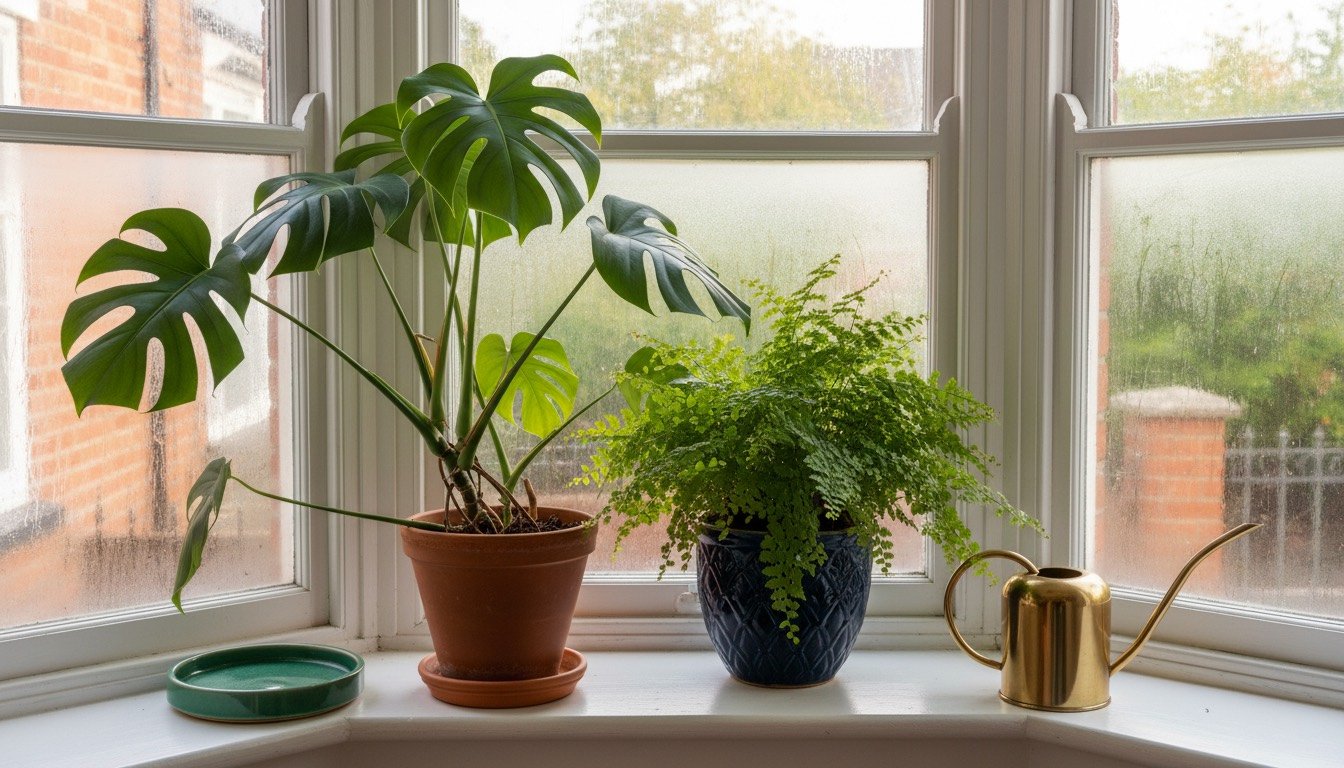
More houseplants die in British homes between November and February than at any other point in the year, and hardly any die of thirst. They drown slowly, in compost that never dries, in a room where the light has collapsed to a fraction of its June level and the plant stopped drinking six weeks ago.
Having unpotted a lot of sodden root balls and mopped a lot of water off engineered oak, we'd split these errors into two piles: those that cost a £12 plant, and those that cost a ceiling or a jolt off a lamp base. Ranked below by consequence, with a plain line at the end showing where DIY stops.
The mistakes that can genuinely hurt you
Water and mains electricity are the only part of houseplant care with a real injury risk, and it is always the same picture: a plant on a shelf, a socket or extension lead below it, someone tipping a can in from above. Water tracks down the outside of a pot far more readily than people expect.
- •Never water a plant sitting on, above or beside a live socket, extension lead or plug-in lamp. Switch off at the wall, or carry it to the sink.
- •Keep grow lights, propagator mats and timers on an RCD-protected circuit and clear of the drip line; conservatory sockets need an appropriate IP rating.
- •Don't lift heavy pots. A 40cm glazed pot of wet compost runs to 30–35kg — water it in place with a long-spouted can, and use a step stool, not a dining chair, for high shelves.
- •Never use washing-up water, softened water from a salt-based unit, or neat feed. Detergent strips the leaf cuticle and sodium builds up fast in a closed pot.
The mistakes that damage the house, not the plant
These are the expensive ones. Laminate and engineered board swell within hours of a standing spill and can't be repaired — you replace boards. A first-floor sill plant that overflows can stain the ceiling below by morning, and unglazed terracotta wicks moisture through its wall, leaving a permanent ring on a waxed oak sill.
The slow version is worse. A dozen plants against a cold north-facing wall lift local humidity all winter, and cold plaster plus damp air breeds black spot mould along the skirting; our guide to damp and mould in UK homes covers ventilation, but moving plants 30cm off the wall does most of the work. Otherwise: deep glazed drip trays, felt pads under terracotta, and emptying saucers fifteen minutes after watering.
The mistakes that quietly kill the plant
Ranked roughly by body count. Most are not overwatering at all — they are drainage failures, and the two get confused constantly. If leaves are yellowing and you can't tell which end of the problem you're on, work through why plant leaves turn yellow first.
- •Planting straight into a decorative pot with no drainage hole — the biggest killer by a distance. Keep the plant in its nursery pot and drop that into the cachepot.
- •Watering to a calendar. Demand can halve between June and December; "every Sunday" is a schedule for the human, not the plant.
- •Shallow sips. A splash every other day wets the top 3cm only, so roots grow upward to chase it and the bottom third goes stale.
- •Leaving a cachepot or saucer full. Roots in standing water have no air, and the fine feeder roots die first — which then looks exactly like underwatering.
The two habits that fix most of it
"How often?" is the wrong question, which is why the answer never works. Judge the pot, not the diary: lift each one the day after watering and again a week later, and the difference in weight is obvious within a fortnight. If lifting is impractical, push a bamboo skewer to the bottom, hold it ten seconds and pull it out — damp compost clings, dry compost doesn't.
The second habit is drench and drain: water until 10–20% of the volume runs out of the bottom, wait a quarter of an hour, then tip the excess away. Our fuller houseplant watering guide gives volumes by plant type. UK compost is now almost all peat-free, and coir and bark mixes look dry on top while still wet at 5cm, then turn water-repellent once truly dry — rehydrate by standing the pot in 5cm of water for half an hour.
UK water and UK winters
Hard water matters more here than international advice admits. London, the South East, East Anglia and much of the Midlands run 250–350 mg/l as calcium carbonate, showing as white crust on compost and terracotta and brown crisped margins on calatheas, ferns and anything carnivorous. Rainwater from a butt is the free fix; boiling removes only temporary hardness. It is the same chemistry you fight on the kettle and shower screen — see our limescale guide. In Scotland, Wales and the North West the water is soft enough to ignore all this.
Winter light is the other local factor. From late October northern Britain sees under 50 hours of sunshine a month, so water use falls sharply while central heating drops humidity to 30–35% and dries the surface fast enough to lie to you about what's below. Halve the frequency, not the volume, and let January mains water — often 5–7°C — stand an hour before it reaches tropical roots. Permanently damp compost means fungus gnats within weeks; drying the surface is the cure, as our guide to bugs on houseplants explains.
Where DIY stops: the professional boundary in the UK
Nearly all of the plant side is squarely DIY. The boundary sits around water, electricity and the building fabric — and in two of those it is a legal line, not just a sensible one.
- •DIY: unpotting and inspecting roots, cutting black mushy root away with sterilised secateurs, repotting into fresh peat-free mix, drilling a drainage hole with a water-cooled diamond hole saw, and running a battery drip timer fed from a water butt.
- •Plumber: any irrigation or self-watering system plumbed into the mains. The Water Supply (Water Fittings) Regulations 1999 require backflow protection, because compost-contaminated water must never siphon back into the supply.
- •Registered electrician (NICEIC, NAPIT or ELECSA): any new socket, spur or fixed light for a plant shelf, conservatory or greenhouse — new circuits are notifiable under Part P in England and Wales.
- •Stop and call an electrician if water has reached a socket, downlight or ceiling rose: isolate the circuit at the consumer unit and leave it off until tested.
- •Plasterer for a stained or bulging ceiling, and an independent CSRT-qualified damp surveyor — not a free survey from a firm selling damp-proofing — if damp returns after you've dried the room.
- •Vet, not a forum, if a pet has chewed a plant; check your collection against our list of pet-safe houseplants.
Quick answers
- •How long can plants go unwatered in winter? Two to three weeks for pothos, sansevieria and ZZ plants in a cool room; ferns and calatheas, far less.
- •Are self-watering pots a good idea? For peace lilies and ferns, yes; for succulents and cacti, no — they need a genuine dry-out.
Found this useful?
There's plenty more — hundreds of guides and honestly-tested product reviews for every corner of your home.
Browse All Guides