DIY & Maintenance · 7 min read · 1 July 2026
How to Get Rid of Damp & Mould in UK Homes (Causes, Cures & Myths)
Black mould on cold walls is a symptom, not the disease. Diagnose which of the three damps you actually have before spending a penny on treatments.
By the Nims Casa editorial team — written from professional cleaning experience and checked against our editorial standards.
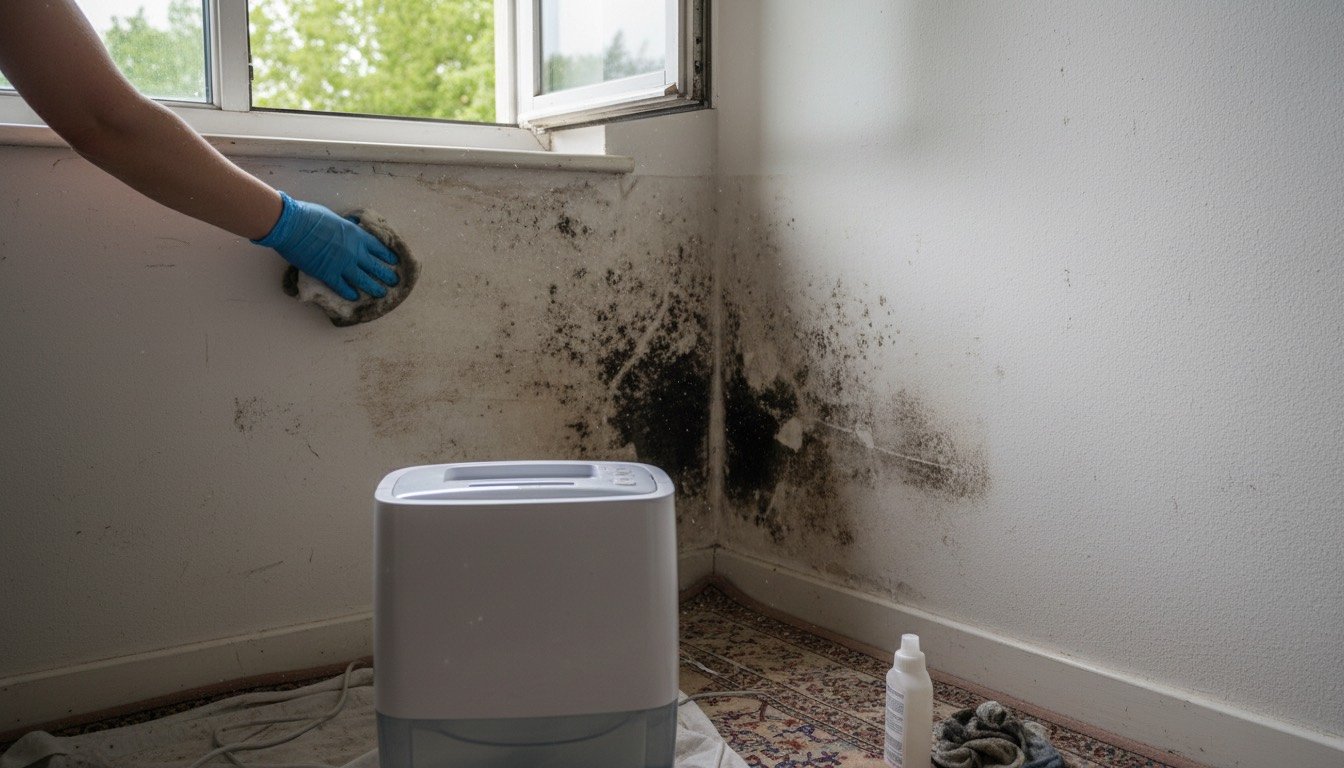
Every autumn, thousands of UK households scrub the same patch of black mould off the same bathroom ceiling or bedroom corner — and every autumn it's back within a few weeks. That's not bad luck: it's a sign the mould was only ever a symptom. Something in the house is putting moisture where it shouldn't be, and until that source is dealt with, wiping the surface is purely cosmetic.
Damp in British housing falls into three distinct categories, each with a different cause and fix, and confusing them is the main reason DIY treatments fail. Order a damp-proof course when the real culprit is a broken extractor fan, and you've spent a fortune solving nothing.
This guide covers how to identify which type of damp you actually have, the tools and safe method for killing existing mould, the habits that stop it returning, the mistakes that make it worse, and when it's worth paying a professional.
How to tell which type of damp you're dealing with
Correct diagnosis takes five minutes and saves weeks of wasted effort. Match what you see to one of three patterns.
- •Condensation damp — by far the most common cause in UK homes. Mould in cold corners, on external walls, around window frames and behind furniture; water beading on glass in the morning; worse in winter. Caused by everyday moisture from cooking, showering and drying clothes indoors meeting a cold surface — see also our guide to stopping condensation on windows.
- •Penetrating damp — a defined patch that darkens and spreads during or after rain, often upstairs, around chimneys, or below a window. The cause is outside: failed pointing, leaking guttering, cracked render, or perished seals letting weather in.
- •Rising damp — rarer than the damp-proofing industry suggests. Look for a tide mark up to roughly a metre on ground-floor walls, salty residue, and damp skirting. Needs a proper survey, but rule out condensation and bridged air bricks first.
Tools and materials for treating damp and mould
A realistic 2026 shopping list, in order of priority:
- •Fungicidal mould remover spray — £5 to £9 a bottle; better than diluted bleach on porous surfaces.
- •Rubber gloves and an FFP2/FFP3 mask — £3 to £10, essential for anyone with a respiratory condition.
- •A stiff scrub brush for grout lines, from around £1.
- •Disposable cloths you're happy to bin afterwards, roughly £5 a pack.
- •A £15 to £20 hygrometer, so you're managing real humidity readings rather than guesswork.
- •A humidistat extractor fan, fitted, typically £150 to £220 including installation — the best single damp investment in the house.
- •A dehumidifier, usually £120 to £280 depending on capacity; our dehumidifier buying guide covers which size suits which room.
- •Mould-resistant paint for repainting treated areas, £20 to £35 a tin.
- •Sealant remover and fresh anti-mould silicone, about £10 to £15, for bathroom seals beyond saving.
Step-by-step: killing mould without spreading spores
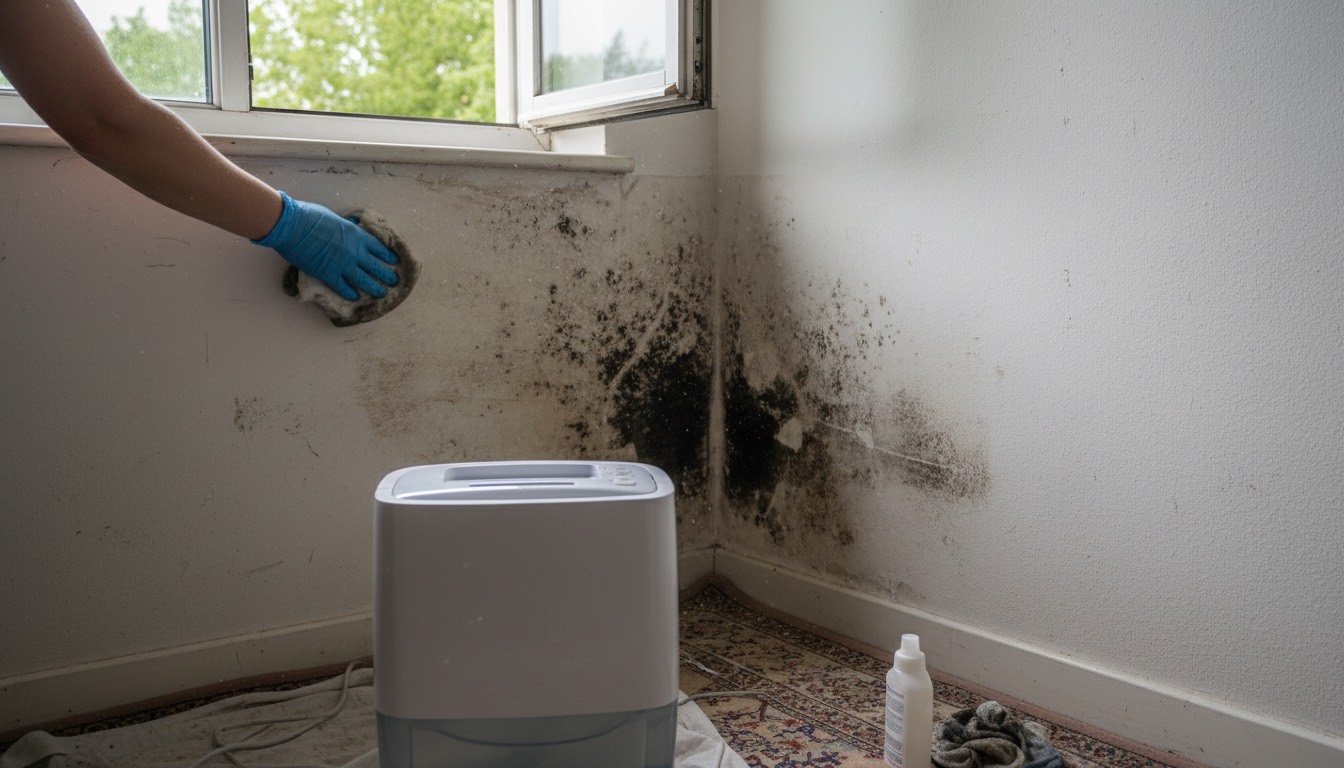
Dry-brushing or vacuuming mould launches spores into the air you then breathe. Work wet, and follow this order:
- •Open a window and close the door to the rest of the house so spores don't travel.
- •Put on gloves and a mask before touching anything mouldy.
- •Never dry-brush mould off — dampen it first so spores stay put.
- •Spray a fungicidal mould remover, or diluted bleach on non-porous, colourfast surfaces only, and leave it to work for the time stated on the label.
- •Wipe from the least affected area towards the worst, then bin the cloth rather than rinsing and reusing it.
- •For mould rooted in bathroom silicone sealant, pack soaked kitchen roll along the line and leave for a few hours before wiping; badly blackened sealant is usually quicker to cut out and re-run. The same wet-first approach works for mould on bathroom grout.
- •Once fully dry, repaint with mould-resistant paint if the area was previously stained, so regrowth shows early.
- •Wash any fabrics that were in the room on a hot cycle — textiles hold spores and the musty smell long after the wall looks clean.
Stopping condensation and damp coming back
Killing existing mould buys weeks, not months, unless the moisture source is fixed. These are the actual cure.
- •Dry clothes outside or with a vented or heat-pump dryer — an indoor airer releases litres of water into the room's air; if you must use one, shut it in a single room with a dehumidifier running.
- •Run extractor fans for every shower and cook, and leave them going 15 minutes afterwards.
- •Keep low background heat on in cold rooms rather than blasting one warm room — mould thrives in the cold room next to the warm one.
- •Pull furniture at least 5cm off external walls so air can circulate behind it.
- •Hold indoor humidity under roughly 60%; a hygrometer tells you the real number, and a dehumidifier enforces it.
Common mistakes that make damp worse
- •Sealing draughts everywhere without adding ventilation — trapped moisture just condenses somewhere else.
- •Relying on vinegar alone for established black mould; it's noticeably weaker than a proper fungicidal treatment.
- •Painting straight over a damp patch without addressing the cause — the stain bleeds back through within weeks.
- •Letting mould-contaminated textiles go back into wardrobes without washing first — see our guide on mould on clothes and inside wardrobes.
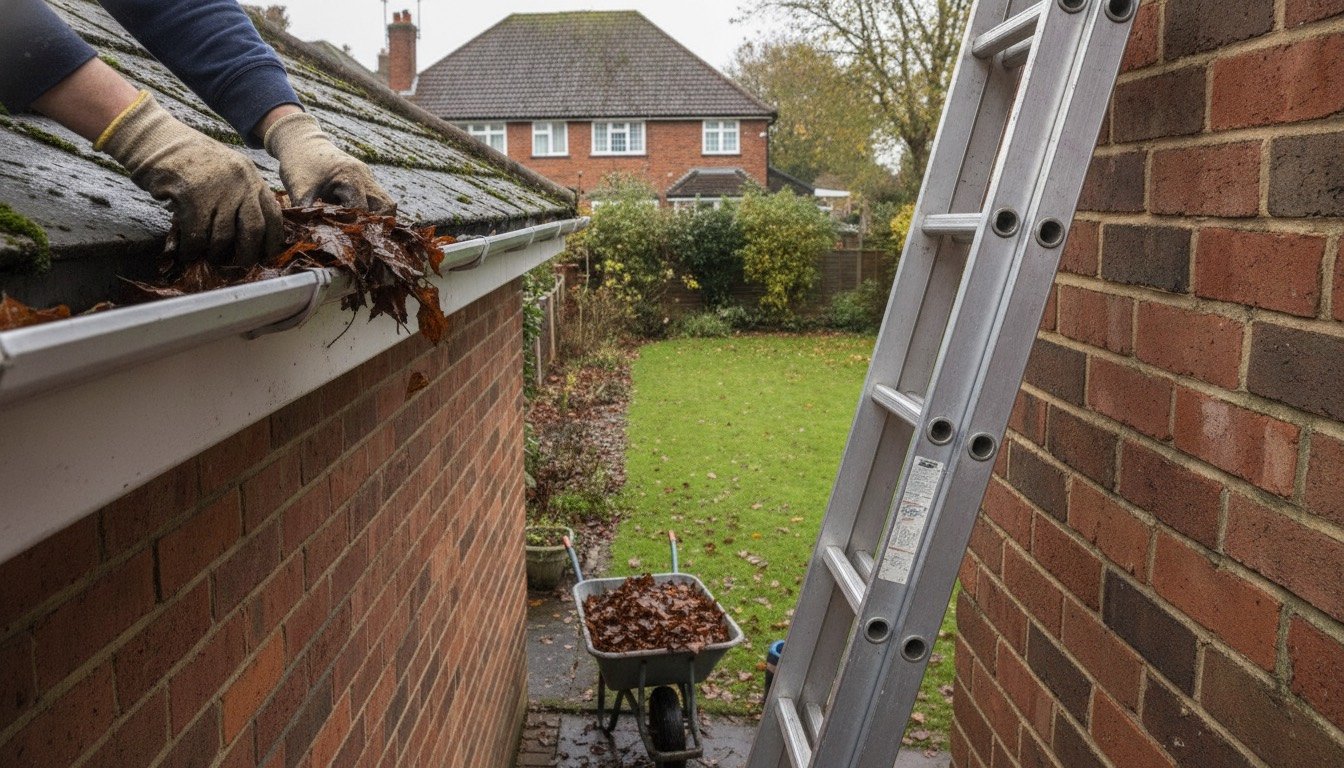
- •Ignoring gutters and roofline maintenance, often the hidden trigger behind penetrating damp; routine gutter cleaning and maintenance is one of the cheapest damp preventions there is.
- •Staying silent in a rented property instead of reporting damp in writing, which leaves no paper trail if it's later disputed.
When it's worth calling in a professional
Some situations are past sensible DIY: mould covering more than roughly a square metre, mould that returns within weeks despite good ventilation habits, any damp in a rental (document it with photos and dates and notify the landlord in writing — persistent damp is legally their responsibility), or a household with anyone who has asthma or another respiratory condition. Renters should also know the fixed timescales landlords now face — our guide to landlord repair deadlines for damp and mould sets them out.
A proper damp survey typically starts from around £150 to £300, and full remediation costs vary by cause and scale; our guide to mould remediation costs sets out realistic UK price ranges to sanity-check any quote you're given.
Frequently asked questions
**Is black mould dangerous to breathe in?** Brief exposure while cleaning a small patch isn't a major hazard for healthy adults provided you wear a mask and ventilate the room. It's a bigger concern for anyone with asthma or another respiratory condition, and for babies and young children — treat larger areas cautiously or bring in a professional.
**Will bleach kill mould permanently?** Bleach can kill surface mould on non-porous materials like tiles and glass, but it doesn't reach roots growing into porous plaster, grout or silicone, which is why a dedicated fungicidal mould remover generally lasts longer. Once the wall is treated and fully dry, repainting with one of the best anti-mould paints helps stop regrowth in the paint film itself.
**How do I know if it's condensation or rising damp?** Location is the giveaway: condensation clusters around cold spots, windows and corners and worsens in winter, while rising damp shows as a tide mark low on ground-floor walls with salty residue. When in doubt, rule out condensation first — it's by far the more common problem.
**Can I claim on home insurance for damp and mould damage?** Standard buildings insurance usually excludes gradual issues like condensation or long-term rising damp, since insurers treat these as maintenance failures. Damage from a sudden escape of water, such as a burst pipe, is often covered instead — check your policy wording.
**Is my landlord responsible for fixing damp in a rented home?** In most cases, yes — landlords have a legal duty to keep a rented property free from serious damp and mould hazards. Report the issue in writing with photos, keep copies, and escalate to your council's environmental health team if it isn't addressed within a reasonable time.
**Does a dehumidifier actually stop mould coming back?** It helps enormously alongside ventilation, but it's a management tool rather than a cure — it lowers the humidity mould needs to establish, but won't fix a leaking gutter or a broken extractor fan causing the moisture in the first place. Background warmth is part of the same control — our guide to when to turn the heating on covers the point where holding out starts costing you in condensation.
Found this useful?
There's plenty more — hundreds of guides and honestly-tested product reviews for every corner of your home.
Browse All Guides