Product Reviews · 6 min read · 27 June 2026
The Best Soil for Raised Beds (2026): What to Buy and What It Really Costs
Most people fill a raised bed with bagged multipurpose compost and wonder why it collapses by August. Here is what actually goes in, what it costs per cubic metre, and the four products worth the money.
By the Nims Casa editorial team — written from professional cleaning experience and checked against our editorial standards.
Affiliate disclosure: if you buy through links in this article we may earn a small commission at no extra cost to you. Our recommendations come from professional cleaning experience and are never influenced by retailers or brands.
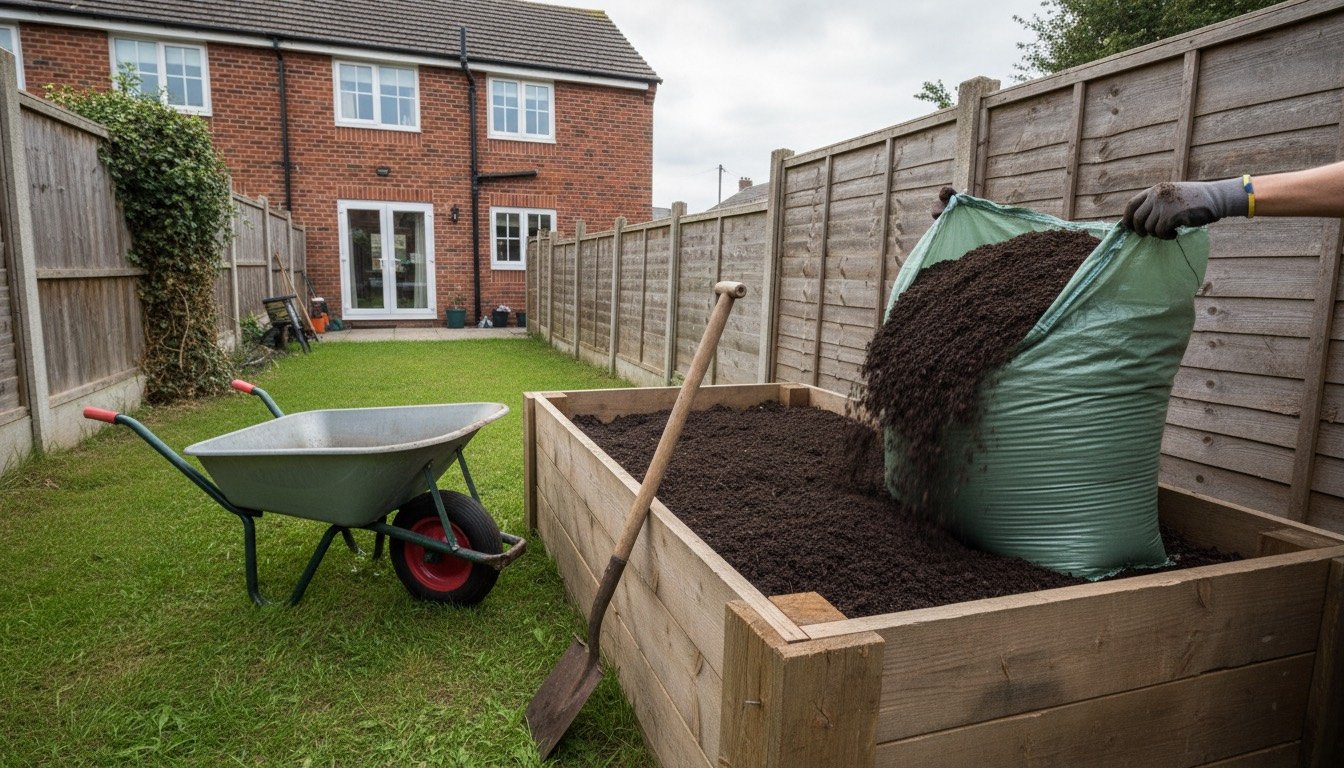
Fill a raised bed with nothing but bagged multipurpose compost and two things happen. By August the level has dropped 100mm, and by the second season the bed is hungry, hydrophobic and impossible to rewet once dry. Compost is a soil improver, not a soil. It is built to hold water and nutrients for twelve weeks in a pot, not to behave like ground for five years.
A raised bed wants a blend: mineral topsoil for structure, compost for organic matter and biology, and something coarse for drainage. Get the ratio right and you buy soil once. Below is how we judged the products, what a bed genuinely costs at 2026 UK prices, and where suppliers quietly take you for a ride.
Our top picks at a glance
Rolawn Vegetable & Flower Bed Topsoil
~£95-135 per bulk bag deliveredA blended, screened topsoil declared to BS 3882:2015 with organic matter already worked in, sold in bulk bags with the volume stated honestly. It behaves like soil rather than compost, which is precisely what a raised bed needs underneath its top few inches.
Pros
- ✓ Consistent screening with almost no stone, brick or root
- ✓ Volume stated in cubic metres rather than vague 'tonne bag' weights
Cons
- ✗ Kerbside pallet delivery only — you barrow it from the drive
- ✗ Still needs compost and grit blending in; it is not a finished bed mix
Dalefoot Wool Compost for Vegetables & Salads
~£14-18 per 30L bagMade in Cumbria from sheep's wool and bracken, this holds water without going claggy and releases nitrogen slowly as the wool breaks down. Expensive by the litre, so use it as the top 100mm seed-sowing layer rather than bulk fill.
Pros
- ✓ Genuinely reduces watering frequency in a dry June
- ✓ No added synthetic fertiliser and no aminopyralid risk
Cons
- ✗ Roughly three times the price of standard bagged compost
- ✗ Small bag sizes make it impractical for filling a whole bed
Melcourt SylvaGrow Farmyard Manure
~£9-13 per 50L bagA bark-based peat-free blend with composted manure, well finished and reliably free of the herbicide residues that plague cheap farmyard manure. The obvious choice for the annual spring top-up rather than the initial fill.
Pros
- ✓ Consistent batch quality and a sensible pH around 6.5
- ✓ Coarse enough to keep the soil open rather than sealing it
Cons
- ✗ Stocked patchily — often easier to find at independent nurseries than the sheds
- ✗ Too rich to use as more than about a third of a new bed's volume
Westland New Horizon All Vegetable Compost
~£7-10 per 50L bagThe peat-free bag you can actually find in every garden centre and DIY shed, usually on three-for-two. Structure is decent and it wets easily, though nutrition runs out faster than the premium blends so plan to feed from about week eight.
Pros
- ✓ Widely stocked and frequently on multibuy, which halves the effective price
- ✓ Rewets readily if a bed dries out, unlike many cheap peat-free mixes
Cons
- ✗ Nutrient charge is short-lived; liquid feeding becomes necessary
- ✗ Batch variation in wood fibre size is noticeable between deliveries
Who this guide is for
This is for someone filling one to four beds in a domestic garden or allotment, typically 1.2m wide and 200–400mm deep, growing vegetables, salads and cut flowers. If you have just knocked a frame together following our guide to building a raised garden bed, this is the next decision and the expensive one — the timber is rarely the biggest line on the receipt. It is not aimed at beds deeper than 600mm, where a loose tipped delivery changes the maths entirely. Still deciding whether beds are worth it? The comparison in raised beds versus growing in the ground is worth ten minutes first.
How we judged them
These assessments come from filling and refilling beds on allotment sites and domestic gardens across Yorkshire and the Home Counties, plus published supplier specifications. Where we make a claim about a product we have handled it; standards and lab figures come from suppliers' own conformity documents. This is expert-reviewed and hands-on, not instrumented lab testing, and we would rather say so plainly.
- •Structure after wetting: does it stay open and crumbly, or slump into a dense mat that sheds water?
- •Settlement over one season, measured against a mark on the bed's inside face. Losing more than 15% means it was over-organic.
- •Conformity: topsoil declared to BS 3882:2015 multipurpose grade, composts certified to PAS 100 or equivalent.
- •pH on delivery — vegetables want 6.0–7.0; fresh green-waste compost often lands at 7.5–8.2.
- •Cost per cubic metre delivered to a UK postcode, not cost per bag on the shelf.
What a raised bed actually costs to fill
This is where most buying guides go quiet. A cubic metre is 1,000 litres, so filling one from 50-litre bags takes twenty of them: £140–200 at £7–10 a bag. The same volume of screened topsoil in a bulk bag is £75–120 delivered. Bags are roughly twice the price for the same hole.
The trap is the bulk bag itself. Topsoil weighs about 1.5 tonnes per cubic metre, so a "tonne bag" holds only 0.6–0.7m³. Compost is far lighter at 0.4–0.5 tonnes, so a tonne bag of compost is nearly double the volume. Buy by cubic metres and ask for the volume in writing. If a supplier will not give it, that is your answer.
Our working blend is 60% topsoil, 30% compost, 10% horticultural grit. Order about 10% more than the geometry says, because a fresh mix settles.
- •One bed, 1.8m × 1.2m × 300mm deep = 0.65m³, or 0.72m³ with settlement. Topsoil 0.43m³ (£45–60 of a bulk bag), compost 0.22m³ from four 50L bags (£30–40), one 25kg bag of horticultural grit (£7–9). Total £82–109.
- •Three beds, 2.4m × 1.2m × 300mm each = 2.9m³ with settlement. Two bulk bags of BS 3882 topsoil (£190–260), 0.9m³ of compost as eighteen 50L bags (£120–160) or one bulk bag (£55–75), grit £25. Total £270–460 — that spread is the whole lesson.
- •Labour, if you are paying someone: £30–48 an hour, and a competent pair moves a cubic metre in 45–70 minutes over a decent path. Budget £90–190 on top of materials for three beds.
How to sanity-check a supplier's quote
A reasonable quote reads: material at £55–110 per cubic metre for BS 3882 multipurpose topsoil or £45–75 for a screened soil conditioner, delivery £30–70 for a pallet or crane-offload lorry, and nothing else. Delivery is kerbside — the driver is not obliged to get a bulk bag through your side gate, and most will not try.
Treat a quote as suspect if it prices by the bag without stating volume, adds a "handling" fee on top of delivery, or quotes premium vegetable topsoil below about £45 per cubic metre. Nobody screens, blends and certifies soil for that — it is as-dug site arisings, and you will be picking brick and root out of your carrots for years. If a landscaper supplies materials within a bigger job, a 10–20% mark-up is fair; 60% is not. The wider picture sits in our landscaping cost breakdown.
What to look for on the bag
Peat-free is the default on UK garden centre shelves now, and the good ones — coir, bark fines, wool, bracken, green waste — are better structured than the peat mixes they replaced. The bad ones are dusty and full of oversize wood. Smell tells you: good compost is dark, springy and earthy; poor compost smells sour or of ammonia, meaning it was bagged before it finished cooking.
- •"Topsoil to BS 3882:2015, multipurpose grade" — the only topsoil claim that means anything.
- •PAS 100 certification on green waste compost, plus a stated pH. Reject anything above 8.0 for vegetables.
- •Stated organic matter of 5–12% for topsoil. Above 20% and it will settle hard.
- •No manure or green waste from an unnamed source if you grow tomatoes, potatoes, beans or dahlias — aminopyralid herbicide survives composting and the leaf distortion is unmistakable.
- •A bag that feels heavy for its size is wet, not rich. You are paying delivery on the water.
Common buying mistakes
Nearly every expensive mistake comes from treating raised bed soil like potting compost. The next most common is buying once and never feeding again — a bed drops 25–50mm a year as organic matter breaks down, which is normal and costs roughly £15–25 per bed each spring. Homemade material closes that gap entirely, and making your own compost is the single biggest saving available to anyone with a garden.
- •Filling entirely with multipurpose compost: £200 a cubic metre for something that slumps, dries out and needs replacing.
- •Ordering by weight instead of volume, then finding a "tonne bag" fills two-thirds of your bed.
- •Buying grit-free. With no coarse fraction a bed goes anaerobic through a wet British winter, especially on a solid base.
- •Using fresh manure or unrotted woodchip in the top layer. It locks up nitrogen and yellows everything you plant — one of the causes covered in our guide to yellowing plant leaves.
- •Ignoring what sits underneath. On a bed under 300mm deep, the ground below matters as much as the fill.
The verdict
For a 200–400mm bed, buy a bulk bag of BS 3882 topsoil, blend in peat-free compost at 30% by volume plus a bag of grit, and spend what you saved on a genuinely good compost for the top 100mm where the seeds go. That is £85–120 per bed, done once. Filling the same bed entirely from garden centre bags costs £160–200 and performs worse.
Found this useful?
There's plenty more — hundreds of guides and honestly-tested product reviews for every corner of your home.
Browse All Guides