Garden & Outdoor · 6 min read · 28 June 2026
Raised Beds vs In-Ground Garden: Costs, Yields and Which Your Soil Actually Needs
Most people choose raised beds because of a photograph, then discover their soil was never the problem. Twenty minutes of testing tells you which one your garden actually needs.
By the Nims Casa editorial team — written from professional cleaning experience and checked against our editorial standards.
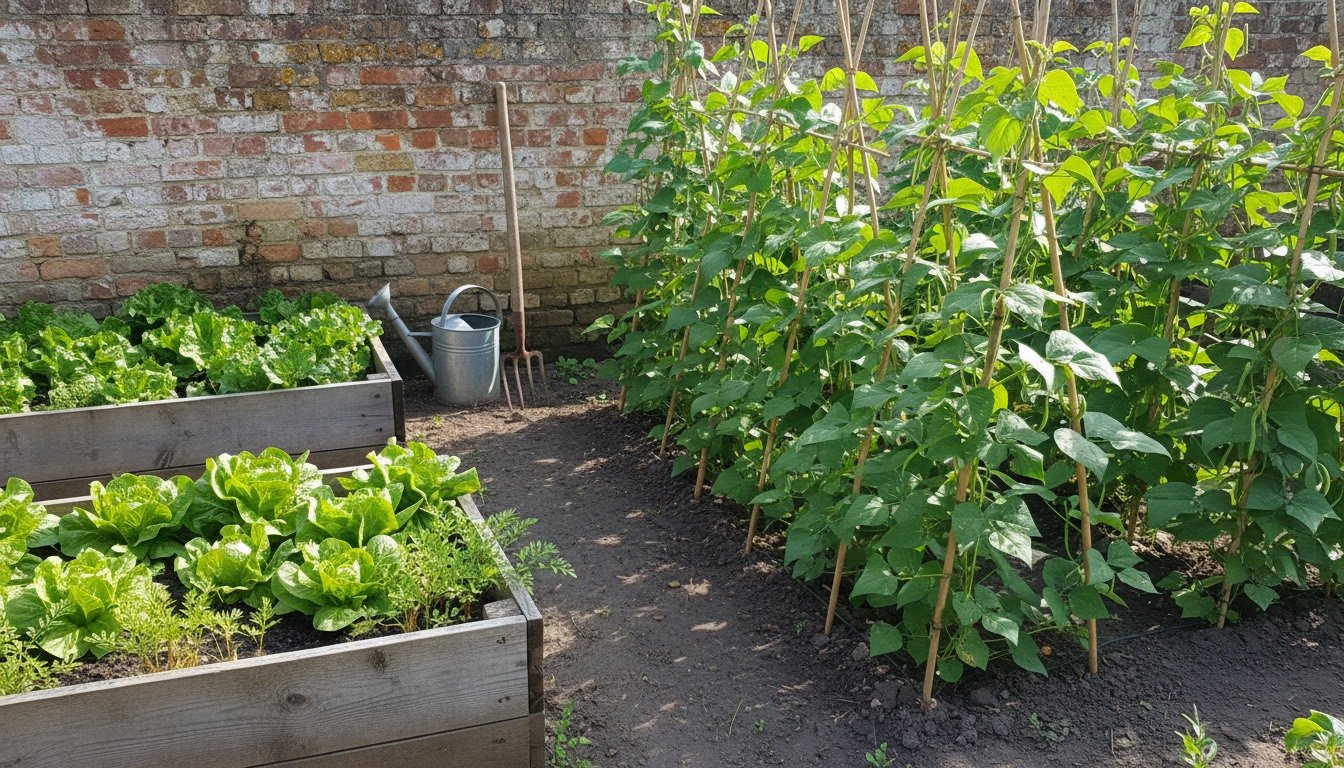
Most people do this backwards. They see four tidy timber beds in a magazine, price up the boards and fill them, then find the soil was workable all along and the real fault was a compacted layer 200mm down that a fork would have sorted in an afternoon. A raised bed is not a growing method. It is a fix for identifiable problems: standing water, buried rubble, contaminated ground, or a back that will no longer tolerate kneeling.
So before anyone quotes a figure, spend twenty minutes with a spade, a bucket of water and a cheap pH kit. That diagnosis settles the argument better than any pros-and-cons table, and can save the £600 to £1,000 four filled beds cost. If you are only just breaking ground, how to start a vegetable garden covers the groundwork assumed here.
First, Diagnose the Plot — Not the Trend
Run these on the patch you actually intend to grow in. Drainage and made-ground vary hugely across one garden.
- •Drainage: dig a hole 300mm deep and 300mm across, fill it, let it drain, then refill and time it. Under 4 hours is free-draining; 4 to 12 normal; still standing at 24 hours is the strongest case for raising the soil.
- •Spade test: push a spade in to the full blade in five spots. Brick, mortar or hardcore at 100-150mm in more than two means builder's spoil, not topsoil — common on post-1960s estates and behind extensions.
- •pH: a £8-12 kit is accurate enough. Most UK soils sit between 5.5 and 7.5. Below 6.0 brassicas sulk and club root takes hold — a £7 bag of garden lime, not a construction project.
- •Contamination: a pre-1960s terrace with an old coal store, ash pit or demolished outbuilding carries real risk of lead and combustion residues. Clean imported soil then becomes a health decision, not an aesthetic one.
- •Perennial weeds: dig one up. Brittle white spaghetti is bindweed, pale wiry rhizomes couch grass, black bootlaces horsetail. Beds cure none of them — they come up through 300mm of fresh soil in a season.
- •Your own body: kneel with a hand fork for twenty minutes. If you cannot, that answers it, and the bed wants to be 600mm high.
Raised Beds vs In-Ground: The Side by Side
Figures are per 2.4m x 1.2m bed, about 2.9 square metres of growing area.
- •Upfront cost: raised £150-£260 built and filled; in-ground £35-£60 for a no-dig mulch, or near nothing with your own heap.
- •Soil temperature: beds run 2-3°C warmer in March and April, worth two to three weeks on early sowings. Open ground lags but holds warmth into October.
- •Summer water: a 300mm bed in a dry July wants watering every two to three days; in-ground clay often carries a crop ten to fourteen days.
- •Root depth: 300mm plus whatever sits beneath, against unrestricted — which matters for parsnips and sweetcorn.
- •Weeds and slugs: imported soil is near seed-free for two seasons, but timber edges give slugs a cool daytime refuge right beside your seedlings.
- •Lifespan: scaffold boards 5-8 years, treated softwood 8-12, oak sleepers and galvanised steel 20 plus. In-ground has no structure to fail.
- •Flexibility: beds fix the layout permanently; open ground lets you shift rows and paths as the rotation demands.
Performance Through a UK Growing Year
Spring is where raised beds genuinely win. Elevated, free-draining soil sheds February rain and warms early, so broad beans, radish and the first lettuce go in while the open plot is still too claggy to walk on. On heavy clay in the north and west that gap is nearer a month. Check dates against a proper vegetable planting calendar rather than the seed packet, which is written for the south east.
Midsummer flips it. The drainage that saved you in March turns liability in a dry June, and loose compost dries from the surface down far faster than settled ground. Growers who lose crops in beds almost always lose them to drought, not cold, so if a bed sits more than two minutes from a tap, budget for drip irrigation at £40-£70 a bed. Crop choice should follow structure: beds excel at carrots, parsnips, salads and garlic, while brassicas want firm soil to anchor sprouts and kale, and squash and maincrop potatoes resent a shallow root run.
Installation: What Each One Actually Takes
One 2.4m x 1.2m x 300mm bed needs about 0.86 cubic metres of fill, and that is the number people get wrong. Reclaimed scaffold boards run £8-£14 each, treated gravel boards £6-£9, softwood sleepers £28-£45, oak £55-£90, plus £10-£15 in screws and corner posts. Frame time is two to three hours; our step-by-step raised bed build shows the corner detail that stops boards bowing by year three.
Fill from a bulk bag, never off the garden centre shelf. A tonne bag of screened topsoil is roughly 0.6 cubic metres at £60-£95 delivered, a blended veg-bed mix £90-£140, and you need about one and a half bags a bed. Bagged multi-purpose costs more and slumps by a third within a year — see the right soil mix for raised beds before ordering. In-ground is mostly labour: cardboard over cleared ground, then 100-150mm of compost, about half a bulk bag at £35-£60.
The 10-Year Cost, and What Maintenance Adds
Take four beds — 11.5 square metres of growing area — at 2026 prices. Building and filling: £600-£1,040. An annual 50mm top-up as the fill settles runs £70-£110 a year across four beds, or £700-£1,100 over the decade. Add one timber replacement round at year six to eight on scaffold boards, £250-£400, avoidable with oak or steel, plus £10-£20 a year in metered water. Total £1,550-£2,500.
The same area in-ground: £60-£120 for a fork, spade and rake if you lack them, plus an annual mulch at £70-£140. Ten-year total £760-£1,520, so beds cost roughly £800-£1,000 more per decade for identical growing space. Both figures collapse if you make your own material — how to make compost covers the ratios that stop a heap turning slimy. On upkeep, beds want topping up, board repairs and closer watering; open ground wants edging, mulching and weeding. Neither is less work, just different.
Who Each Suits, and the Verdict
Build raised beds if the test hole still held water after 24 hours, the spade hit rubble at 150mm, the plot has a contamination history, or kneeling is genuinely painful. On that last point go straight to 600mm and accept that fill cost roughly doubles, to £200-£350 a bed. Grow in-ground if the hole drained inside twelve hours, the spade goes in a full blade, and there is no ash or paint history.
The verdict: for most UK back gardens with 200mm or more of workable soil, in-ground under an annual mulch beats raised beds on cost, on summer resilience and on what it will grow. Beds earn their money where the ground has failed a specific test, and there they are worth every penny. Most experienced growers end up with both — two beds for carrots and early sowings, the rest of the plot open. Do the drainage test this weekend, then buy accordingly.
Found this useful?
There's plenty more — hundreds of guides and honestly-tested product reviews for every corner of your home.
Browse All Guides