Garden & Outdoor · 6 min read · 19 July 2026
How to Make Compost: A UK Step-by-Step Guide (With Real Costs)
Grass clippings tipped into a bin and left alone don't become compost — they become grey slime. Here's the ratio, the method, the honest UK costs and the point where paying someone makes sense.
By the Nims Casa editorial team — written from professional cleaning experience and checked against our editorial standards.
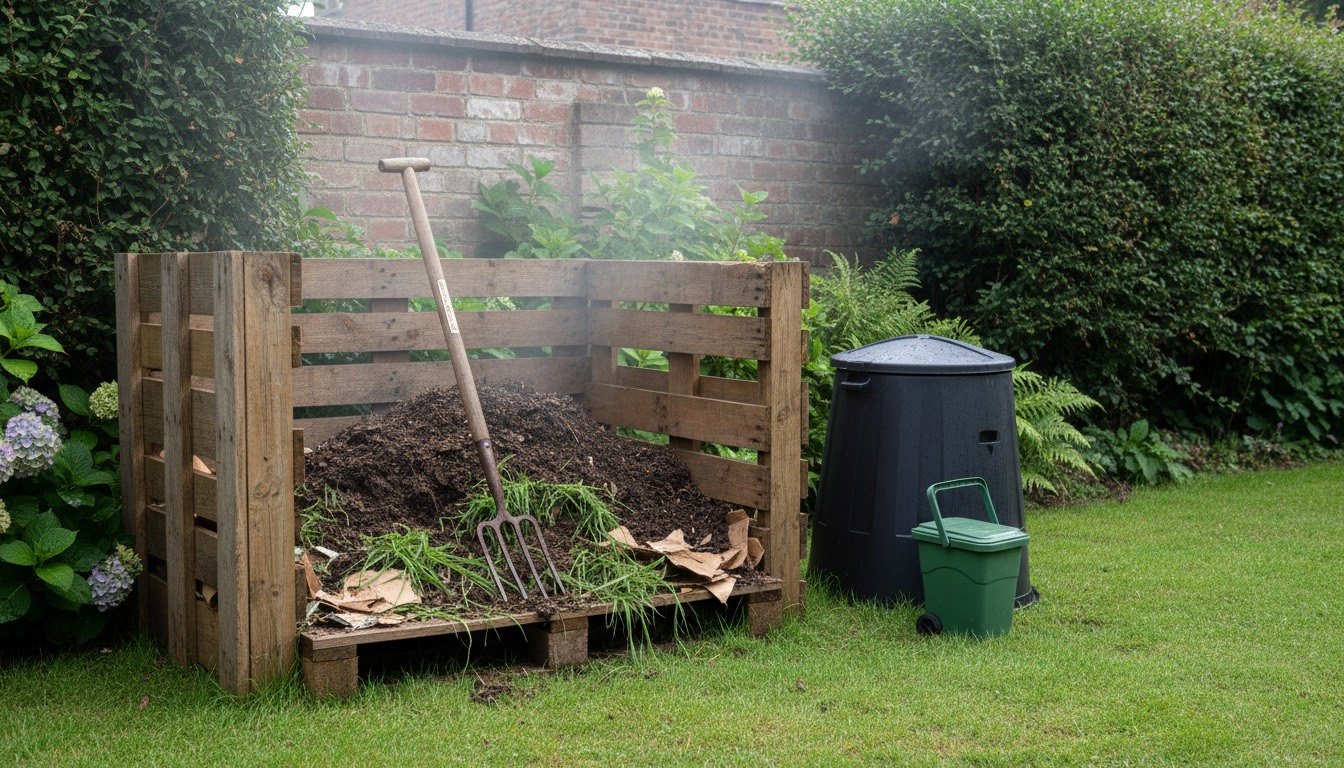
Grass clippings tipped into a black dalek bin and forgotten do not become compost. They become a grey, airless slime that smells of silage and sits there until Christmas. The gap between that and dark, crumbly material you can sieve isn't luck or a bottle of accelerator — it is the ratio of green to brown material, the bulk of the heap, and how much air gets in.
It is also one of the few garden jobs where the arithmetic works firmly in your favour: a council-subsidised bin costs less than four bags of shop-bought peat-free compost, and an average UK garden yields 150 to 250 litres a year from one.
Safety First: The Bits Nobody Mentions
Two hazards get skipped. The first is Aspergillus fumigatus, a mould that thrives in decomposing material and releases spore clouds when you disturb a dry heap. Healthy lungs shrug it off; asthmatic, COPD or immunosuppressed lungs sometimes don't. Water the heap before turning and wear an FFP2 mask. The second: compost is soil, and soil carries tetanus. If your booster is over ten years old, sort it first.
- •Wear stout gloves and keep cuts covered; rats visit heaps, and leptospirosis spreads through their urine.
- •Never put cooked food, meat, fish, dairy or bones into an open bay. That is a rodent invitation, not composting.
- •Leave out cat and dog faeces and used litter; Toxocara eggs survive a cold heap.
- •A full 330-litre bin weighs 120–180kg wet. Decide where it lives before you fill it.
Tools and Materials for a UK Garden
You can compost with nothing but a fork and a heap on bare earth. Everything below is comfort or speed. If you are still deciding what goes in, our piece on what belongs in the heap and what never does covers the awkward cases like citrus, rhubarb leaves and glossy card.
- •Compost bin: a 220L or 330L conical 'dalek' through your council's subsidised scheme, £18–£32 delivered. The same bin retails at £38–£55.
- •Or four pallets, usually free from builders' merchants — check for the HT (heat-treated) stamp, reject anything marked MB. Add £10–£20 for screws.
- •Four-tine digging fork, £20–£35. A border fork is too light to move a settled heap.
- •Kitchen caddy, £8–£15, plus around £6 a year for compostable liners.
- •Compost thermometer, 300–500mm probe, £18–£30. Essential only if you run hot.
- •Loppers, £15–£30, or an impact shredder at £90–£180 for woody prunings.
- •A dry store of browns: cardboard, autumn leaves, wood chip. Most heaps fail because there was nothing brown to hand in June.
Time and Cost: What This Really Sets You Back
Setting up takes 30 to 45 minutes, feeding five minutes a week. Turning is the only real labour: 20 to 40 minutes a turn, three or four turns a batch. A cold heap finishes in 6 to 12 months, an insulated hot bin in 8 to 16 weeks. Almost all the cost is materials, because you supply the labour.
- •DIY pallet bay: £0–£25 in materials, about 90 minutes of your time.
- •Council-subsidised 330L dalek: £22–£32 delivered, no labour beyond clipping the lid on.
- •Dual-chamber tumbler (2 × 10⁵L): £70–£160. Fast and rat-proof, but too small to run genuinely hot.
- •Insulated hot bin (HOTBIN, Green Johanna, Aerobin): £120–£240, the only sensible route for cooked-food or winter composting.
- •The alternative you are avoiding: a council garden waste subscription, £40–£70 a year.
The Method: Nine Steps From Caddy to Crumb
A 330L bin yields 100 to 150 litres per fill — £11–£21 of shop value a batch, two batches a year, so a subsidised bin repays itself inside twelve months. It won't replace a bagged blend for seed sowing (see the right soil mix for raised beds), but as a soil improver it equals anything you can buy. Steps three, five and six decide whether you get compost or sludge.
- •1. Site it level on bare soil in dappled shade, 300mm off fences and shed walls. Full sun cooks the moisture out by mid-July; deep shade keeps it cold all year.
- •2. Lay 100–150mm of coarse browns at the base — snapped twigs, torn card — as a drainage and air layer.
- •3. Work to two or three buckets of browns per bucket of greens, by volume. Clippings, peelings and weeds are greens; card, leaves, straw and prunings are browns.
- •4. Chop everything under 50mm. Surface area is what bacteria eat; a whole cabbage stalk will still be a stalk next spring.
- •5. Aim for the moisture of a wrung-out sponge: squeeze a handful, one or two drops, no more.
- •6. Build in bulk. A heap needs a full cubic metre to hold its own heat, whatever the packaging claims.
- •7. Keep rain off with a lid, or cardboard under a weighted tarpaulin. A wet August drowns more British heaps than anything.
- •8. Turn it: cold heap at six weeks and twelve, hot heap whenever the probe drops under 40°C. Outside goes to the middle.
- •9. Judge it finished — dark, crumbly, smells of woodland floor. Sieve through a 10mm riddle, return the lumps to the next batch.
Troubleshooting a Heap That Isn't Working
Nearly every problem is one of four things: too wet, too dry, too green or too small. Diagnose in that order and the fix costs nothing.
- •Sharp ammonia smell: too much nitrogen. Fork in two buckets of torn cardboard and turn.
- •Sour, eggy and slimy: anaerobic and waterlogged. Turn it out, mix through coarse browns, cover properly.
- •Bone dry and papery: water with a full can and add a bucket of grass clippings.
- •Fruit flies on opening: exposed food waste. Bury each caddy load 150mm under browns.
- •Rats nesting inside: cooked food went in, or the heap is dry and warm in winter. Move to an enclosed bin standing on 6mm galvanised mesh.
- •White fungal threads: actinomycetes, entirely normal and a good sign.
- •Slugs everywhere: they are shredding material for you. Leave them, but never spread unsieved compost around seedlings.
When to Pay Someone — and What a Fair Quote Looks Like
Three situations justify calling someone. Japanese knotweed and other Schedule 9 invasives are controlled waste under the Environmental Protection Act 1990 — never compost them, and a treatment programme with an insurance-backed guarantee runs £1,500–£5,000 by size of stand. An established rat colony needs a pest controller at £80–£180 a visit; our breakdown of UK exterminator pricing sets out what belongs on that invoice.
The third is having a landscaper build a three-bay timber composting bay. Materials run £120–£220 — treated 100mm posts, postcrete, scaffold boards — plus half a day to a day of labour at £150–£250. A fair total is £280–£450, materials making up 40–55% of it; labour at triple the materials on a one-day job is padded. Two other warning signs: no materials breakdown, and a line item for 'compost activator' — nitrogen is free, it is grass clippings. Read our notes on how UK landscaping is priced before accepting a garden quote.
Once compost is coming out reliably, the next moves are a bed to put it in — see building a raised bed for under £100 — and something worth growing, which is where starting a vegetable garden picks up.
Found this useful?
There's plenty more — hundreds of guides and honestly-tested product reviews for every corner of your home.
Browse All Guides