Product Reviews · 5 min read · 8 June 2026
The Best Landscape Edging for UK Gardens (2026): Steel, Concrete and Renter-Safe Picks
Most edging sold in UK garden centres is out of the ground by the second frost. Here is what actually holds a line for a decade, what it costs per metre, and what a tenant can fit without risking the deposit.
By the Nims Casa editorial team — written from professional cleaning experience and checked against our editorial standards.
Affiliate disclosure: if you buy through links in this article we may earn a small commission at no extra cost to you. Our recommendations come from professional cleaning experience and are never influenced by retailers or brands.
A border either holds its line or it doesn't. Most of what sits on the racks in garden centres is the second kind: 40mm plastic strip with four plastic pegs, lifted by frost heave and lying sideways in the flower bed by the following March. Good edging is boring. It disappears visually, it takes a mower wheel without complaining, and it is still straight in ten years.
We have fitted, dug out and replaced a great deal of it — on heavy Midlands clay, on thin chalk in the south, and on the sandy stuff that drains too fast to hold a peg. What follows is what survives a British winter, what it genuinely costs per metre in 2026, and, because around a fifth of UK households rent, which options come back out of the ground without leaving a mark.
Our top picks at a glance
EverEdge Classic Steel Lawn Edging (100mm)
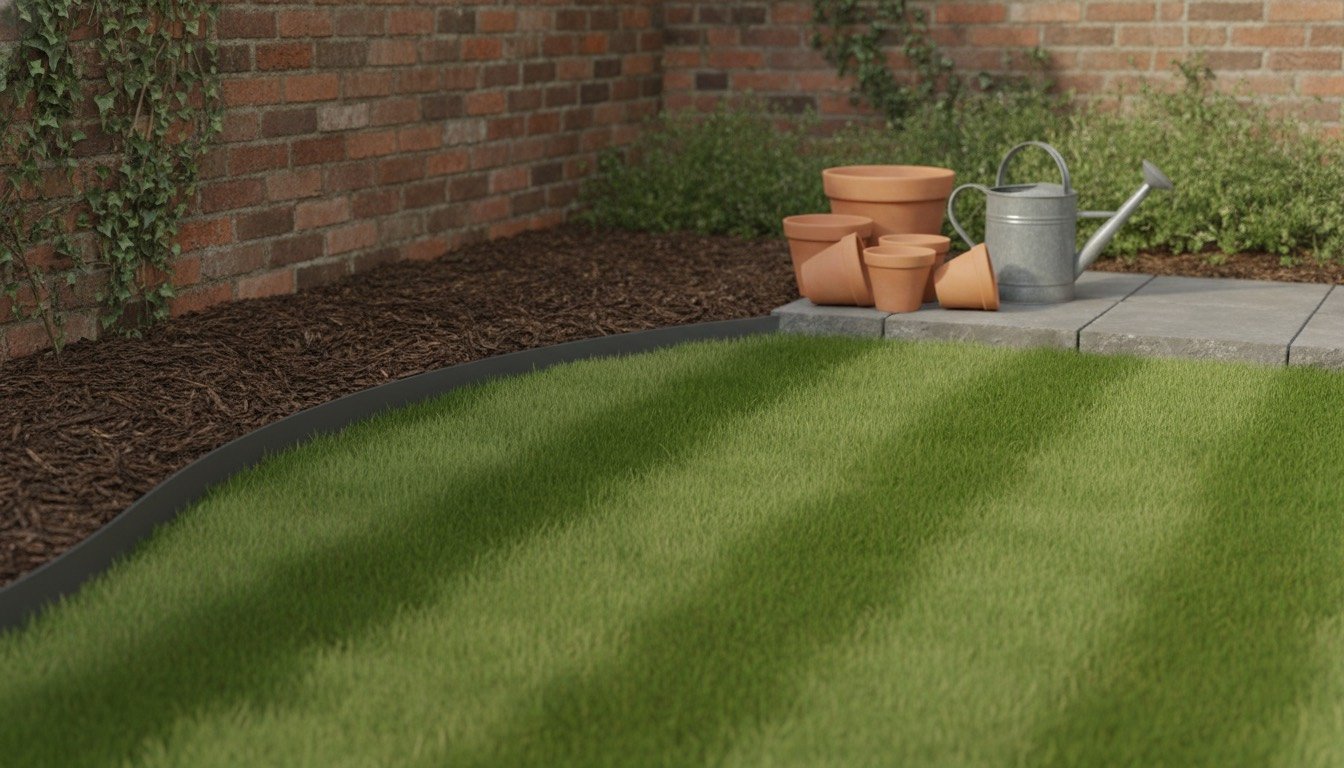
~£18–26 per metreGalvanised then powder-coated 1.6mm steel with integral spikes, made in Northamptonshire and the default choice on professional jobs for good reason. It bends to gentle curves cold, overlaps at the joints without plates, and looks identical in year ten to year one.
Pros
- ✓ Integral spikes mean no separate pegs and a genuinely fast fit
- ✓ Powder coat over galvanising survives UK winters without rust bleed
Cons
- ✗ Will not take tight radii below roughly 600mm without kinking
- ✗ Among the dearest options once you add delivery on a long run
Core Edge Flexible Steel Edging
~£13–20 per metreA thinner, more pliable steel strip supplied with separate ground pins, which is exactly what you want for island beds, tree circles and serpentine borders. On tight curves it follows a hosepipe line far more obediently than heavier gauge steel.
Pros
- ✓ Bends by hand into radii that stiffer steel simply refuses
- ✓ Separate pins let you upgrade to longer ground stakes in sandy soil
Cons
- ✗ Needs more pins per metre on long straights or it ripples
- ✗ Corten finish stains adjacent pale paving during the first year of weathering
Bradstone Round Top Concrete Edging (600mm)
~£4–7 per unitThe traditional bedded kerb, and still the right answer wherever gravel needs holding or a wheel might mount the edge. Set on a semi-dry mortar bed with a haunch behind, it will outlast most of the garden around it.
Pros
- ✓ Genuinely retains gravel and takes vehicle loads when properly haunched
- ✓ Cheap per metre and available from every UK builders' merchant
Cons
- ✗ Mortar bedding makes it permanent and unsuitable for rented gardens
- ✗ Heavy, slow to set level, and unforgiving on curves
Gardena Border Edging Roll (9m x 15cm)
~£30–40 per 9m rollThick UV-stabilised plastic on a roll, pushed in rather than dug in, and the only plastic edging we would fit ourselves. It is the sensible choice when the border must come back up cleanly at the end of a tenancy.
Pros
- ✓ Fully reversible: lifts with a spade leaving no trace beyond a slot
- ✓ The 150mm depth is enough to stop bark and compost washing onto turf
Cons
- ✗ Visible as a green line until planting grows over it
- ✗ Frost heave will lift it slightly each winter; expect to re-seat it in spring
Who this guide is for
If you are separating turf from a planted border and you are tired of re-cutting the edge with a half-moon every six weeks, this is your buying decision. Edging is a labour-saving purchase before it is a decorative one: a well-set steel line takes the strimming out of a garden and stops bark or gravel migrating onto the lawn every time it rains hard.
It is a poor purchase in three situations. If the border line is going to change within two years, wait. If you have a slope steeper than about 1 in 6, you need a low retaining solution rather than edging. And if the real problem is that grass keeps creeping into the bed, understand that no edging stops stolons travelling over the top — depth stops roots, not runners. A sensible UK lawn maintenance routine still has to happen.
How we judge edging
We assess anything sold as garden or landscape edging against five things that show up in the second and third winter, not on the shelf.
- •Frost-heave resistance: does it stay put in saturated clay that freezes and thaws a dozen times between December and February?
- •Effective depth: 75mm is the working minimum for a lawn-to-bed division; 100–125mm is what you want against couch grass, ground elder or a neighbour's bamboo.
- •Gauge and rigidity: 1.6mm galvanised steel is the sensible floor. Anything thinner ripples when you mallet it and never looks straight again.
- •Mower tolerance: the top must sit 5–10mm proud of the turf so a rotary mower rides over it. Set 25mm proud and you will meet it with a blade.
- •Cost per finished metre, including pegs, joiners, delivery and the 10% you always lose to curves, overlaps and offcuts.
Our picks and where each belongs
Four products cover almost every UK domestic situation. Steel for lawn edges, concrete for gravel and anything a car touches, plastic roll only when it must come back up.
Budget properly: edging is the line item people underestimate, so check it against your overall figure for a full garden makeover before you order.
- •Long lawn-to-border runs, gentle curves, permanent: powder-coated steel at 100mm depth.
- •Tight curves under a 600mm radius, island beds, tree circles: thinner flexible steel that will bend cold by hand.
- •Gravel paths, driveway margins, anything bearing a wheel: bedded concrete round-top edging on a mortar haunch.
- •Rented gardens, allotments, temporary vegetable beds: pinned plastic roll or timber board you can lift with a spade.
What to look for when buying
Lay a hosepipe along the line, then measure the hosepipe — not the straight-line distance. Curved borders eat 15–20% more than people estimate. Order in one go: batch colour varies on powder coating, and joiners rarely fit between brands.
Check the fixings. Integral spikes fit faster; separate pegs let you drive a longer pin into loose ground. On sand we swap the supplied 200mm pegs for 300mm ground pins at around £1.20 each.
Finally, think about what runs underneath. Do not drive anything deeper than about 100mm until you know where garden lighting cable, an old lead supply pipe or a drip irrigation line sits. A £25 cable detector is cheaper than an emergency electrician.
The renter-safe version
Most assured shorthold tenancy agreements prohibit alterations but say nothing about gardening, and the practical test a landlord or deposit adjudicator applies is simple: can the garden be put back as it was? That rules out mortar, concrete haunching, membrane-and-gravel and anything screwed to a fence panel, which belongs to the landlord regardless of which side it faces.
What is reversible: plastic or steel roll edging held on pins under 150mm, timber gravel board laid on the surface and pegged, log roll, or a simple recut edge with no product at all. Push, do not dig. Keep any turf plugs you lift in a shady corner and water them — they go back in twenty minutes at the end of the tenancy.
Photograph the border before you start and again on the day you fit, with a tape measure in shot. If you add bark or compost, keep it to a 50mm layer that can be raked off; our figures on mulch depths and costs assume a permanent bed, so halve them for a rented one. Pots, movable planters and a lifted timber bed all achieve the same look as low-maintenance planting with nothing to make good.
Common buying mistakes
These are the ones we get called out to correct, roughly in order of how often they happen.
- •Buying 40mm plastic strip because it is £2.50 a metre. It is out of the ground within two winters and the pegs snap on removal.
- •Ordering exactly the measured length with no allowance for curves, overlaps or a mis-cut. Add 10%.
- •Fitting in August on baked clay. Late September to November, or March to April, when the ground takes a pin without a sledgehammer.
- •Hammering steel directly with a metal-faced hammer. Use a rubber mallet through a 400mm timber offcut, or you will deform and shine the top edge.
- •Choosing green or brown UV-unstable plastic. Two British summers and it goes chalky and brittle at the same time.
- •Using edging where a 300mm paving mowing strip belongs. Along a wall or fence, slabs laid flush let a mower wheel run right up and remove strimming entirely.
Fitting time, cost and when to call someone
For steel edging on reasonable ground, budget 45–60 minutes per 5 metres including cutting the turf line, plus 20 minutes a metre if you are removing an old concrete kerb. A two-person landscaping team charges roughly £190–£260 a day in most of the UK, more inside the M25, and will comfortably fit 30–40 metres of steel in a day including spoil removal.
Do it yourself when the run is straight-ish, the ground is soft and nothing structural is involved. Call a landscaper when the edging has to retain more than about 150mm of level difference, when it forms the margin of a drive that takes a vehicle, or when it meets an existing patio or path that has to be cut into. Those are the jobs where a poorly bedded edge fails within a season and takes the adjoining surface with it.
Found this useful?
There's plenty more — hundreds of guides and honestly-tested product reviews for every corner of your home.
Browse All Guides