Garden & Outdoor · 6 min read · 6 May 2026
Lawn Care Basics: A Realistic UK Calendar for a Decent Lawn
You don't need the bowling green — you need green, mostly weed-free and alive in August. The realistic calendar, and the three rules that matter more than products.
By the Nims Casa editorial team — written from professional cleaning experience and checked against our editorial standards.
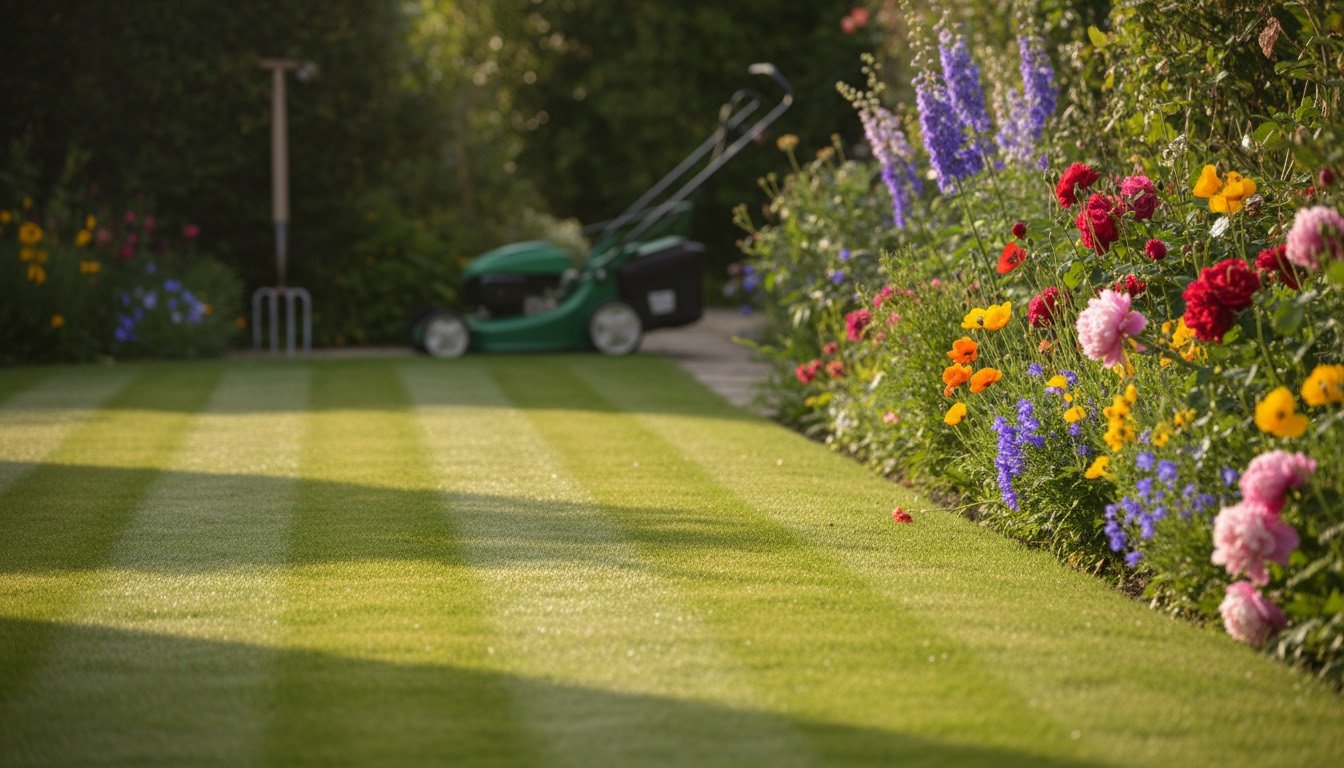
Type "lawn care" into any search engine and you get two extremes: obsessive greenkeeping advice about hollow-tining and pH testing, or nothing beyond "mow it sometimes". Most UK gardens want the missing middle — a lawn that's green, reasonably weed-free and still alive by August, kept that way on roughly an hour a week.
Three rules do most of the heavy lifting: mow little and often, never scalp the grass, and feed it properly twice a year. Get those right and the rest — moss, thin patches, the odd stubborn weed — becomes routine maintenance. This guide covers those rules, the kit worth owning, a realistic calendar, and the mistakes that quietly undo a decent lawn.
None of it assumes perfect weather. Between hosepipe bans, scorching Julys and soggy Novembers, British lawns spend a good chunk of the year stressed by something outside your control — the aim here is a lawn that copes with that, not a show lawn that needs rescuing every August.
The three rules that matter more than any product
- •Little and often: weekly mowing through the growing season beats a fortnightly scalping session — frequent light cuts thicken the sward, while occasional brutal ones thin it out and let moss and weeds in.
- •The one-third rule: never remove more than a third of the blade's length in a single cut. If the grass has got away from you, take it down over two cuts a few days apart rather than scalping it in one go.
- •Height honesty: keep ordinary lawns at 2.5–4cm, and raise that in drought, deep shade or under trees. The lowest setting on a mower is built for bowling greens and regret, not a family garden.
Tools and kit: what a decent lawn actually costs
You don't need a shed full of specialist kit to keep a lawn in reasonable shape — a handful of tools, bought once and looked after, cover almost everything a normal garden needs.
- •Mower: a corded or battery rotary mower runs roughly £90–£250; a cordless model with a decent battery costs £180–£450; petrol self-propelled mowers for larger plots start around £300.
- •Edging shears or a half-moon edging iron: £12–£25, and the fastest way to make an average lawn look deliberately kept rather than merely mown.
- •Garden fork: £15–£30, and doubles for relieving compaction — our guide on when to aerate a lawn covers how to tell if yours needs it.
- •Spring-tine rake for scarifying and clearing leaves: £15–£25; hire an electric scarifier for a large lawn at around £35–£55 a day rather than buying one for a single annual job.
- •Feed: granular spring or autumn lawn feed covering 80–100m² costs £12–£20; liquid feed is £10–£15 and quicker to apply evenly — see our liquid vs granular fertiliser comparison.
- •Grass seed for overseeding thin patches: £8–£15 per kilogram, enough for roughly 25–35m².
A realistic UK lawn care calendar
For a fuller month-by-month breakdown, see our complete lawn care schedule by month. The condensed version below covers what actually matters in each stretch of the year.
- •March–April: first cuts on a high setting once growth restarts; apply a spring feed; rake, seed, cover and water any bare patches.
- •April–May: peak moss and weed season. Treat moss if needed and rake out the blackened moss afterwards; spot-treat individual weeds rather than blanket-spraying, and move to weekly mowing.
- •June–August: keep the mowing rhythm going and raise the cutting height in dry spells. Established lawns can brown off in a heatwave and recover once rain returns — they're dormant, not dead. Water new lawns and re-seeded patches only.
- •September–October: the month that decides next year. Apply an autumn feed (low nitrogen, higher potassium, for root strength over soft leafy growth), scarify if the surface feels spongy, aerate compacted areas with a fork, and re-seed thin patches.
- •November–February: rake fallen leaves off regularly so the grass isn't smothered, keep off the lawn during frost, and use the quiet months to service the mower.
Feeding, moss and scarifying: the bits people get wrong
Feed twice a year, not once. A spring feed pushes leafy green growth; an autumn feed, low in nitrogen and higher in potassium, builds root strength that gets the lawn through winter. Skipping the autumn feed is the single most common reason a decent-looking lawn in September turns patchy by March.
Moss is a symptom, not the disease. It moves in wherever grass is struggling — shade, compaction, poor drainage or a lawn that's been scalped too often — and moss killer treats the moss without touching the cause, so it returns every year until that changes. Improving drainage and relieving compaction does more long-term good than another round of moss killer.
Persistent weeds are usually a mowing or feeding problem wearing a different hat: thin, stressed grass lets weeds establish where thick grass would have crowded them out. See our guide to getting rid of weeds in a lawn for what actually clears them.
Common lawn care mistakes that undo a year's work
- •Scalping an overgrown lawn in one pass rather than two, which shocks the grass and opens the door to moss and weeds within weeks.
- •Buying combination "weed and feed" products expecting both jobs done well — they do each adequately and neither brilliantly compared with separate, targeted treatments.
- •Watering an established lawn through every dry spell instead of letting it go dormant, which wastes water — and risks a hosepipe ban fine — on a lawn that would have recovered anyway.
- •Ignoring the actual cause of a struggling patch, such as deep shade or a tree root, and re-seeding the same spot every year instead of addressing it. Our guide on lawn care mistakes to avoid covers the ones specific to older gardens.
When to call a professional (and what it costs)
Most of this is genuinely DIY-able on an hour a week, but a few situations are worth paying for. A one-off scarify-and-aerate treatment typically costs £60–£150 depending on garden size — worth it rather than buying a scarifier for one job a year. A rolling treatment programme, usually five or six visits covering feed, weed and moss control, runs £150–£300 a year and removes the guesswork on timing.
For lawns that are more bare soil than grass, get a professional opinion before another season of re-seeding the same dead patch; persistent drought damage is covered in our lawn recovery after drought guide. If shade or drainage genuinely can't be fixed, artificial grass — see our artificial grass care guide — is a legitimate answer, not an admission of defeat.
Frequently asked questions
**How often should I mow my lawn in the UK?** Weekly during the main growing season, roughly April to September, dropping to fortnightly or less either side of that. Frequency matters less than never taking off more than a third of the blade length in one cut.
**Why is my lawn full of moss even though I keep treating it?** Because moss killer treats the symptom, not the cause. If shade, compaction or poor drainage isn't fixed, moss reliably returns the following year regardless of how much product you apply.
**Can I feed and scarify my lawn on the same day?** Better not to. Scarify first to remove thatch and moss, let the lawn recover a week or two, then feed once new growth is visible so the roots can actually use the nutrients.
**Is it normal for grass to go brown in summer?** Yes — an established lawn browning off in a dry spell is dormancy, not death, and it greens up within a fortnight of proper rain. Watering through the drought mostly delays the inevitable. Our guide on why grass turns brown covers the full diagnosis if colour doesn't return.
**What's the difference between scarifying and aerating?** Scarifying rakes out thatch and moss from the surface; aerating spikes or removes small plugs of soil to relieve compaction underneath. Most lawns benefit from both in autumn, scarifying first and aerating a week or two after.
Found this useful?
There's plenty more — hundreds of guides and honestly-tested product reviews for every corner of your home.
Browse All Guides