Garden & Outdoor · 6 min read · 8 April 2026
Low Maintenance Landscaping Ideas for Real UK Gardens and Budgets
A garden that looks after itself doesn't exist. One engineered so the work arrives twice a year instead of every Saturday absolutely does — here's what it costs, and what tenants can do without risking the deposit.
By the Nims Casa editorial team — written from professional cleaning experience and checked against our editorial standards.
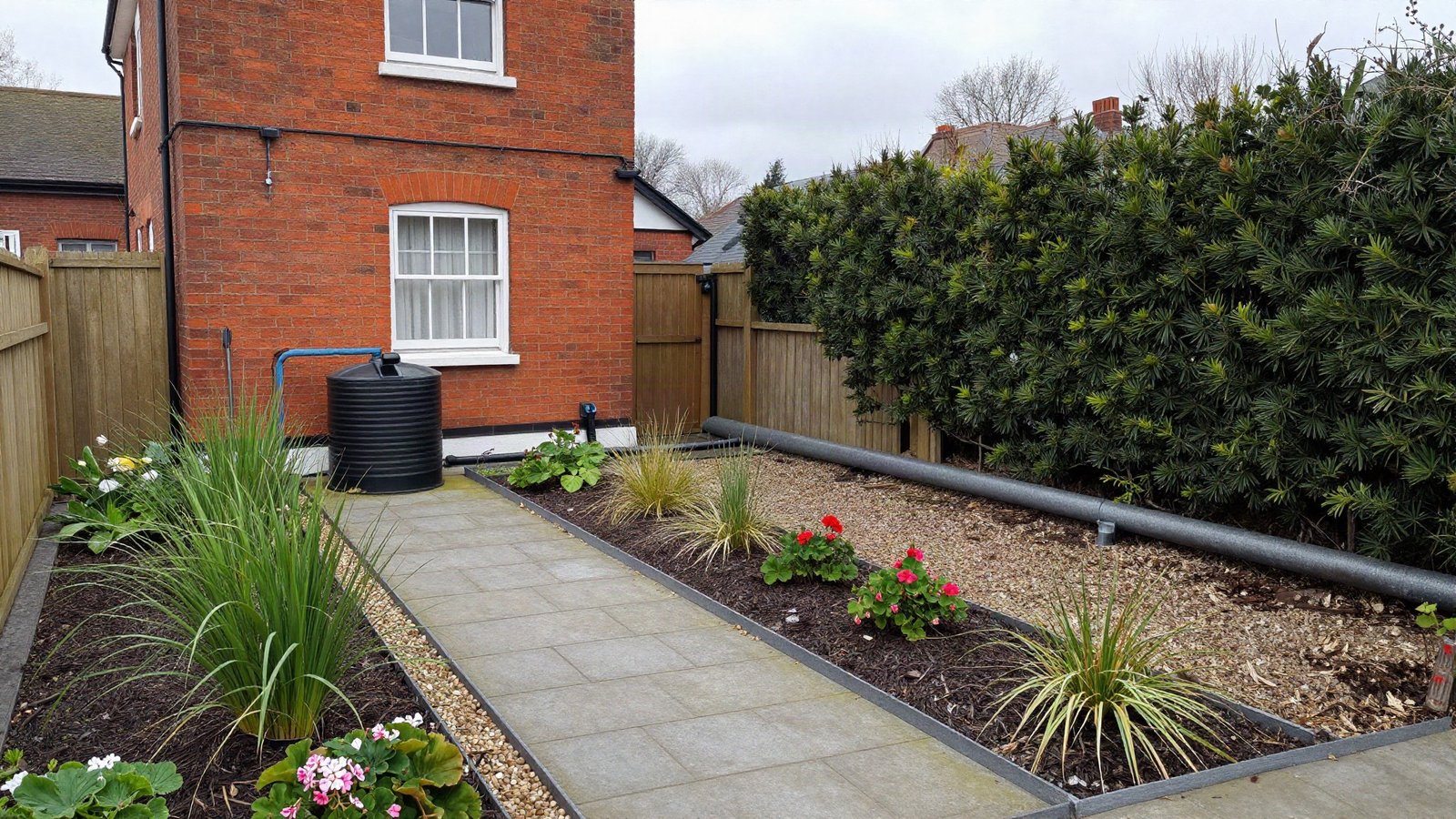
A garden that looks after itself does not exist. What exists is one engineered so its jobs arrive twice a year instead of every Saturday — on a typical 60m² UK plot, a difference worth close to 70 hours between March and October.
Nearly all of that saving comes from three early decisions: what covers the ground, how water reaches the plants, and whether the boundaries need cutting. Get those right and the rest is tidying. Get them wrong and you will be out there every weekend from March, in the drizzle, resenting it.
Price the hours before you price the materials
Work out what the current garden costs you in time first. These figures come from real maintenance rounds, measured rather than guessed.
- •Mowing 50m² of lawn, March to October: 26 cuts at 25 minutes including edging — about 11 hours a year.
- •Trimming 12m of privet twice a season and bagging the arisings: 5 to 6 hours.
- •Hand-watering fifteen pots through a dry July: 15 minutes daily, with no days off.
- •Weeding gravel laid without a membrane: 2 hours a month, April to September.
Six changes that genuinely cut the workload
Ignore anything promising zero effort. These six shift a garden from weekly to seasonal, in rough order of time bought back per pound.
- •Simplify the lawn shape before you shrink it. One curve you mow in eight passes beats a rectangle with three fussy cut-outs, and steel edging at £12–£18 per metre deletes the edging job.
- •Replace the grass that never works, not the grass that does — the shaded side return, the worn line to the shed. Fifty millimetres of 20mm gravel over woven membrane costs about £12/m².
- •Plant a matrix, not a bedding scheme. Geranium 'Rozanne', Stipa tenuissima, Erigeron karvinskianus and Hebe at five per square metre knit together in two seasons and shade out weeds themselves.
- •Mulch every border 50–75mm deep each March. It suppresses annual weeds and cuts summer watering by roughly a third; our guide to mulch types and costs covers the coverage maths.
- •Put watering on a timer. A 50m porous hose under the mulch on a battery tap timer costs £55–£90; for pots and raised beds, step up to a proper drip irrigation system.
- •Choose a slow hedge and paving that will not grow things in its joints. Yew, hornbeam and Pittosporum need one cut a year where leylandii needs three; porcelain on a primed bed with resin jointing stays clean where block paving on sand grows moss by year three.
Budget tiers: £300, £1,500 and £6,000
Quotes vary because everyone means something different by the same words. These tiers are costed on a 60m² rear garden in the Midlands, spring 2026, with a two-person team at £380–£480 a day where labour is involved.
- •Under £300, one DIY weekend: three bulk bags of bark mulch £190–£240 delivered, membrane and pegs £40, tap timer and 50m leaky hose £55. Watering and weeding roughly halved.
- •£300–£1,500: edging to 25m of lawn £350–£500 fitted; 15m² of failed grass converted to gravel, £180 in materials or £400–£550 fitted; twelve 3-litre shrubs and 40 plugs £250–£350.
- •£1,500–£6,000: 20m² porcelain patio on a full MOT Type 1 sub-base £2,600–£3,600; 8m of sleeper retaining wall £900–£1,600; border irrigation £700–£1,200 fitted.
- •Above £6,000 you are into levels and drainage — read our full UK landscaping cost breakdown first.
Small gardens, courtyards and side returns
Most British back gardens are 4m to 8m wide, often north-facing and overlooked on two sides. Small does not mean less work: a 5m x 4m courtyard with a dozen pots is more demanding than the same space planted into the ground, because 10-litre pots dry out in 36 hours in July.
At that size, ground-level planting beats containers. Lift two or three slabs, break out the sub-base beneath, add 40 litres of compost per hole and plant directly. If the surface must stay, use three 60-litre planters instead of twelve small ones.
- •Go vertical for privacy instead of hedging: Trachelospermum jasminoides on wires needs one tidy-up a year and takes 200mm of floor space.
- •Keep a lawn only above about 15m² with four hours of sun; below that it thins, poaches over winter and becomes the highest-maintenance thing you own.
- •Where a north-facing strip refuses to grow anything, stop fighting it: gravel and three ferns beats a fourth attempt at turf. One small tree — Amelanchier or crab apple — does more for the view than bedding.
Materials and where the money actually goes
Groundwork and labour take 55–70% of any hard landscaping total; the surface takes the rest. That is why two quotes for a patio differ by £1,800 — one includes 150mm of compacted MOT Type 1 and a fall away from the house, the other lays slabs on five blobs of mortar. In England and Wales, more than 5m² of impermeable surface at the front needs drainage to a border or soakaway, or planning permission.
- •Indian sandstone, 22mm calibrated: £24–£32/m² supplied, £95–£140/m² laid on a full base.
- •Porcelain, 20mm: £35–£60/m² supplied, £130–£180/m² laid including priming.
- •MOT Type 1: £55–£75 per bulk bag, covering about 3m² at 150mm compacted.
- •Decorative 20mm gravel: £70–£110 per 850kg bag, covering 8–10m² at 50mm; bark mulch £65–£90 a bag, covering 12m².
- •Landscaper day rate £180–£280 per person, plus £280–£420 per skip for spoil.
The renter-safe version: everything reversible
Tenants are told to leave the garden alone, so it becomes a wilderness that costs them at check-out anyway. Almost every idea above has a reversible version, and the test is simple: could you restore the space to its check-in photographs in one afternoon?
Two rules head off most disputes. Never lay membrane or gravel onto living turf — grass dies beneath it within a season and reinstatement runs £8–£14/m². And never drill brick, render or fence posts for trellis or lights; use freestanding obelisks and solar stakes. Keep up whatever cutting your tenancy requires, too: unlike an overgrown hedge, a ruined lawn is deductible, and our UK lawn care calendar sets a realistic rhythm.
- •Photograph every corner on move-in day and again before handover. That settles more deposit arguments than any tenancy clause.
- •Use large planters on pot feet rather than beds — feet prevent the staining and rot marks most often deducted from decking and paving.
- •Contain gravel on top of existing hard surfaces with removable timber battens, then sweep it up and take it with you.
- •Choose evergreen structure you can lift: Pittosporum, Euonymus and Hebe all move happily to your next garden.
- •Get written consent for anything altering a permanent surface — lifting slabs, planting a tree, changing levels.
The questions we get asked on every site visit
Artificial grass is lower maintenance, not low: it needs brushing, rinsing and moss treatment in shade, and hits 55°C in July sun — fine for a dog-worn patch, poor as a whole-garden answer. Gravel stops weeds for roughly two years, until seed germinates in the dust on top.
Next step: measure the plot, mark what has never worked, and cost two options before ringing anybody. If you would rather start from a drawing, work through how to plan a landscape design, or browse more outdoor guides in the Garden & Outdoor hub.
Found this useful?
There's plenty more — hundreds of guides and honestly-tested product reviews for every corner of your home.
Browse All Guides