Product Reviews · 6 min read · 10 July 2026
The Best Roof Sealant UK (2026): What Works, What It Costs, and What to Refuse
Roof sealant buys you time, not a new roof. Here are the four products worth owning in the UK, what they genuinely cost per square metre, and the quote you should show the door.
By the Nims Casa editorial team — written from professional cleaning experience and checked against our editorial standards.
Affiliate disclosure: if you buy through links in this article we may earn a small commission at no extra cost to you. Our recommendations come from professional cleaning experience and are never influenced by retailers or brands.
Most tins of roof sealant in Britain are bought in a panic: water tracking down a bedroom wall on a wet Saturday, the merchants shut, a dash to whatever is open. That is a fair reason to buy one. The trouble starts when the same tin gets treated as a permanent repair, or when a doorstep firm sells the idea back to you at £4,000.
Three different products share the name: elastomeric coatings for flat felt and asphalt, self-adhesive flashing tape for junctions, and bitumen compound for splits and gutter seams. Below are the four we keep on the van, what each costs per square metre rather than per tin, and what a roofer would charge to apply the same material. Prices are UK retail, July 2026.
Our top picks at a glance
Cromar Cromapol Acrylic Roof Coating
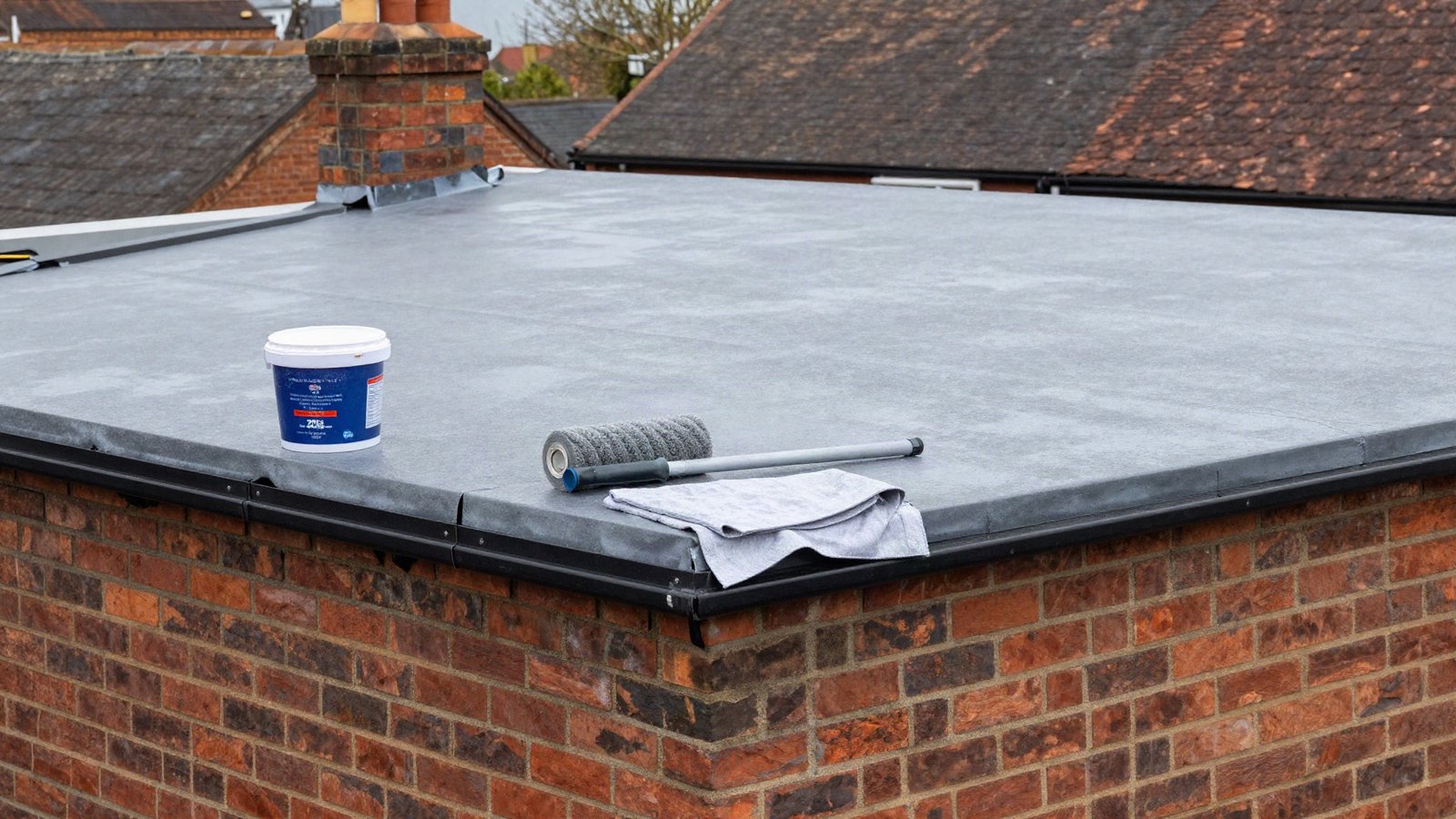
~£55-£170A single-pack, fibre-reinforced elastomeric acrylic that is the default flat-roof coating in British builders' merchants for good reason. It bonds to felt, asphalt, concrete, brick and most metals, stays flexible through frost, and gives a genuine ten-year-plus service life over two coats on a primed deck.
Pros
- ✓ Excellent adhesion to old bitumen felt and asphalt without stripping
- ✓ Fibre reinforcement bridges hairline splits on flat areas
- ✓ Around £7-£9 per m² in material for two coats
- ✓ Grey and white versions run far cooler than black felt in summer
Cons
- ✗ Needs 5°C and rising, so realistically an April to October product
- ✗ Not suitable for EPDM or most single-ply membranes
- ✗ A part-used tub sets solid if the lid is not cleaned and sealed properly
Acrypol+ Roof Repair Coating
~£70-£160The one to reach for when the weather will not co-operate, because it goes onto a wet surface and even through light rain. In a British autumn that is often the difference between fixing a roof now and fixing it in April.
Pros
- ✓ Genuinely applies to damp substrates and at low temperatures
- ✓ Tack-free fast, so a shower an hour later is not a disaster
- ✓ Strong track record on emergency repairs to felt and asphalt
Cons
- ✗ Noticeably dearer per kilo than a standard acrylic coating
- ✗ Strong solvent odour; keep it away from open loft hatches
- ✗ Will not cure ponding or a failing deck, whatever the weather claim implies
Evo-Stik Flashband Grey Self-Adhesive Flashing Tape
~£12-£35Bitumen-backed aluminium tape that seals chimney abutments, roof-to-wall junctions, gutter seams and splits in seconds with no cure time at all. Applied over the matching primer onto a clean surface, it holds far better than most people expect.
Pros
- ✓ Instant seal with no drying time, ideal for a leak found at dusk
- ✓ Grey finish blends acceptably against lead and cement flashing
- ✓ Cheap enough to keep a spare roll in the shed permanently
Cons
- ✗ Needs the companion primer on porous surfaces or the edges lift
- ✗ UV degrades it over roughly five to eight years exposed
- ✗ Looks messy if overlapped badly, and it is unpleasant to remove
Everbuild Black Jack 908 Flashing Compound
~£12-£30Old-fashioned bitumen compound in a tin, brushed or trowelled over splits, gutter joints and rough masonry junctions, usually with a strip of scrim bedded into it. Cheap, tolerant of uneven surfaces, and it has kept an enormous number of British garage roofs going for another season.
Pros
- ✓ Under £20 for enough to patch several splits
- ✓ Sticks to rough, aged and gritty surfaces where tapes will not
- ✓ Combines with reinforcing scrim for a much stronger repair
Cons
- ✗ Black, messy and effectively impossible to overpaint neatly
- ✗ Poor adhesion to wet surfaces and unsuitable for EPDM
- ✗ Shorter exposed life than a proper elastomeric; treat it as a patch, not a system
Who a roof sealant is actually for
Coatings and tapes solve a narrow set of problems very well and nothing outside it. If the leak is on a pitched clay, concrete or slate roof, put the tin down: sealant does not fix a slipped tile or perished underfelt, and smearing it over the symptom only makes the eventual repair dearer. Trace the water with our method for finding a roof leak, and be honest about the warning signs of a roof that is finished.
- •Worth doing: a garage or extension flat roof, 10-20 years old, felt sound but grey and chalky; a lifted flashing at a chimney abutment; a weeping cast-iron gutter seam; a single split or blister in felt.
- •Not worth doing: a pitched tiled roof, ponding deeper than 15mm, or decking that feels soft underfoot. Soft decking is rot, and no coating bridges rot.
- •Never: bitumen or solvent-based products on EPDM or single-ply rubber. Use the membrane maker's own repair kit.
How we judged these, and our four picks
We do not run a laboratory and will not pretend otherwise. These picks come from applying the products on paying jobs across the North East and Yorkshire, checked against each manufacturer's technical data sheet. Cost per square metre over ten years mattered more to us than the price on the tub: a £150 tub covering 20m² for a decade beats a £40 tin covering 6m² that needs redoing in three.
- •Application window: most acrylics stop working below 5°C and falling, and a fully dry deck is a weather window Britain often refuses.
- •Coverage and movement: two coats of a decent elastomeric is 1-1.5kg per m², with elongation above 200% and ideally a BBA certificate. Claims well below that coverage are being spread too thin.
What it really costs: materials versus labour
Take a single garage roof of about 15m². Materials: 20kg of coating (£120-£170), 5L of stabilising primer if the felt is chalky (£25-£40), a roll of reinforcing fleece for joints and upstands (£15-£30), brush and rollers (£20). Call it £180-£260 and one dry weekend of your own time.
The same job supplied and applied by a roofer is £30-£55 per m², so £450-£825, and that is not profiteering: labour is 60-70% of the bill. Day rates in 2026 run £250-£350 across most of England and Wales, £180-£260 in parts of the North and Scotland, and £320-£450 in London and the South East, with a labourer adding £120-£180. Taping a chimney abutment is £8-£25 in materials but £150-£280 as a call-out, because you pay for half a day and access.
Access is the line item that catches people out. A 4m alloy tower is £70-£120 a week; scaffolding to a two-storey terrace is £600-£1,100, or £900-£1,600 with a chimney lift. A suspiciously cheap first-floor quote has usually left it out. Ask for three things in writing: the rate per square metre, access priced separately, and the product name with the number of coats. One figure for the whole roof, no named material, or a price that expires at the end of the visit means walk away. Our UK roof repair cost breakdown has the wider numbers.
The £4,000 roof coating quote, and how to spot it
There is a persistent doorstep trade in spray-applied coatings for concrete and clay tiles, pitched as roof sealing at £2,500 to £6,000. Tiles are rarely the problem. On houses built between 1930 and 1980 the failure is the bituminous underfelt beneath them, which sealant never touches, and a continuous film across the tiles reduces breathability and can push moisture back into the loft. Surveyors flag sprayed coatings on homebuyer reports.
- •The approach came to you, by phone, leaflet or knock, rather than you seeking a roofer out.
- •A 25-year guarantee underwritten by the firm itself, or a price that drops by a third the moment you hesitate.
- •The honest alternatives: re-bed and repoint ridge tiles for £450-£900, replace slipped tiles for £150-£350, or re-roof with a breathable membrane at £6,000-£12,000 on a three-bed semi. Only the last one cures failed underfelt.
What to look for before you buy
Read the back of the tin, not the front. Colour matters too: a grey or white reflective finish holds a flat roof surface 15-20°C cooler than black in July, which slows the thermal cycling that splits coatings. Clear the gutters and outlets first, because standing water at the edge kills more coatings than sunlight does. Our gutter cleaning guide covers doing that safely, and if you need access kit, start with our ladder buying guide.
- •Substrate compatibility stated explicitly: felt, asphalt, GRP, concrete, metal, EPDM. If EPDM is not named, assume it is not compatible.
- •Rain resistance time. Anything needing more than four hours dry is a gamble outside June to September.
- •Whether reinforcing fleece is required at joints and upstands. It nearly always is, and that is where failures start.
Common buying mistakes
Almost every failed coating we get called back to fails for the same few reasons, none of them the product's fault. The biggest is sealing over a leak nobody traced: water runs along battens and the underside of decking before it drops, so the wet patch inside is often a metre from the entry point. Half an hour with a proper roof inspection checklist beats a whole tin applied in the wrong place.
- •Buying on tin price rather than cost per m², then running out halfway across the roof.
- •Coating over moss, chalky oxidised felt or a damp surface with no clean-down and no primer.
- •One thick coat instead of two thin ones. Thick films skin over, stay soft underneath and split at the first hard frost.
- •Silicone on a wet gutter joint. It will not bond; use butyl or MS polymer on a dry, wire-brushed surface.
The bottom line
For a tired but structurally sound flat roof, a fibre-reinforced elastomeric over a clean, primed deck is one of the best-value jobs in home maintenance: £12-£18 per m² in materials, a decade of service, and no scaffolding if it is a garage. What it will never do is renew a roof. The question is not which sealant is best, but how many years you are buying and at what cost per year. Two hundred pounds for eight years on a garage is excellent. Four thousand for a sprayed film over tiles whose real problem sits underneath is not.
Found this useful?
There's plenty more — hundreds of guides and honestly-tested product reviews for every corner of your home.
Browse All Guides