Garden & Outdoor · 5 min read · 21 July 2026
Signs You Need a New Roof: Spot the Warnings Before They Get Expensive
A roof rarely fails overnight — it fails in slow motion. Here is how to read the warning signs from the loft and the pavement, what each outcome costs in the UK, and exactly when to stop and call a roofer.
By the Nims Casa editorial team — written from professional cleaning experience and checked against our editorial standards.
A roof rarely fails overnight. It fails in slow motion — a slipped tile one winter, a damp patch the next — and the gap between a £180 repair and a £9,000 re-roof is almost always how early somebody looked. We maintain homes for a living, so we tend to spot it first: mould in a bedroom corner, grit in the gutters, a tide mark down a chimney breast. By the time water is landing in a bucket, the roof has usually been asking for help for two or three winters.
Nearly every warning sign can be read from inside your loft or from the pavement with binoculars — no ladders, no walking on tiles. Here is the routine we use, what each outcome costs in the UK, and where DIY has to stop.
Start in the loft: 15 minutes with a torch
Do it during heavy rain if you can — active leaks announce themselves. Take a proper torch, switch the loft light off, and let your eyes adjust for a minute before scanning. Work through this list slope by slope:
- •Daylight through the covering. Scattered pinpricks across a whole slope mean the underfelt has perished; a single bright chink beside the chimney means failed flashing. Water follows the light.
- •Staining on the felt or membrane. Brown rings with hard, crusted edges are historic; dark, glossy and spreading means it is live.
- •Sagging between rafters. A gentle dish in one bay usually means soaked, heavy battens. A dip along the ridge line is structural — stop the survey there and book a professional.
- •Wet or crusted insulation. Repeatedly soaked mineral wool loses most of its insulating value and holds moisture against the plasterboard below.
- •Musty smell and black spotting on the timbers. Roof moisture often shows downstairs before it shows up top — our guide to damp and mould in UK homes separates ordinary condensation from a genuine leak.
- •Rusty nail heads and slate dust on the loft floor. On older slate roofs this is nail sickness: the fixings corrode long before the slate itself wears out.
The ground survey: binoculars, not ladders
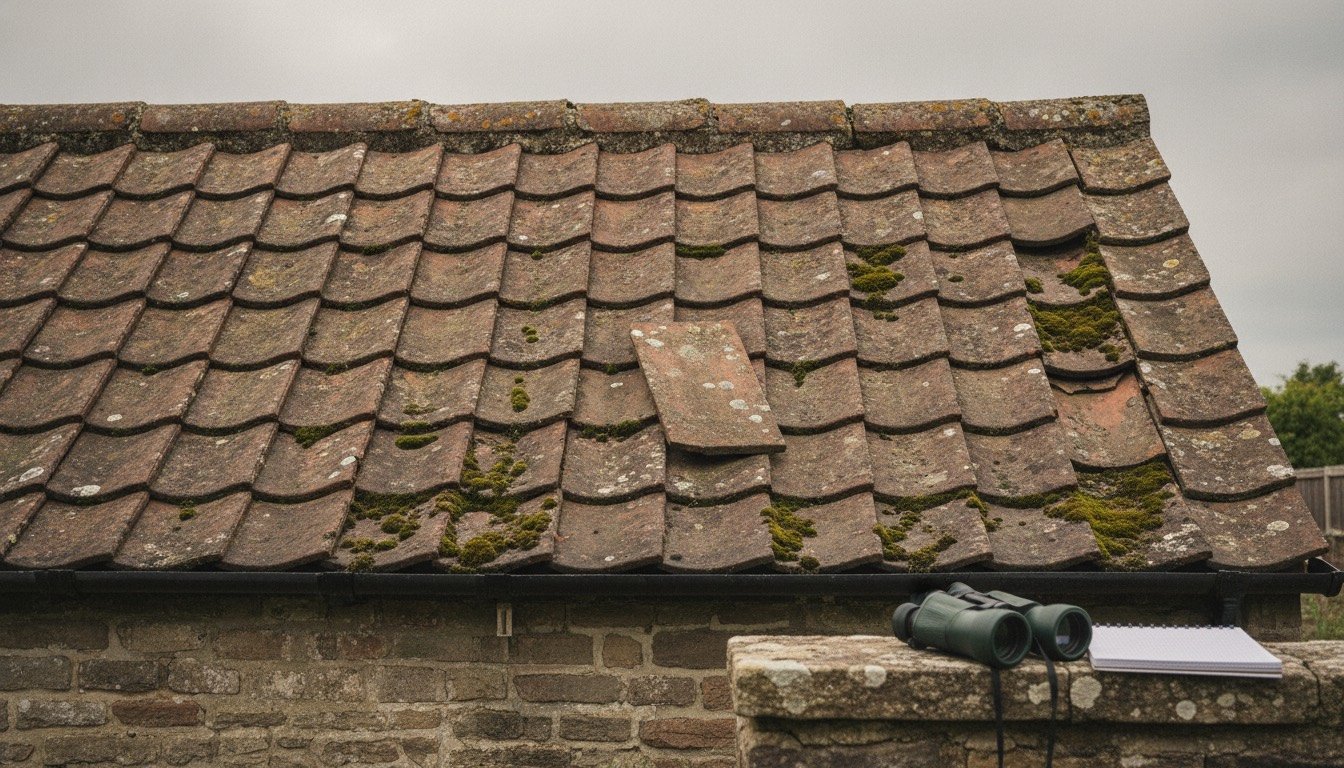
Stand across the road on a bright, dry day and scan slowly. You are hunting pattern breaks — anything interrupting the grid of tiles or slates.
Slipped, cracked and missing tiles are obvious. Ridges and verges deserve equal attention: crumbling mortar lets wind under the caps, and one gale can strip an entire run. A wavy or dipped ridge line is the strongest sign the structure beneath is tired, not just the covering. Thick moss is not damaging in itself, but it holds water against tiles through freeze-thaw and sheds debris downhill.
Gutters are your early-warning system. Grit washing out of the downpipe means the surface of concrete tiles is breaking down, and constant overflows soak the eaves timbers the roof depends on. Clearing them twice a year is the cheapest roof insurance there is — our gutter cleaning and maintenance guide covers doing it safely.
How old is your roof? Honest lifespans by material
Age alone does not condemn a roof, but it sets expectations. If your covering is near the end of these ranges and showing two or more of the signs above, budget for replacement, not another patch:
- •Concrete interlocking tiles, on most post-1960 UK housing: 40–60 years
- •Machine-made clay tiles: 60–80 years, handmade clay often longer
- •Natural Welsh slate: 80–100+ years, though the fixing nails routinely fail first
- •Fibre-cement slates: 30–40 years
- •Mineral felt flat roofs, typical on extensions and dormers: 15–20 years
- •EPDM rubber or GRP fibreglass flat roofs: 30–50 years
- •Steel, zinc or standing-seam metal: 40–70 years — see our metal roof vs shingles cost comparison for the long-run maths
- •Bitumen shingles, mostly on UK garages and outbuildings: 15–25 years
One leak or a failing roof? The repair-versus-replace maths
A single defect is a repair, not a roof. Budget £100–£250 to refit or replace a few slipped tiles, £200–£500 for lead flashing work around a chimney, and £400–£900 to re-bed a ridge. If water is already coming in, our guide to finding and fixing a roof leak walks through tracing it back to the entry point, which is rarely directly above the wet patch.
Replacement territory looks different: leaks in different places within a couple of years, underfelt that tears like wet paper, widespread nail sickness, or repair quotes that keep climbing. A full re-roof on a typical UK semi runs £5,500–£9,000 in concrete tiles and £9,000–£15,000 in natural slate, including £800–£1,200 of scaffolding. Our rule of thumb: once five years of likely repairs would cost more than 30% of replacement, stop patching.
People underestimate the interior clean-up. Soaked carpet and underlay left more than 48 hours holds a musty smell permanently, however well the roof is fixed — lift it, dry the floor, and book professional carpet cleaning while the drying gear is still running.
Three UK rules that change the quote
Before accepting a price, check whether any of these apply — each moves the number materially:
- •Replace more than 25% of a roof slope and Building Regulations Part L requires the insulation upgraded at the same time — typically £600–£1,500 extra on a semi, though it pays back on heating bills alongside basic draught-proofing.
- •Listed buildings and conservation areas normally require like-for-like materials. Swapping Welsh slate for concrete is a planning problem, not a saving — check with the council first.
- •Spray foam on the underside of the roof is now a survey and mortgage headache: several lenders down-value or decline outright, and removal runs £2,000–£5,000. Get the installation paperwork together long before you sell.
What you can safely do yourself — and where to stop
Genuine DIY territory: loft inspections, a binocular survey after every named storm, clearing gutters from a properly footed ladder, and brushing moss off low single-storey slopes with a telescopic soft brush.
The stop-and-call-a-pro line is simple — your feet never touch the roof. Walking on tiles cracks them, pressure washing strips their weathered surface and drives water under the laps, and a fall from eaves height on a two-storey house, around 4.5 metres, is routinely fatal. Call a roofer straight away for anything structural, any chimney or flashing work, and any flat-roof repair beyond a temporary patch.
A drone roof survey costs £150–£250, takes under an hour and gives you dated photographs of every slope — invaluable for storm-damage insurance claims. Book one every five years once a roof passes 30. Use a roofer registered with TrustMark or the Confederation of Roofing Contractors, insist on an itemised written quote, and be sceptical of anyone knocking after bad weather claiming they spotted urgent work from the street. Good roofers are booked weeks ahead. Caught early, most roof problems are boring, affordable maintenance; caught late, they are the most expensive bill a house can send you.
Found this useful?
There's plenty more — hundreds of guides and honestly-tested product reviews for every corner of your home.
Browse All Guides