Roofing & Exterior · 6 min read · 11 July 2026
How Much Does Roof Repair Cost? UK Prices for 2026
A slipped tile and a failed valley look identical from the pavement, yet they are £1,300 apart. Here are the real 2026 UK numbers, and the line between a homeowner job and a roofer's job.
By the Nims Casa editorial team — written from professional cleaning experience and checked against our editorial standards.
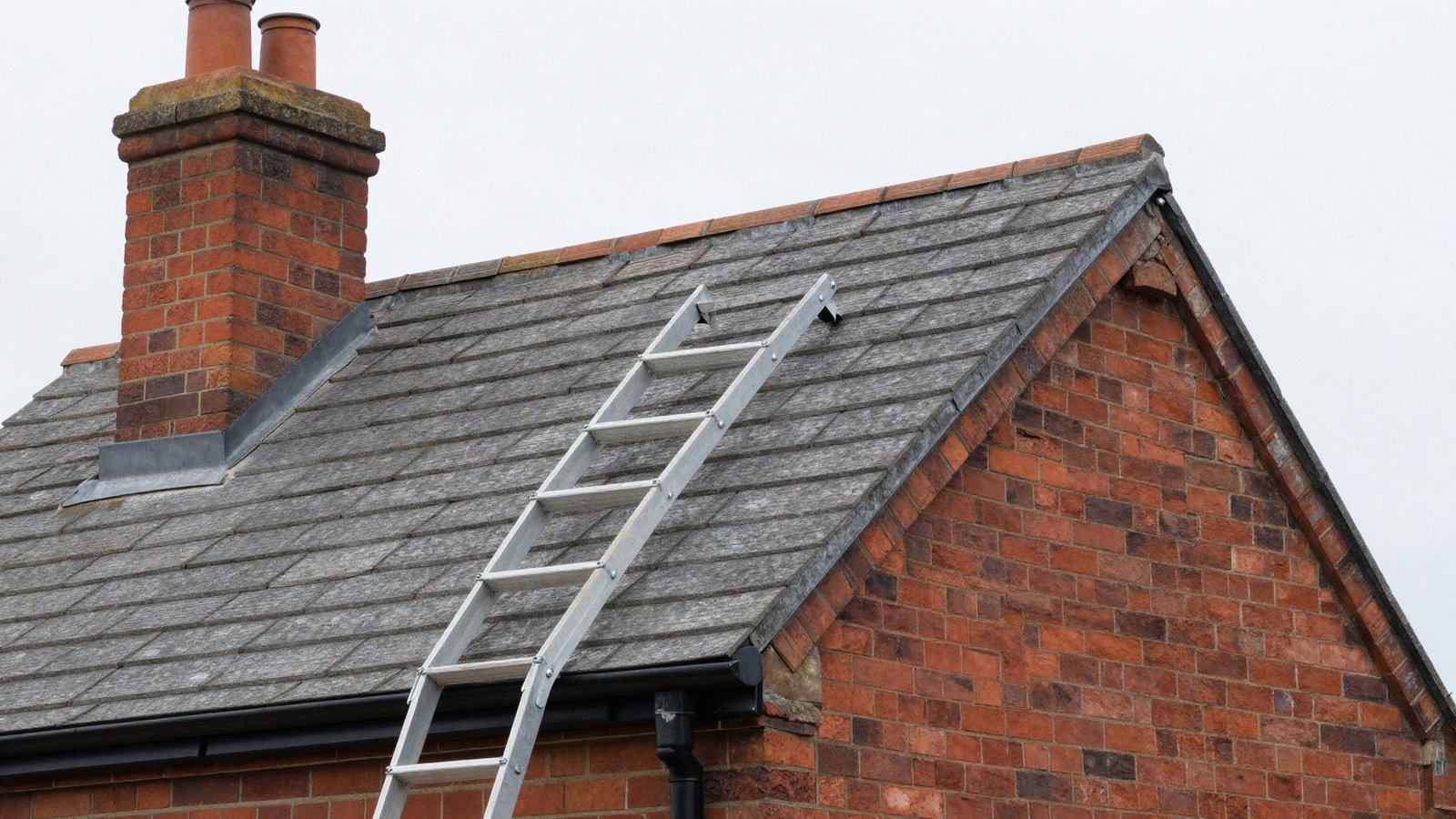
A slipped tile and a failed lead valley look almost identical from the pavement, and they are about £1,300 apart. That gap is why quotes vary so wildly: the symptom tells you little about how much roof has to come apart, or whether anyone can work off a ladder rather than scaffold.
Below are the figures we see on ordinary UK domestic jobs in 2026, fitted, access included, VAT flagged. We have also drawn a hard line through the middle, because the cheapest roof repair is the one you did yourself and the most expensive is the one you tried to.
Typical UK roof repair costs in 2026
The honest range is £150 to £2,500, with most repairs landing between £250 and £800. The floor is a minimum charge, not materials: nobody works at height for under half a day's labour, which is why refitting one £2.80 tile costs £150. If you have a stained ceiling and no idea where water is entering, tracing the leak yourself takes the detective work off the bill.
All-in, two-storey house, reasonable access:
- •1-5 slipped or cracked tiles or slates: £150-£280
- •Trace and repair one leak, ladder access: £180-£450
- •Re-bed and re-point ridge tiles: £35-£60 per metre, or £450-£950 for a 12m ridge
- •Retrofit a mechanically fixed dry ridge system: £70-£110 per metre
- •New code 4 lead step and cover flashing to a chimney: £350-£750
- •Chimney re-flaunching, the mortar cap around the pots: £300-£650
- •Cracked cement or corroded lead valley, per side: £600-£1,500
- •Patch a failed felt flat roof: £150-£400
- •Strip and re-cover a flat roof in EPDM or GRP: £90-£140 per m²
- •Rotten fascia and soffit: £45-£80 per metre
- •Emergency make-safe and sheeting, out of hours: £250-£600
Labour versus materials
The split is roughly 70:30 labour to materials, and on small jobs nearer 90:10. A concrete interlocking tile is £1.50-£4, a Spanish slate £1.80-£3, a metre of code 4 lead £22-£35. You are buying time and safe access, not covering.
Day rates run £220-£320 per roofer across England and Wales, £280-£400 inside the M25. Two-man teams are standard above single-storey, so £450-£650 a day is realistic. Access often costs more than the repair:
- •Ladders and roof ladder: absorbed into the day rate
- •Alloy tower to eaves height: £80-£150 a week to hire
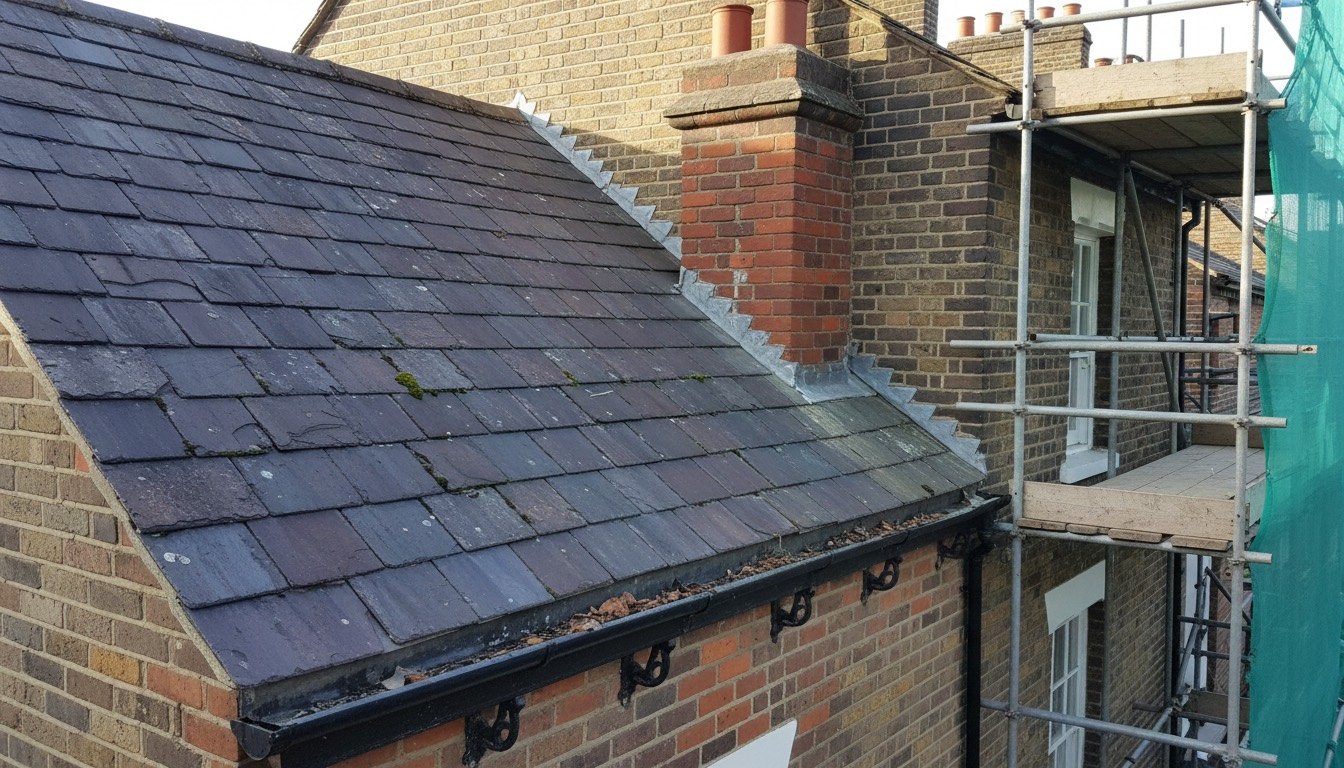
- •Scaffold to one elevation of a two-storey house: £550-£1,100 a fortnight
- •Full perimeter scaffold with a hoist: £1,400-£2,800
- •Scaffold licence where it stands on public pavement: £40-£150
What moves the price
Two houses on the same street can be quoted £900 apart for the same-looking job. What explains it, in order of impact:
- •Access. A bungalow repair off a ladder is £160; the same fault on a three-storey terrace needs scaffold and becomes £1,100.
- •Covering. Concrete interlocking tiles are cheap and forgiving; natural slate, handmade clay pegs and stone slates are slow work with scarce materials.
- •Matching. Reclaimed tiles for a 1930s roof run £2-£6 each against £1.50 new, and sourcing them adds days.
- •Region. London and the South East sit 25-40% above average; the North East, Wales and much of Scotland 10-20% below.
- •Conservation areas and listed buildings. Like-for-like materials and lime mortar are often mandatory: add 30-50%.
- •Urgency. Storm callouts carry an out-of-hours premium, and insurers pay for storm damage but rarely for wear and tear.
- •VAT. Sole traders under the £90,000 threshold do not charge it; a larger firm adds 20%, or £300 on a £1,500 job.
- •Scale. Re-covering more than about a quarter of a slope is generally treated as renovating a thermal element under Approved Document L, triggering an insulation upgrade and building control notification. Then you are comparing against a full roof replacement, not a repair.
Three worked examples
Real jobs, broken out so you can read your own quote:
- •Leicester, 1970s semi, three slipped concrete tiles, ladder access via the garden. Half a day for one roofer £140, tiles and clips £12. Total £180.
- •Bristol, 1930s semi, staining beside the chimney breast. Failed cement fillet replaced with code 4 soakers and step flashing, plus re-flaunching. Two roofers for a day £480, lead and mortar £95, tower hire £110, waste £30. Total £780.
- •Manchester, 12m² felt flat roof over a kitchen extension, ponding at 18 years old. Stripped to deck, two boards replaced, firrings corrected, EPDM and new trims. Labour £900, membrane £310, timber and trims £185, skip £220. Total £1,615 plus VAT.
The DIY-or-professional boundary
Falls from height remain the biggest killer in UK construction. The line is not about skill but whether the job can be done with both feet on something solid. Fair game for a competent DIYer with a stable ladder and someone footing it: ground-level inspection through binoculars, working from a roof inspection checklist before anyone quotes; clearing gutters, since blocked guttering causes more suspected roof leaks than roofs do; swapping a gutter bracket at eaves height; tracing damp timber from inside the loft; and sheeting a small area in an emergency.
Everything below needs a roofer: standing on the covering, working above a fragile surface, or a failure that gets expensive fast when botched.
- •Standing on tiles or slates. They are not walkable; a batten cracking under you is a fall.
- •Ridge, hip and verge work, at the highest point, where failed mortar in a gale becomes a liability problem.
- •All lead and stack work: valleys, chimney flashings, box gutters, re-flaunching and repointing above roof level. Wrong code or fixing centres and it leaks by spring.
- •Any repair above single-storey height, or above roughly 30 degrees pitch, where scaffold is needed.
- •Fragile roofs: old fibre-cement, polycarbonate or GRP over a conservatory or garage.
- •Structural sag, springy decks or rotten rafters, which is a builder or structural engineer, not a patch.
- •Anything near an overhead cable, or a roof carrying solar panels.
How to sanity-check a quote
Get three written quotes and read them for what they exclude. 'Access by others' means a scaffold bill arrives separately. Ask which covering is matched, what fixings are used, and whether waste removal and VAT are included.
Then do the arithmetic: strip access and materials out, divide the remainder by your regional day rate, and check the implied days are plausible. £1,200 for a chimney flashing with a tower and one day is high; £1,200 with two days and scaffold to a three-storey elevation is fair. Confirm the firm is on the NFRC or CompetentRoofer register, then weigh the repair against the roof's remaining life: if you can see the warning signs of a roof near the end, a fourth £700 patch is money you will not get back.
How we arrived at these figures
Prices come from quotes and invoices gathered across England, Wales and Scotland in early 2026, weighted towards interwar and post-war semis and terraces with concrete or clay tiles. Materials are checked against trade counter prices at national merchants, labour against advertised day rates for two-operative teams. Low ends assume ladder access, a common covering and no VAT; high ends assume scaffold, a specialist covering and a VAT-registered contractor. Regional multipliers are stated separately rather than averaged in.
Found this useful?
There's plenty more — hundreds of guides and honestly-tested product reviews for every corner of your home.
Browse All Guides