Product Reviews · 6 min read · 27 June 2026
The Best Steam Irons & Steam Generators UK (2026)
A good iron halves ironing time — a steam generator halves it again. Where the thresholds are, and the models that glide rather than fight.
By the Nims Casa editorial team — written from professional cleaning experience and checked against our editorial standards.
Affiliate disclosure: if you buy through links in this article we may earn a small commission at no extra cost to you. Our recommendations come from professional cleaning experience and are never influenced by retailers or brands.
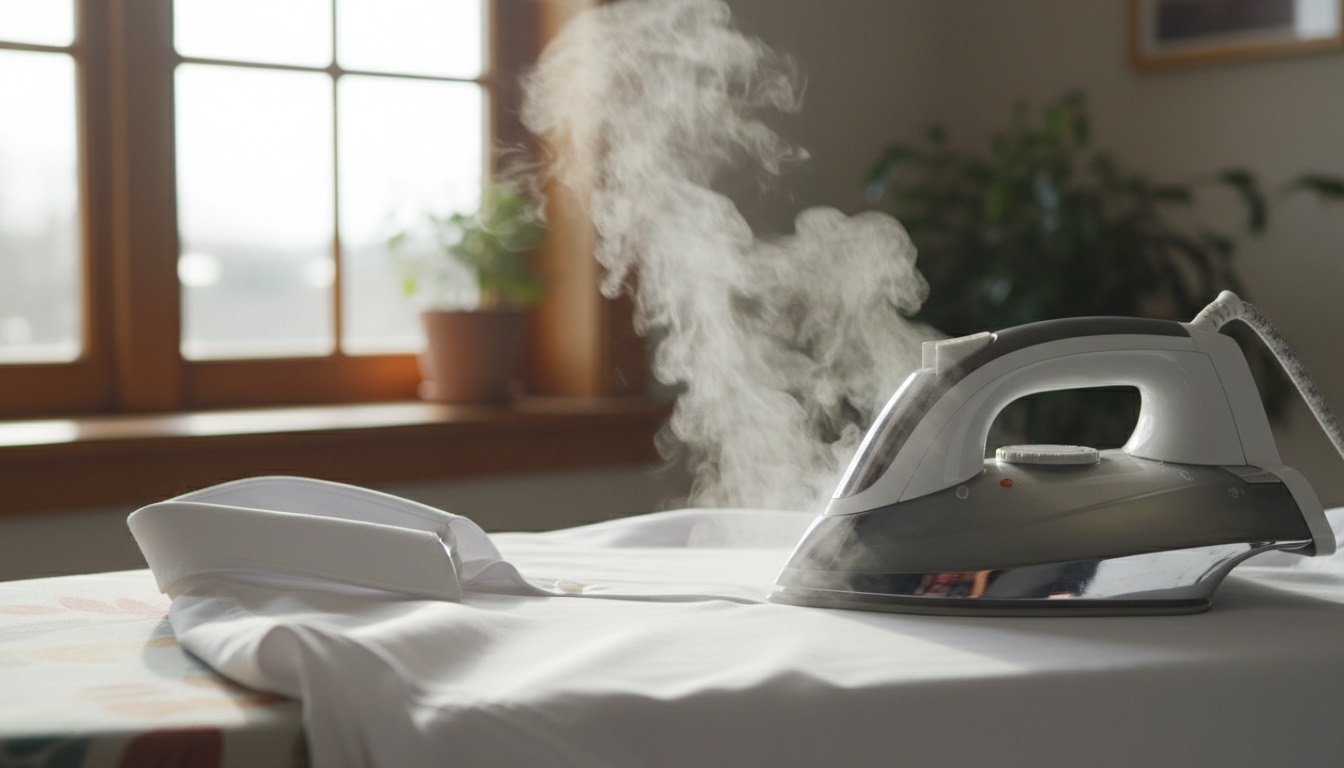
Nobody looks forward to the ironing pile, but a genuinely good iron turns a dreaded Sunday chore into twenty minutes of steam and repetition instead of a lost evening. The gap between a budget iron and a proper steam generator isn't marketing spin — it's steam physics. More steam, delivered at higher pressure and without stopping to rebuild that pressure every few passes, relaxes cotton and linen fibres far faster than a basic domestic iron on tap pressure alone. That's the case for spending beyond the cheapest end of the shelf.
This guide sits alongside our tested picks — one steam generator for households drowning in laundry, one conventional iron for everyone else, and one budget option for occasional use — and covers how we test, the specs worth paying for, keeping an iron running past the three-year mark, common buying mistakes, and a straight verdict on which award-winner suits which household.
If you already sort washing by care label rather than colour alone, you'll recognise why steam output and accurate temperature control matter more than headline wattage.
Our top picks at a glance
Philips PerfectCare 8000 Steam Generator
~£300No-temperature-setting technology that's safe on everything from silk to denim, brutal steam output, and an anti-scale system that survives hard water. Ironing pile, meet ironing hour.
Pros
- ✓ Iron anything without settings
- ✓ Huge continuous steam
- ✓ Excellent descaling design
Cons
- ✗ Worktop and storage footprint
- ✗ Premium price
Tefal Ultimate Pro FV9865
~£90The best glide we've used on a standard iron, strong steam shot for creases, and Tefal's durilium soleplate shrugs off years of use. The sweet spot for most homes.
Pros
- ✓ Superb soleplate glide
- ✓ Powerful steam boost
- ✓ Comfortable weight
Cons
- ✗ Tank refills on big sessions
- ✗ Cord could be longer
Morphy Richards Crystal Clear
~£35Light, reliable, decent steam and a transparent tank so you never run dry mid-shirt. Everything a casual ironer needs.
Pros
- ✓ Affordable and dependable
- ✓ Light for long sessions
- ✓ Good steam for the price
Cons
- ✗ Modest continuous steam
- ✗ Basic scale management
How We Tested Steam Irons and Steam Generators
We ran every iron and generator through the same basket of everyday UK laundry over several weeks: cotton work shirts fresh out of a washing machine's spin cycle, linen trousers, a school blazer, and polyester-cotton PE kit straight from the tumble dryer. Each was timed on the same pile, judged on how quickly creases actually released, and kept running on a full tank to see how heat and pressure held up towards the end of a session.
We also lived with each one for the unglamorous parts of ownership: filling the tank without slopping water, how loud the pump was, how quickly it reached working temperature from cold, and how it coped with being knocked or tipped — a realistic test in any house with children or pets. Models that scorched fabric, leaked, or spat brown flecks of scale onto light clothes were marked down regardless of how fast they otherwise worked.
Buying Guide: The Specs and Features Worth Paying For
Steam output, quoted in grams per minute, is the figure that predicts ironing speed — not the wattage on the box. A generator forces continuous high-pressure steam through a hose and never pauses to rebuild pressure. Budget irons (£20–£40) manage modest, steady steam suited to occasional use. Mid-range irons (£60–£100) close the gap with stronger bursts and better glide. Generators (£150–£350) sit in a different category — a separate pressurised boiler feeding a lightweight iron head, built for households doing several loads a week.
Soleplate material affects glide and durability more than buyers expect. Stainless steel is the durable, easy-clean default; ceramic-coated plates glide better fresh out of the box but can scratch over years; titanium blends split the difference and survive zips and buttons better. A precision tip helps around collars and cuffs, and well-spaced steam holes avoid the patchy results of a single central jet.
Variable steam and temperature settings that track the care symbols matter more than gimmicks like a steam-boost button. An auto-shutoff that cuts power if the iron is left flat or motionless is worth paying for around children or pets, and on a generator a hose long enough to reach a full-size board matters more once you've lived with one than it does in the shop.
Caring for Your Iron: Limescale, Storage and Everyday Habits
Limescale is what actually kills irons and generators before their time, and it's a bigger problem than expected across hard water regions of the South East, East Anglia and much of the Midlands. The classic symptom is brown, gritty flecks spat onto a clean shirt. Prioritise a genuinely removable, rinseable scale collector over a token 'self-clean' button, use it every few weeks rather than waiting for symptoms, and never leave water sitting in the tank between uses.
Filtered water extends the life of most generators, but check the manual before reaching for pure distilled water — on some soleplates it strips protective minerals and encourages corrosion instead. A simple weekly routine, similar in spirit to our appliance maintenance checklist, keeps most irons running past the three-year mark: empty the tank after every session, wipe the soleplate while cooling rather than hot, and store it upright rather than flat.
The ironing board cover matters more than people think, too. A thin, compressed cover reflects heat unevenly and leaves scorch shadows on dark fabrics, while a padded cover speeds ironing along by working both sides of the fabric at once. Replace a flattened cover before the iron itself — it's a £10–£15 fix that quietly solves a problem people blame on the appliance.
Common Mistakes When Buying (and Using) a Steam Iron
A handful of buying mistakes account for most of the disappointed reviews we read before testing began — nearly all of them are easy to avoid once you know to look for them.
- •Buying on wattage alone. A 3,000W iron with weak steam won't outpace a 2,000W model with continuous, high-pressure steam — check grams-per-minute where listed.
- •Choosing a generator for occasional use. For a once-a-fortnight job, the worktop space, descaling routine and £150-plus outlay rarely pay back; a good conventional iron does just as well.
- •Skipping the scale collector in a hard water postcode. A cheap model without a proper anti-calc system usually means replacing it within two years instead of its full lifespan.
- •Ignoring hose and cord reach before buying. A generator with a short hose forces awkward angles on a full-size board.
- •Persisting with a scaled-up iron instead of replacing it — a repair often costs close to a replacement anyway, as our appliance repair cost guide shows.
- •Overlooking auto shut-off around children or pets — a genuine safety feature, usually for only a small price difference.
Frequently asked questions
**Is a steam generator worth the extra money?** Only if you're ironing regularly for more than one person. A single adult with a light basket is well served by a good £60–£90 conventional iron; a family doing several loads a week will find a generator's continuous steam genuinely halves time at the board.
**How often should I descale my iron?** Every two to four weeks in a hard water area, and every couple of months in a soft water one. Waiting until you see brown flecks means scale has already built up and is harder to shift.
**Can I use ordinary tap water in my steam iron?** In most of the UK, yes, provided you descale regularly. In hard water areas, a filtered or partially distilled mix reduces build-up, but pure distilled water alone can strip minerals from some soleplates.
**Why does my iron leave brown marks on clothes?** Almost always limescale flaking off internal components and being pushed out with the steam. Run a descale cycle immediately, and check whether the scale collector, if fitted, needs replacing.
**Does ironing before or after tumble drying make a difference?** Fabric that's still slightly damp, whether from the dryer or from drying indoors, needs less steam and irons faster because the fibres are already relaxed.
**How long should a steam iron actually last?** A well-maintained conventional iron typically lasts five to eight years; a generator, with its extra components, often runs three to six years before the pump or boiler needs attention.
Which Iron Should You Buy?
If you're ironing for a family several times a week, the Philips PerfectCare 8000 Steam Generator (Best Overall) is the one to budget for — its no-temperature-setting technology and continuous steam make short work of mixed loads without sorting by fabric first. For most single households and couples doing a weekly session, the Tefal Ultimate Pro FV9865 (Best Conventional Iron) delivers the best glide and steam shot we tested on a standard iron, without the price tag of a generator. And if ironing is an occasional chore, the Morphy Richards Crystal Clear (Best Budget) does everything a casual ironer needs, with a transparent tank that removes the guesswork of running dry mid-shirt.
Found this useful?
There's plenty more — hundreds of guides and honestly-tested product reviews for every corner of your home.
Browse All Guides