Home Safety & Security · 6 min read · 6 April 2026
How Much Does Storm Damage Repair Cost in the UK? (2026 Price Guide)
A slipped tile and a wrecked roof are the same phone call but a hundredfold difference in price. Here is what UK storm repairs actually cost in 2026, and how to work out which job you have.
By the Nims Casa editorial team — written from professional cleaning experience and checked against our editorial standards.
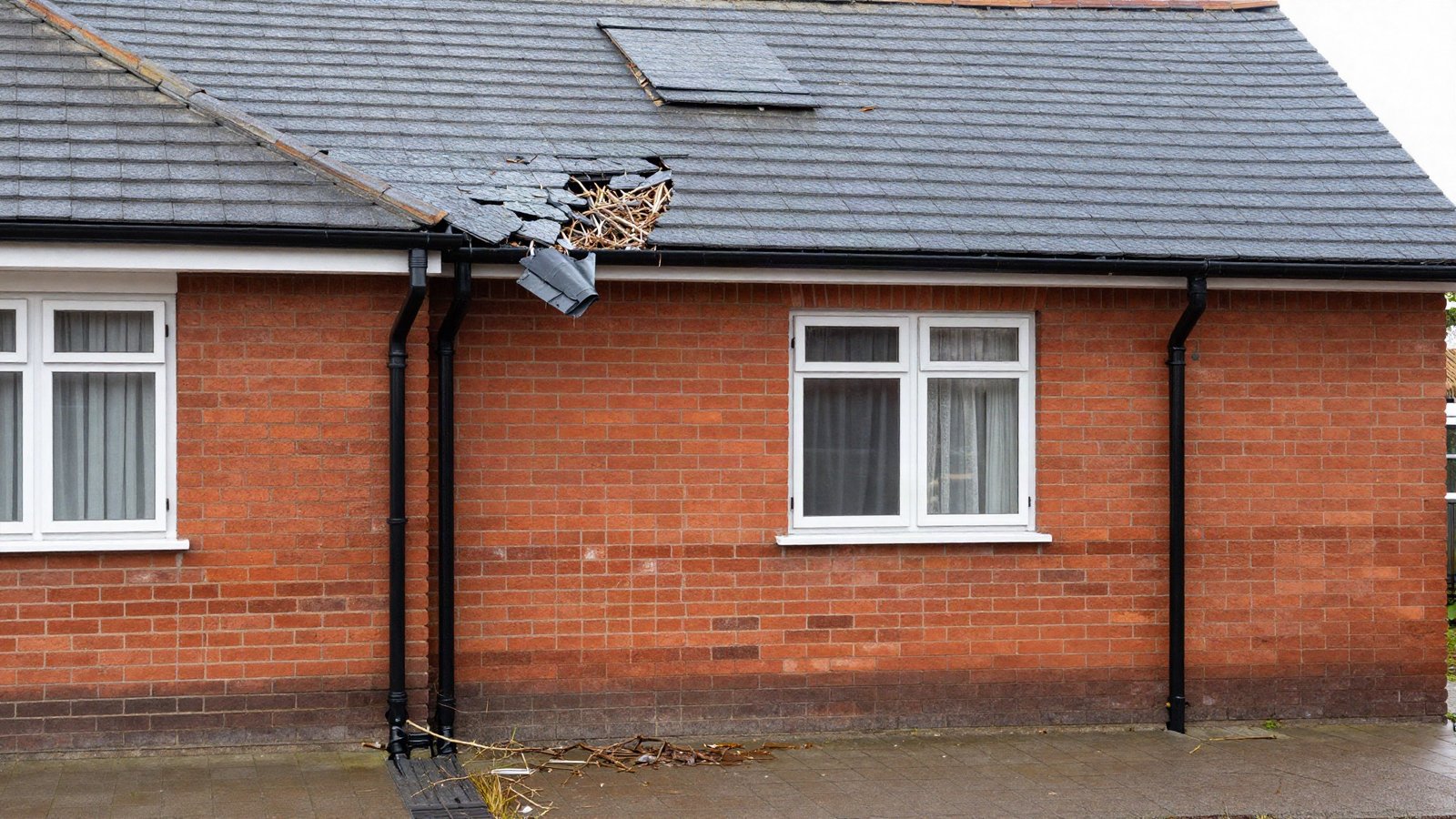
The morning after a named storm, roofers get two kinds of call: the £180 job and the £9,000 job. From the ground, with a wet ceiling patch and two tiles in the flower bed, both look identical. Quotes then arrive ranging from £200 to £4,000 for what the homeowner believes is one problem.
So this guide does the diagnosis first and the pricing second. Figures are UK rates for 2026, supplied and fitted, VAT included, and assume the Midlands or northern England. Add roughly 20-35% inside the M25 and across the South East.
Step one: work out which problem you actually have
Storm damage falls into four cost families: covering, water ingress, structural and ground water. They look alike and almost never cost alike. Run through this from the garden and inside the loft before you ring anyone.
- •Water appears only while it is raining and stops within an hour: a covering fault — slipped tile, lifted verge, failed lead flashing. Usually £120-£600.
- •Water keeps dripping for hours after rain stops: it is sitting on the underlay or ponding in a blocked gutter. Budget £250-£900.
- •Staining runs down the inside of a gable wall or a chimney breast: flashing, verge mortar or chimney pointing. Scaffold is usually unavoidable, which is what pushes these to £900-£2,500.
- •Damp at floor level after heavy rain with a dry loft: this is drainage, not roof. Different trade entirely — see basement waterproofing costs.
- •Tiles on the lawn but nothing wet inside: you have bought time, not escaped. Count the gaps with binoculars and book a repair within a fortnight.
- •Ceiling sagging or bulging: stop diagnosing. Clear the room and pierce the lowest point to drain it in a controlled way.
- •Water running near light fittings or the consumer unit: isolate that circuit at the fuse board first.
Typical UK storm damage repair costs in 2026
Most storm jobs never reach four figures; the average is skewed by a handful of severe cases. Note the minimum charge — few firms attend for under £120-£180 however small the job, because access and setup dominate the time.
- •Emergency sheeting or tarpaulin, out of hours: £180-£450
- •Replacing 1-5 slipped or cracked concrete tiles: £140-£280
- •Slate patch repair, including nail sickness: £180-£400
- •Re-bedding or repointing a ridge: £45-£80 per metre (a 9m semi ridge, £420-£720)
- •Renewing lead flashing to an abutment wall: £250-£600
- •Refixing or replacing plastic guttering: £28-£48 per metre fitted
- •Full fascia, soffit and gutter replacement, three-bed semi: £1,900-£3,600
- •Felt or EPDM patch to a flat roof: £160-£420; new 15m² garage roof £1,300-£2,400
- •Chimney stack repointing £650-£1,600; partial rebuild £1,400-£3,200
- •Scaffolding on a semi: £650-£1,300 for a two-week hire
- •Full re-roof, three-bed semi: £6,000-£10,000 in concrete tile, £9,500-£17,000 in natural slate
- •Storm-damaged fencing: £75-£150 per 6ft panel fitted, £50-£80 per concrete post
- •Emergency tree work after a blowdown: £450-£1,600 (see tree removal costs)
- •Water-damaged ceiling: stain-block and redecorate £280-£520; full plasterboard replacement £550-£1,000
- •Professional drying after internal flooding: £1,400-£4,000 in equipment and monitoring
Labour versus materials: where the money goes
This split explains most of the confusion over quotes. On a small roof repair the materials are trivial — five concrete tiles cost about £12. You are buying a qualified pair of hands at height on a wet roof, plus travel and insurance: roughly 75-80% labour and access, 20-25% materials.
On a full re-roof it shifts to about 50% labour, 33% materials and the rest in scaffold and skips. Flood reinstatement is the extreme, with labour and drying hire reaching 80%. The takeaway is to bundle: if scaffold is going up for a chimney, get the ridge checked, the flashing renewed and the gutters cleared while it stands, because you pay that £900 once. Our gutter maintenance guide is worth reading before the scaffolders leave.
What moves the price
- •Pitch and height. Above about 45 degrees, or on a three-storey terrace, scaffold replaces ladders and roughly doubles access cost.
- •Covering type. Concrete interlocking tile is cheapest to repair; slate, clay pantile and stone slate cost more.
- •Matching. A reclaimed tile for a 1930s roof runs £8-£15 each against £2.20 for a modern equivalent.
- •The 25% rule. Replace more than a quarter of a slope and Building Regulations Part L is triggered, potentially adding £600-£1,800 in insulation upgrades.
- •Listed status or a conservation area: like-for-like materials become mandatory and consent takes weeks.
- •Timing. The fortnight after a named storm is a seller's market — prices firm by 15-25% and lead times stretch to a month. Out-of-hours call-out adds £90-£200.
Three worked examples
- •1970s semi, concrete tile, four tiles off and a damp bedroom ceiling. Tiles replaced from a ladder £220; underlay checked; ceiling stain-blocked and repainted £310. Total £530 — not worth claiming against a £350 excess.
- •Edwardian terrace, slate roof, lifted ridge and cracked chimney pointing. Scaffold £980, 8m of ridge re-bedded at £62/m (£496), chimney repointed £850, three slates renewed £190. Total £2,516, and worth doing all of it on one scaffold visit.
- •1990s detached, tree down onto the rear slope and conservatory. Emergency sheeting £320, tree removal £1,150, structural engineer £450, 12m² of roof rebuilt with two new rafters £3,900, conservatory panels £2,200, drying and redecoration £1,700. Total £9,720 — a full insurance job with a loss adjuster.
How to sanity-check a quote
Get three written quotes, not three verbal figures, and check all three price the same scope. The usual cause of a wild spread is one roofer quoting a patch and another a slope renewal. Reject any quote that is one line and a total: a legitimate one states the access method, the number of tiles or metres, whether underlay is being repaired, and whether scaffold is included. If scaffold is 'TBC', it is not a price. Cross-check against our guides on comparing contractor estimates and contractor red flags.
On insurance, most UK policies define storm as sustained gusts around 55mph or above, so check Met Office data for your area on the date. Insurers routinely decline where the underlying cause was wear and tear, and a roof at the end of its life is a wear-and-tear roof. With a typical £250-£500 excess, anything under about £800 is cheaper paid outright. If you are claiming, photograph everything before the tarpaulin goes up and follow our guide to filing a claim.
Methodology, and where DIY stops
These bands come from quoted jobs across the Midlands, Yorkshire and the North West in early 2026, cross-checked against published NFRC member rates and merchant prices. Roofing labour currently sits at £230-£320 a day for one operative and £420-£580 for a two-man team. We revise these annually; regional variation of 20-35% either side is normal and is not evidence of a bad quote.
The genuinely useful DIY here is inspection, not repair. Binoculars from the garden, a torch in the loft during rain and a phone camera on a pole will tell you most of what a roofer will. Clearing gutters from a properly footed ladder is reasonable. Standing on a wet roof, working near a chimney or tackling a slope steeper than 30 degrees is not a homeowner job. Gather evidence with a roof inspection checklist, then spend the money on the permanent repair, not a second attempt.
Found this useful?
There's plenty more — hundreds of guides and honestly-tested product reviews for every corner of your home.
Browse All Guides