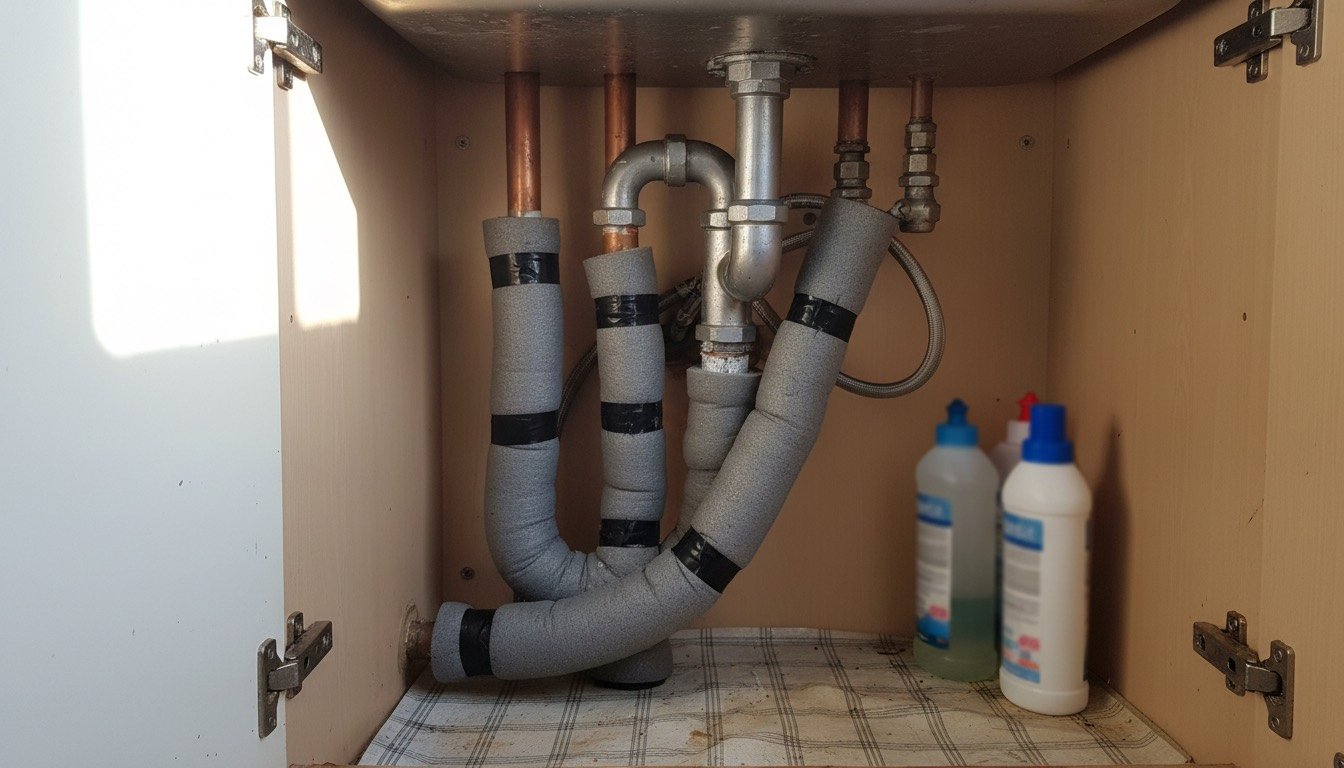
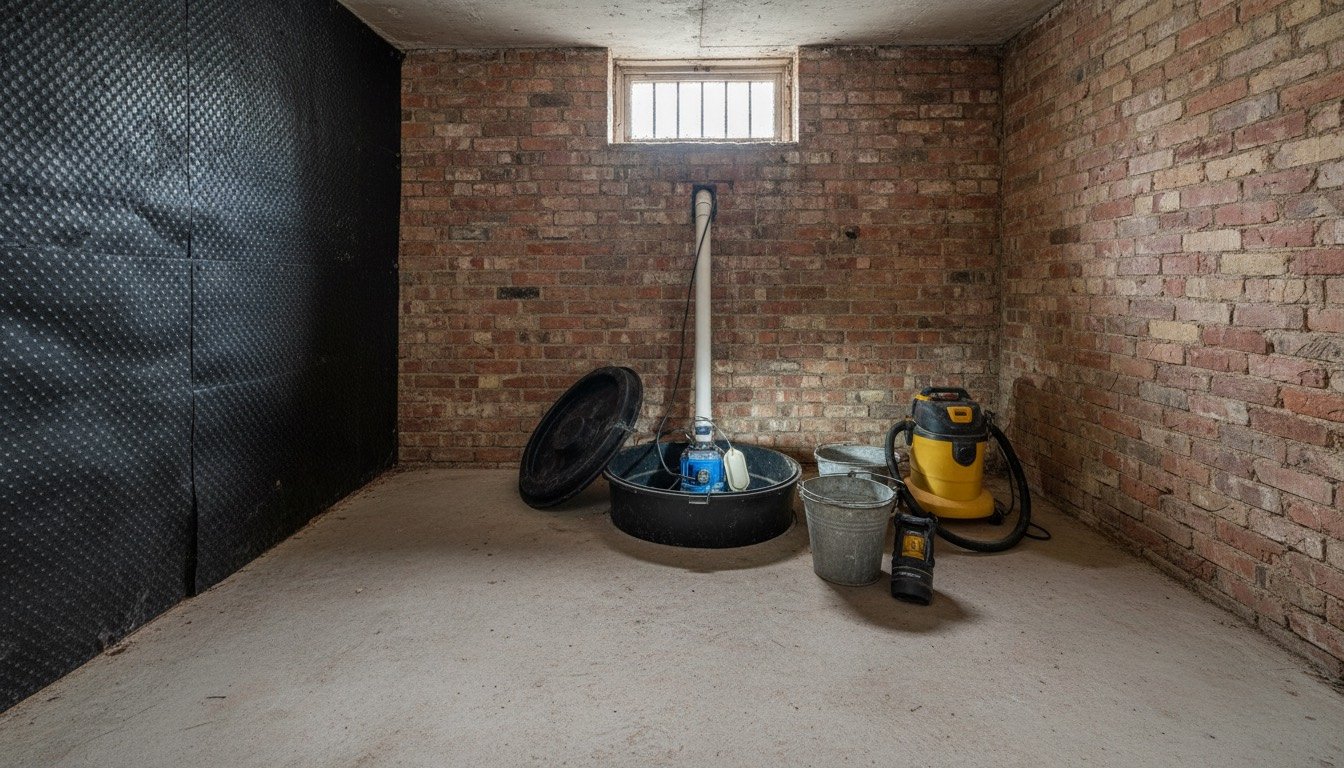
Plumbing · 6 min read · 11 April 2026
How Much Does Basement Waterproofing Cost? 2026 UK Price Guide
One firm quotes £2,800 to hack off and re-render. Another quotes £14,000 for a pumped drainage system. Here is what each element genuinely costs in the UK, and where the DIY line sits.
By the Nims Casa editorial team — written from professional cleaning experience and checked against our editorial standards.
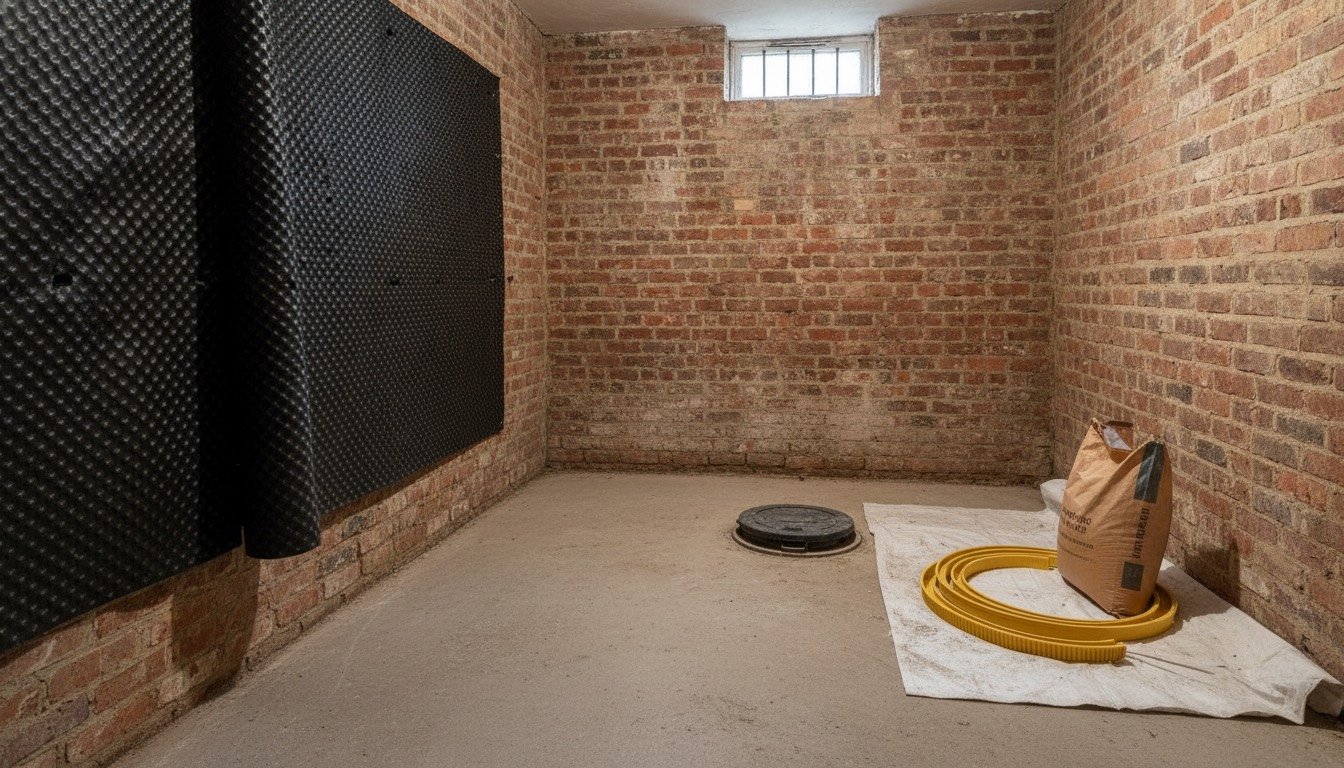
Cellar quotes vary by a factor of five for the same wet wall, and homeowners assume somebody is trying it on. Usually nobody is. The £2,800 quote is a render job that will hold back nothing; the £14,000 quote is a managed drainage system with twin pumps, backup and an insurance-backed guarantee a valuer will accept.
Prices below are UK rates for spring 2026 including VAT, based on Victorian and 1930s housing with cellar head heights of 1.9m to 2.2m. Before comparing anything, decide what the space is for. BS 8102:2022 grades below-ground waterproofing by intended use, and Grade 1 (dry storage) costs a third of Grade 3 (a habitable room).
Typical UK price range
For a whole cellar in an average terrace or semi, expect these all-in bands, covering labour, materials, waste and making good but not flooring or heating.
- •Fixing the external cause only (gutters, gullies, ground levels, a failed downpipe): £150 to £900. Price this first.
- •Type A cementitious tanking: £900 to £2,600 for one or two walls, £2,500 to £5,500 for a small cellar.
- •Type C cavity drain membrane with sump, single pump and perimeter channel: £5,500 to £9,500.
- •The same with twin pumps, backup, alarm and a 10-year insurance-backed guarantee: £8,000 to £15,000.
- •External excavation and tanking to the outside wall face: £14,000 to £30,000, and often impossible on a terrace.
Unit costs, so you can price your own room
Reputable contractors price by measured quantity. Measure your wall area (perimeter x height) and floor area, then apply these rates.
- •CSSW-qualified survey with written specification: £250 to £550, often credited against the works.
- •Cementitious tanking slurry: £42 to £58 per 25kg bag, covering 4 to 5 m2 at two coats.
- •8mm studded membrane: £160 to £230 per 40 m2 roll, plus plugs, tape and sealing rope.
- •Membrane fixed to walls and floor, labour and materials: £55 to £85 per m2.
- •Perimeter drainage channel bedded into the floor edge: £45 to £80 per linear metre.
- •Sump chamber, single pump and non-return valve, fitted: £900 to £1,600.
- •Second pump plus battery backup and high-water alarm: £550 to £1,200.
- •Certificated fused spur: £160 to £320, plus £28 to £45 per m2 to re-plaster.
Labour versus materials, and what moves the price
On a cavity drain job the split runs roughly 60% labour, 25% materials, 15% plant and waste. Membrane is cheap; hand-balling forty bags of spoil up a narrow cellar stair is not. That is why a cellar with a coal-hole hatch is often £1,000 cheaper than one reached through a kitchen. Type A tanking sits nearer 70% labour.
If materials exceed about 35% of a quote, the labour has been under-priced and will return as an extra. Working out why your basement is damp first stops you buying an expensive fix for a £200 problem. Beyond that, six things move it:
- •Grade of use. Grade 3 habitable space adds insulation, ventilation and escape provision on top of the waterproofing.
- •Water table. Standing water means a pumped system; damp masonry alone may not.
- •Head height. Below about 1.9m most people want the floor lowered, which adds £1,800 to £3,200 per m2.
- •Region. London and the South East run 20% to 30% above the Midlands, the North and Wales.
- •VAT. Standard 20%, but a property empty two years or more can qualify for the 5% reduced rate.
- •Guarantees. Selling or remortgaging needs a PCA-registered installer, ruling out the cheapest end.
Three worked examples
- •Storage cellar, 1930s semi, 2.5m x 3m, musty but dry underfoot. Downpipe and gully repair £290, air brick reinstated £120, DIY tanking materials £140, 20-litre dehumidifier £199. Total £749, no contractor needed.
- •Victorian terrace cellar, 3.5m x 4.5m, damp to 1m all round with occasional puddling. Survey £350, membrane over 48 m2 at £70 = £3,360, 16 metres of channel at £62 = £992, twin-pump sump £2,100, spur £240, mechanically fixed plasterboard and skim £1,150, waste £320, guarantee £280. Total £8,792.
- •Detached 1900s house, garden access, external tanking to 12 metres dug to 2.4m. Excavation and shoring £5,400, render and protection board £4,200, land drain £2,600, patio reinstated £2,300, party wall surveyor £1,100. Total £15,600, against £9,800 for a comparable internal result: interior versus exterior waterproofing is a real decision.
The DIY-or-pro boundary, stated plainly
Plenty of this work is legitimately DIY, and the trade rarely admits it. Clearing gutters and gullies, digging soil back below the damp-proof course, reinstating an air brick, brushing masonry waterproofer onto a storage wall and running a dehumidifier are all within reach of a competent DIYer, as is laying cavity drain membrane in a Grade 1 store. Routine gutter and downpipe maintenance fixes more cellars than any product does.
The following is not DIY territory in the UK, and treating it as such creates legal and safety exposure.
- •Any new electrical circuit for a sump pump. It must be certificated under Part P; a pump on an extension lead is a shock and fire risk.
- •Excavating within 3 metres of a neighbour's wall and deeper than their foundations. That triggers the Party Wall etc. Act 1996 and needs notice served.
- •Lowering the floor or underpinning. Structural engineer plus building control, without exception.
- •Converting a cellar to habitable use. Building Regulations cover escape, ventilation and insulation; unapproved work surfaces at sale.
- •Disturbing suspected asbestos in old bitumen coatings, floor tiles or textured finishes. Sample and test first.
- •Mould over roughly 3 m2, or any mould in a sleeping room. Wear FFP3 protection even for small patches, and read our guide to identifying mould in a basement first.
- •Radon-affected areas, including parts of Cornwall, Devon and Derbyshire. Sump systems alter radon movement, so test before and after.
How to sanity-check a quote
Three itemised quotes beat three headline numbers. A quote naming the membrane, the measured areas and the pump model can be compared; one reading "tank cellar, £7,450" cannot.
- •Is there a written survey referencing BS 8102 and a stated grade? If not, nobody has diagnosed anything.
- •Are quantities shown, so you can check the rate per m2 against the figures above?
- •Is there a second pump or backup? A single mains pump fails at the moment it is needed. Check the figures against typical sump pump installation costs.
- •Where does the pump discharge? A soakaway beside the wall simply recirculates the water.
- •Is the guarantee insurance-backed by a named insurer, or just the firm's own promise?
- •Has anyone priced the external cause? A contractor who ignores your blocked gully is selling a product, not a solution.
Methodology and caveats
These figures come from merchant pricing in early 2026 plus day rates of £220 to £320 for a two-person waterproofing team in the Midlands and North, and £300 to £420 in the South East. Worked examples are composites, cross-checked against PCA member specifications.
Treat them as a bracket for negotiation, not a fixed tariff, and re-check annually. Listed buildings and conservation areas add consent costs; any change of use pulls in building control. If the goal is a usable room, read our cost breakdown for finishing a basement first: waterproofing is typically only 40% of that total.
Found this useful?
There's plenty more — hundreds of guides and honestly-tested product reviews for every corner of your home.
Browse All Guides