DIY & Maintenance · 5 min read · 7 July 2026
How to Budget for a Home Renovation: A Step-by-Step UK Guide
Renovation budgets rarely fail on the big items - they fail on everything around them. Here is the step-by-step method we use to price a project honestly, protect a contingency and know when to stop.
By the Nims Casa editorial team — written from professional cleaning experience and checked against our editorial standards.
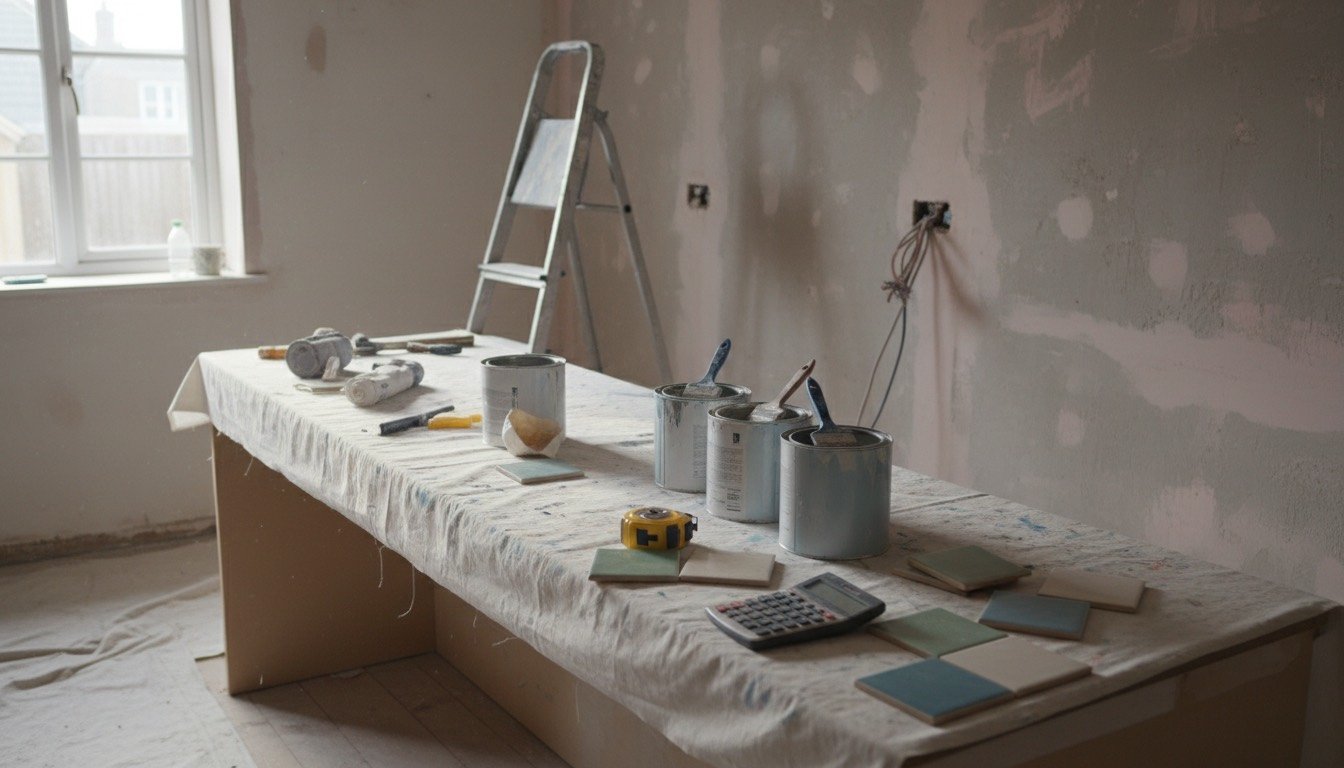
We spend our working lives inside other people's houses, and we see how renovations actually end: not with a magazine reveal, but with a project that ran out of money at the snagging stage. The skip has gone, the kitchen is in, and there is no budget left for flooring, decorating or the deep clean that gets the plaster dust out. The pattern is nearly always the same - the big item was priced carefully and everything around it was guessed.
This is the budgeting method we recommend to clients before a single wall comes down. It works for a £3,000 bathroom refresh and a £60,000 extension alike: set a ceiling, price line by line, get real quotes, make honest DIY decisions, ring-fence a contingency, and agree in advance what would make you stop.
Step 1: Work Out What the House Can Justify
Before you price anything, find your ceiling value - the realistic most your street will pay. Check sold prices for your road on the Land Registry, then ask two local estate agents what the finished house would fetch. If your home is worth £280,000, similar renovated houses sell for £320,000, and your project costs £55,000, you are overcapitalising unless you plan to stay ten years or more.
Returns vary hugely by project. A loft conversion with a bedroom and en suite typically adds 15-20% to value; a new kitchen adds 5-10%; a like-for-like bathroom perhaps 3-5%. If you are renovating to sell, spend on the cheap, high-impact jobs first - we ranked 30 kerb appeal improvements by cost and impact and most of the winners cost under £500.
Step 2: Build a Line-by-Line Cost Estimate
A renovation budget is a spreadsheet, not a number in your head. List every job, then price labour, materials and waste separately for each line. As a sanity check, here is what typical projects cost in the UK in 2026:
- •Mid-range fitted kitchen: £9,000-£16,000 including fitting, before appliances
- •Full bathroom renovation: £5,000-£9,500 depending on tiling area
- •Single-storey rear extension: £2,200-£2,800 per square metre, plus VAT and fees
- •Dormer loft conversion: £40,000-£55,000
- •Full rewire of a three-bed house: £4,500-£7,500
- •New boiler and system flush: £3,000-£4,500
- •Replastering one room: £450-£750
- •Hidden extras people forget: skip hire at £250-£350 per skip, building control fees of £300-£600, structural engineer calculations £400-£900, and 20% VAT on any VAT-registered trade's invoice
Step 3: Get Three Quotes and Read Them Properly
Get three written, itemised quotes - not estimates, which are legally just guesses. The cheapest quote is usually the least complete, so compare what each one excludes: waste removal, making good, decoration and second-fix items are the classic gaps. Watch for 'provisional sums', which are placeholders the builder can revise once work starts; a quote with several large provisional sums is not really a quote.
Check trades hold the right credentials - Gas Safe registration for anything gas, and TrustMark or Federation of Master Builders membership are worth favouring for larger jobs. Know the going day rates too, so you can spot padding: we publish what plumbers actually charge in the UK and the same logic applies across the trades. Agree a stage-payment schedule in writing and never pay a large sum up front - 10% deposit is normal, 40% is a red flag.
Step 4: Make Honest DIY vs Pro Decisions
DIY is where budgets are rescued or wrecked. The honest test has three parts: skill (have you done this exact job before?), time (a first-timer takes roughly three times a professional's estimate), and consequence (what does getting it wrong cost to undo?). Strip-out, demolition and painting rooms properly are genuinely beginner-friendly and can save £150-£250 a day in labour. Click-fit flooring is achievable in a weekend once you have chosen sensibly between LVT, laminate and engineered wood.
Never DIY gas work (illegal without Gas Safe registration), consumer unit or new-circuit electrics (notifiable under Part P of the Building Regulations), structural alterations, or roof work at height. The £300 you save becomes a £3,000 remedial job when a surveyor finds it at sale time.
Step 5: Ring-Fence a Contingency and Sort the Money
Add a contingency of 10% for a modern house and 15-20% for anything Victorian or Edwardian, where opening a wall routinely reveals rotten joists, dead wiring or crumbling plaster. This money is not 'extra budget' - it does not exist until something goes wrong, and it is never spent on upgrades.
On financing: savings are cheapest, and for borrowed money the usual routes are a personal home-improvement loan, a further advance from your existing mortgage lender, or remortgaging. Compare the total cost of credit over the full term rather than the monthly payment, and talk to an FCA-regulated broker or adviser before committing - the right answer depends entirely on your circumstances. Whatever you do, never fund an open-ended project on a credit card; renovations and revolving debt are a miserable combination.
Know When to Stop
Every renovation reaches a point of diminishing returns, and the discipline is deciding your stopping rules before emotion takes over. Write these down on day one:
- •Stop and pause - do not borrow more - the day the contingency is fully spent
- •Stop upgrading when total spend approaches the gap between your home's current and ceiling value
- •Finish rooms completely rather than starting new ones; three finished rooms beat six half-done
- •Cut cosmetic scope (fancier taps, premium tiles) before ever cutting structural or waterproofing scope
- •If the last 10% of the wish list costs 30% of the budget, it is the wish list that goes
Budget for the Aftermath
Two lines almost nobody includes, and which we are called about constantly. First, the post-build clean: fine plaster dust keeps settling for two to three weeks after trades leave, and it takes repeated top-to-bottom passes to clear - budget £150-£300 for a professional after-builders deep clean if you want the house genuinely liveable rather than wiped once. Second, ongoing maintenance: a renovated house still needs looking after, so set aside roughly 1% of your home's value each year for upkeep and you will never be ambushed by the boiler again.
Budgeted this way, a renovation is boring - and boring is exactly what you want. The drama belongs in the before-and-after photos, not the bank statement.
Found this useful?
There's plenty more — hundreds of guides and honestly-tested product reviews for every corner of your home.
Browse All Guides