DIY & Maintenance · 6 min read · 12 July 2026
How to Find a Water Leak in Your House: The Professional's Step-by-Step Method
A weeping fitting can hide for months; a burst pipe cannot wait five minutes. Here is the exact order the trade uses to track down a leak: meter first, dye second, moisture meter last.
By the Nims Casa editorial team — written from professional cleaning experience and checked against our editorial standards.
We maintain homes across the UK for a living, and water causes more of the damage we see than everything else combined: lifted laminate, stained ceilings, carpets that smell of pond. Most of it started as a leak losing less than a litre an hour, quietly, for months. A weeping toilet flush valve alone can pass 200 to 400 litres a day — £300 a year on a meter.
Finding a leak is elimination, not a dark art, and you can do 90% of what a plumber would do in the first hour with kit you already own. Here is the order we work in, and the point at which to stop and hand over.
Before You Start: Tools, Time, Skill and Cost
Skill level: complete beginner; nothing here involves opening a pipe. Time: 45 to 90 minutes, including the wait while the meter test runs. Budget: under £10 if you own a torch, or £30 to £45 if you add a pin-type moisture meter from Screwfix or Toolstation, the best diagnostic tool a homeowner can own.
- •Torch (your phone torch is fine)
- •Roll of plain white kitchen roll, your leak litmus paper
- •Food colouring, any dark colour, for the toilet dye test
- •Pin-type moisture meter, £25 to £40, optional but decisive
- •Stop tap key if your outside valve sits under a pavement cover
- •Phone camera to record meter readings and boiler pressure
Step 1: Let the Water Meter Tell You the Truth
If you have a meter, this test answers the only question that matters: is water leaving the system at all? Roughly 60% of UK homes are metered; if yours is not, skip to Step 2.
- •1. Turn off every tap and appliance; check nobody is mid-shower and the washing machine is idle.
- •2. Find the meter: usually under a small cover in the pavement or driveway, sometimes under the kitchen sink.
- •3. Photograph the full reading, including the small red dials or the spinning flow indicator.
- •4. Use no water for 60 to 90 minutes. Do not flush.
- •5. Re-read. Any movement, even one digit on the red dials, means a live leak; a visibly spinning flow indicator means a significant one.
Step 2: Narrow It Down: Cold, Hot or Heating
Now close the internal stop tap (usually under the kitchen sink) and check the meter again. Still moving? The leak is on the underground supply pipe between the boundary and your house — your responsibility, not the water company's, and a professional job from the start.
If the meter stops, the leak is inside. Next, the boiler pressure gauge: a combi drifting from 1.5 bar to below 1 bar over a few days, with no drip from the external relief pipe, points to a heating-circuit leak rather than the taps. Bleeding radiators and re-pressurising the boiler explains what that gauge should do week to week. A warm patch on the floor is the classic sign of a hot-water pipe leaking under screed.
Step 3: The Room-by-Room Hunt (20 Minutes)
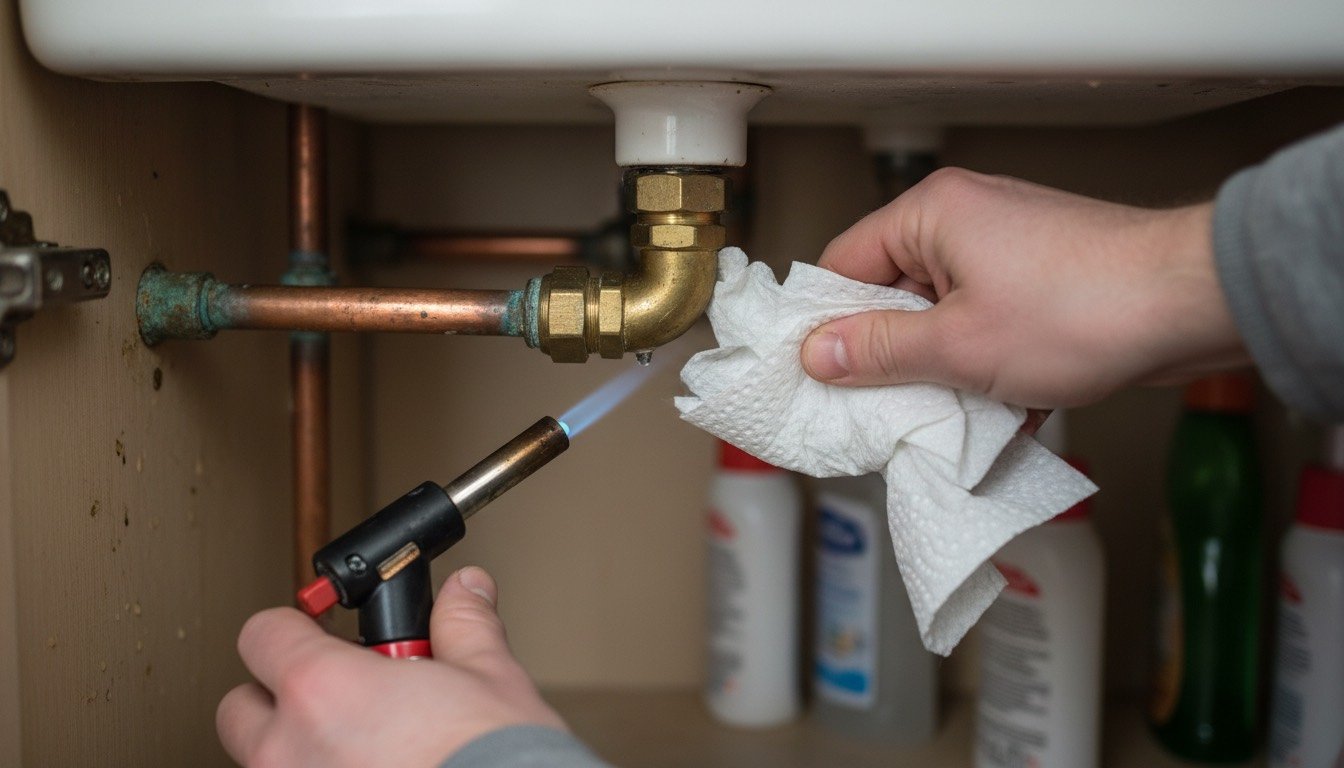
Work top-floor bathroom downwards, because water travels down and shows up a room away from where it starts. Wrap dry kitchen roll around every accessible joint; come back in ten minutes and any damp spot has found your leak.
- •Toilets: food colouring in the cistern, wait 15 minutes without flushing. Colour in the bowl means the flush valve is passing — Britain's most common hidden leak and a £12 part; our running toilet fix walks you through it.
- •Under sinks: kitchen roll around the trap, flexi hoses and compression fittings. Green or white crust on copper means it has been weeping for a while.
- •Washing machine and dishwasher: pull them out and check the fill hose, the valve and the drain spigot. Hoses age like tyres and fail from around year five.
- •Bath and shower: usually failed sealant or grout, not pipework. Splash water at the screen seal and check the ceiling below an hour later.
- •Radiators: kitchen roll under every valve and gland nut. A teaspoon a day here will drop boiler pressure and rot a carpet.
- •Outside: check the garden tap and, in winter, any pipe in a garage or loft.
Reading the Clues: Hidden and Pre-Failure Leaks
Some leaks announce themselves in advance. Water hammer — the bang or shudder when a tap or valve closes — is loose pipework slamming against joists, and it works joints loose; treat it as a warning, not a quirk. A sudden drop in flow at one outlet is worth diagnosing too; our low water pressure guide separates leak symptoms from mundane causes.
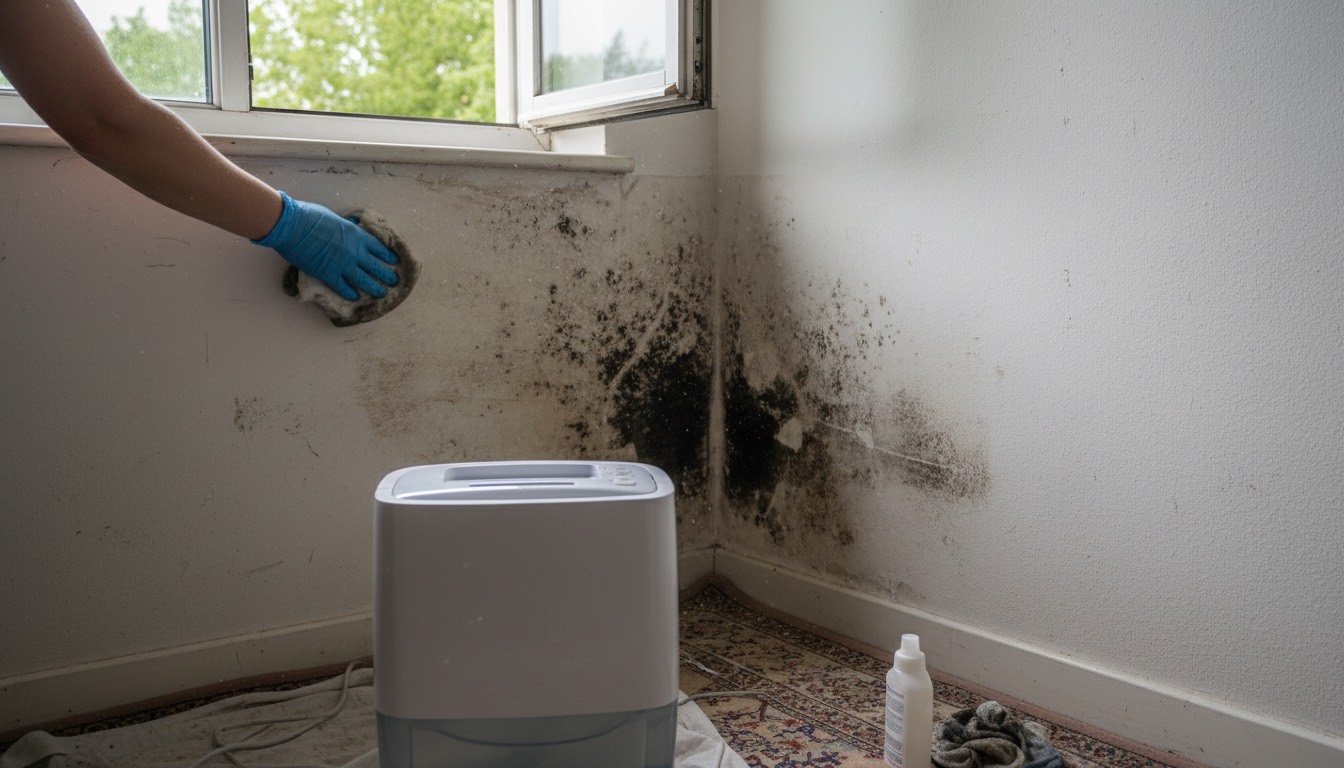
For leaks already under way, trust your eyes and nose: tide marks or a coffee-coloured ring on a ceiling, bubbling paint, skirting pulling from the wall, a musty smell, or mould that keeps returning to the same patch. A moisture meter turns guesswork into a map: probe the wall in a grid and follow the rising numbers to the source. Anything over about 20% in plaster that should be dry deserves investigation.
A genuine burst pipe is a different animal: shut the stop tap immediately, open the cold kitchen tap to drain pressure, and switch off electrics if water is anywhere near fittings. Speed matters more than diagnosis.
When to Stop: DIY vs Calling a Professional
Stop when the trail goes under a solid floor, inside a finished wall, or beyond the stop tap into the supply pipe. This is where trace-and-access specialists earn their money, using acoustic gear, tracer gas and thermal imaging to pinpoint leaks without demolition. Expect £250 to £500 for detection; many buildings insurance policies include trace-and-access cover up to £5,000, so check first. For the repair itself, see how much a plumber costs, but budget £80 to £160 for a straightforward accessible fix.
We constantly see the leak fixed and the soggy carpet ignored. Underlay holds water like a sponge; after 48 hours you are growing mould underfoot. Lift the carpet, get air moving beneath it, and if it was more than a small spill, a professional carpet cleaning team with extraction and drying equipment can usually save a carpet that would otherwise be landfill.
Prevention: The Ten-Minute Annual Routine
Almost every leak we encounter was preventable with maintenance that costs pennies and minutes.
- •Exercise the stop tap twice a year, fully closed and back. A seized stop tap during a burst is how a £100 problem becomes a £10,000 one.
- •Fit foam pipe insulation, £1 to £2 per metre, on every run in the loft, garage or outside wall; our frozen pipes guide covers the winter routine that goes with it.
- •Replace braided flexi hoses every 5 to 10 years; they cause more catastrophic escape-of-water claims than anything else.
- •Photograph the boiler pressure gauge monthly; a slow decline is a leak talking quietly.
- •Consider a smart leak detector, £40 to £80, under the sink and behind the washing machine if you travel often.
Found this useful?
There's plenty more — hundreds of guides and honestly-tested product reviews for every corner of your home.
Browse All Guides