DIY & Maintenance · 6 min read · 18 May 2026
How to Bleed Radiators & Re-Pressurise the Boiler (The 15-Minute Heating Fix)
Radiators cold at the top are full of air; the boiler gauge below 1 bar is why the fix 'didn't work'. Two five-minute jobs, one warm house.
By the Nims Casa editorial team — written from professional cleaning experience and checked against our editorial standards.
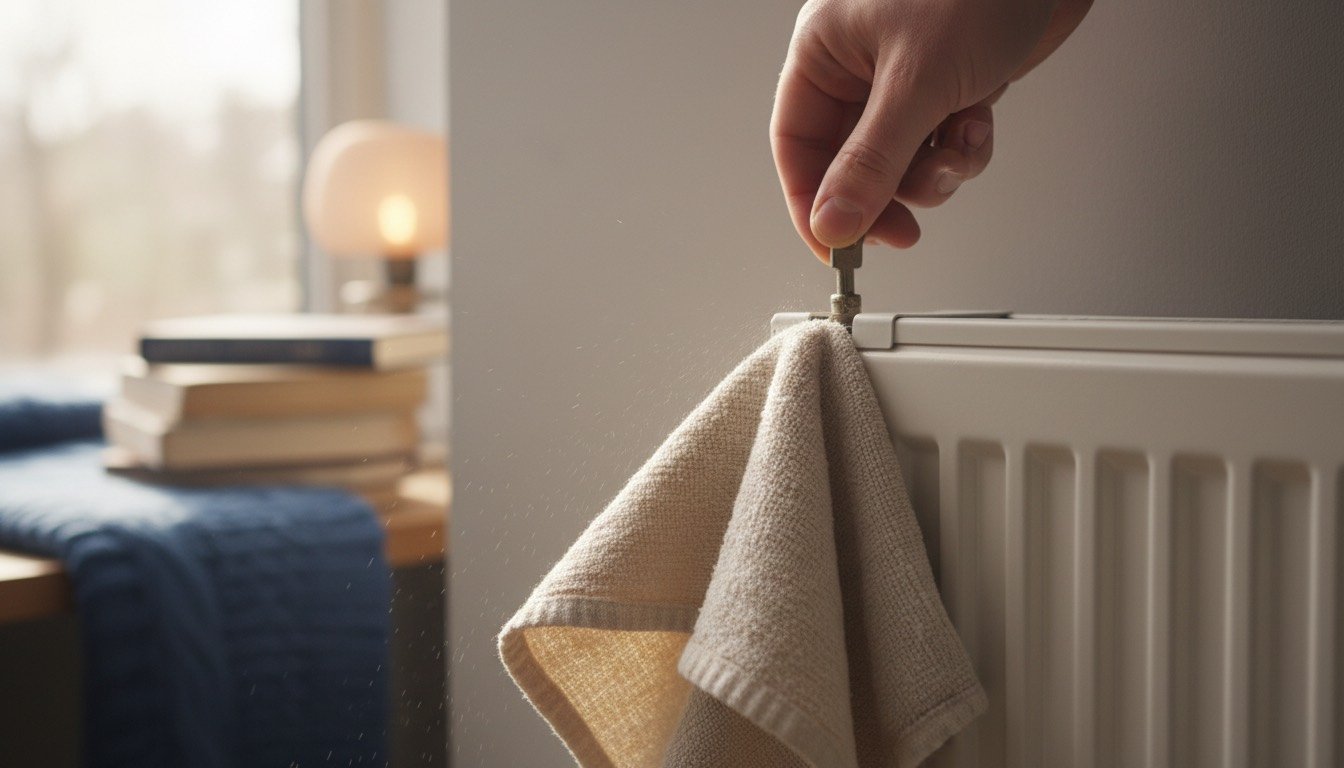
Radiators roasting at the bottom and stone cold across the top are the most common heating complaint reported to UK engineers every autumn, and the cause is almost always trapped air, not a broken boiler. The fix is a radiator key costing about £1–£4 and five minutes per radiator — no plumber required. If you are still debating the bigger question first, see when to turn the heating on.
What catches people out is the second half of the job. Every bleed lets a little water out of the sealed heating system too, dropping the boiler's pressure. Bleed several radiators without topping the system back up and the gauge can sink below the level the boiler needs to fire properly, so the heating that was 'fixed' ten minutes ago goes lukewarm or locks out altogether.
This guide covers both halves: the correct order to bleed radiators, how to use the filling loop to bring pressure back to a safe 1.0–1.5 bar, the signs that tell you it isn't air at all, and when to stop and book an annual boiler service instead.
Tools and Materials You'll Need
Everything here is cheap and most of it you'll already own. Doing this before winter properly sets in? Pair it with a look at cheap radiator reflectors and TRV tweaks — they cost even less and cut heat loss further once the air is gone. While the system is running, it is also the right moment to check your boiler flow temperature — the one setting that decides how efficiently a condensing boiler runs.
- •Radiator bleed key, or a flat-blade type for older valves — £1 to £4 from any hardware shop or supermarket
- •A small towel and a shallow dish or old mug to catch the few drops of water that escape
- •An adjustable spanner if the filling loop is a screw-on flexible hose rather than a built-in lever — most are hand-tight, older ones aren't
- •A torch, since pressure gauges live in dim airing cupboards
- •Central heating inhibitor, roughly £8–£12 a bottle, worth adding if it's been over a year since the system was last dosed
How to Bleed Radiators in the Right Order
- •Turn the heating off and let radiators cool for 20–30 minutes. Bleeding a hot radiator sprays scalding water and pulls fresh air back in as it cools.
- •Check the boiler pressure gauge first and note the reading, so you know how far to top up afterwards.
- •Start with the radiator furthest from the boiler, ground floor first, finishing upstairs. Air migrates towards the boiler, so this order clears it in one pass instead of chasing it between rooms.
- •Fit the key onto the square bleed valve at the top corner, hold a cloth underneath, and turn a quarter-turn anticlockwise.
- •Listen for a hiss as trapped air escapes. Keep it open until the hiss stops and water runs out in a solid, steady stream.
- •Close the valve promptly once the water runs clean — firm and snug is enough; forcing it can crack the spindle.
- •Move to the next radiator and repeat, then check each one heats evenly across its whole surface once the heating's back on.
- •Once every radiator is done, check the pressure gauge again. It will almost always have dropped a little — expected, and the next section covers putting it right.
Re-Pressurising the Boiler With the Filling Loop
Combi and system boilers run as a sealed, pressurised loop, and the gauge should read around 1.0–1.5 bar when cold — check your model's manual, as some want slightly less. Every bleed lowers that figure, and below about 0.8 bar many boilers lock out or heat weakly because the pump can't push water round properly.
The filling loop is a small flexible braided hose, or a built-in lever on newer boilers, linking the cold mains to the heating circuit. With the heating off, open the loop's valve slowly and watch the gauge climb, closing it the moment it reaches 1.2–1.5 bar. It takes seconds, and rushing it is the easiest way to overshoot.
If yours is a detachable hose rather than a fixed lever, disconnect it once done — left attached, pressure can creep up on its own over following weeks. Gone past 2 bar by mistake? Open a radiator's bleed valve for a second or two, then close it.
When It Isn't Air — Reading the Other Signs
- •Cold at the BOTTOM, warm at the top is not air — it's sludge in the base of the radiator, and bleeding does nothing for it. That's a powerflush conversation with a heating engineer.
- •A radiator needing bleeding every few weeks means air is being generated somewhere, sometimes by internal corrosion, and is worth mentioning to an engineer alongside an inhibitor top-up.
- •A pressure gauge that sags on its own within days, with nothing bled, usually points to a leak in the pipework or a failing expansion vessel rather than normal air loss.
- •Knocking or gurgling from the pipes rather than the radiators after a full bleed can mean the system needs balancing rather than more bleeding.
- •One room that stays noticeably cooler than the rest even once everything's bled is usually a flow issue — see why one room stays colder than the rest for the full diagnosis.
Common Mistakes That Undo the Job
- •Bleeding radiators while the heating is still on or hot, which sprays scalding water and draws air straight back in.
- •Skipping the pressure check afterwards, so the boiler quietly limps along on 0.6 bar until it locks out days later.
- •Topping up too fast and blowing past 1.5 bar, which stresses the expansion vessel and can trip a pressure-relief valve.
- •Using excessive force on the bleed key — the spindle is brass or plastic, not built for a wrench.
- •Bleeding the same radiator over and over instead of asking why the air keeps returning, which is a job for an engineer, not more key-turning.
- •Leaving a screw-type filling loop connected after use instead of removing it, letting pressure drift upward on its own.
When to Call a Heating Engineer
Bleeding and re-pressurising are safe, tool-free jobs, but a few situations are beyond them. If the gauge won't hold above 1 bar for a day or two with nothing bled, or you spot damp near pipe joints or under the boiler, stop and book an engineer — that's usually a leaking pipe joint, not an air problem.
Radiators that stay cold at the bottom regardless of bleeding need a chemical flush, not a key. If the boiler won't hold pressure, won't fire, or throws a fault code after a correct top-up, get it looked at before assuming the worst — sometimes it's a small part, not a full replacement. Boiler work itself should only ever be done by a Gas Safe registered engineer.
Frequently asked questions
How often should I bleed my radiators? Once a year, typically as part of getting the heating system ready for winter, is normal for most homes. Needing it more often than that usually means air is getting in somewhere, worth flagging to an engineer.
Why does my radiator gurgle after I've bled it? A little gurgling for a day or two while the last air pockets settle is normal. Gurgling that continues points to trapped air still further down the pipe run.
What pressure should my boiler be at? Most combi and system boilers want 1.0–1.5 bar cold, though it's worth checking your model's manual, as some sit slightly lower. Below about 0.8 bar the boiler will usually struggle to fire or lock out.
Can I bleed a radiator with the heating switched on? You can, but shouldn't — hot water under pressure sprays rather than trickles, it's a scald risk, and the swing pulls more air back into the system as it cools.
Do I need a different key for every radiator? Most modern radiators use a standard square bleed valve and a universal key. Older or imported ones sometimes use a flat-blade or hexagon type, worth checking before you start.
Is a slight pressure drop over weeks normal without bleeding anything? A slow drift over several months is common as tiny amounts of air are absorbed by the system. Anything faster, or a sudden drop, points to a leak worth investigating.
Found this useful?
There's plenty more — hundreds of guides and honestly-tested product reviews for every corner of your home.
Browse All Guides