Tools & Workshop · 6 min read · 23 July 2026
How to Use a Circular Saw: Straight, Safe Cuts (UK Step-by-Step)
A circular saw is the cheapest way to buy a straight line - and the power tool most likely to hurt you. The method, the kit, the real costs, and a version that works in a rented flat.
By the Nims Casa editorial team — written from professional cleaning experience and checked against our editorial standards.
A circular saw is the cheapest way to buy a straight line. It will rip a 2440 x 1220mm sheet of 18mm MDF into shelf widths in under a minute. It is also the power tool most likely to hurt you, almost always for one reason: kickback from a cut that was never properly supported.
Everything here assumes UK kit: a 165mm cordless or 190mm corded saw with the riving knife fitted, sheet goods at 2440 x 1220mm, and a 230V lead that needs an RCD outdoors. If you are still choosing a machine, our circular saw buying guide covers what is worth the money.
Safety first: kickback is the only injury that matters
Kickback is the saw climbing back out of the cut towards you at speed. It happens when the blade binds - the offcut sags and pinches the kerf shut. Every rule below exists to stop that kerf closing; our power tool safety checklist covers the rest of the workshop.
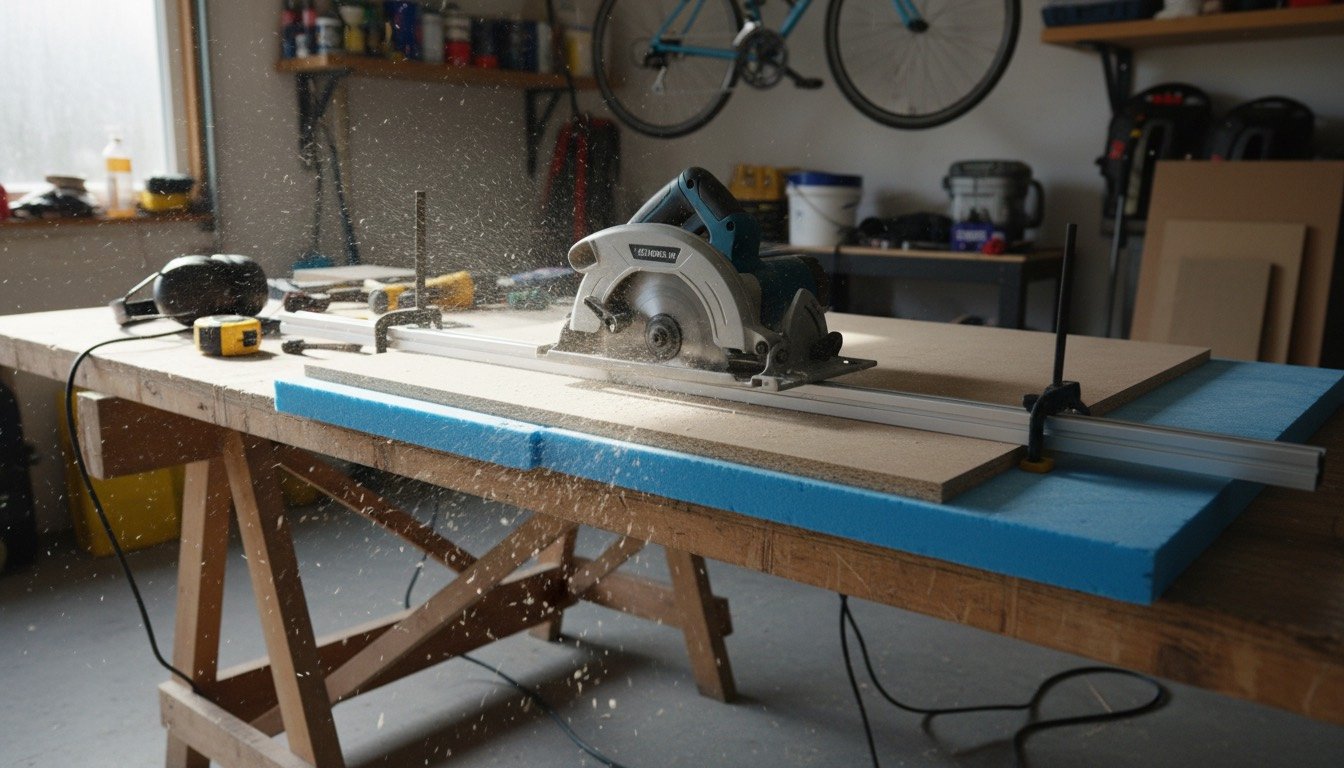
- •Support the whole board both sides of the line. Two sheets of 50mm PIR on the floor let the blade cut 5mm into a sacrificial layer while nothing sags.
- •Never bridge the cut between two trestles with the offcut hanging free. That is the classic pinch.
- •Set the blade so one full tooth, about 5mm, clears the underside. Deeper means a more violent kickback.
- •Check the riving knife is fitted and the lower guard springs shut freely. Never tape or wedge the guard open.
- •Stand to the side of the blade line, not behind it, and keep both hands on the saw.
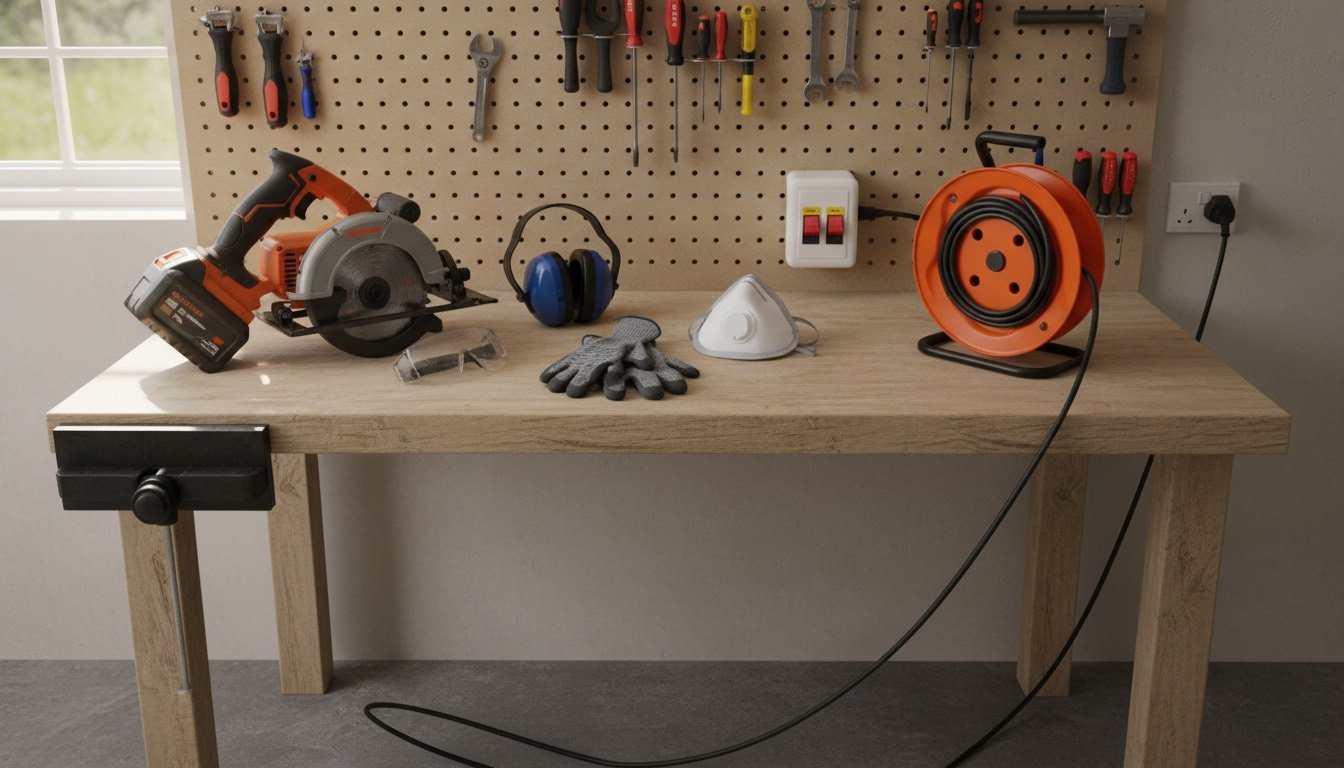
- •Defenders rated SNR 25dB or better - a saw runs at 100-105 dB(A) - EN166 goggles, and an FFP3 mask for MDF dust.
- •Use a 30mA RCD adaptor outdoors, and drop the battery before every blade change.
Tools, materials and what they cost
The guide matters more than the saw: a £60 saw against a clamped straight edge beats a £250 saw cut freehand. Our list of essential tools for UK homeowners sets out a sensible buying order.
- •Saw: entry corded 165mm from £45-£70; a solid corded 190mm around £110-£140; an 18V cordless bare unit £120-£200 before batteries.
- •Blades: 24-tooth for ripping timber (£15-£20), 48-60 tooth for ply, MDF and melamine (£20-£30). The blade in the box is a builder's blade - swap it.
- •Guide: a 1.4m aluminium rail is £60-£90, or build one for £12 from 9mm ply with a factory-straight edge, trimmed to your own blade.
- •Two 300mm quick clamps (£10-£16 the pair), PPE at about £30, and a 600mm speed square. Nothing gets cut freehand.
Realistic time and cost
- •Skill level: beginner, but not first-tool beginner. Spend an afternoon on scrap first.
- •Unboxing to first cut, including blade change and depth setting: 30-40 minutes.
- •Breaking a full 8x4 sheet into six shelves: 25-35 minutes; a joiner with a track saw does it in ten.
- •Starter outlay: about £120 at the cheap end, £280 with a rail and a decent cordless. A good 48-tooth blade does 40-60 sheets of ply.
The method, step by step
- •1. Fit the blade with the power disconnected, teeth pointing forwards and up at the front of the shoe - the blade cuts on the upstroke.
- •2. Mark with the good face down. The teeth exit through the top surface, so tear-out lands on the face you can see.
- •3. Set the depth. Rest the shoe on the board, unplugged, and drop the blade until roughly 5mm of tooth clears the underside. Lock it off.
- •4. Support and clamp, with no unsupported overhang at the cut. Clamp the guide at the offset from your line - measure shoe edge to blade once and write that figure on the saw; usually 90-105mm.
- •5. Rest the saw on the work before pulling the trigger, blade clear of the timber, shoe flat against the guide.
- •6. Let the motor reach full speed - 4,500-5,500 rpm - before the teeth touch, then feed at a steady walking pace. If the motor note drops, you are pushing too hard.
- •7. Avoid stopping mid-cut. If you must, back off 20mm, let the blade regain speed, then re-enter the kerf.
- •8. Release the trigger and keep the saw on the work until the blade stops.
- •9. Deburr with 120-grit and check for square before cutting the next piece to match.
The renter-safe version: sawing without losing your deposit
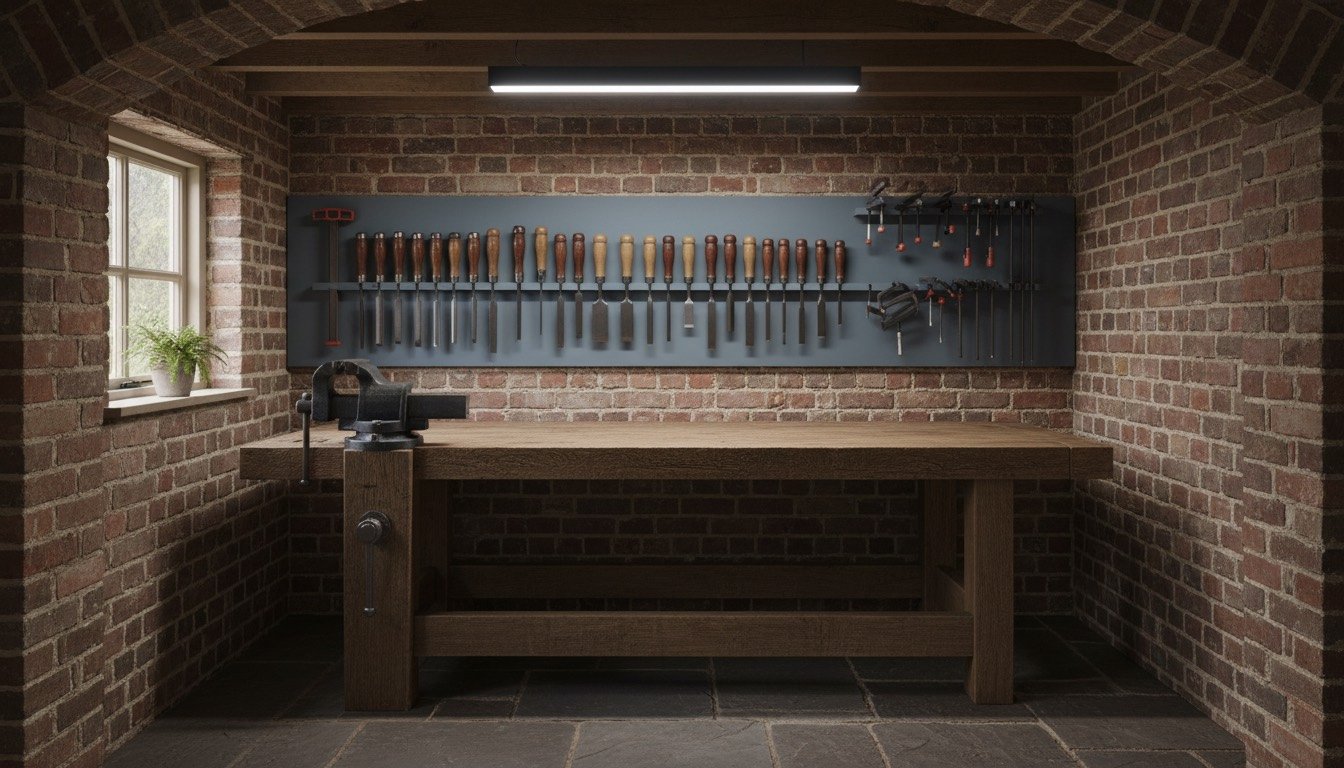
Nothing about a circular saw is inherently a tenancy problem - the trouble is where you cut and what you fix it to. Everything below is reversible, and it is the same discipline that keeps a shared space usable if you are carving a workshop out of a rented garage.
- •Cut outside: a balcony, a shared drive or a doorstep with a dust sheet down. MDF dust in a carpet pile is a deduction; a plunge through the floor is a bigger one.
- •Choose battery over corded - no lead trailing across a communal hallway, which most leases and fire risk assessments prohibit.
- •Work 9am to 6pm on weekdays and Saturday mornings; a 100dB saw earns a complaint long before the 11pm-7am statutory night hours.
- •Never cut anything fixed. Trimming an internal door or shortening a fitted worktop is an alteration needing written consent - cut new material to fit around the fixture.
- •Build freestanding: shelf boards for a bookcase you own, a bed base, a plinth to lift a wardrobe off a damp wall.
- •Fix with tension rods, adhesive strips rated to around 7kg, or freestanding uprights rather than plugs and screws.
- •Nowhere safe to cut? Use the in-store cutting service at B&Q or Wickes for a small charge per cut.
Troubleshooting: what the cut is telling you
- •Burn marks along the edge: blunt blade, too slow a feed, or resinous timber. If the teeth look grey, replace it.
- •The cut drifts off the line: you are steering by eye. Freehand wander is about 3mm per metre.
- •The saw bogs down and howls: too deep, too fast a feed, or the offcut is pinching. Check the support before blaming the motor.
- •Chipped, feathered edge on melamine: wrong blade, wrong face. Use a 60-tooth negative-rake blade, cut face down, score the line first.
- •Blade binds halfway and the saw jumps: the board sagged. That is the whole diagnosis.
- •Cordless saw dies mid-sheet: an 18V 5.0Ah pack gives roughly 40-60 crosscuts in 18mm ply.
When to stop and call a professional
A circular saw is a breaking-down tool, not a fine joinery tool. Cutting sheet material to fit, including underlay and vinyl plank flooring, is DIY. The following is not.
- •Anything structural. Notching or drilling joists, rafters and studs is governed by depth and position limits in the Building Regulations.
- •Any unidentified board in a property built before 2000. Asbestos insulating board looks like soft, fibrous plasterboard and turns up in ceilings, soffits and around old boilers - a power saw makes it a licensed problem.
- •Fibre cement board and concrete pavers, where dry-cutting releases respirable crystalline silica well past the workplace exposure limit.
- •Worktop sink cut-outs and mitred joints in 40mm laminate. Those need a jig and a router.
Found this useful?
There's plenty more — hundreds of guides and honestly-tested product reviews for every corner of your home.
Browse All Guides