Tools & Workshop · 6 min read · 21 July 2026
Essential Tools for Homeowners: The UK Kit That Actually Earns Its Space
Most tool lists are written for American timber-framed houses. Work out what your walls are made of and what your house keeps asking you to do, and the shopping list gets shorter and cheaper.
By the Nims Casa editorial team — written from professional cleaning experience and checked against our editorial standards.
Ask ten people what belongs in the cupboard under the stairs and you get ten lists, most of them lifted from sites where every wall is timber stud. British housing stock does not behave that way. A 1930s semi in solid brick, a 2006 estate house in dot-and-dab plasterboard and a Victorian terrace in lath and plaster each punish a different set of tools, and buying the wrong one is how people end up with a drill that skates across brick and a shelf on the floor.
The useful question is not what you should own. It is what your house keeps asking you to do. Answer that first and the list gets shorter and cheaper than the generic one you would otherwise have bought.
Start here: diagnose the house before you spend a penny
Five checks, fifteen minutes, and they decide two thirds of what follows. The big fork is what your walls are made of: that dictates whether you need hammer action and masonry bits, or simply the right plasterboard fixings.
- •Tap the wall you want to fix into. A dead, solid thud is masonry. A hollow drum that changes pitch every 400mm is timber stud. A hollow drum over a wall that still feels rigid, common in anything since about 1985, is dot-and-dab: plasterboard stuck to blockwork with 15-40mm of air behind it. That void is why fixings pull out.
- •Count the masonry holes on your list for the next year. Two or three and a combi drill covers it. A dozen or more, or anything into concrete lintels, and you want an SDS+ rotary hammer instead.
- •Sort the job queue into families: plumbing, decorating, fixings and shelving, flat-pack, or garden. Each buys a different first hundred pounds; do not try to cover all five at once.
- •Audit what is already there. Most homes inherit a hammer and mixed screwdrivers; the real gaps are measuring, detecting and cutting, not hitting.
- •Check your storage honestly. No shed and no garage rules out a mitre saw and a workbench, and pushes you towards a kit that lives in one stackable box.
The core kit: twelve items that earn their space
This covers perhaps 80 per cent of jobs in an average UK home, at realistic Screwfix, Toolstation and B&Q prices. Buy once, properly, and most will outlive you.
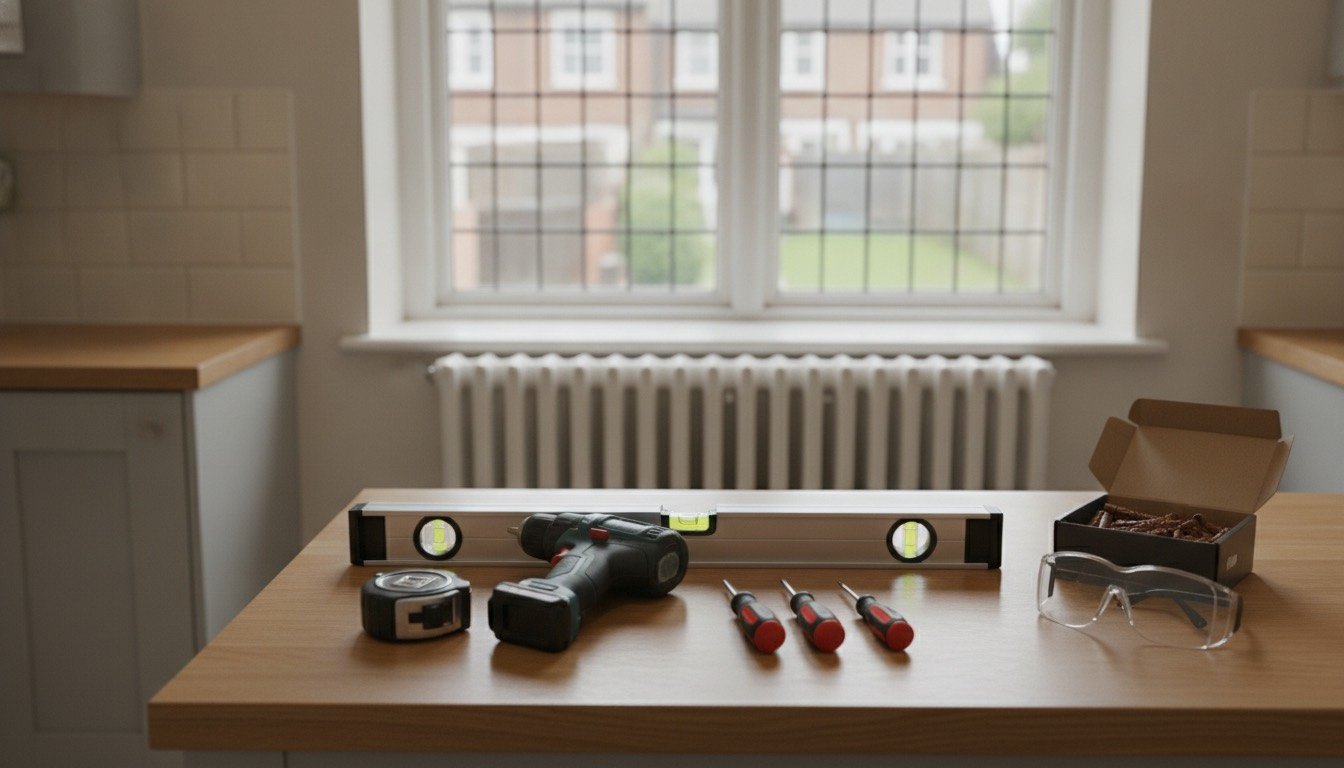
- •Cordless combi drill, 18V, two 2.0Ah batteries: £70-£160. Hammer action gets you into brick; brushless adds £40 and roughly doubles runtime and life.
- •Multi-detector for cables, pipes and studs: £25-£70, and cheaper than an electrician.
- •Pozidriv screwdrivers, PZ1 and PZ2, plus slotted: £15-£25. British screws are Pozidriv, not Phillips; the wrong tip is why heads chew out.
- •5m locking tape measure and a 600mm spirit level: £20-£35. Long enough for shelves, short enough for a stair riser.
- •Fixings: brown 7mm plugs for brick, spring toggles or metal self-drive fixings for plasterboard, £15.
- •Claw hammer, 450g, and nail punches: £15-£25.
- •Water pump pliers, adjustable spanner and a basin wrench: £30-£50, and they do almost every job under a sink.
- •Utility knife with spare blades and decent side cutters: £15.
- •Filling knives at 100mm and 25mm, ready-mixed filler and a sanding block: £15.
- •Radiator bleed key and grips: under £5, and it saves a callout every October.
- •EN 131 stepladder, three or four treads: £45-£90. Rating and height matter more than price, as the ladder buying guide explains.
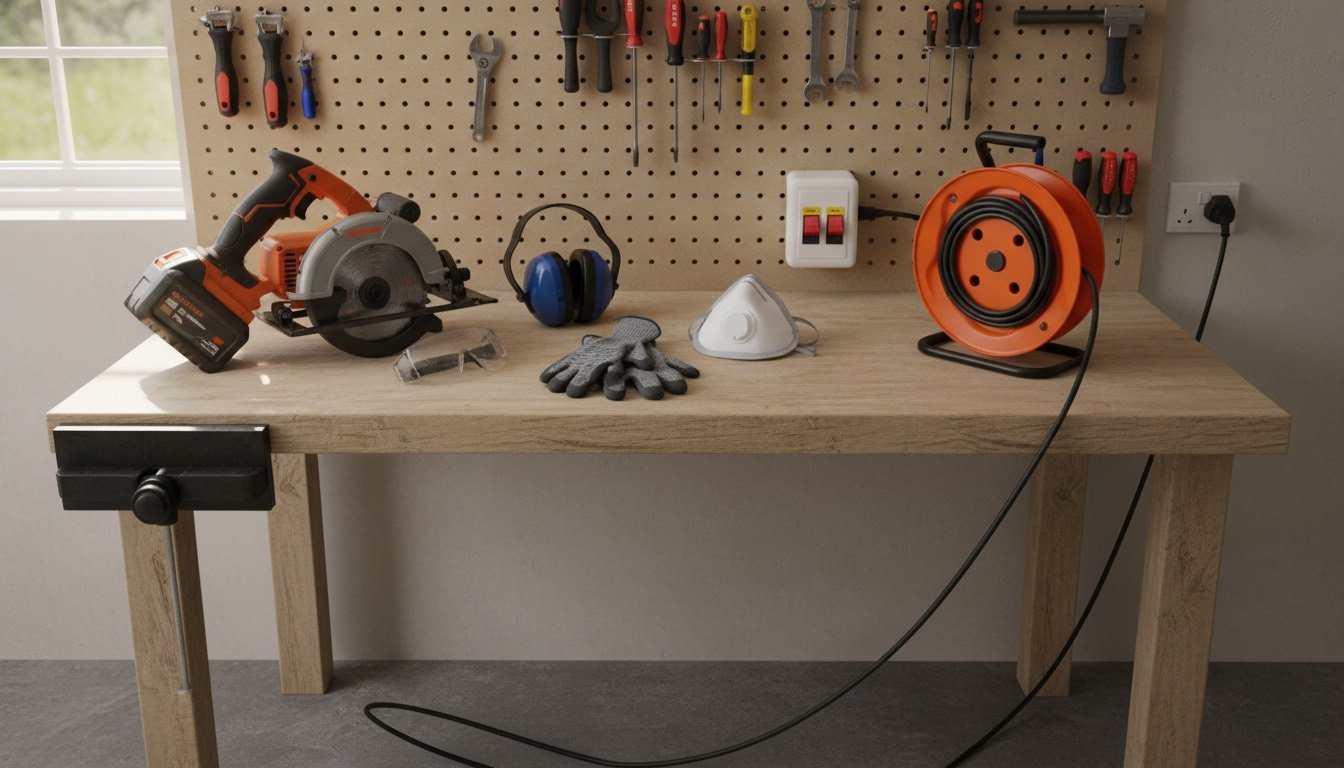
- •Impact-rated glasses, FFP3 masks, gloves and knee pads: about £25 the lot.
Cordless: choose the battery, not the tool
The expensive mistake is buying tools one at a time from whichever brand was on offer, then owning four chargers and no spare battery that fits anything. Pick one 18V platform and stay on it. A DIY-grade range is cheaper and broad enough; with a full renovation coming, a trade platform earns its money in duty cycle and repairability, as the best cordless tool brand guide sets out.
Expand in this order, and only when a job forces it: combi drill, then an impact driver (£60-£120, and it will change your view of flat-pack and decking screws), then an oscillating multi-tool (£40-£90), then an SDS+ drill if the wall test said so. A circular saw comes last. Blowers, planers and sanders are wants, not needs: the full picture sits on our Tools & Workshop hub.
What it costs to kit out a UK home
Three honest tiers. The first-to-second jump changes what you can attempt; the third mostly buys speed and comfort.
- •Starter, £120-£180: hand tools, fixings, an entry-level drill, a stepladder. Covers flat-pack, curtain poles, filling, bleeding radiators and basic tap repairs.
- •Capable, £350-£500: brushless combi and impact driver on one platform, multi-detector, multi-tool, better level. Covers shelving into any wall type, door adjustments, laminate flooring and garden fixings.
- •Serious, £800-£1,200: adds an SDS+ rotary hammer, circular or track saw, mitre saw, workbench and real storage. Only worth it with the space and a renovation ahead.
Safety: the five things that actually injure homeowners
Ranked by how often they end in A&E or a rewire. All of it is cheap to avoid.
- •Drilling into a live cable. Use the detector every time, and if a socket or switch sits above or below your mark, assume a cable runs between them.
- •Ladders on soft ground. Most domestic falls are from under two metres. Level base, three points of contact, never the top two treads.
- •Silica dust from drilling brick and mortar. An FFP3 mask costs a few pounds; the damage is permanent.
- •Eye injuries from grinders, chisels and masonry drilling. Impact-rated glasses, not sunglasses.
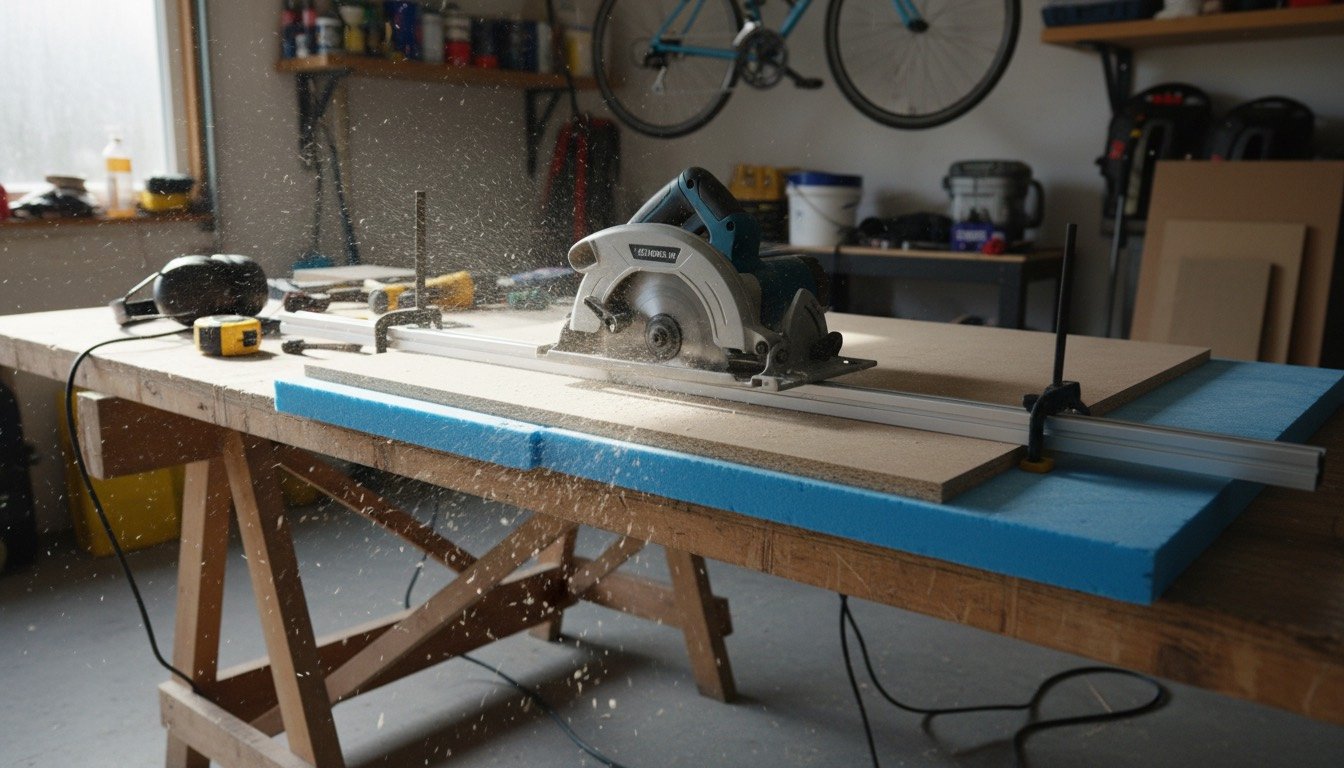
- •Saw kickback. Support the offcut, let the blade stop before lifting, never freehand a small piece. Pin the power tool safety checklist up in the garage.
Where DIY legally stops in the UK
Confidence is not the boundary; the law is. Anything touching gas needs a Gas Safe registered engineer. Notifiable electrical work in England and Wales falls under Part P of the Building Regulations: new circuits, consumer unit changes and most bathroom work need a registered electrician or building control sign-off, with equivalents in Scotland and Northern Ireland.
Three more hard stops. Textured coatings and some floor tiles in pre-2000 homes may contain asbestos, so do not sand, drill or scrape them. Notching structural timber or cutting a load-bearing wall needs a structural engineer. Roof work beyond gutter clearing belongs to someone with a tower. Everything else, including bleeding radiators and re-pressurising the boiler, is fair game.
Questions we get asked most
- •Are own-brand tools a false economy? Not always: entry ranges are fine for occasional use. Where cheap genuinely bites is blades, drill bits, measuring tools and ladders.
- •Why does my shelf pull out of the wall? Almost always dot-and-dab: the plug is gripping 12mm of plasterboard with a void behind it. Use spring toggles, or a longer plug into the block behind.
- •One tool that punches above its price? The multi-tool: it cuts skirting in place, trims door linings for new flooring and lifts old sealant without gouging the bath.
- •What should I budget each year? A few hundred pounds of consumables and small tools alongside general upkeep: the annual UK home maintenance cost guide is the sensible next read.
Found this useful?
There's plenty more — hundreds of guides and honestly-tested product reviews for every corner of your home.
Browse All Guides