Garden & Outdoor · 6 min read · 14 August 2026
Lavender Border Design: Planting Plans That Work in UK Gardens
Lavender laughed at the hosepipe bans — but winter wet kills more borders than drought ever will. The varieties, spacing and three planting plans that actually survive a British year.
By the Nims Casa editorial team — written from professional cleaning experience and checked against our editorial standards.
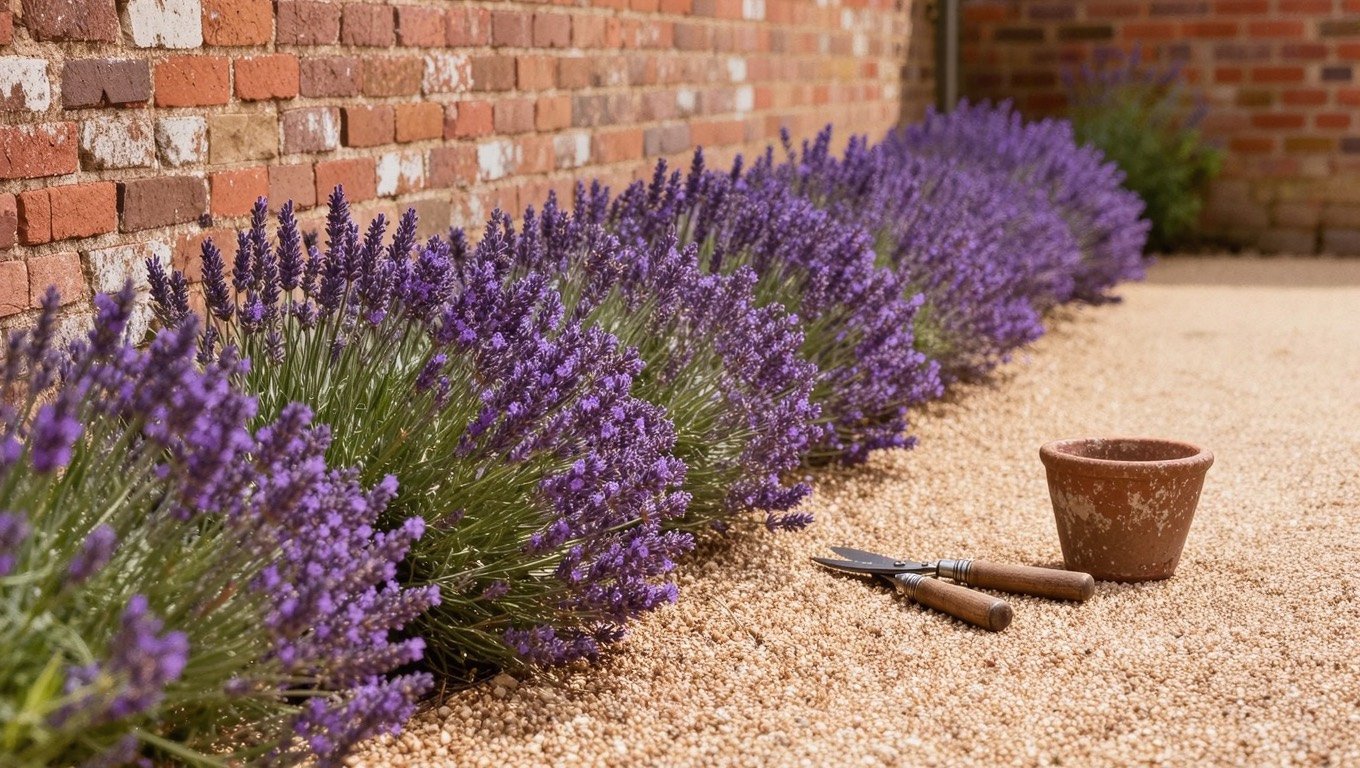
Two dry summers on the trot have quietly rewritten Britain's planting priorities, and lavender has come out the clear winner. While lawns browned off and hydrangeas sulked through the hosepipe bans, established lavender borders flowered harder than ever — the same Mediterranean genes that make the plant fussy about drainage make it near-indestructible in drought. UK searches for lavender garden border design are up over 1,000% this year, and for once the trend deserves the attention.
The catch is that a good share of the lavender borders planted this autumn will be dead or woody within three years, because the plant is killed by two very British things: winter wet and bad pruning. Get the variety, the spacing and the drainage right, and a border costs less than £50 to start and largely looks after itself for a decade.
English, French or Intermedia: What Survives a UK Winter
English lavender (Lavandula angustifolia) is the only type we would hedge with anywhere north of the Midlands. 'Hidcote' gives deep violet spikes on a tidy 60cm dome; 'Munstead' is a shade lighter and shorter at around 45cm. Both are hardy to roughly -15°C, which covers everything short of a Highland glen. Expect to pay £3-£4 for a 9cm starter plant or £8-£12 for a 2-litre pot at any decent garden centre — buy named varieties, never an unlabelled 'lavender mix'.
French lavender (Lavandula stoechas), the one with the rabbit-ear bracts, is hardy to only about -5°C and loathes sitting wet. In most of the UK it is a container plant or a two-to-three-year treat, not hedging material. The third group, Lavandula x intermedia hybrids such as 'Grosso' and 'Phenomenal', are the big ones: 75-90cm across, later flowering and strongly scented. They make an imposing hedge along a drive but will swamp a narrow border.
Spacing, Drainage and When to Plant
For a solid hedge line, plant closer than the label suggests; for individual billowing domes, give plants room to breathe. April to May is the ideal planting window in the UK — the soil is warming and plants root in fully before winter. Early September works on free-draining soil in the South, but avoid autumn planting on clay: young plants sit in cold, wet ground and rot at the crown before spring.
Drainage is non-negotiable. On clay, dig in roughly 25% horticultural grit by volume, or plant along a ridge of soil 10-15cm proud of the border so water sheds away from the crowns. Where the whole garden sits wet, a raised bed filled with gritty topsoil is the honest fix. Mulch with 20mm gravel, never bark — bark holds moisture against the stems, which is precisely what kills lavender in February.
- •'Munstead' and 'Hidcote': 30cm apart for a continuous hedge, 40-45cm for separate mounds
- •Intermedia types ('Grosso', 'Phenomenal'): 45-60cm apart — three plants fill a 1.5m run
- •Dwarf varieties ('Little Lottie', 'Nana Alba'): 25cm apart for edging a path
- •Quick maths: run length in centimetres divided by spacing equals plants needed, plus one for the end
Three Border Plans by Budget
Plant size is where the money goes — the design itself barely changes between tiers. A 9cm plant catches up with a 2-litre one within two seasons, so the premium buys impatience, not a better border.
- •Under £50 — the starter hedge: twelve 9cm 'Munstead' at about £3.50 each gives a 3.6m hedge at 30cm spacing. Sparse in year one, respectable by the second summer, proper by the third.
- •Around £150 — instant impact: twelve 2-litre 'Hidcote' (£9-£12 each), two bags of horticultural grit and six 25kg bags of decorative gravel. Flowers properly in its first July.
- •£300-£400 — the designer mix: 'Grosso' as a 60cm-spaced backbone, 'Hidcote' in front, thirty allium bulbs threaded through the middle, plus membrane and gravel mulch. Works out at £30-£35 per metre, which still undercuts most professional planting quotes.
Companions That Cope With the Same Conditions
The classic pairing is roses — lavender hides their bare ankles and the flowering seasons overlap — but the best companions are plants that share its taste for lean, dry soil: salvia 'Caradonna', erigeron, santolina, stachys and alliums punched through the middle for May colour before the lavender peaks. Our companion planting chart covers pairings in detail, but the short version is: nothing thirsty. A hydrangea planted mid-border guarantees you will overwater the lavender to keep the hydrangea alive.
Water new plants weekly through their first summer — a genuine soak at the roots, not a sprinkle — then stop. An established border needs nothing in a normal British year, and if you run a drip irrigation system for other beds, keep the lavender line off it entirely.
Small Gardens, Front Gardens and the Planning Wrinkle
In a small garden, use dwarf forms — 'Little Lottie' (pink, 30cm) or 'Nana Alba' (white) — as path edging rather than trying to shrink a full hedge into a 40cm bed. In pots, choose terracotta over plastic, mix compost 3:1 with grit, and lift containers onto feet from November. A single 40cm pot of French lavender by the front door gives you the exotic bracts without gambling a whole border on a mild winter.
Front gardens carry one genuine planning point. Swapping a tired front lawn for lavender and gravel counts as permeable landscaping, so it sails under the permitted development rule that requires planning permission for more than five square metres of impermeable front-garden paving. And unlike a fast-growing privacy hedge, lavender never approaches the 2m height at which the high-hedge provisions of the Anti-social Behaviour Act can be invoked by a neighbour — it is about the least contentious boundary planting there is. Where the border runs beside a terrace, set plants 30cm back from the patio edge so summer growth flops over the stone rather than across the walkway.
The Pruning Calendar That Keeps a Border Alive
More lavender borders are ruined by pruning than by weather. The rule is simple: cut hard once a year, immediately after flowering, and never into bare wood — lavender will not regrow from old brown stems.
Budget 20 minutes per 5 metres with sharp hand shears. Even perfectly pruned, English lavender is an 8-12 year plant; when gaps open at the centre and the base is more wood than leaf, take cuttings in July and replace the run the following spring rather than nursing it along. A lavender border is cheap enough to renew — that is part of the design.
- •Late August to early September: shear the whole plant back by a third, leaving 2-3cm of green growth above the woody base. Aim for a tight dome, not a flat top.
- •April: a light tidy only — snip winter-scorched tips and any stems spoiling the shape.
- •Never: cut into leafless brown wood, prune in winter, or skip a year. One missed summer prune is how plants go leggy and split open at the middle.
Found this useful?
There's plenty more — hundreds of guides and honestly-tested product reviews for every corner of your home.
Browse All Guides